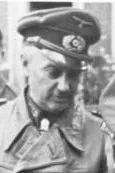
Walther Model
Human Design Chart
Biography
He shot himself in the ruins of the Ruhr on 21 April 1945 to avoid being taken prisoner by the Allies.
The Human Design of Walther Model: Generator 3/5
Generator 3/5 — Design at a Glance
Walther Model was a Generator in Human Design. This profile endowed him with immense endurance and strength, comparable to that of a workhorse capable of providing energy over long periods of time. His design suggested he would be most effective when he did not initiate actions himself but instead responded to signals from his environment. The strategy involved waiting for impulses and then reacting from the gut – specifically from the Sacral Center – with a clear 'yes'.
This approach was crucial for his well-being. When he engaged in activities that gave him this inner confirmation, he experienced deep feelings of fulfillment and satisfaction. Conversely, frustration and energy loss threatened when he acted against this mechanism, such as doing things he had no desire to do or being hindered from engaging in his actual work while still full of power. His strength did not lie in driving projects forward on his own initiative but rather in the powerful response to what confronted him. Only through this could he fully unleash his potential and act without typical pitfalls like burnout.
Sacral Authority
Walther Model was someone whose decision-making relied on direct, physical resonance. As a Generator, his inner authority was identical with his strategy: sacral authority. This configuration fundamentally simplified his process as he did not need to look externally to know what was right. His leadership came from the defined Sacral Center – his powerful engine.
This authority manifested not as intellectual deliberation but as an immediate physical reaction to external stimuli. Walther Model responded with a 'gut feeling', often audible as grunting or a nodding 'mm-hm' when his system was engaged. When he felt this inner surge, he was vital and energetic; then he approached his tasks with great enthusiasm without them needing to fulfill an external purpose. The joy of doing itself was the motivation.
Furthermore, an activated Spleen Center served as a supportive instance. This gave him quick, instinctive access to his physical well-being. He could spontaneously and swiftly decide, guided by a reliable perception of what benefitted him. This combination of sacral energy and spleen-based intuition allowed Walther Model to immerse himself fully in his tasks and experience deep satisfaction that directly sprang from the alignment of his actions with his inner compass.
The 3/5 Profile — Martyr / Heretic
Walther Model presented himself as someone who gained knowledge not through books but by personal experimentation. His design, Profile 3/5, combined the line of the experimenter with that of the hero. Line 3 meant he did not accept anything at face value; he had to experience things firsthand and learned through trial and error. This individual learning process, driven by Saturn's discipline and material ambition, formed the foundation for his later role.
He used these accumulated practical experiences to solve others' problems – the task of Line 5. This heroic role made him attractive; others wanted to learn from his stories. Yet this profile also carried a specific vulnerability: failure often occurred in public. Line 3 required experimentation, and if it did not succeed, the failure was publicly visible.
Additionally, his design showed a dynamic of life struggle (Line 5, Gate 28). It was about whether the fight was worth the effort. Here Pluto played a role: conflicts were provoked, alliances dissolved or reformed. Walther Model had to learn whom he could trust and when an alliance should be dissolved to join stronger ones. His path involved proving his competence through personal experience and then using this as authority – always with the risk that trust might be abused or the fight seem pointless.
Single Definition — Defined & Open Centers
Walther Model was revealed as someone who possessed an immense inner source of power, which however had to be directed through a specific reactive pattern. His defined Sacral Center generated vital energy every day, but this energy was only available to him when he responded instinctively with a yes or no to external requests. This sacral response mechanically decided whether he could use the energy for a task; mental initiatives without this confirmation led to frustration and exhaustion. Supporting this vitality was his defined Spleen Center, which gave him spontaneous body awareness. It acted as an intuitive instance in the present moment, sending health and well-being warning signals that he had to trust without being able to rationalize them. Additionally, his defined Root Center provided a constant adrenalized pressure that propelled him forward in the world and helped him cope with stress, so long as this was channeled through his strategy.
At the same time, Walther Model was vulnerable to conditioning from his open centers. His open Head and Ajna Centers meant he did not have consistent mental inspiration; he tended to get stuck in doubts or the questions of others rather than listening to his inner authority. Similarly, his open Throat Center attracted attention when he waited instead of actively forcing it through speaking. Particularly defining was his open G Center: It lacked a fixed identity or direction. Walther Model tended to mirror himself in relationships and environments to gain a sense of belonging. He had to learn that he could not seek love or meaning for himself but rather wait to be initiated. His open Heart Center lacked consistent willpower; he was vulnerable to the pressure to prove himself through promises or competition, which often led to cycles of self-doubt. Moreover, his open Solar Plexus absorbed the emotions of his surroundings, causing him to experience foreign moods as his own and avoid emotional confrontations to maintain stability.
Channels for caring values and meaningful life struggle.
Walther Model showed a deep need to take responsibility for his environment while simultaneously struggling for individual validation. His design tended towards natural caregiving whose aura automatically inspired trust. This stemmed from the Channel of Preservation 27-50, connecting the Sacral Center with the Spleen. Through the care of Gate 27 and the protection of traditional values at Gate 50, an instinctive ability to nourish and protect communities emerged. Walther Model was designed to look after those who could not take care of themselves, learning to regulate his own energy through sacral reactions to avoid overloading.
Parallel to this, he was marked by stubborn determination and the drive to forge his own path even against resistance. The Channel of Life Struggle 38-28 connected adrenalizing Root Energy with intuitive Spleen. Gate 38 propelled the fight for individual integrity while Gate 28 recognized which struggles had value. This configuration gave him the strength to resist distractions and find meaning in difficulties, often making him a role model for others to advance their own individuation.
Additionally, further energies were at work: Gate 31 promoted leadership through energetic transmission onto the collective. Gate 41 steered evolutionary changes and helped maintain clarity despite emotional crises. Gate 32 ensured continuity and radically tested material stability while Gate 5 determined the fundamental life rhythm built up by consistent habits. Together these elements formed a profile oscillating between nurturing structure and combative independence.
Individual Circuitry — Circuit Signature
Walther Model's design tended towards instinctive vigilance and protection of the core circuit. His simple definition connected Sacral, Spleen, and Root Centers in a continuous energetic flow, suggesting coherent, directly available life energy.
The Hunter Circuit worked through the Channel of Preservation (Gates 27–50), connecting the Sacral Center with the Spleen Center. This created a primal force for preservation and care driven by the life force of the Sacral in conjunction with the instinctive intuition of the Spleen. It was about protecting and nurturing the family as well as maintaining one's own genetics.
Parallel to this, the Knowledge Circuit showed the Channel of Life Struggle (Gates 28–38), linking Spleen and Root Centers. Although both circuits used the Spleen, they did not form a direct bridge between Sacral and Root energy through the Knowledge Circuit; rather, the life struggle channel imbued instinctive perception with a pulsing, acoustic quality. This supported the ability to recognize changes through inner resonance and intuitive pattern recognition, where the emotional wave of the Solar Plexus did not directly come into play as this center remained undefined. The combination of preservation and life struggle shaped an essence that trusted in survival and intuition.
Right Angle Cross of the Unexpected 4
Walther Model exhibited a fundamental disposition marked by the right cross of the Unexpected. This configuration in Human Design describes a specific energetic alignment where the individual often encounters unpredictable turns or sudden insights that do not arise from linear planning. Instead of living a controlled and predictable path, he lived within a field where surprises served as an integral part of life's flow. The design suggested that Walther Model encountered situations that initially appeared chaotic or unexpected but revealed deeper patterns.
This mechanism does not mean his life was unplanned; rather, his growth processes were often triggered by spontaneous events that challenged established perspectives. The right cross of the Unexpected acts as a catalyst for new perspectives when old structures lose their validity. Walther Model had to learn to accept these moments of surprise not as disruptions but as necessary impulses for further development. His experiential world was characterized by solutions proving meaningful only in retrospect, after the unexpected had occurred. This dynamic fostered a certain flexibility and the ability to deal with the unknown without immediately reaching for control. It was a way of life that required acceptance of the flow of events rather than trying to force it.
Saturn Return · Uranus Opposition · Chiron Return — Life Cycles
Walther Model's design indicated a tendency towards strategic adaptation and uncovering hidden structures, which manifested in his career steps. This configuration describes a life task where external circumstances are used to achieve inner clarity and purpose.
In 1918, at the age of 27, Model experienced his first Saturn Return. During this period, he was transferred twice: first to Second General Staff Officer with the Guard Reserve Division and then to the 36th Reserve Division. For his design, this cycle marked a moment when years of groundwork condensed into a viable result, laying the foundation for further responsibility.
Ten years later, in 1931 at age 40, the Uranus Opposition came into effect. Model undertook a secret trip to Russia within the framework of relations between Reichswehr and Red Army. This aspect promoted a need for change and breaking established boundaries by utilizing new, often not obvious paths to acquire knowledge.
The Chiron Return around 1940, when Model was 49 years old, represented an achievement cycle. He participated in the Western Campaign as Chief of Staff of the newly formed 16th Army. In this phase, his own incarnation cross increasingly unfolded in life; meaning and purpose became experiential. Models actions that year showed the bloom of his strategic abilities, where his role as chief of staff embodied the integration of planning and execution as foreseen by his design.
Generator · Sacral Authority — Synthesis
Walther Model was a Generator whose life was marked by a deep drive towards activity and an inexhaustible energy reserve (Sacral Center). This impulse manifested in a continuous search for activities that truly fulfilled him – a tendency amplified by the Profile of the Experimenter/Hero. He learned through personal experimentation and applied this knowledge to master challenges and support others (Line 3/5). The connection between Sacral Center and Spleen Center via the Preservation Channel indicates a deep commitment to maintaining what exists and using resources sustainably.
Simultaneously, Model lived in a tension field between an unceasing need for activity and constraints imposed by external circumstances (Cross of the Unexpected). Documented events – transfers, secret trips, participation in campaigns – attest to his readiness to face new situations, yet also to a life often dictated by external demands. This dynamic between inner energy and outer pressure shaped his path and revealed an ability to act under unexpected conditions and translate knowledge into action (Knowledge Circuit).
2 Defined Channels
Incarnation Cross - Right Angle Cross of the Unexpected 4
Solar Return
The Solar Return shows the moment when the sun returns to its exact birth position - your personal solar year.
Life Cycles
Discover the life cycles with a detailed triple view (birth chart, cycle chart, composite).
Human Design Profile
- Type
- Generator
- Strategy
- To respond - wait for something to respond to
- Authority
- Sacral Authority
- Profile
- 3/5 - Martyr / Heretic
- Definition
- Single Definition
- Incarnation Cross
- Right Angle Cross of the Unexpected 4
- Date of Birth
- 24.01.1891 21:00
- Place of Birth
- Genthin, Germany
Frequently Asked Questions
What was Walther Model's Human Design type?
What Profile did Walther Model have in Human Design?
Which Authority guided Walther Model's decisions?
What incarnation cross characterized Walther Model?
When was Walther Model born?
Discover your own Human Design
Are you also a Generator? Find out in a personal reading how to use your sacral energy correctly and discover deep satisfaction.
More Personalities
Back to overviewAaliyah

Alexia

Angèle

Anne-Marie

Arcángel

Arno