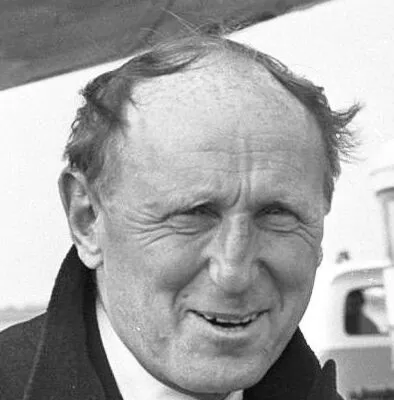
Photo: Wikimedia Commons
William Stern
Human Design Chart
Biography
Stern was considered in his time as a leading youth psychologist and one of the foremost authorities in differential psychology. Stern's philosophy, which is laid down in several voluminous books, was expressed as a form of personalism.
Stern was in 1904 a founding member of the "German Society for Psychology" and the Journal of Applied Psychology.
In 1897, Stern invented the tone variator, allowing him to research human perception of sound in an unprecedented way.
In 1933, because of the Nazi regime, he and his wife had to fled, first to the Netherlands and later to the USA. He died at age 66 on 27 March 1938 in Durham, North Carolina, of heart failure.
What does Projector 1/3 mean for William Stern?
Projector 1/3 — Design at a Glance
William Stern's design leans towards precise system analysis. As a projector, he did not have a constant intrinsic energy source in the Sacral Center but rather had phases of high intensity followed by necessary rest periods to avoid burnout. His aura acted like a focused flashlight: it projected light directly onto weaknesses in his environment and immediately identified errors in systems or relationships.
However, this ability to recognize the 'dark' in others carried a risk. If he pointed out these deficits abruptly, he often encountered resistance as his sharp gaze could be perceived as unpleasant. The most effective strategy for him was not active intervention but maintaining a harmonious presence. Through this pleasant 'glow', he attracted others who then sought his expertise on their own initiative. His design required waiting for appreciative and honest invitations before acting.
If William Stern followed the principle of invitation and restraint, he was rewarded with success. Ignoring these dynamics and acting autonomously or pushing his insights led to his non-self theme: bitterness sooner or later. Thus, his life path was characterized by the balance between his sharp diagnostic ability and patience until his environment was ready to accept this leadership.
Emotional Authority
William Stern's design leans towards emotional depth and wave-like experience. His inner authority lies in the defined Emotional Center. In Human Design mechanics, if this center is activated, it always takes charge of decisions regardless of other defined centers. This priority rule is central to his system.
Stern was subject to a constant emotional wave of ups and downs. His perception of the world was colored by his current mood; he could be enthusiastic about something one moment and see the same thing negatively the next. However, his feeling at any given moment was only a snapshot, an initial impression that did not necessarily reflect truth yet. Quick, spontaneous decisions based on such emotions could therefore have negative consequences.
Instead, his configuration required patience and time to let decisions ripen. The longer he waited, the deeper and more comprehensive he could see. This meant he should hesitate, be asked multiple times, and sleep over decisions. Over time, intense feelings subsided, emotional distance was gained, clarity and calm set in. Only then had he gone through the process. This mechanism was particularly important for long-term decisions that could significantly influence his life path.
The 1/3 Profile — Investigator / Martyr
William Stern's design leans towards empirical testing: He sought what lay beneath the surface and wanted to convey insights so others could take them on board. This profile of a researcher and experimenter (1/3) revolves around learning through trial and error. Often, the energy of Line 1 took control, causing him to hesitate moving from planning to implementation because he felt he did not know enough yet. This conflicted with the will of Line 3 to actively try things out and learn from mistakes. Self-earned and tested insights were therefore his core theme. If he deemed something good, it had been thoroughly examined theoretically and practically; one could trust his judgment.
Gate 24 (Line 1) demanded a test of inspiration: He checked whether thoughts were new or merely repeated old knowledge. Individuality was crucial to distinguish new ideas from the collective. Uncertainty in his own thinking sometimes led to innovative approaches being rejected because they did not seem 'new' enough. At the same time, Gate 19 (Line 3) brought a need for resources and vigilance in relationships. This concerned dedication and productivity: It mattered how effectively partners contributed to the common good. Accepting connections strengthened his sensitivity as he learned to consider mutual dependencies rather than just superficial contacts. Thus, the theoretical rigor of Line 1 was combined with the practical learning readiness of Line 3.
Split Definition — Defined & Open Centers
William Stern revealed himself through a firmly anchored self-understanding and a clear inner direction, characterized by his defined G Center. He possessed a natural ability to guide others into their correct life orientation without being unsure himself. His emotional depth, carried by his defined Solar Plexus Center, however, required patience; he only made decisions after experiencing the full emotional wave, which gave him an uncommon clarity that avoided superficial judgments.
His communication was steady and reliable, as his defined Throat Center drew this expression directly from his identity and feelings. He did not speak impulsively but from a stable source, making his words authentic and weighty. This was supported by his defined Spleen Center, which gave him the sharpest intuition for health and well-being. He acted spontaneously based on moment-to-moment insights that should protect and sustain his body rather than advance rational considerations. The constant pressure of his defined Root Center drove him forward, especially in dealing with existential questions of survival and material reality.
In contrast, his vulnerability was revealed in the mental areas. His open Head and Ajna Centers meant he did not have a consistent source for inspiration or conceptual answers. He tended to absorb the thoughts and doubts of others, which could confuse him if he did not clearly distinguish whose ideas truly fit him. Furthermore, his Heart Center was open, so he did not act from inner willpower but was susceptible to trying to prove himself through promises or competition – a path that often ended in disappointment as he could not generate this energy sustainably. His Sacral Center was also open; he lacked a constant vital energy source and had to learn to separate himself from the overwhelming life force of his environment to avoid exhaustion. His design challenged him to use his inner authority rather than getting entangled in mental games or false commitments.
Channels for presence, logical scrutiny and emotional synthesis.
William Stern's design tended towards clear, self-determined presence. The Awakening Channel 10-20 connected the G Center with the Throat Center and promoted the ability to be awake in the here and now. This allowed him to show himself as a survivor and leader through authentic behavior, inspiring others' self-love and trust.
At the same time, the Judgment Channel 58-18 between Root and Spleen Centers drove an insatiable urge to question and correct patterns. William Stern sought logical solutions to make life happier for the collective but only used his critical assessment when asked, to conserve energy and remain effective.
The Synthesis Channel 19-49 connected Root with Solar Plexus Center and emphasized emotional belonging to the tribe. It fostered a sensitive perception of loyalty and fairness while balancing the need for resource and territory protection with the will to support his community.
Additionally, Gates like 24 (mental mutation), 44 (awareness), and 33 (reflection) shaped his inner stance, while personality gates like 15 (collective behavior) and 8 (contribution) formed his outer expression. These configurations created a person who both internally reflected and externally engaged.
Individual Circuitry — Circuit Signature
William Stern's design tended towards clear, structured analysis. The Understanding Circuit connected his Spleen and Root Centers via the Judgment Channel (18-58). This promoted the ability to share logical insights free from emotional conditioning and strategically apply them for future improvements.
Parallel to this, the Ego Circuit linked Solar Plexus and Root Centers through the Synthesis Channel (49-19), focusing on cooperation within the tribe and creating resources together. As there was no direct connection to his Sacral Center, this system required regular rest periods to regenerate energy for mutual support.
A third aspect appeared in the Integration Circuit, which linked Throat and Identity Centers via the Awakening Channel (20-10). This supported securing his own survival through guiding intuitive knowledge and correct behavior into the present. William Stern had a Split Definition: The mentioned centers formed two separate groups – on one hand G and Throat Center, on the other Spleen, Root, and Solar Plexus Centers. These existed as parallel, not directly connected forces alongside each other, shaping different, independent emphases in his expression and actions.
Right Angle Cross of the Four Ways 1
William Stern's Design revealed a tendency towards inner conflict arising from the tension between two fundamental life impulses. This was not an arbitrary trait but stemmed directly from the configuration of the "right cross of the four paths." This specific mechanism described a field of tension: On one side, there was a deep desire for meaning and understanding higher connections. On the other side, there was the drive to translate these insights into concrete, material reality and practical application.
For William Stern, this meant that his life often oscillated between these poles. He did not only seek abstract truths but felt compelled to make them tangible. This conflict shaped his inner stance significantly. It was not a state of simple action but one of constant negotiation between the spiritual and the earthly. The energy of this cross challenged him to integrate both aspects rather than playing them off against each other. As a result, there was a characteristic depth in his personality marked by the attempt to make the invisible visible and the visible meaningful. This configuration did not create a clear line but a dynamic field of engagement with his role in the world.
Saturn Return · Uranus Opposition · Chiron Return · 2nd Saturn Return — Life Cycles
William Stern's Human Design profile indicated a tendency towards structural anchoring and later deeper expansion. His first Saturn return around the age of 28 often marked the point where years of internal preparation condensed into a solid external result. This was evident in 1899 with his marriage to Clara Joseephy – a step in relationship building that stabilized his personal foundation, thereby laying the groundwork for future developments.
The Uranus opposition around the age of 40 brought a phase of necessary change and liberation from old patterns, often accompanied by a sudden breakthrough in public perception. For William Stern, this energy became active in 1911: he established Differential Psychology through a professional book. This was not mere coincidence but rather the concrete effect of a mechanism that forces new structures during this life phase.
The Chiron return between ages 48 and 51 is understood in Human Design as a fulfillment cycle where one's incarnation cross unfolds, and the meaning becomes experiential – provided strategy and authority are observed. This state of bloom occurred for William Stern in 1919 with the founding of the University of Hamburg. This event underscores how his potential life mission did not manifest during this phase as healing old wounds but rather as a concrete realization of inner purpose in outer life.
Projector · Emotional Authority — Synthesis
William Stern was a Projector whose life was marked by a deep drive for understanding and recognizing hidden patterns. His defined Throat Channel (Gate 10/20) indicates a natural ability to recognize principles and communicate them to the world – a process that was reinforced by his emotional authority. He needed time to let feelings mature before gaining clarity, which led him to view situations from multiple perspectives and make well-founded judgments (Judgment Channel). As a Researcher/Experimentor (Profile 1/3), he constantly sought new insights, validating them through careful examination and practical experience.
A central paradox in his design lay in the interplay between projection and emotional wave. He quickly recognized errors and potentials in others (Projector), yet his emotional authority required a longer decision-making process to find his own inner truth. This may have led to tension between the impulse to give immediate feedback and the necessity of fully experiencing his emotions before speaking out. The documented events – both in relationships and professional successes – showed a tendency to learn from experiences and incorporate them into new ventures.
3 Defined Channels
Incarnation Cross - Right Angle Cross of the Four Ways 1
Solar Return
The Solar Return shows the moment when the sun returns to its exact birth position - your personal solar year.
Life Cycles
Discover the life cycles with a detailed triple view (birth chart, cycle chart, composite).
Human Design Profile
- Type
- Projector
- Strategy
- Wait for the respectful invitation
- Authority
- Emotional Authority
- Profile
- 1/3 - Investigator / Martyr
- Definition
- Split Definition
- Incarnation Cross
- Right Angle Cross of the Four Ways 1
- Date of Birth
- 29.04.1871 02:30
- Place of Birth
- Berlin, GER
Frequently Asked Questions
What Human-Design type did William Stern have?
Which Profile was identified for William Stern?
What Authority guided William Stern's decisions?
What incarnation cross characterized William Stern?
When was William Stern born?
Discover your own Human Design
Are you also a Projector? Find out in a personal reading how to unfold your leadership qualities and recognize the right invitations.
More Personalities
Back to overviewSissy Spacek

Alain-Fournier
Anémone

Angeli
Ann-Margret

Bourvil