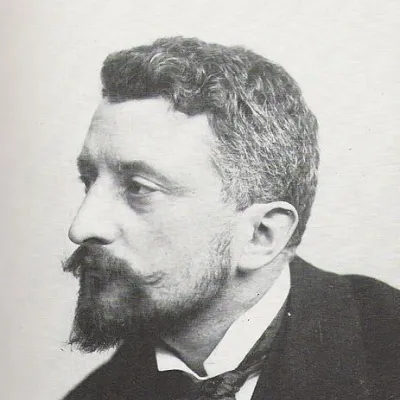
Willy Beckerath
Human Design Chart
Biography
Human Design Analysis: Willy Beckerath as Generator 2/4
Generator 2/4 — Design at a Glance
Willy Beckerath's design established a foundation of endurance that was sustained not through constant self-initiative but by responding to external impulses. As a Generator, he had a defined Sacral Center, which provided him with high physical and mental energy – comparable to a powerful workhorse that can only effectively use its strength when it remains in motion and does not swim against the current.
His primary life strategy involved waiting for signals from his environment and responding to them rather than taking the initiative himself. This approach was crucial for utilizing his energy: When he responded to an impulse that his inner self confirmed with a clear "yes" – often described as intuition – he could transform this resonance into sustainable action. If he lived true to this pattern, his design rewarded him with a deep sense of satisfaction and fulfillment.
Conversely, ignoring this strategy led to significant stress. When Beckerath invested energy in tasks that did not resonate internally or when he was prevented from continuing projects where he still felt driven to proceed, frustration and a feeling of energetic depletion resulted. The risk of burnout especially arose when he acted against his inner signal or had to suppress his heart's projects. His success thus depended less on the quantity of his actions than on whether these were in harmony with his natural impulses and originated from reaction rather than initiation.
Sacral Authority
Willy Beckerath did not base his decisions on intellectual analysis but rather on an inner, physical resonance. His design as a Generator featured sacral authority, which simplified the decision-making process: strategy and inner guidance merged here. This mechanism required an open emotional center to clearly feel reactions.
Confirmation for Beckerath was shown through a specific "gut feeling" or sudden surge of energy in response to external stimuli. He learned to pay attention to bodily signals like grunting, humming, or a confirming "mm-hm." When this reaction occurred, he felt vital and energized. This state gave him seemingly inexhaustible power and great enthusiasm for his tasks. He could fully immerse himself in his actions without the need for external purpose; joy in the act itself was enough.
Moreover, if the Spleen Center were activated or directly connected to the Sacral Center, this served as a supportive instance. This allowed for quick, spontaneous reactions and immediate access to instinctive perception of physical well-being. Beckerath relied reliably on this deep, bodily intuition that helped him live authentically and energetically.
The 2/4 Profile — Hermit / Opportunist
Willy Beckerath's design shows a clear tendency towards balance between withdrawal and networking. He was someone who constantly fluctuated between the need for solitude and the desire for community. This Profile 2/4 created an internal tension: on one hand, it pushed for correction and acceptance (Line 2), while on the other hand, it demanded self-discipline within a network (Line 4).
For Beckerath, it was crucial to clearly communicate his availability limits. He needed to signal when he sought company and when he wanted to be undisturbed. Only in this way could he protect the energy required for his idea development. During his "Me-Time", he immersed himself in internal processes, found peace, and clarified his thoughts. Once the need for solitude was satisfied, he returned from this inner cave to spend time with his favourite people.
This cycle of withdrawal for processing and targeted reintegration was central. During the Line 2 phase, he worked on correction and renewal, accepting the uncorrectability of certain situations. In the Line 4 phase, he exercised self-discipline and concentration while remaining socially active. He used shared doubts and reflections from his network during the subsequent hermit phase to evaluate them and develop brilliant ideas from them. This interaction between introverted corrective work and extroverted, disciplined networking characterised his way of acquiring and disseminating knowledge.
Split Definition — Defined & Open Centers
Willy Beckerath's Human Design profile indicated a tendency towards inner stability and reliable energy. His defined G Center provided him with a firm sense of self-identity and clarity about his direction in life, without needing to rely on others for guidance. This internal security marked him as someone who knew who he was and where he belonged.
This identity was reinforced by his defined Sacral Center, which endowed him with vital energy. As the guardian of an immense reservoir of power, Willy Beckerath had a constant engine that allowed him to find satisfaction in activities that resonated with him. His strategy involved not initiating actions but waiting and then responding from the gut instinct to use his energy effectively.
Additionally, his defined Spleen Center and defined Root Center ensured existential awareness and survival instincts. The Spleen Center gave him intuition in the present moment, while the Root Center provided the necessary drive to move forward in the world and thrive materially. This combination created a robust foundation of instinct, stress resistance, and physical presence.
In contrast, Willy Beckerath exhibited situational openness in his mental and emotional fields. His open Head Center meant that he did not have a consistent way of processing mental information; instead, he tended to be swayed by doubts or the inspiration of others rather than forcing his own questions. The open Ajna Center allowed him a flexible mind open to new concepts but lacking the consistency to follow through with theories.
His open Throat showed in his inability to consistently control communication; he relied on invitations to speak rather than actively seeking attention. His open Heart Center made him vulnerable to the pressure of wanting to prove his worth or make promises, often leading to frustration due to a lack of constant willpower. Finally, his open Solar Plexus absorbed emotional moods from the environment, so he had to learn to distinguish between his own feelings and those of others to avoid being overwhelmed by emotional waves.
Channels for powerful rhythm and critical judgment.
Willy Beckerath was someone who maintained a continuous tension between the impulse for radical innovation and the drive to correct existing structures. His design indicated a tendency to initiate new directions through material resources while simultaneously ensuring logical consistency in the collective.
This dynamic was particularly marked by two channels. The Beat channel 14-2 connected his Sacral Center with his G Center. Gate 14 focused on the availability of material resources to drive mutation, while Gate 2 acted as a driver directing movement through space and time. This combination enabled Willy Beckerath to bring innovative, supportive new directions simply by remaining open and responding to life. He was capable of maintaining his own creative efforts or supporting others materially without actively chasing after his fate. His authenticity had a mechanical reinforcing effect on others.
At the same time, the Judgment channel 58-18 shaped his approach. This channel connected his Root Center with his Spleen Center and drove an insatiable urge to question patterns, correct them, and perfect them. Gate 58 promoted love for life and consistency, while Gate 18 acted as a gatekeeper assessing whether something was healthy or balanced. For Willy Beckerath, this meant that his judgment only became fruitful when he was asked; if it broke through uninvited, he risked being perceived as fault-finding; however, on invitation, he could find solutions applicable to society and restore peace.
The remaining gates of his design, including Gate 17 with its focus on succession and logical teaching and Gate 52 with its self-imposed pause for concentration, supported this dual nature of activity by bringing structure into the mutative energy and channeling critical questioning through silent reflection.
Individual Circuitry — Circuit Signature
Willy Beckerath's Human Design profile established a tension between two separate energy fields. On one hand, there was pulsating, emotional creative power; on the other, there was cool, strategic logic. These two worlds did not engage in direct exchange but existed as parallel forces side by side.
The Knowledge Circuit connected his Identity Center with his Sacral Center. Through the channel 'The Beat' (Gates 2 and 14), a rhythmic acoustic energy emerged. It propelled individual transformation, fostered creativity, and promoted emotional wave movements. This was about expressing one's uniqueness in the present moment.
Simultaneously, the Understanding Circuit connected his Spleen Center with his Root Center. The channel 'Judgment' (Gates 18 and 58) provided focused visual strategy. This energy was rational, future-oriented, and free from emotion. It served to share logical insights and develop structures for a better future.
Since Willy Beckerath had a split definition, there was no energetic bridge between these two circuits. The intuitive, emotional creativity of the first field contrasted with the impartial judgmental capacity of the second. His design required him to consciously integrate these different ways of thinking and acting since they did not automatically transition into one another.
Right Angle Cross of Service 3
Willy Beckerath's design laid a profound and often unconscious motivation: an existential orientation serving others or a greater cause. This was not a superficial hobby but a central life goal that fundamentally shaped his actions.
This configuration is referred to as the 'Right Service Cross 3'. It describes an inner structure where fulfillment was not primarily sought in individual glory or isolated self-fulfillment, but rather in dedication to a collective, community, or higher idea. For Willy Beckerath, this meant that his sense of purpose was closely linked with the need for connection and support from others.
The mechanics of this cross show that personal identity is strengthened through taking responsibility for others. It was an energetic alignment that prioritized cooperation and solidarity. Willy Beckerath lived this tendency by understanding himself as part of a whole whose well-being he cared about deeply. The energy flowed where it was needed, not out of compulsion but from a deep inner necessity to be useful and contribute to the stability of his environment. This formed an attitude of humility and connection that significantly shaped his experience.
Saturn Return · Uranus Opposition · Chiron Return · 2nd Saturn Return — Life Cycles
Willy Beckerath's life story is marked by two clear phases of structural affirmation and radical change. In 1896, at age 28, he received a small gold medal at the International Art Exhibition in Berlin. This success coincided with his first Saturn return, a cycle that often condenses years of hard work into professional recognition. The award marked a moment of consolidation of his artistic position.
Eleven years later, in 1907 at age 39, he was appointed Professor for Monumental Painting at the School of Arts and Crafts in Hamburg. This appointment corresponded with the Uranus opposition, an astrological configuration that initiates deep upheavals and a new status acquisition. While the Saturn return validated early work, the Uranus phase opened the way to institutional anchoring and expanded responsibility. Both events illustrate how cyclical turning points not only set personal milestones but also change external structures: first through individual validation, then through a fundamental realignment of professional identity. Beckerath's design thus showed a development line where inner maturation and external recognition coincided in these specific time windows.
Generator · Sacral Authority — Synthesis
Willy Beckerath lived a life deeply influenced by his sacral energy and the need to react to external impulses (Generator type with Sacral Authority). This responsiveness, coupled with the ability to recognize and correct patterns in deep concentration (Channel 58-18), formed the thread of his work. He was a creator whose strength sprang from an immediate 'yes' of the body, always seeking opportunities to bring his energy into the world – as long as it aligned with his inner perception. His natural inclination towards individuality (Channel 3-60) and expressing new ideas was complemented by the need for community and exchange (Profile 2/4), which led him to share insights found during phases of concentration with others.
A central paradox lay in the tension between his desire for correctness and perfection (Gate 58) and the inherent transience and mutation that characterized his design (Channel 3-60). Beckerath was committed to recognizing and improving patterns, yet also oriented towards creating new things and questioning conventions. This dynamic led him to constantly reinvent himself and adjust his direction, which gave him creative freedom but also challenged him to find inner peace amidst constant change.
2 Defined Channels
Incarnation Cross - Right Angle Cross of Service 3
Solar Return
The Solar Return shows the moment when the sun returns to its exact birth position - your personal solar year.
Life Cycles
Discover the life cycles with a detailed triple view (birth chart, cycle chart, composite).
Human Design Profile
- Type
- Generator
- Strategy
- To respond - wait for something to respond to
- Authority
- Sacral Authority
- Profile
- 2/4 - Hermit / Opportunist
- Definition
- Split Definition
- Incarnation Cross
- Right Angle Cross of Service 3
- Date of Birth
- 28.09.1868 04:30
- Place of Birth
- Krefeld, Germany
Frequently Asked Questions
What is Willy Beckerath's Human Design type?
Which Profile did Willy Beckerath have?
What Authority did Willy Beckerath have?
What was Willy Beckerath's incarnation cross?
When was Willy Beckerath born?
Discover your own Human Design
Are you also a Generator? Find out in a personal reading how to use your sacral energy correctly and discover deep satisfaction.
More Personalities
Back to overviewAaliyah

Alexia

Angèle

Anne-Marie

Arcángel

Arno