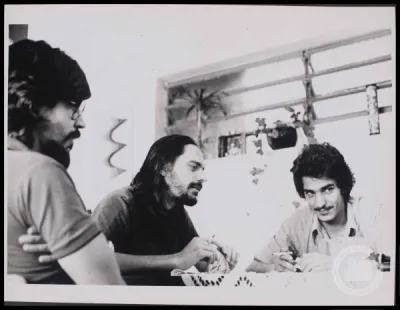
Photo: Wikimedia Commons
Yoko Ono
Human Design Chart
Biography
What does Manifesting Generator 6/2 mean for Yoko Ono?
Manifesting Generator 6/2 — Design at a Glance
Yoko Ono's design shows a tendency towards hybrid energy: She had the constant power of a Manifesting Generator, but also possessed the ability to skip steps and swiftly draw new realities into her life. This configuration as a Manifesting Generator means that she needed to respond to internal impulses to optimally use her energy, yet unlike pure Generators, she could not or should not proceed linearly.
Her speed allowed her to tackle multiple projects simultaneously and fall into a playful mode seeking variety. The challenge was that this rapid implementation sometimes led to skipping important steps. If she acted too quickly or ignored the inner approval of her sacral center, it could lead to frustration – the typical non-self theme for this type.
To experience deep satisfaction, it was crucial for her design to first respond to life and only then proceed when her inner authority clearly approved. As long as she maintained this strategy and regularly checked whether the started paths still brought joy, her creative power flowed freely. The pressure to complete one thing before starting another stood against her natural way of working; instead, she thrived through variety and the feeling of being in the flow of play.
Emotional Authority
Yoko Ono displayed a fundamental attitude where inner clarity did not lie in the first impulse but only after an emotional processing phase. Her design carries emotional authority, meaning that the defined Solar Plexus Center guides her decision-making – regardless of which other centers are also defined. This configuration is subject to natural wave movements of mood: Feelings oscillate between enthusiasm and rejection, with the initial impression often not reflecting the deeper truth.
Quick reactions to these fleeting emotions could be misleading. Instead, a process of distancing took effect: The more time Yoko Ono took to let a decision mature, the more comprehensive her insight became. The requirement was to allow patience to prevail and to reconsider important questions multiple times, often processed during sleep. Over time, intense feelings subsided, emotional distance gained strength, and calm serenity set in. Only then was the inner process complete and clear orientation possible. This mechanism was particularly relevant for long-term realignments that profoundly shaped her life course. The strategy did not lie in immediate action but in enduring until inner peace was achieved.
The 6/2 Profile — Role Model / Hermit
Yoko Ono's design shows a tendency to define herself through intense experimentation and the principle of trial and error in early years. Before Saturn returns, her Profile line 6/2 acted like a 3-line: It was about gathering many personal life experiences and retreating after setbacks to learn. This first phase of her development was marked by resignation and acceptance, coupled with the readiness to be a role model – not through rigid instruction but through lived discipline in right action.
Around age thirty, the full dynamics of line 6 were activated. Yoko Ono then showed an attitude of deep distance, similar to someone retreating into a cave to reflect clearly on all previous experiments. This phase served healing and intense self-knowledge, where negative feelings were sidelined and positive experiences with valuable people came to the fore.
Her inner nature as a 'Natural Talent' (line 2) worked selectively: It became visible only when called upon. Although her outward momentum could appear powerful, there was always the risk of isolation through impatience. Once the time was ripe, however, Yoko Ono emerged from her reflective phase as a wise person. Others recognized this wisdom and sought her contact to partake in her life lessons and learn her ability for deep introspection.
Triple Split Definition — Defined & Open Centers
Yoko Onos Human Design shows a tendency towards constant mental pressure combined with clear inner direction and available willpower. She was someone who asked questions and formed concepts (defined Head and Ajna Centers), but could not directly execute them as no energy source is connected to these centers. Instead, she had a reliable self-identity (defined G Center) and the ability to keep promises (defined Heart Center). Her communication flowed through her defined Throat Center, which served as an anchor for expression.
At the same time, her system was open in Spleen and Root Centers. The open Spleen Center made her vulnerable to conditioned fears of survival and well-being; she tended to hold onto uncertain situations or make spontaneous decisions to numb this uncertainty. The open Root Center absorbed external stress from the environment, leading to a cycle of adrenalized pressure and attempts to escape it through overactivity rather than letting go.
The challenge was not to transform mental pressure into hasty actions – which leads to frustration – but to wait patiently. Through her defined Heart and G Centers, she could maintain structure and identity while learning to distinguish the conditioned reactions of her open centers (fear, stress absorption) from her own inner authority. Thus, the mental input became inspiration for others rather than a source of personal exhaustion.
Channels for charisma, discovery, community and abstraction.
Yoko Onos Human Design shows a tendency towards intense, self-reinforcing activity guided by internal responses. The Channel of Charisma 34-20 connects her physiological life force with the ability to express immediately. This configuration generated a drive to move in the present moment; stillness was often hard to endure. Her energy acted as charismatic power but only remained stable when it waited for true inner resonance rather than being driven by mental 'shoulds'.
Parallel to this, her system showed deep persistence in the discovery process. The Channel of Discovery 29-46 connects the Yes-Saying of the Sacral Center with the determination of the G Center. This meant that she could get lost in experiences without expecting immediate meaning. Through patience and letting go of expectations, she found confirmation at the right time and place. Her strength lay in carrying processes to completion and deriving insights for the collective rather than exercising short-term control.
Emotionally, she sought connection and fair agreements. The Channel of Community 37-40 connects her emotional space with her will for partnership. Here it was not about spontaneous decisions but carefully considered contracts that secured mutual benefit. She built bridges between individuals based on the principle: 'I do this for you if you do that for me.' This promoted balance in groups where everyone found their place.
Mentally, she experienced a constant process of finding meaning. The Channel of Abstraction 64-47 connects impulsive thinking with the need for understanding. Her mind filtered experiences through mental images and sought stories behind the surface. Although this sometimes led to confusion, it often resulted in new perspectives or an 'aha' moment that she could share.
Collective Circuitry — Circuit Signature
Yoko Onos Human Design shows a tendency towards emotional reflection and sharing of experiences. Her Perception Circuit connects Head with Ajna Center as well as Identity with Sacral Center as two separate pieces. This generated cyclical emotional waves serving to reflect past events and share insights with the collective. Parallel, there was a power of mutual support through her Ego Circuit connecting Heart and Solar Plexus Centers. Here it was about cooperation and creating resources together in the sense of 'today I give, tomorrow you give'. As no connection existed to Sacral Center, rest periods for regeneration were necessary. A third aspect was securing personal survival through her Integration Circuit connecting Throat with Sacral Center. This allowed drawing strength from reacting to life and making it effective in the present moment. The triple definition meant that these three areas – emotional reflection, cooperative support, and individual self-reinforcement – worked as parallel existing forces without directly overlapping each other. Yoko Ono thus showed herself as someone who processed past emotions, supported communities, and simultaneously kept her own strength in the moment.
Left Angle Cross of Industry 1
Yoko Ono's Human Design profile indicates a tendency towards consistent and hard work that is not merely seen as duty but as an inner driving force. This orientation is evident through the presence of the left cross of diligence 1 in her chart. In Human Design mechanics, this configuration represents an inexhaustible energy that propels projects forward with great endurance and dedication. It's not superficial activity but a deeply rooted need to bring things to completion often against resistance or without external recognition.
This structure means that Yoko Ono possessed life energy expressed through persistent action and creation. Diligence here is not an external compulsion, but an inner compass driving her to translate her visions into reality with relentless force. Those who carry this cross configuration tend to take responsibility for their tasks and pursue them with almost ascetic discipline. It's about the quality of work itself and the process of making things happen rather than immediate results or public applause.
This energetic foundation shaped her approach to everything she undertook. She showed herself as someone who did not give up easily, but accepted difficulties as part of the path and overcame them through continuous effort. Diligence became a characteristic feature of her life expression: steady, focused, and carried by an inner stability that grew from trust in her own work process.
Saturn Return · Uranus Opposition · Chiron Return · 2nd Saturn Return — Life Cycles
Yoko Ono's Human Design profile indicates a tendency towards profound structural shifts often coinciding with personal milestones. In 1963 at the age of 30, her daughter Kyoko Chan Cox was born – for her design a typical moment of the first Saturn return, where years of groundwork condenses into a solid result and new fields of responsibility emerge.
Later another dynamic became apparent: the Uranus opposition around the 38th year marks often a point of radical renewal or breaking with tradition. This was evident when Yoko Ono released the double album 'Fly' in 1971. This event underscores the mechanical logic that during this phase of life cycle, innovative impulses and the desire for freer expression often challenge or replace existing structures. The combination of Saturn return's stabilizing power and Uranus opposition's disruptive energy shapes a pattern where personal anchoring and artistic rebellion condition each other. Yoko Ono thus moved between founding family as a base and publishing experimental works as an expression of individual freedom. This configuration describes not linear development but a field dynamics visible through concrete life events.
Manifesting Generator · Emotional Authority — Synthesis
A central red thread runs through this design: the dynamic connection of initiation and reaction. The structure as a Manifesting Generator (with sacral energy) implies constant readiness to respond to external stimuli – yet the defined connection between Head Center and Ajna Center (constant mental pressure) generates an inner questioning and inspiring process that does not passively wait. This combination of quick response (Channel of Charisma) and deep reflection (Profile: Role Model/Natural Talent with later wisdom) points towards a life path characterized by a dance between impulsive action and the need for meaning-finding. Emotional authority strengthens this process further, subjecting decisions to temporal maturation.
The design reveals a central paradox: the tension between speed and depth. On one hand, the structure enables lightning-fast implementation of impulses, skipping steps (Manifesting Generator). On the other hand, emotional authority demands patience and repeated consideration while the meaning-finding circuit requires confrontation with past experiences and their significance. This apparent discrepancy between quick action and deep reflection seems a defining tension field directing energy in various directions – from spontaneous creativity to seeking profound wisdom.
4 Defined Channels
Incarnation Cross - Left Angle Cross of Industry 1
Solar Return
The Solar Return shows the moment when the sun returns to its exact birth position - your personal solar year.
Life Cycles
Discover the life cycles with a detailed triple view (birth chart, cycle chart, composite).
Human Design Profile
- Strategy
- To respond - wait for something to respond to
- Authority
- Emotional Authority
- Profile
- 6/2 - Role Model / Hermit
- Definition
- Triple Split
- Incarnation Cross
- Left Angle Cross of Industry 1
- Date of Birth
- 18.02.1933 20:30
- Place of Birth
- Tokyo, Japan
Frequently Asked Questions
What is Yoko Ono's Human Design type?
What Profile does Yoko Ono have in Human Design?
What authority does Yoko Ono have?
What is Yoko Ono's incarnation cross?
When was Yoko Ono born?
Discover your own Human Design
Are you also a Manifesting Generator? Find out in a personal reading how to unfold your multi-talents and direct your energy wisely.
More Personalities
Back to overviewAaliyah

Aldair
Alexia

Alizée

Angèle

Angeli