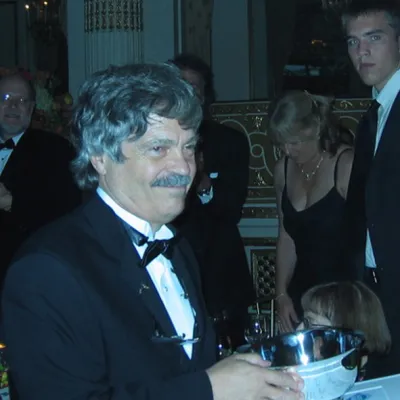
Alan Kay
Human Design Chart
Biography
Born in Springfield, Massachusetts, Kay’s family moved to Australia where he spent the first few years of his life, but with the advent of World War II, his parents returned to the United States. By the age of three, he was reading prolifically, and the gifted youngster continually pushed himself to learn more and expand his mind. He had read more than two hundred books by the time he entered school at age five, and he had formed strong opinions that he wasn’t afraid to express. Because his mother was a musician and artist, he was exposed to music throughout his childhood, and he sang in his grade school choir and played the guitar. After high school graduation, he enrolled at Bethany College in West Virginia, but in 1961, he was expelled when he protested their Jewish quota. He briefly worked as a professional jazz guitarist, gave guitar lessons in Denver, Colorado and tried his hand at composing. Eventually he joined the U.S. Air Force where his talents in the computer field were discovered. After leaving the military, he attended the University of Colorado where he earned degrees in mathematics and molecular biology in 1966. In 1969, he got his M.S. in electrical engineering from the University of Utah.
In 1970, he became a professor at Stanford Artificial Intelligence Laboratory where he began work on his Smalltalk programming language. His deep interest in education and children prompted him to begin work on a project deemed "KiddieKomp," which included a personal laptop computer specifically for children.
Alan Kay as a Generator 3/5 in Human Design
Generator 3/5 — Design at a Glance
Alan Kay's design inclines towards great endurance if he commits to things that truly resonate with him internally. As a Generator, he possesses abundant sacral energy – a powerful, continuous resource that makes him seem like a strong workhorse. This energy is not released by sheer will but reacts to external impulses. Therefore, the motto for his system is: Not initiate, but react.
When a signal from life came and his inner self responded with a clear "yes," he could respond through consistent action. This process of reacting from the gut was the key to his effectiveness. If Alan Kay lived in harmony with this mechanism, he was rewarded with deep satisfaction and a sense of true fulfillment. No one could then stop him as his actions were carried by a stable inner power.
Two stumbling blocks, however, defined the opposite poles of this design. Attempting to persistently do things that he had no interest in would squander his energy and lead to exhaustion. On the other hand, being prevented from continuing work on his heart projects while still full of power would result in frustration. The successful use of his energy thus strictly depended on listening to the right signals and not working against the natural flow of his sacral response.
Sacral Authority
Alan Kay's design inclined towards a direct, physically grounded decision-making process. As a Generator, he possessed sacral authority, meaning his strategy and inner guidance were identical: to wait for external stimuli and then respond from the gut. This configuration greatly simplified his process, as no cognitive weighing was necessary but rather an immediate reaction to life itself.
His authority manifested as a "gut feeling" or surge of energy – often audible as grunting, humming, or simply a "mm-hm". When his sacral motor kicked in, he felt vital and alive with inexhaustible energy for the task at hand. This allowed him to become fully immersed in his work, driven by joy and satisfaction rather than duty.
Additionally, his activated Spleen Center acted as supporting authority. In conjunction with the Sacral Center, this gave him the ability to react particularly quickly and spontaneously. He had direct access to his instinctive perception and physical well-being, allowing him to reliably guide himself from these deep impulses. This combination of sacral energy and spleen-supported intuition shaped how he made decisions in the here and now.
The 3/5 Profile — Martyr / Heretic
Alan Kay's Human Design profile was characterized by a fundamental skepticism towards preconceived truths. He had to try things out himself in order to understand them – a process that often involved mistakes and adjustments. This attitude stemmed from his third Profile line, which promotes learning through trial and error. Here, the focus was less on theoretical correctness than on practical applicability; style and form were often more important than pure content.
With increasing experience, this experimental approach evolved into a kind of wisdom that he offered to others. As an exemplar of the 3/5 Profile, Alan Kay acted like a hero or rescuer: He used his accumulated practical insights to find solutions for other people's problems. This role made him attractive to those around him who wanted to learn from his experiences. Yet this status came with risks. If he failed publicly during an experiment, it could be painful because the expectations of the "hero" were high.
His fifth Profile line also brought a certain calmness and irony into play. He recognized the transience of goals but still focused on progress, trusting in the process of moving forward even when setbacks seemed inevitable. This combination of pragmatic experimenting and the ability to communicate insights humorously and realistically shaped his way of interacting with the world. It was a path based on personal experience that he then shared as a gift to the community.
Single Definition — Defined & Open Centers
Alan Kay's design established a tendency towards a clear, reliable self-identity and a natural sense of direction in life. With his defined G Center, he had a stable core of self-love and the ability to show others new perspectives or paths without needing their consent. This inner alignment acted as a magnetic anchor that allowed him to remain steadfast in his mission even when external circumstances were unclear.
This orientation was fueled by his defined Sacral Center with a constant source of vital energy. As a Generator, his strategy was not to initiate but to react to life. Once a question or invitation arrived, his body responded with an immediate Yes-No tone that revealed whether the necessary power for the task was available. This sacral reaction ensured him deep satisfaction and persistence in his projects as long as he did not try to impose mental plans over this physical truth.
At the same time, Alan Kay showed a high sensitivity to external influences through his open centers. His open Head Center made him vulnerable to mental pressure and the risk of identifying with others' questions or confusion rather than remaining a neutral observer. Similarly, his open Solar Plexus absorbed the emotional climate of his environment, tending to personalize foreign moods as his own if he did not consciously distance himself.
Another defining pattern emerged from his open Heart Center. Here, there was no constant energy for willpower in terms of competition or proving one's worth. Instead, he tended to avoid promises and did not need to prove his value through performance. His open Throat Center completed this picture: He did not actively seek attention but waited for the right invitation to speak, thereby keeping his communication authentic and spontaneous rather than forced or controlled. This configuration promoted a stance of open curiosity and trust in the right moment instead of constant striving for control or confirmation.
Channels for powerful resources and deep endurance.
Alan Kay's design established a tendency towards mutative impulses that were translated into material reality through persistent experience. This configuration is most evident in Channel 14-2, which connects the Sacral Center with the G Center. Here, Gate 14, skillfully handling power, works together with Gate 2 of higher knowledge. This connection generates a powerful resource for creative life force that strengthens new directions and drives innovation. Alan Kay was capable of delivering innovative perspectives through trust in his sacral reaction without needing to predict the exact outcome.
Parallel to this, Discovery Channel 29-46 shaped his approach to processes. This channel links Gate 29 of saying Yes with Gate 46 of self-determination. It requires letting go of expectations and a full commitment into the depth of an experience to be in the right place at the right time. Only through correct Yes-saying could he remain persistent even when the purpose of a process was not clear during that time. At the end of such cycles, the significance of his discoveries became apparent, which could change collective understanding.
Additionally, individual gates influenced his identity and behavior. Gate 8 of contribution promoted his engagement for group goals and served as a creative role model. Gate 30 brought a desire for positive feelings while recognizing illusions of freedom. In personal matters, Gate 15 with its focus on collective behavior and natural rhythms, along with Gate 27 of care, enriched activities through warmth were evident. In the design, Gate 42 supported closing processes for new commitments, while Gate 3 drove mutations to overcome confusion.
Individual Circuitry — Circuit Signature
Alan Kay's design established a tendency towards rhythmic, pulsating creativity. He was someone who walked his own unique path and transformed raw knowledge into new insights – not through abstract logic but through emotional wave movements. This attitude results from his Simple Definition: The Identity Center and the Sacral Center were directly connected, creating a continuous, powerful flow between personal essence and life energy.
This connection was shaped by the Knowledge Circuit. For Alan Kay, specifically Channel 'The Beat' (Gates 2 and 14) was active here. This channel linked the Identity with the Sacral Center and endowed his expression with an acoustic, pulsating rhythm – the 'Beat'. It was about strengthening one's individuality through mutations, that is, deviations from the known expressed in a now-valid, creative form.
Parallel to this, the Meaning Circuit influenced him. Here too, only one channel was active: 'Discovery' (Gates 46 and 29), also between Identity and Sacral Center. This flow focused on the past. While the Knowledge Circuit pointed forward into transformation, this area reflected past experiences. The energy flowed cyclically – with a beginning, middle, and end – serving to gain felt insights from history. Both circuits connected Alan Kay exclusively to his Identity and Sacral Centers; they did not form a bridge to other centers like Head or Solar Plexus. The forces existed as two separate but closely linked streams within their own groups: one for the creative impulse of now, the other for the sense-making reflection of what has been.
Right Angle Cross of Contagion 2
Alan's design carried the signature of the right infection cross, a configuration that suggests a profound sensitivity to collective consciousness and its evolutionary transformation. This structure indicated that he did not primarily act as an isolated individual but rather as part of a larger whole whose vibrations he could receive and reflect. In Human Design, this cross describes a specific energetic alignment: it's about the ability to immerse oneself in the currents of time to 'infect' others with new ideas or values – in the sense of infecting them with a vision or concept that is not yet widespread.
This mechanism does not mean that Alan had to actively play the role of a missionary, but rather that his presence and expression served to scatter seeds into the collective field. The energy of this cross often works subtly; it acts through resonance rather than direct persuasion. For him, it was likely crucial to authentically engage with his own impulses because only then could the 'infection' occur naturally. When he lived his truth, it became accessible and inspiring for others. The right infection cross emphasizes the aspect of reception: one must first be touched by an idea or feeling before they can pass it on. Thus, Alan's process involved internal processing that then had an external effect – not as targeted marketing but as organic emanation of what was alive within him.
Saturn Return · Uranus Opposition · Chiron Return · 2nd Saturn Return — Life Cycles
Alan Kay's design showed a tendency towards structural anchoring, which manifested in clear career steps. In 1971, at the age of 31, he joined Xerox PARC in Palo Alto, California. This coincided exactly with his first Saturn return, a cycle often marking how years of internal groundwork condenses into a solid external position. His admission to this prestigious institution was no coincidence but rather the concrete expression of this mechanical phase: the foundation was laid for future developments.
Later, another cycle effect became apparent. In 1987, Alan Kay received the ACM Software System Award together with Adele Goldberg and Daniel H.H. Ingalls Jr., for achievements in object-oriented programming and Smalltalk. At age 47, he was in the realm of Chiron return, a fulfillment cycle considered a blooming period. During this phase, one's incarnation cross increasingly unfolds in life; purpose and meaning become experiential. The award here served as visible proof that his long-term work lived according to his strategy and authority and now fully unfolded its effect. Thus, the Chiron return not only confirmed success but also the deep resonance between inner design and outer reality.
Generator · Sacral Authority — Synthesis
A central red thread runs through the design: a profound, sacral energy (Generator type, Sacral Authority, Beat Channel) paired with an unstoppable urge to collect experiences and pass them on (3/5 Profile). This combination generates a natural cycle of action, learning, and teaching. The defined direction (G Center) enhances the ability to inspire others and show new paths – a process fueled by the energy of the Knowledge Circuit. The right cross also points towards an infectious quality that enables pulling others along and initiating changes.
The central paradox lies in the tension between the need for deep self-realization and the hero role expected from outside. Sacral energy demands action out of joy and inner resonance, while the 3/5 Profile harbors a tendency to lose oneself in experiments and then offer solutions as a hero (which belongs to the Generator's stumbling block). This creates an ongoing shift between pursuing personal interests and fulfilling others' expectations – a dynamic balance further shaped by the melancholy of the Knowledge Circuit.
2 Defined Channels
Incarnation Cross - Right Angle Cross of Contagion 2
Solar Return
The Solar Return shows the moment when the sun returns to its exact birth position - your personal solar year.
Life Cycles
Discover the life cycles with a detailed triple view (birth chart, cycle chart, composite).
Human Design Profile
- Type
- Generator
- Strategy
- To respond - wait for something to respond to
- Authority
- Sacral Authority
- Profile
- 3/5 - Martyr / Heretic
- Definition
- Single Definition
- Incarnation Cross
- Right Angle Cross of Contagion 2
- Date of Birth
- 17.05.1940 11:56
- Place of Birth
- Springfield, MA, United States
Frequently Asked Questions
What is Alan Kay's Human Design type?
What Profile does Alan Kay have in Human Design?
Which Authority guides Alan Kay's decisions?
Which incarnation cross shapes Alan Kay's design?
When was Alan Kay born?
Discover your own Human Design
Are you also a Generator? Find out in a personal reading how to use your sacral energy correctly and discover deep satisfaction.
More Personalities
Back to overviewAaliyah

Alexia
Angèle

Anne-Marie

Arcángel

Arno