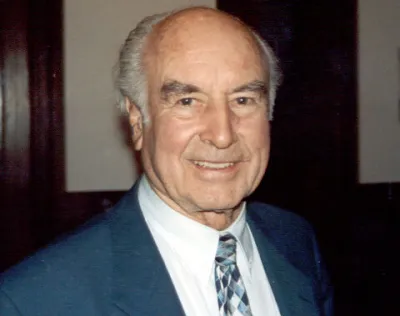
Albert Hofmann
Human Design Chart
Biography
The Human Design of Albert Hofmann: Generator 6/2
Generator 6/2 — Design at a Glance
Albert Hofmann's design inclined towards great endurance and inner strength. As a Generator, he had plenty of sacral energy that made him extremely strong and resilient – provided this energy flowed into tasks he truly enjoyed. His life force was not released by his own initiative but responded to impulses from the outside world. Therefore, the motto for his design was: don't initiate, but react.
This mechanism manifested concretely in Albert Hofmann finding his deepest satisfaction and fulfillment when he answered a signal from life and confirmed his sacral center with a clear 'yes'. Once he followed this inner resonance and reacted through action, nothing could stop him. Conversely, ignoring this principle led to two characteristic stumbling blocks. If he continuously did things that he actually had no interest in, he wasted his energy and tended towards exhaustion. Equally frustrating was being prevented from working on his heart project when he still wanted to do so with full power. If Albert Hofmann didn't live according to this design – for instance by constantly trying to initiate – he sooner or later encountered a feeling of persistent frustration and a lack of energy. His path to effectiveness was thus always that of reacting from the gut, not pushing against the current.
Emotional Authority
Albert Hofmann's design inclined towards emotional depth and wave-like experience. His inner authority was Emotional Authority carried by his defined Emotional Center. In Human Design mechanics, this means: regardless of all other defined centers, this center always had priority in decision-making. Albert Hofmann was subject to an emotional wave, a permanent up-and-down of his feelings. The world he saw was colored by his current mood; at one moment totally excited, the next negatively surprised about the same thing. However, his feeling in the moment was only a snapshot, a first impression that did not necessarily represent his truth yet. Quick, spontaneous decisions based on emotion could therefore have negative consequences. The more time he took to let a decision mature, the deeper and more comprehensive he could understand something. This required patience and multiple nights of reflection. He should take his time and ask himself several times. Over time, intense feelings subsided, he gained emotional distance, and clarity as well as calmness set in. Only then was he through with the process. This primarily applied to long-term decisions with significant influence on his life course.
The 6/2 Profile — Role Model / Hermit
Albert Hofmann's design inclined towards experimental learning in early years, followed by a phase of intense inner distancing. As a 6/2 profile, he acted like a 3-line before the age of 30: trial and error shaped his steps, with necessary retreats after mistakes as driving principles. After around 30 years, the 6-line activated; metaphorically speaking, he withdrew into a 'cave' to look back on earlier experiments from a distance. This period served for healing and deep self-knowledge. Eventually, he emerged as a wise person whose life wisdom attracted others who wanted to learn from his introspective ability.
The 54/6-line (Selectivity) promoted smart decisions through the gathering of hidden information and an ingrained sense of responsibility while limiting relationships that stood in the way of ambition. At the same time, Jupiter brought a generous nature with him, which often meant energy wastage. The 32/2-line projected outward without knowing the other side; control – especially in financial matters – was a key aspect. Without maturity, this projection caused frustration and strenuous control attempts. Albert Hofmann thus appeared as someone who gained wisdom through selective learning and later reflection while dealing with tensions between generosity and necessary control.
Split Definition — Defined & Open Centers
Albert Hofmann's Human Design configuration inclined him to stand under constant mental pressure, asking questions and seeking answers. This setup between the Head Center and Ajna Center created a permanent surge of inspiration but did not provide direct energy for implementation. Instead of acting himself, he inspired others to think; his mind was always active, which made meditation difficult but fostered deep conceptual understanding. As a Generator, he had a powerful sacral energy source that only became effective through reactive responses to external stimuli. Initiated actions led to frustration while reactive behavior brought satisfaction. His emotional authority in the Solar Plexus Center required patience: decisions were made after experiencing an emotional wave. The defined Spleen Center provided spontaneous intuition and well-being in the present moment, while the Root Center supplied necessary stress to move forward. Open centers shaped his vulnerabilities: the undefined Throat Center tended to seek attention or withdraw rather than speak spontaneously. The open G Center meant no fixed identity; he adapted to environments and sought the right place and people instead of following a predetermined path. In the open Heart Center, there was no energy for willpower and promises; he avoided proving himself or competing as this led to exhaustion. Instead, he trusted his inner authority to take on commitments that truly mattered and let his sacral response guide him rather than being driven by the mind.
Channels for critical mind, ambition, emotions and maturation.
Albert Hofmann's Human Design configuration inclined him towards analytical skepticism paired with a deep drive for cyclical experience and emotional authenticity. His mind was not a passive observer but an active filter for patterns. The Logic Channel 63-4 connected his Head Center to Ajna Center through the Gate of Doubt (63) and the Gate of Formulation (4). This created a doubting mind that constantly checked if patterns were consistent. Only when an answer was consistent, reliable, and practically verifiable did it qualify as logical. Unfounded belief found no place here; truth had to work to be accepted.
Simultaneously, he was driven by the Transformation Channel 54-32. It connected his Root Center with Spleen Center through the Gate of Ambition (54) and the Gate of Continuity (32). This channel represented ambition, fueled by constant effort and the desire to improve one's position in life. It was about talent and competence, rising on one's own strength and supporting the trunk through loyalty and engagement. The fear of failure or collective collapse served as a motor for this transformation.
Emotionally, Albert Hofmann moved within the wave of the Emotions Release Channel 39-55. He connected his Root Center with Solar Plexus Center through the Gate of Provocation (39) and the Gate of Spirit (55). This generated a pulsating on/off wave of moods between ecstatic joy and melancholic uncertainty. It was a deep, creative force that could not be rationalized but had to be lived authentically.
The conclusion was formed by the Ripe Channel 42-53, which connected his Root Center with Sacral Center through the Gate of Beginnings (53) and the Gate of Growth (42). His design required every experience to be brought to a satisfying conclusion. Only through complete passage and reflective contemplation could wisdom be gained that was passed on as collective history.
Collective Circuitry — Circuit Signature
Albert Hofmann's Human Design configuration inclined him towards separate, parallel operating energetic fields. Through Split Definition, two independent groups existed: one connected the Head Center with Ajna Center (Understanding Circuit), allowing focused logic and strategic future visions without emotional interference. The second group united Spleen, Root, Solar Plexus, and Sacral Centers. Here flowed energies of the Knowing Circuit (Solar Plexus-Root: releasing emotional waves), the Finding Meaning Circuit (Sacral-Root: cyclical ripening through past experiences), and the Ego Circuit (Spleen-Root: transformation through intuitive resource utilization). These four centers formed a continuous stream of intuition, feeling, and physical action power. However, since Head/Ajna was isolated from this emotional-intuitive mass, Albert Hofmann's mind appeared as a clear, rational observer who could only analyze but not directly steer the intense wave-like processes of his other defined centers. This created an inner distance between cool strategy and lively, often melancholic or pulsating experiential world.
Left Angle Cross of Cycles 2
Albert Hofmann's design carried the imprint of the left cross of cycles. This configuration set a specific life dynamic: a strong drive to recognize deeper connections through personal experience and intuition, followed by an urge to share these insights with the world to inspire or infect others. It was not just theory but a process of experiencing and passing on.
In Human Design, this cross describes a connection between logical reasoning and intuitive creativity. The person seeks truth behind things often through personal experiments or intensive engagement with topics. Once inner clarity is achieved, there arises a natural impulse to share the discovery. For Albert Hofmann, this happened not as a conscious strategy but as an automatic expression of his design. Energy flowed from recognition to communication. It was a cyclical movement: diving into the topic, understanding it, and then opening the door for others. This mechanism shaped how he dealt with knowledge – it did not remain private but became effective through exchange with the outside world.
Saturn Return · Uranus Opposition · Chiron Return · 2nd Saturn Return — Life Cycles
Albert Hofmann's design set a tendency towards profound structural turning points that condensed into concrete life events. This configuration does not describe random coincidences, but cyclical moments where inner maturity meets outer reality and establishes new phases of life.
In 1935, at age 29, he married Anita Guanella. This coincided exactly with his first Saturn return. In Human Design mechanics, this cycle marks the transition to full responsibility for one's own life; years of groundwork and inner development often crystallize here in stable, long-term bonds or structures. For Albert Hofmann, this marriage was not just a social act but the solidification of a life foundation that stabilized his further existence.
A second decisive impulse occurred in 1943 when he discovered at age 37 the hallucinogenic effects of LSD. This corresponded with his Uranus opposition in his chart. This planetary position stands for sudden insights, breaks from the known and breaking out of old patterns. The discovery was not a gradual process but an eruptive moment of clarity that fundamentally changed his professional career path. Both events show how Albert Hofmann's design responded to specific astronomical cycles: the Saturn return built the stable base through partnership, while the Uranus opposition triggered the creative breakthrough and public impact of his work. His life courses thus followed a clear inner logic of structuring and sudden breakouts.
Generator · Emotional Authority — Synthesis
Albert Hofmann was a Generator whose life was marked by deep internal dynamics. The sacral energy (Generator type) seemed to propel him tirelessly, yet this power unfolded always in interplay with his emotional authority. Decisions did not mature quickly but ran through a longer emotional wave that allowed him to recognize patterns and learn from experiences – a process marked by doubts (Channel 63-4) and the constant need for understanding. This cycle of tension and resolution shaped his approach to tasks and projects, often culminating in years of intense engagement.
4 Defined Channels
Incarnation Cross - Left Angle Cross of Cycles 2
Solar Return
The Solar Return shows the moment when the sun returns to its exact birth position - your personal solar year.
Life Cycles
Discover the life cycles with a detailed triple view (birth chart, cycle chart, composite).
Human Design Profile
- Type
- Generator
- Strategy
- To respond - wait for something to respond to
- Authority
- Emotional Authority
- Profile
- 6/2 - Role Model / Hermit
- Definition
- Split Definition
- Incarnation Cross
- Left Angle Cross of Cycles 2
- Date of Birth
- 11.01.1906 15:00
- Place of Birth
- Baden, Switzerland
Frequently Asked Questions
What was Albert Hofmann's Human Design type?
Which Profile did Albert Hofmann have?
What Authority did Albert Hofmann have?
What incarnation cross was assigned to Albert Hofmann?
When was Albert Hofmann born?
Discover your own Human Design
Are you also a Generator? Find out in a personal reading how to use your sacral energy correctly and discover deep satisfaction.
More Personalities
Back to overviewAaliyah

Alexia

Angèle

Anne-Marie

Arcángel

Arno