Photo: Wikimedia Commons
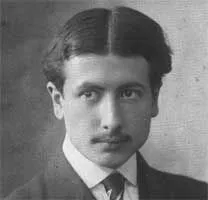
Albert Londres
Human Design Chart
Biography
One of the inventors of investigative journalism, Londres not only reported news but created it, and reported it from a personal perspective. He criticized abuses of colonialism such as forced labour.
Albert Londres gave his name to a journalism prize, the Prix Albert-Londres, for Francophone journalists.
He died on 16 May 1932.
Human Design Analysis: Albert Londres as Manifesting Generator 3/5
Manifesting Generator 3/5 — Design at a Glance
Albert Londres was a Manifesting Generator, making him a hybrid configuration of Generator and Manifestor. His design featured a defined Sacral Center, providing him with constant energy, and active connections from Motor Centers to the Throat Center. This structure gave him the ability to quickly pull things into his life and skip steps.
Albert Londres' strategy was to not initiate but to react to impulses. Only when his Sacral Center responded with a clear 'yes' should he act. This feedback loop was crucial to avoid frustration, which was his non-self theme. If he moved too quickly and skipped important steps, he often had to backtrack and redo them, which frustrated him.
Furthermore, Albert Londres tended to do multiple things at once, reacting to various impulses. As long as his inner authority agreed, he could work on parallel projects and find deep satisfaction. His creativity flourished in the 'play mode' when he had variety and fun. The advice to finish one thing before starting another did not suit his nature. By correctly applying his strategy—constantly checking if the Sacral Center was still enthusiastic—he could effectively use his creative power without falling into the trap of haste or multitasking frustration. His energy was only useful when he responded to life and did not take the first step himself.
Emotional Authority
Albert Londres lived with an inner authority that compelled him to let each significant decision mature over a longer period. His design carried emotional authority, meaning the Solar Plexus Center was defined and thus had precedence over all other defined centers. This configuration generated a constant emotional wave, a permanent up and down of feelings that colored the perception of the world through the current mood. What appeared inspiring in one moment could seem negative in the next. However, this feeling was only a snapshot, not the final truth. Quick, spontaneous decisions from this emotional heat would have negatively affected Albert Londres. Instead, his mechanism required patience and the conscious overnighting of decisions. Only when the intense feelings subsided over time did he gain emotional distance. Then, the necessary clarity and calmness set in. This process was particularly crucial for long-term decisions that significantly influenced his life course. By delaying and repeatedly thinking through his decisions, he ensured that his actions were based on deep, comprehensive understanding, not on a fleeting impulse.
The 3/5 Profile — Martyr / Heretic
Albert Londres' design was characterized by the Profile 3/5, the Explorer and Hero. He showed a basic attitude based on direct, practical experience: Initially, he believed little in given truths and had to experience things himself to understand them. This Line 3 of the Adventurer drove him to learn through his own actions and even failures. The knowledge thus acquired served him in the role of Line 5, the Hero, to solve others' problems or sharpen their vision. His attractiveness to his environment resulted from this rich treasure of lived experiences, which he made accessible to others.
This mechanism was shaped by specific Gate Dynamics. Gate 44 on Line 3 emphasized the need for adaptation and handling of commitments and ego projections. Here, it was shown that pure consciousness without the support of the tribe and concrete assertiveness often led to illusions. Albert Londres often acted out of self-interest, which ideally also served the welfare of the community. On Line 5, it was added that he sought practical solutions in crisis times, with timing being crucial. The dynamics required him to keep his intentions secret until complete reflection to avoid confusion. Prematurely revealing his thoughts would otherwise lead to misunderstandings. His path was thus marked by the tension field between the pressing need to experience things himself and the disciplined waiting period until the right solution was ripe to present it as a Hero to the public.
Single Definition — Defined & Open Centers
Albert Londres' Human Design profile indicated a tendency towards clear, strong-willed communication that stemmed from a deep inner identity and vital energy. His defined Throat Center served as a focal point, translating messages from various body parts into speech and action. Connected to his defined Heart Center, he often spoke from a strong 'I', clearly articulating his intentions and promises. The defined Heart Center gave him the willpower to determine his own life and take responsibility for his resources; he preferred to work independently and kept his commitments.
This action-oriented energy was fueled by his defined Sacral Center, which acted as a motor, providing a constant source of vitality and fertility. As a Generator, his strategy was not to initiate but to react, ensuring that his energy was available for the chosen task. His emotional depth and spiritual awareness came from his defined Solar Plexus Center, which acted as an inner authority. This meant that he did not make decisions in the 'now', but patiently waited for the emotional wave to clarify before taking action. His defined Spleen Center complemented this by providing spontaneous intuition and a sense of health and well-being in the present moment.
In contrast, his open Head Center made him vulnerable to mental pressure and confusion. He tended to engage with questions that were not his own and sought inspiration to relieve this pressure rather than trusting his inner authority. His open Ajna Center also made him susceptible to foreign concepts and opinions, leading him to sometimes adopt others' ideas as his own truth or feel uncertain when he lacked logical answers. His open Root Center absorbed external stress and adrenaline from the environment. Instead of interpreting this stress as his own and reacting hyperactively, it was important for him to recognize that this stress did not originate from him and to find ways not to be overwhelmed by it. This configuration described a person who used his clear voice and willpower while learning to let go of mental confusion and external pressure.
Channels for intuitive power, charisma and deep connection.
Albert Londres was characterized by a deeply rooted intuition that guided his actions in the here and now. His design included the Channel of Perfect Form 57-10, which linked intuitive insight with self-behavior. This allowed him to let go of unfounded future fears and move through the world existentially unburdened, securing his survival through spontaneous, appropriate reactions.
This individual clarity was reinforced by the Channel of Exploration 34-10. Here, the sacral power of self-empowerment was linked with self-acceptance. Albert Londres followed his own convictions, regardless of how unusual they seemed, and demonstrated through his authentic reaction the benefits of complete self-love. This encouraged others to connect with their own truth.
His expression was marked by a charismatic urgency, driven by the Channel of Charisma 34-20. The generative power from the Sacral Center propelled him to act and manifest in the moment. This energy allowed him to sustain activity over longer periods, provided he reacted to things that truly fulfilled him. Without this inner guidance, the driving energy would have become chaotic; through the connection with his intuition, it became a powerful source of inspiration.
At the same time, he had the ability to articulate intuitive truths directly, thanks to the Channel of Flash of Insight 57-20. Here, the intuitive insight from the Spleen Center received a clear voice in the present moment. Albert Londres could thus express the truth of his existence and encourage others to awaken their own inner survival intelligence. His spontaneous verbal outbursts often reached the core of a matter faster than the analytical thinking of others.
In interpersonal dynamics, the Channel of Union 59-6 was evident. This channel linked sexual energy with the emotional wave of pleasure and pain. Albert Londres sought fusion and intimacy. His emotional wave determined the timing for friendships and relationships, requiring patience to recognize if a deep connection had formed. Through these configurations, he influenced his environment sustainably through authentic presence and intuitive presence.
Individual Circuitry — Circuit Signature
Albert Londres' design indicated a tendency towards impulsive, creative outbursts that flowed directly from the Spleen to the Throat Center. The Knowledge Circuit connected these two centers through the Channel of Flash of Insight. This generated spontaneous, acoustic impulses that immediately brought new knowledge into the world without prolonged deliberation.
Parallel to this, a strong inner firmness was evident. The Centering Circuit connected his Identity Center with the Sacral Center. This connection created a deeply rooted, individual conviction and life force, which was often hard to put into words, as the Throat Center was not involved here. His identity was thus firm but not necessarily loudly expressed.
In the realm of resources and cooperation, the Ego Circuit was at play. It connected his Heart Center with the Throat Center. This allowed him to move material or social resources through direct communication and willful decisions based on the principle of give and take.
Another element was the Archer Circuit, which connected his Sacral Center with the Solar Plexus Center. This generated a primal, emotional energy aimed at protection and preservation. The life force was directly linked with strong, wave-like emotions.
Finally, the Integration Circuit united all these energies. It connected Throat, Sacral, Spleen, and Identity Centers into a closed loop. This integrated the intuitive Spleen energy, the life force of the Sacral, the emotional wave, and the creative identity into a coherent expression. Albert Londres lived as a unity of spontaneous creativity, firm inner conviction, and emotional protective instinct.
Right Angle Cross of the Four Ways 3
Albert Londres' Human Design profile featured the right cross of the four paths. This configuration characterized a life orientation marked by a profound, often painful dedication to a higher truth or mission. It was not a superficial interest but an existential commitment that drove him to look beyond the facades of societal norms.
The right cross of the four paths describes a specific energetic alignment that turns a person into a seeker willing to make great personal sacrifices to gain an essential insight. This energy is not directed towards success or recognition but towards the integrity of one's perception. It demands a clear, unadulterated view of the world, even if it is uncomfortable or isolating.
For Albert Londres, this meant that his inner compass always pointed towards the right, regardless of external circumstances or opinions. The mechanics of this design suggested that his strength lay in seeing things as they truly were and upholding this realization with almost unshakable constancy. It was a dynamic of inner loyalty to one's truth that fundamentally shaped his actions and perceptions, without regard for comfort or social acceptance.
Saturn Return · Uranus Opposition — Life Cycles
Albert Londres' design indicated a tendency towards deep, often painful truth-seeking that was activated by external crises and societal upheavals. His mechanics showed that he did not report superficially but delved into the core of events to expose structures.
In 1914, at the age of 30, he published his first major article on the fire in the cathedral of Reims. This marked his first Saturn return, a cycle in which years of internal maturation and groundwork condensed into a tangible, public result. For his design, this was a moment of crystallization: the previously gathered impulses found expression in a concrete, resonant achievement.
Ten years later, in 1924 at the age of 40, he began his first reporting on the Tour de France. Here, the Uranus opposition was at work. This aspect often brings sudden changes, rebellion against established norms, or a desire for greater freedom and visibility. In Albert Londres' case, this manifested as a career breakthrough, where he broke away from conventional reporting forms and established a new, more dynamic form of journalism. The mechanics here describe less a random innovation than the necessary breaking of old patterns to meet the growing internal pressure. Both events underscore how his design configuration translated external shocks and internal maturation phases into concrete, socially relevant contributions.
Manifesting Generator · Emotional Authority — Synthesis
Albert Londres was a Manifesting Generator, whose life was marked by a constant interplay between the urge for quick, impulsive action and the necessity of emotional maturation. The connection of sacral energy with manifesting traits (Design View) led to a capacity to seize opportunities and initiate things rapidly, yet the defined emotional center (Authority) required time to gain clarity and make decisions not out of affect. This interplay shaped his work style, in which he seemed to react spontaneously to events while simultaneously requiring a deep inner processing.
A central paradox lay in the combination of the experimental nature of the profile (Explorer/Hermit) and the emotional wave. He actively sought new experiences and challenges (Cross), learned through trial and error, but the emotional authority required him to fully grasp the consequences of his actions over time. This led to a tension between the desire for immediate impact and the necessity of letting decisions mature, which was reflected in documented successes that often only emerged after a phase of emotional clarification.
8 Defined Channels
Incarnation Cross - Right Angle Cross of the Four Ways 3
Solar Return
The Solar Return shows the moment when the sun returns to its exact birth position - your personal solar year.
Life Cycles
Discover the life cycles with a detailed triple view (birth chart, cycle chart, composite).
Human Design Profile
- Strategy
- To respond - wait for something to respond to
- Authority
- Emotional Authority
- Profile
- 3/5 - Martyr / Heretic
- Definition
- Single Definition
- Incarnation Cross
- Right Angle Cross of the Four Ways 3
- Date of Birth
- 01.11.1884 13:30
- Place of Birth
- Vichy, France
Frequently Asked Questions
What was Albert Londres' Human Design type?
What profile did Albert Londres have in Human Design?
What authority guided Albert Londres?
What incarnation cross did Albert Londres have?
When was Albert Londres born?
Discover your own Human Design
Are you also a Manifesting Generator? Find out in a personal reading how to unfold your multi-talents and direct your energy wisely.
More Personalities
Back to overviewAlain-Fournier
Aldair

Alizée

Angeli
Arletty
Artus