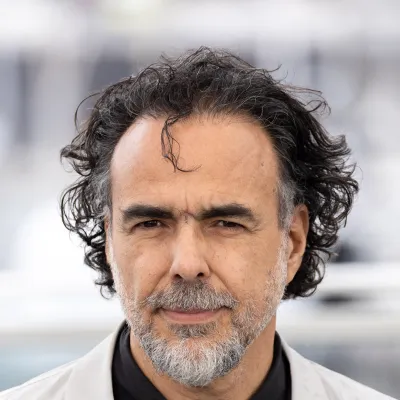
Alejandro G. Iñárritu
Human Design Chart
Biography
In 2006, Iñárritu became the first Mexican filmmaker to receive the Best Director Award at the Cannes Film Festival. He became the first Mexican filmmaker to be nominated as director or producer in the history of the Academy Awards, as well as the first to win for Best Original Screenplay and Best Picture. In 2019, Iñárritu served as the first Latin American president of the jury for the 72nd Cannes Film Festival.
In 2015, Iñárritu was awarded the Academy Award for Best Director for Birdman (2014) and a year later received the same award for The Revenant (2015), making him the third director to win the award back-to-back, following in the footsteps of John Ford and Joseph L. Mankiewicz. To date, he is the only director in history to have won the DGA Award for Outstanding Directing two years in a row.
Iñárritu was later awarded a Special Achievement Academy Award for his virtual reality installation Carne y Arena (2017), the first ever VR installation to be presented at the Cannes Film Festival.
Iñárritu has attention deficit hyperactivity disorder. He is married to Maria Eladia Hagerman, an editor and graphic designer. They have a daughter and a son.
What does Generator 4/6 mean for Alejandro G. Iñárritu?
Generator 4/6 — Design at a Glance
Alejandro G. Iñárritu revealed himself as someone with immense inner endurance who used his strength most effectively when responding to concrete impulses from his environment. His Generator design pointed towards deep fulfillment, provided the activity aligned with his internal 'yes'. This energy source, the sacral center, did not function through sheer will or initiated action but rather in response to external signals.
The mechanics of his design highlighted two specific risks: Either Alejandro G. Iñárritu would deplete himself on tasks that went against his inner nature, leading to exhaustion, or he was held back from his true heart project even though his inner self wanted to continue. The key lay in the strategy of responding. Instead of taking the first step and initiating action himself, his design waited for life to send a signal. Once this inner center responded with a clear impulse, Alejandro G. Iñárritu could react with consistent action.
Living by this pattern brought about deep satisfaction. Ignoring this internal resonance and forcing things against his gut feeling or initiating without an external trigger led to frustration and energy depletion. His strength did not lie in pushing forward at all costs but rather in the ability to recognize the right moments and respond fully.
Emotional Authority
Alejandro G. Iñárritus design pointed towards emotional wave movement: his inner truth was revealed not in the first impulse, but after the initial feeling wave subsided. As someone with defined Emotional Authority, he went through a natural process of up and down at each decision. The world appeared colored by his current mood - sometimes excited, sometimes negative - yet these moments were only temporary impressions, no final clarity.
This mechanism demands patience. Quick, spontaneous judgments from intense emotion risked distortions as the first impression did not represent the deeper truth. Instead, Alejandro G. Iñárritu had to let decisions rest ideally overnight. Only when the intense feelings subsided and emotional distance was gained would true calmness and clarity set in. This process of 'polishing' and multiple reviews was no obstacle but rather the necessary path for proper orientation, especially with long-term steps that greatly influence his life course. Emotional Authority always took precedence over other defined centers; it determined the timing of decisions regardless of logical or intellectual considerations. Only through this waiting period could he gain the deeper, comprehensive insight lying beneath the surface of current mood.
The 4/6 Profile — Opportunist / Role Model
Alejandro G. Iñárritus design pointed towards experimental behavior in youth followed by a later tension between the desire for community and the search for wise distance. As a 4/6er, he often acted like a 3/3 before his first Saturn return: curious, ready to try out things, especially in relationships. This phase served to test one's position within social structures.
With the activation of line 6, an internal conflict came to light: The heart (line 4) sought connection and belonging while the head (line 6) looked up at the mountain - down on the world to rethink its meaning. This contradiction between emotional bonding need and intellectual reflection shaped his development. The energy of Gate 4 in elevation promoted a theatrical quality in handling knowledge; it was about mastering timing and freeing oneself from false narratives without mistaking fantasies for facts.
Simultaneously, line six worked as a lifelong process of synthesis. Here individual insights merged into a more complex whole. Clear expression of this inner fusion was necessary to create both individuality and collective value. Without this communication, he risked atrophy since the renunciation of synthesis remains fruitless. In his later years, it was expected that he embody this process as a role model: by highlighting cooperation while carefully guarding the big heart so as not to open up to the wrong people and get hurt.
Split Definition — Defined & Open Centers
Alejandro G. Iñarritu's Human Design profile reveals a tendency towards consequent, energy-charged expression that is filtered through a deep emotional sieve. His defined Sacral Center provides him with a constant source of vital energy and a mechanical yes/no system: he has the natural power to react to what addresses him rather than initiate actions himself. This sacral foundation connects with his defined Throat Center, allowing thoughts from his also defined Ajna Center - his constantly active conceptual mind - to be directly translated into communication and action. He thinks incessantly and speaks what he thinks, giving him a clear yet stubborn mental presence.
At the same time, his open centers shape his vulnerabilities. His open Heart Center lacks consistent willpower; he tends to want to prove his worth through performance or make promises he cannot keep, leading into spirals of self-doubt. His open Spleen Center makes him susceptible to survival fears and the need to cling to people with defined spleens for a sense of security rather than trusting spontaneous intuition. Additionally, in his open Head Center, he lacks a consistent source of inspiration; he can easily be absorbed by others' mental pressure or try to find answers that are not his own.
This configuration creates a person with immense endurance and a clear voice (Sacral/Ajna/Throat), who must learn to give emotional impulses from his defined Solar Plexus Center space before acting, and free himself from the need to prove his worth through willpower or solving others' problems.
Channels for inspiration, clarity, mysticism, structure and maturation.
Alejandro G. Iōarritu's design shows him as someone who attracts attention through the authentic life of his individuality and encourages others to express their unique selves. This happens not just through words, but by living out his creative perspective. The Inspiration Channel 1-8 connects the G Center with the Throat Center; Gate 1 brings in a transformative, individual viewpoint while Gate 8 formulates this as a contribution to the group. This configuration requires courage to stand out and works through role modeling.
At the same time, Alejandro G. Iōarritu shows intense engagement with logical organization of details. His mind constantly sorts information into his worldview, generating a strong urge to express these ordered opinions. The Accepting Channel 17-62 connects Ajna Center with Throat Center: Gate 17 visualizes patterns while Gate 62 translates them into language and detail. What cannot be logically categorized is often dismissed as incomprehensible.
Another aspect is the ability to process and express innovative insights, even if this initially appears like an outsider's perspective. The Structuring Channel 23-43 connects Ajna Center with Throat Center; Gate 43 receives spontaneous breakthroughs that are assimilated and communicated through Gate 23. This promotes efficient new perspectives but requires patience until proper recognition.
Emotionally, Alejandro G. Iōarritu is oriented towards belonging and protecting the 'tribe'. He seeks principles that hold communities together and reacts sensitively to balance between feasibility and fairness in relationships. The Synthesis Channel 19-49 connects Root Center with Solar Plexus Center; Gate 19 urges connection and cohesion, while Gate 49 sets ideals and rejects incompatible elements. This forms the emotional basis for loyalty and traditions.
Furthermore, he experiences cycles to gain wisdom from them. Each new phase builds on the previous one, with a complete cycle's conclusion crucial before starting anew. The Maturation Channel 42-53 connects Sacral Center with Root Center; Gate 53 initiates an experience's beginning while Gate 42 enables growth and reflection. This process serves collective learning history.
Additionally, his design includes the Formulating Gate (Gate 4), which develops logical formulas for future security, as well as the Genetic Strategy Gate (Gate 59), focusing on pairing and binding without personal preference.
Individual Circuitry — Circuit Signature
Alejandro G. Iōarritu's Human Design profile sets a tendency towards structured, inspired communication that initiates emotional transformations. The Knowledge Circuit connects his Ajna, Throat, and Identity Centers directly: flashes of inspiration (Channel 1-8) culminate in structured expression (Channel 23-43), making his unique identity pulsing and acoustically effective. Parallel to this, the Understanding Circuit links Ajna with Throat Center; here, sharing logical, future-oriented insights is focused on, free from emotional coloring. These two circuits create a dualistic dynamic: once emotional transformative creativity, once cool rational strategy - both channeled through the same expression center (Throat) but sourced differently.
Separately as an independent power line, the connection of Sacral, Solar Plexus, and Root Centers works. The Meaning Circuit here connects Sacral with Root Center (Channel 42-53), guiding cyclical emotions and reflecting past experiences into a shared learning stance. Simultaneously, the Ego Circuit links Solar Plexus with Root Center (Channel 19-49), fostering synchronous resource-oriented cooperation - yet without direct life force from the Sacral, necessitating pauses for regeneration. These separate groups form no continuous energy path but parallel existing systems: one for identity-defining expression and rational sharing, the other for emotional processing and collective creation. Alejandro G. Iōarritu thus shows himself as someone who oscillates between impulsive inspiration and strategic clarity while transforming emotionally charged past experiences into collective resources - always with a need for pauses to recover his energetic foundation.
Right Angle Cross of Explanation 3
Alejandro G. Iñarritus Human Design reveals a tendency towards profound and often painful realizations: the truth is not always comfortable, and its revelation requires courage. This attitude stems from the right cross of definition 3, a configuration that combines the quest for clarity with the willingness to acknowledge uncomfortable realities. It represents an inner discipline aimed at breaking through illusions and insisting instead on raw, unfiltered perception.
This mechanism describes a process of “explaining” in its true sense: not merely conveying information but uncovering connections that were previously hidden or obscured. The focus is on the integrity of one's statement towards oneself and others. It involves naming things as they are, even if this provokes resistance or disrupts established comfort zones. Alejandro G. Iñarritu was marked by a need for authenticity through this configuration, going beyond superficial harmony. The energy of this cross supports the ability to reduce complex situations to their essence and draw a clear, though sometimes harsh, line. It is an impulse towards mental and emotional honesty that urges one not to settle for half-truths but to grasp the core of an issue and present it unvarnished.
Saturn Return · Uranus Opposition · Chiron Return · 2nd Saturn Return — Life Cycles
Alejandro G. Iñarritus Human Design promoted a development where internal maturation processes condensed into external recognitions. This dynamic was evident in 2014: at age 51, during his Chiron Return, he won three Oscars for “Birdman” and other awards. In the Human Design mechanics, this cycle does not mark a healing of old wounds but rather a blooming phase where the Inkarnation Cross - if lived according to strategy and authority before - becomes experiential in its life purpose. It is the time when one's personal goal unfolds.
Earlier, in 2006 at age 43, an Uranus Opposition had taken effect as he received the Career Achievement Award of the Zurich Film Festival. Such constellations often bring unexpected turns or sudden confirmations of one's direction, reshaping previous work.
Later, in 2019 at age 56, his second Saturn Return was marked by his appointment as Jury President of the International Cannes Film Festival. The second Saturn cycle demands structure and authority; it solidifies the achievements of the first return into a position of responsibility and judgment. Alejandro G. Iñarritus path illustrates how these planetary influences - from sudden confirmation to meaningful blooming, to authoritative anchoring - gradually shaped his career without him having to work against his inner rhythm.
Generator · Emotional Authority — Synthesis
A central red thread runs through the design: the dynamic tension between internal preservation and external expression. The sacral energy (Generator Type) seeks fulfilling work, yet emotional authority demands time for decision-making – a process often in conflict with the impulsive drive of the defined mental center. This combination leads to a profound ability to develop and implement concepts (Knowledge Circuit), but also to an inner conflict between the desire for authenticity and the need to take on a role in the world (4/6 Profile). The channel of inspiration (1-8) enhances this pull towards creative self-realization, while the right cross of definition 3 emphasizes the necessity of processing and communicating personal experiences.
The central paradox lies in the interplay between deep emotional processing and the need for public expression. Emotional wave (emotional authority) requires an inner maturation of feelings, while channel 1-8 fosters a desire to share these creative impulses with others. This leads to a tension between withdrawing into internal clarity and presenting new perspectives to the world – a back-and-forth that is shown in repeated successes (documented events) but also requires an ongoing confrontation with one's identity.
5 Defined Channels
Incarnation Cross - Right Angle Cross of Explanation 3
Solar Return
The Solar Return shows the moment when the sun returns to its exact birth position - your personal solar year.
Life Cycles
Discover the life cycles with a detailed triple view (birth chart, cycle chart, composite).
Human Design Profile
- Type
- Generator
- Strategy
- To respond - wait for something to respond to
- Authority
- Emotional Authority
- Profile
- 4/6 - Opportunist / Role Model
- Definition
- Split Definition
- Incarnation Cross
- Right Angle Cross of Explanation 3
- Date of Birth
- 15.08.1963 06:00
- Place of Birth
- Mexico City, Mexico
Frequently Asked Questions
What is Alejandro G. Iñárritu's Human Design type?
What Profiles does Alejandro G. Iñárritu have in Human Design?
What Authority does Alejandro G. Iñárritu have?
What incarnation cross is Alejandro G. Iñárritu associated with?
When was Alejandro G. Iñárritu born?
Discover your own Human Design
Are you also a Generator? Find out in a personal reading how to use your sacral energy correctly and discover deep satisfaction.
More Personalities
Back to overviewAaliyah

Alexia

Angèle

Anne-Marie

Arcángel

Arno