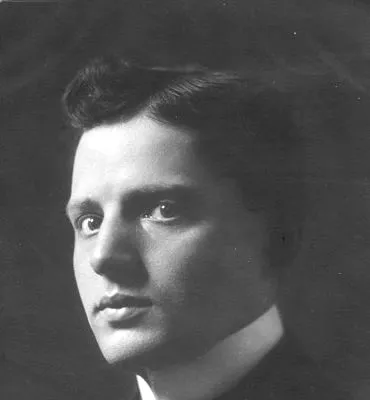
Photo: Wikimedia Commons
Alfred Sittard
Human Design Chart
Biography
As an organ virtuoso he toured Romania, Spain, Holland, Belgium, Hungary, Italy, Czechoslovakia, Russia and Sweden.
On 1 April 1942 he wanted to retire, but died unexpectedly on his last working day in Berlin at age 63.
Human Design Analysis: Alfred Sittard as Projector 5/1
Projector 5/1 — Design at a Glance
Alfred Sittard appeared as someone who observed his surroundings with a dense, focused aura. His Human Design Type was that of a Projector. This configuration grants the ability to immediately recognize errors in systems or within other people – much like a bright flashlight shining into darkness. Sittard did not have a constant intrinsic energy source due to an undefined Sacral Center. Instead, he experienced phases of high activity followed by necessary rest periods to avoid burnout. His best strategy was to wait for valuable and honest invitations from others rather than pushing forward on his own initiative. Through this patience, he became attractive; people came to him voluntarily seeking advice. When he expressed his observations directly and unexpectedly, it could cause resistance or discomfort in his environment because the 'light' was too bright. A more elegant approach for him was to lead by example through harmonious behavior, making others naturally inquire about his insights. If Sittard lived according to this design, he would be rewarded with success. Ignoring these dynamics and acting without invitation led sooner or later to his non-self theme: Bitterness. His path involved illuminating the way for others by waiting until asked to share his light.
Emotional Authority
Alfred Sittards' design indicated a tendency towards emotional depth and wave motion. He showed himself as someone whose perception was strongly filtered through his current emotional state. His inner authority was Emotional Authority, carried by the defined Emotional Center. In Human Design mechanics, this center is always considered the primary decision-making instance once it is defined – regardless of other structures in the chart.
This configuration meant for Alfred Sittard that he was under constant emotional waves. His feelings permanently swung between enthusiasm and rejection; the same situation could appear positive or negative depending on his mood. However, his immediate feeling was only a snapshot, not yet his deeper truth. Quick, spontaneous decisions based on this first emotion carried the risk of being wrong.
The mechanics of his authority required patience and time. Alfred Sittard had to allow decisions to mature, often over several days. Only when intense feelings subsided and emotional distance was gained did clarity set in. This process of 'sleeping on it' was not an obstacle but a necessary path towards calmness and correct orientation, especially for long-term life decisions. His design challenged him to let himself be led and not follow the first impulse but wait until his emotional wave had subsided before acting.
The 5/1 Profile — Heretic / Investigator
Alfred Sittards' design indicated a tendency towards an authoritative, inquiring stance paired with the magnetic ability to provide solutions for others. As a 5/1 (Hero/Investigator), he showed himself as someone who accumulated deep knowledge to offer later for problem-solving. This configuration created almost an attractive effect: Others sought his advice and answers, which could quickly lead to overload if clear boundaries were not set.
The mechanics of Profile 5/1 describe exactly this dynamic: Line 1 stands for careful investigation and understanding – a process that requires stability and development. At the same time, Line 5 brings with it the quality of carrying this knowledge outward and being perceived as an expert. Without appropriate hierarchy or structure, however, this flow could become blocked; success on a material level was only possible if clear order structures prevailed.
Especially relevant here was the integration of forces through pattern recognition (Gate 44, Line 5), which should ensure that the 'trunk' framework was protected from failure. This often meant unusual forms of influence or manipulation in the sense of necessary order. For Alfred Sittard, this resulted in the life task to find a balance between withdrawing for research (Line 1) and engaging for others (Line 5). Only by learning to say no could he optimally utilize his gifts without being burned out by endless questions and expectations from his environment. His authority thus did not rest on caprice but on thorough study and the ability to channel collective intelligence into orderly paths.
Split Definition — Defined & Open Centers
Alfred Sittard's design inclined towards a clear, self-determined expression, supported by a stable inner identity and available willpower. His defined G Center gave him a reliable sense of his own direction and the need to be loved without becoming dependent. This influenced his communication: His defined Throat Center served as a pivot point, transmuting messages from the Heart and G Centers into the world. He often spoke from an 'I' that knew what it wanted and had.
This structure was complemented by his defined Heart Center, which gave him access to willpower and ego strength. Alfred Sittard tended to take promises seriously and control his own resources. He enjoyed working independently to follow his inner mechanisms for work and rest. His voice thus wasn't just an expression of thoughts but of concrete intention and power.
At the same time, his design showed a complex emotional depth through the defined Solar Plexus Center. This was his inner authority: He had to wait out the waves of his feelings to gain clarity. Impulsive decisions on emotional highs or lows were risky for him; truth revealed itself only over time. His emotional wave strongly colored the environment, which others often intensely received.
In contrast, his open centers made him vulnerable to conditioning. His open Head Center tended to absorb mental pressure from the surroundings and get entangled in questions that weren't his own. He could easily be overwhelmed by doubts when trying to find answers for others. The open Ajna Center amplified this: He was open to many ideas but not designed to hold them as his own truth.
His open Sacral Center meant no constant energy flow. Alfred Sittard absorbed the generative energy of others and intensified it, which could lead to overload if he neglected boundaries. He wasn't designed to trust sacral answers but had to learn when enough was enough. The open Spleen Center carried a fundamental fear of survival; he tended to hold onto things that gave him a false sense of security rather than follow spontaneous decisions. Finally, his open Root Center absorbed stress from the environment, putting pressure on him to constantly achieve something, though this wasn't his own energy.
Channels for inspiration, reflection and communal connection.
Alfred Sittard was someone who through his mere presence and authentic life encouraged others to discover their unique qualities. This effect stems from Channel of Inspiration 1-8, which connects the G Center with the Throat Center. Here Gate 1 of Self-expression works together with Gate 8 of Contributing: Alfred Sittard was designed to serve as a living role model. His leadership didn't show in instructive words but rather in bravely living his individual direction and thereby drawing public attention.
Parallel to this, Alfred Sittard gathered life experiences with the patience of a listener before passing them on. Channel of the Lost Son 13-33 here connected Gate 13 of Listener in G Center with Gate 33 of Withdrawal in Throat Center. This mechanism challenged him to withdraw to reflect on collected memories and secrets. Only after understanding the deeper truths of an experience did he share it – often as a lesson from the past that helped others recognize the meaning of their own story.
In interpersonal relationships, Alfred Sittard sought clear agreements and a place within a community. Channel of Community 37-40 linked Solar Plexus Center with Heart Center through Gate 37 of Friendship and Gate 40 of Solitude. This created an emotional dynamic where he waited for the right invitation to become part of a group. His design promoted building connections based on mutual benefit and loyalty, understanding that true support arises from joint work, not material transactions.
Additionally, further gates shaped his attitude: Gate 44 brought awareness in resource management while Gate 7 projected a need for leadership and hierarchy. Gate 24 fostered inner silence through mental renewal, Gate 36 used crises as movement towards new experiences, and Gate 25 carried a mystical stance of innocence and self-love into his design.
Individual Circuitry — Circuit Signature
Alfred Sittard's design inclined towards emotional reflection and communal exchange. His energy was organized in separate blocks, creating parallel but not directly connected fields of experience. In the Knowledge Circuit, Channel Inspiration linked Throat with Identity Center. This promoted creative impulses to articulate individuality. Parallel to this, in the Meaning Circuit, Channel The Lost Son also between Throat and Identity. Here, processing past experiences stood front and center to understand their meaning and share it with others. Both circuits used the same centers but generated different forms of expression: on one hand innovative creativity, on the other emotional reflection. A third block formed in the Ego Circuit through Channel Community between Heart and Solar Plexus Centers. This connection concerned cooperation and balance of giving and taking within a group. As Alfred Sittard had a shared definition, these three areas existed as separate energy fields alongside each other. There was no continuous flow from Head to Base; instead, energetic streams worked in isolated segments. The connection between Heart and Solar Plexus supported social interaction and the building of communal resources while connections in the upper chart area shaped personal voice and emotional depth. This structure required a clear demarcation of different life areas as they didn't automatically overlap.
Left Angle Cross of Incarnation 2
Alfred Sittard's Human-Design profile indicated a tendency towards deep and often painful confrontation with his own essence. He was driven by internal conflicts and the feeling of inadequacy, ultimately striving for a holistic integration of spirit and matter. This configuration, known as the left cross of incarnation 2, describes a path where initial dissatisfaction with oneself and the world is not seen as a deficit but rather as a necessary motor for spiritual growth. Alfred Sittard lived in tension between the desire for perfect harmony and the harsh reality of human imperfection. His Human-Design suggests that he learned to accept this duality instead of fighting it. The mechanics of this cross show that true healing and insight are not achieved by avoiding suffering but through its conscious penetration. Alfred Sittard's path was marked by the task of accepting his own fracture and turning it into a source for deeper understanding. He did not seek superficial satisfaction, but rather an authentic connection to his truth, which could only be possible through confrontation with the shadow aspects of himself. This process shaped his entire existence as a constant movement towards greater wholeness and inner peace despite external imperfections.
Saturn Return · Uranus Opposition · Chiron Return · 2nd Saturn Return — Life Cycles
Alfred Sittard's Human-Design profile marked a clear, step-by-step increase in his public role. In 1903, at the age of 25, he was appointed organist in Dresden – a classic first Saturn return, where years of groundwork often condense into a stable result and the first solid life structure emerges. This phase laid the foundation for further development.
Later, in 1925 at the age of 47, he became professor of organ playing at the Academy for Church and School Music in Berlin. This fell during the Chiron return cycle (around 49-51 years), a fulfillment period where one's incarnation cross unfolds and purpose becomes experiential. Here his life mission bloomed: not as healing old wounds but as concrete realization of his inner plan through teaching.
The second Saturn return around 1933 marked another consolidation. At 55, he was appointed director of the State and Cathedral Choir Berlin. This cycle serves to review and solidify previously worked structures, thereby cementing his position definitively. Sittard's path thus followed the rhythmic build-up of his chart mechanics: from initial professional anchoring through inner fulfillment to final structural confirmation in a leading role.
Projector · Emotional Authority — Synthesis
Alfred Sittard lived a process of continuous deepening and alignment with his inner truth. His projector design, paired with emotional authority (centers), indicated a natural ability to recognize the potential of others – casting
3 Defined Channels
Incarnation Cross - Left Angle Cross of Incarnation 2
Solar Return
The Solar Return shows the moment when the sun returns to its exact birth position - your personal solar year.
Life Cycles
Discover the life cycles with a detailed triple view (birth chart, cycle chart, composite).
Human Design Profile
- Type
- Projector
- Strategy
- Wait for the respectful invitation
- Authority
- Emotional Authority
- Profile
- 5/1 - Heretic / Investigator
- Definition
- Split Definition
- Incarnation Cross
- Left Angle Cross of Incarnation 2
- Date of Birth
- 04.11.1878 05:45
- Place of Birth
- Stuttgart, GER
Frequently Asked Questions
What Human Design type was Alfred Sittard?
Which Profile did Alfred Sittard have?
What Authority did Alfred Sittard possess?
What incarnation cross did Alfred Sittard have?
When was Alfred Sittard born?
Discover your own Human Design
Are you also a Projector? Find out in a personal reading how to unfold your leadership qualities and recognize the right invitations.
More Personalities
Back to overviewSissy Spacek
Aaliyah

Alain-Fournier
Alexia

Alizée

Anémone