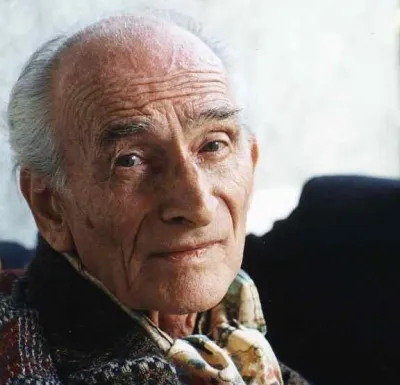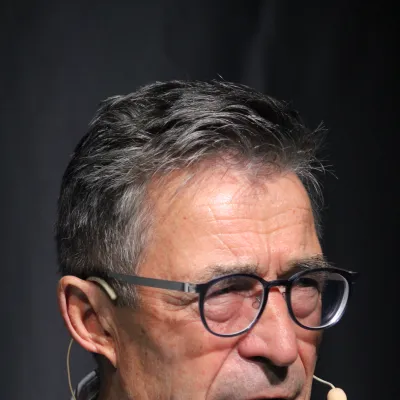
Anders Fogh Rasmussen
Human Design Chart
Biography
Anders Fogh Rasmussen — Manifesting Generator with Profile 5/1
Manifesting Generator 5/1 — Design at a Glance
Anders Fogh Rasmussen's design showed a tendency towards hybrid dynamics: He had the constant energy source of a Generator but also possessed through specific connections in his chart the ability to quickly skip action steps. This configuration acted as a symbiosis of consistent power and sudden acceleration.
As an Manifesting Generator, he primarily reacted to internal impulses – the “yes” from the sacral center – rather than starting without this feedback. This distinguished him from pure Manifestors who need to inform before acting. Rasmussen's strength lay in his speed at pulling things into life once a pulse arrived.
However, this quickness carried two risks: Firstly, there was the danger of overlooking important intermediate steps, which could lead to corrections and thus frustration later on – a classic symptom of “not-self”. Secondly, he tended to pursue multiple projects simultaneously as he responded to various impulses at once. Without constant verification by his inner authority, this multitasking joy threatened to turn into exhaustion.
With correct application – reacting instead of initiating and regularly confirming his own authority – this structure led to deep satisfaction. Rasmussen's design promoted a “play mode” where variety and parallel work did not act as distractions but rather as sources of his creative power. The challenge always lay in channeling his speed through conscious pauses for pulse verification to prevent frustration.
Sacral Authority
Anders Fogh Rasmussen's design showed a tendency towards direct, body language-based decision-making. As a Generator, his strategy was identical with his inner authority: the sacral authority. This configuration fundamentally simplified the process of deciding as no weighing between different strategies was necessary. The sacral authority acts as an internal voice or a perceivable surge of energy that arises in response to external stimuli. It manifests in bodily sounds like grunts or hums and verbal affirmations such as “Mhm”. When this impulse occurred, he felt vital and alive, equipped with inexhaustible energy. This allowed him to carry out tasks with great enthusiasm and without compulsive purposefulness. His design promoted the ability to fully immerse himself in his duties while experiencing joy and satisfaction. A crucial mechanism for this was the open Emotional Center, a necessary prerequisite for this authority. Additionally, an activated Spleen Center acted as a supportive instance. This connection allowed quick, spontaneous reactions and immediate access to instinctive perception of physical well-being. Anders Fogh Rasmussen could thus reliably guide himself from this deep, bodily intuition, which gave him agile and authentic action capability.
The 5/1 Profile — Heretic / Investigator
Anders Fogh Rasmussen's design showed a tendency towards a dual role: He was someone who accumulated deep knowledge to provide problem-solving for others. This Profile 5/1 grants almost magnetic radiance; people instinctively sought answers from him, but this carried the risk of his own resources quickly being depleted if clear boundaries were not set. Line 1 drove him to intense research and learning new challenges, while Line 5 put these insights into service for the community.
This dynamic was shaped by specific energetic influences. Gate 41 on the fifth line brought a strong projection through others, connected with themes of empowerment and fantasy. Others projected high expectations onto him, which could lead to restrictions he might feel as irritation since they limited his freedom. Simultaneously, Gate 44 in the ego area required clear agreements and hierarchies for economic success and harmony. Through this gate, a sharp recognition of patterns developed towards superiority in the collective. Pluto here increased power over the whole and enabled enforceable limitations. Anders Fogh Rasmussen had to learn to balance withdrawing into research for himself and actively solving problems for others by learning to also say no, so he could optimally use his gifts without exhaustion.
Single Definition — Defined & Open Centers
Anders Fogh Rasmussen's Design inclines towards clear, identity-driven communication, backed by constant vitality. His defined G Center gave him a firm sense of self-identity and direction; he knew who he was and where he was going without imposing this on others. This inner security flowed into his defined Throat Center, serving as a focal point to carry these messages reliably and honestly outward. His voice did not come from impulsive loudness but from this central identity. At the same time, he had a defined Sacral Center, the motor of his energy. This meant an enormous power source for work and activities, which was only sustainable if he responded to questions rather than initiating them. His truth lay in confirmation through the "yes" or "no" of gut feeling; only then could he use his energy without frustration and persist with tasks until mastery.
In contrast, his open Head Center showed a vulnerability to mental pressure and confusion that did not originate from him. He tended to engage with questions that actually concerned others, which could distract him from the clear decision-making process. His open Ajna Center amplified this through flexible but unstable conceptual thinking; he was open to other people's ideas but had to learn not to interpret them as his own absolute truth. The open Heart Center meant that he did not have a consistent willpower to keep promises or assert himself against expectations. He was vulnerable to wanting to prove his worth, which could end in a cycle of promises and disappointment if he did not trust his inner authority. Furthermore, his open Solar Plexus absorbed the emotions of his surroundings, making him emotionally vulnerable; he had to learn not to personalize others' feelings to avoid being pulled into their emotional waves. His open Spleen Center carried a fundamental survival fear and made him sensitive to well-being or its lack in his environment, while his open Root Center took on external stress that he amplified but could not sustain long-term. These opennesses required him to observe these states rather than embody them.
Channels for resources, leadership and reflective wisdom.
Anders Fogh Rasmussen's Design indicates a tendency towards innovative direction-seeking, paired with the ability to establish collective leadership through logical patterns. This is primarily seen in Channel 14-2: Gate 14 focuses on making material resources available for mutation, while Gate 2 as driver directs higher knowledge and movement. This connection allowed him to chart new courses and encourage others by example, trusting his reaction from the Sacral.
Parallel to this, Channel Alpha 7-31 was influential. It links the logical role of self (Gate 7) with collective leadership (Gate 31). Here it was about democratic leadership based on trust and shared patterns. Anders Fogh Rasmussen could thus exert influence by focusing attention on essential qualities without claiming absolute authority. Success depended on being invited by a majority to look towards the future together.
A third aspect is Channel Lost Son 13-33. Gate 13 gathers information and secrets, while Gate 33 withdraws to reflect on experiences. This promoted an attitude of reflection: he learned from the past, sorted memories, and shared wisdom after understanding lessons. This patience helped him maintain continuity in changing situations.
Additionally, individual Gates shaped his Profile. Gate 41 advanced evolutionary development and fostered a sense despite crises. Gate 44 brought awareness and resource management, where transformation occurred through proper interaction. Gate 24 provided mental mutation with the pulse rhythm while filtering knowledge. In the Heart Center, Gate 45 worked with tribal energy and hierarchical structure, promoting attraction of like forces. Finally, Gate 9 in the Sacral Center stood for detail work and perfection through repeated experimentation, enabling focused direction without strong logical support.
Collective Circuitry — Circuit Signature
Anders Fogh Rasmussen's Design showed a clear, coherent energy: His Identity, Sacral, and Throat Centers were directly connected. This simple structure created a continuous flow from inner determination through vital power to expression.
In the Knowledge Circuit, Channel "The Beat" between Identity and Sacral activated. This linked his unique individuality with pulsing, rhythmic life energy. It was about the primal path, supported by internal mutations and creativity.
The Understanding Circuit activated the Alpha Animal Channel between Throat and Identity Centers. Here focused, rational strategy took center stage. Anders Fogh Rasmussen could formulate and share logical insights for the future, free from emotional distortion. This energy aimed at structural improvements.
In the Meaning Circuit, Channel "The Lost Son" also between Throat and Identity Centers was active. This area referred to the past and the emotional learning from it. Cyclical feelings and experiences were reflected upon to find their meaning and share these insights with others.
Together, these circuits formed a Profile that combined both innovative, future-oriented logic as well as deeply rooted rhythmic identity and emotional reflection. The direct connection of all three centers allowed for integrating these different aspects – creativity, strategy, and past experience – into a coherent expression through the Throat Center.
Left Angle Cross of the Alpha 2
Anders Fogh Rasmussen's Human Design shows a tendency towards deep, almost fateful dedication to his own visions. He appeared as someone willing to make extreme personal sacrifices to achieve what he felt was his true destiny. This configuration is known in Human Design as the 'Left Cross of Alpha 2'. It describes a life mission that is less about external achievements or social status and more about inner integrity and the ability to reach a higher truth through suffering and challenges.
For Anders Fogh Rasmussen, this meant his path was often marked by a strong internal pressure to pursue his ideas to their ultimate conclusion, even if it came with isolation or personal pain. It wasn't about power in the traditional sense but rather about the purity of intention and readiness to set aside everything else to be true to one's essence. This mechanism explains an attitude where compromises were often felt as betrayal to the core self, significantly shaping his decisions and actions.
Saturn Return · Uranus Opposition · Chiron Return · 2nd Saturn Return — Life Cycles
Anders Fogh Rasmussen's Human Design shows a tendency towards structural condensation in life phases marked by external commitments and inner maturation. His first Saturn Return around age 25 marks the transition from experimental freedom to binding responsibility. This was reflected in 1978 when, at 25 years old, he married Anne-Mette Rasmussen – a step signaling the foundation of a stable private base.
The Uranus Opposition around age 39 often brings a crisis of established structures, breaking old patterns. For Anders Fogh Rasmussen, this turning point occurred in 1992: his resignation as Minister for Taxation and Economics due to 'creative accounting' was an expression of this pressing moment when existing roles seemed unsustainable and a realignment was forced.
The Chiron Return between ages 49 and 51 is a fulfillment cycle where the incarnation cross unfolds, and personal meaning increasingly becomes tangible. In 2004, at age 51, under his leadership, tax rates were slightly reduced – an event aligning with the bloom phase of the Chiron Return, in which strategic decisions solidify long-term life tasks.
The second Saturn Return around age 56 often cements a new, mature identity after previous breaks. Anders Fogh Rasmussen stepped down as Danish government leader in 2009 to become NATO Secretary General. This career shift illustrates the Saturn energy: releasing from a national position for an international responsibility based on years of experience and structural clarity.
Manifesting Generator · Sacral Authority — Synthesis
A central red thread runs through the design: the dynamic connection between initiation and reaction. As a Manifesting Generator (MG), this chart combines both the ability to quickly initiate and transform things – fueled by defined sacral energy and the Beat channel (14/2) – as well as the necessity of waiting for an inner impulse. The Profile as Hero/Researcher (5/1) amplifies this aspect, combining a deep knowledge base and drive for problem-solving with the ability to navigate challenges swiftly. Recurring events in Saturn Return and Uranus Opposition point towards a life path marked by rapid changes and dealing with their consequences.
The central paradox lies in the tension between speed and thoroughness. The design allows for lightning-fast action (sacral center, MG hybrid) but also carries the risk of skipping important steps. This is further emphasized by the knowledge of the 5/1 profile: deep understanding requires time and reflection, while energy pushes to move quickly forward – a constant weighing between one's inner compass and the demands of the moment.
3 Defined Channels
Incarnation Cross - Left Angle Cross of the Alpha 2
Solar Return
The Solar Return shows the moment when the sun returns to its exact birth position - your personal solar year.
Life Cycles
Discover the life cycles with a detailed triple view (birth chart, cycle chart, composite).
Human Design Profile
- Strategy
- To respond - wait for something to respond to
- Authority
- Sacral Authority
- Profile
- 5/1 - Heretic / Investigator
- Definition
- Single Definition
- Incarnation Cross
- Left Angle Cross of the Alpha 2
- Date of Birth
- 26.01.1953 02:00
- Place of Birth
- Grenå, DEN
Frequently Asked Questions
What is Anders Fogh Rasmussen's Human Design type?
What Profiles does Anders Fogh Rasmussen have?
What Authority does Anders Fogh Rasmussen possess?
What is Anders Fogh Rasmussen's incarnation cross?
When was Anders Fogh Rasmussen born?
Discover your own Human Design
Are you also a Manifesting Generator? Find out in a personal reading how to unfold your multi-talents and direct your energy wisely.
More Personalities
Back to overviewAldair

Alizée

Angeli
Arletty
Artus

Balthus