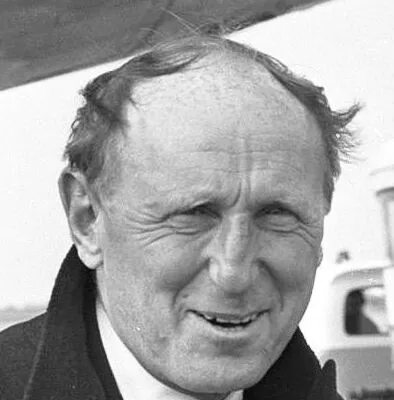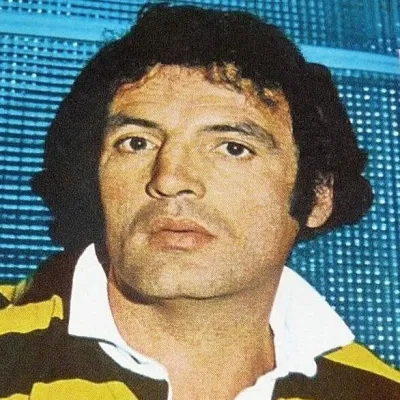
André Boniface
Human Design Chart
Biography
Boniface was inducted into the International Rugby Hall of Fame in 2005. Both he and his younger brother Guy Boniface were inducted into the IRB Hall of Fame in March 2011. According to British journalists, the Boni bros pioneered the "French flair", a new style in rugby.
André Boniface died on 8 April 2024 at the age of 89 in Bayonne, Pyrénées-Atlantiques.
What does Projector 3/5 mean for André Boniface?
Projector 3/5 — Design at a Glance
André Boniface acted like a focused flashlight with his Projector nature, revealing system errors in others immediately. This dense aura highlighted weaknesses but often made direct confrontation uncomfortable, as it felt like a harsh beam shining directly into the face of the other person. Instead of this direct approach, his true strength lay in harmonious presence: When he functioned well himself, he attracted others who then sought his advice. His strategy therefore was to wait for a respectful invitation rather than imposing solutions.
Since his Sacral Center was undefined, André Boniface did not have constant life energy. Instead, he experienced cyclical phases of high efficiency that had to be balanced with rest periods to prevent burnout. Societal expectations of continuous performance stood in opposition to this natural rhythm. Living according to this dynamic – waiting for invitations and respecting his energy cycles – rewarded him with success. If he deviated from his design by overworking or intervening without invitation, bitterness would arise as an indicator of non-self-acting behavior. His path was thus characterized by trust in the power of his own integrity and the discipline to carefully dose his energy.
Emotional Authority
André Boniface showed himself to be someone who consciously took time for important decisions. Instead of acting immediately, he let emotions rise and subside before taking action. His design carried emotional authority, meaning that his defined Solar Plexus Center guided decision-making – independent of other defined centers in the chart. This configuration subjected him to a constant wave of emotions: His perception was always colored by his current mood. What seemed absolutely right at one moment could appear negative in the next.
This fluctuating nature of his feelings made spontaneous reactions unreliable. An initial emotional impulse for André Boniface was rarely the final truth but merely a snapshot. To gain clarity, he had to practice patience and 'dally'. Decisions were allowed to mature, often through multiple nights' reflection. Only when intense emotions subsided and an emotional distance emerged did calmness set in. This process was essential for long-term steps that shaped his life path. By waiting out the emotional wave, he distinguished between transient mood and deeper insight, allowing him to make grounded rather than impulsive judgments.
The 3/5 Profile — Martyr / Heretic
André Boniface showed himself as someone who gained knowledge not from books but through direct experimentation. His design laid a tendency towards experimental learning: He initially believed no one and had to experience everything firsthand. This attitude stemmed from his Line 3, which defined trial and error as a necessary process. Failure was not a mistake but an integral part of the learning process. Through this often uncommitted exploration, he accumulated a rich trove of practical experiences.
This self-acquired knowledge became the foundation for his role in the collective. His Line 5, the Hero Line, made others project onto him and seek his solutions. He was attractive as a storyteller or hero because he solved problems with practical know-how. Yet this dynamic harbored tension: While Line 3 demanded freedom to explore, the collective expected competence and success through Line 5. When André Boniface experimented in front of others and failed, it was often misinterpreted, which could be painful. Nevertheless, this process served to communicate individual insights in a way that was understandable and applicable for others. He did not just sell ideas but the fruit of his own life experiences.
Split Definition — Defined & Open Centers
André Boniface showed a consistent mental and existential structure characterized by defined Ajna, Throat, G Centers as well as Solar Plexus, Spleen, and Root Centers. His design inclined towards continuous concept formation; he was always thinking, which made meditation difficult but provided reliable answers. This mental stability flowed into his communication through the defined Throat Center: He spoke what he thought or felt without being easily influenced by external factors. His identity and direction were set by the G Center, giving him a deep sense of self-love and clarity about his life path, even though sometimes he wanted to guide others without being asked.
Emotionally, André Boniface moved in a defined wave (Solar Plexus). He needed time to gain emotional clarity before making decisions and used this depth for comprehensive insights. His defined Spleen Center gave him intuitive security in the present; he trusted his spontaneous warning signals for health and well-being without having to rationalize them. The constant pressure of his Root Center propelled him forward, allowing him to utilize stress in his own, set way.
In contrast, Head, Heart, and Sacral Centers were open. André Boniface tended to be inspired by questions from others without taking on their problems as his own; he did not compulsively seek answers that did not belong to him. His open Heart Center lacked consistent willpower; he avoided making promises which he could not keep constantly, feeling free from the pressure of having to prove his worth. Energy he drew situatively from the environment (open Sacral), making him vulnerable to exhaustion when amplifying others' energy instead of listening to his inner authority.
Channels for mystical principles, reflection, intuition, logic and structure.
André Boniface was an analytical observer and condenser of knowledge. His design laid a tendency towards rigorous logical structuring before he spoke. The Channel of Acceptance 17-62 connected Gate of Opinions with Gate of Details; this caused his mind to permanently translate visual patterns into language and only accept information as understandable if it logically fit into his mental system. He did not seek impulsive freedom of expression, but rather precise categorization.
Parallel to this, André Boniface showed himself as someone who collected experiences to reflect on them later and share. The Channel of the Lost Son 13-33 connected Gate of Listeners with Gate of Withdrawal. Herein lay his mechanics: He listened, stored secrets and memories, withdrew to sort through these data, and revealed his insights only when the timing was right. This was not a lack of willingness to communicate but rather a process of maturation where patience was the central virtue.
A deep intuitive talent also drove him towards perfectionism. The Channel of Wavelength 48-16 connected Gate of Depth with Gate of Skillfulness. This configuration described a life task: transforming intuition through repeated practice into technical mastery. It was not about superficial experimentation, but rather the gradual refinement of a skill to excellence, where recognition and resources served as fuel.
Emotionally, André Boniface was marked by the search for belonging. The Channel of Accepting 19-49 connected Gate of Claims with Gate of Principles. This created a strong bond to the "tribe" or family, driven by the need for protection, fairness, and mutual support. At the same time, he often acted as a mutant outsider. The Channel of Structuring 23-43 connected Gate of Assimilation with Gate of Insight. This allowed him to develop innovative solutions and new perspectives that were, however, frequently only understood by his environment much later, since his thinking was often years ahead.
Collective Circuitry — Circuit Signature
André Boniface processed information through separate parallel energetic streams. His design showed two main clusters: a rational-structural block from Ajna, Throat, Spleen, and G Centers, as well as an emotional rhythm between Solar Plexus and Root Center. This separation shaped his way of taking in and expressing information.
In the Knowledge Circuit, he connected Ajna with the Throat Center through Channel 43-23 (Structuring). This allowed him to formulate mental concepts precisely and express new insights in a structured manner. The Understanding Circuit used the same connection plus the Spleen Center (Channels 17-62 Accepting, 16-48 Wavelength). Here it was about logical analysis and sharing rational insights free from emotional coloring. Both circuits worked together to clearly communicate complex connections.
Parallel to this, the Meaning Circuit existed with Channel 33-13 (The Lost Son), connecting Throat Center and Identity Center. This served for an emotional reflection of past experiences and finding personal meaning, separate from rational analysis. Finally, the Ego Circuit linked Solar Plexus and Root Center (Channel 49-19 Synthesis). This created a wave-like emotional rhythm alternating phases of intense energy with necessary pauses to conserve resources. André Boniface thus moved between clear rational structuring and cyclical emotional processing without directly mixing these areas.
Right Angle Cross of Explanation 3
André Bonifaces design carries the Right Cross of Explanation, a configuration that significantly shaped his deeper motivation. It was not about conscious control but rather an underlying current guiding his decisions and actions towards clarity and transparency continuously. For him, it was crucial to resolve misunderstandings and clearly articulate his truth or intention. This inner compass sought authenticity and aimed to avoid any ambiguity. The mechanics of this cross acted as a constant alignment: André Boniface felt driven to explain and clarify things to create a clear foundation for his existence. It was less an active strategy in the tactical sense but rather the fundamental energetic orientation of his life path. Through this configuration, he tended to reduce uncertainties through explanation, thus creating a space of understanding. His design indicated that he functioned best in situations where clarity prevailed, while ambiguity or uncertainty generated internal resistance for him. The energy of this cross therefore promoted an attitude of open communication and the search for his own unadorned truth as a means of orientation in life.
Saturn Return · Uranus Opposition · Chiron Return · 2nd Saturn Return — Life Cycles
André Boniface went through the classical, structurally anchored time cycles of Human Design in his life. His chart was marked by recurring astronomical transits serving as temporal frameworks for his personal development. The first Saturn return signaled a turning point where early life plans condensed into firm structures and responsibility became concrete. This cycle laid the groundwork for his later actions.
The Uranus opposition followed as a phase of dissolution and realignment. Here, tensions between established patterns and the need for change came to light, often leading to sudden insights or necessary breaks with old structures. It was a time when rigid stances were broken open to make room for new impulses.
The Chiron return, a fulfillment cycle in middle age, brought the bloom of his incarnation purpose. If he had lived according to his strategy and authority, his life's meaning became tangible and palpable in this phase. It was not about healing old wounds but about realizing what he incarnated for. The second Saturn return crowned this process through another condensation of life experience into wise structures. These cycles shaped André Bonifaces path as a rhythmic sequence of building, dissolving, and fulfilling without specific gates or channels determining the details of this movement.
Projector · Emotional Authority — Synthesis
André Boniface's design reveals a central thread of mediation and understanding. His combination of defined mental center, the channel of structuring, and open sacral center points to someone who deeply processes information and communicates it clearly (Gate 43/23). This ability to recognize patterns and explain them is reinforced by his defined G Center—an inner knowledge of direction and identity that he could pass on to others. The open sacral energy indicates that he did not feel carried by a constant life force but rather reacted to the energy of others and reflected it.
A central paradox in André Boniface's chart lies in the tension between his ability for deep analysis (defined Ajna and Root) and the emotional wave of his solar plexus center. He was destined to recognize patterns and draw logical conclusions, yet his decisions were influenced by a cyclical emotional clarity that required time and patience. This interplay between rational thinking and emotional depth created both strength and challenges in his life.
5 Defined Channels
Incarnation Cross - Right Angle Cross of Explanation 3
Solar Return
The Solar Return shows the moment when the sun returns to its exact birth position - your personal solar year.
Life Cycles
Discover the life cycles with a detailed triple view (birth chart, cycle chart, composite).
Human Design Profile
- Type
- Projector
- Strategy
- Wait for the respectful invitation
- Authority
- Emotional Authority
- Profile
- 3/5 - Martyr / Heretic
- Definition
- Split Definition
- Incarnation Cross
- Right Angle Cross of Explanation 3
- Date of Birth
- 14.08.1934 21:00
- Place of Birth
- Montfort, France
Frequently Asked Questions
What was André Boniface's Human Design type?
Which Profile did André Boniface have?
What authority did André Boniface have?
What incarnation cross did André Boniface have?
When was André Boniface born?
Discover your own Human Design
Are you also a Projector? Find out in a personal reading how to unfold your leadership qualities and recognize the right invitations.
More Personalities
Back to overviewSissy Spacek

Alain-Fournier

Aldair

Anémone

Ann-Margret

Bourvil