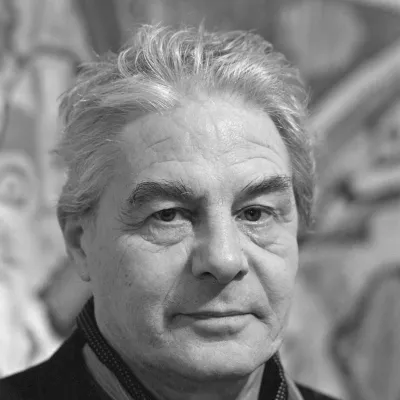
Andreas R. Batlogg
Human Design Chart
Biography
Andreas R. Batlogg — Manifestor with Profile 2/4
Manifestor 2/4 — Design at a Glance
Andreas R. Batlogg's design establishes a foundational stance as a pioneer and visionary, geared towards actively leading the world into new directions. This profile corresponds to the Manifestor type, which acts comparably to a strategic leader: He formulates large goals but leaves their operational implementation to others. This role brings with it a specific conflict. As Andreas R. Batlogg often thought further ahead than his environment, this inevitably led to polarization and misunderstandings. While some people recognized his visions and followed him, he encountered rejection or even hatred from others precisely because of the radical nature of his ideas.
The key to overcoming this dynamic lay in the strategy of informing. By timely and precise informing his surroundings about his intentions, Andreas R. Batlogg could find the right followers – those willing to support him. This communication was not an optional social behavior but a mechanical prerequisite for his success. If he followed this strategy, he was rewarded with a deep sense of inner peace. Living against this design and acting without prior information resulted in persistent anger. His chart thus describes a clear mechanism: Through targeted informing, potential resistance could be transformed into support, thereby enabling his path as a leadership figure to be sustainable and peaceful.
Emotional Authority
Andreas R. Batlogg's design tends to evaluate spontaneous impulses as unreliable and makes decisions only after the initial emotional wave has subsided. His inner authority is Emotional Authority, carried by the defined Emotional Center. In Human-Design, this authority always takes precedence over all other defined centers, regardless of further configurations in the chart.
This center is subject to a permanent emotional wave with constant ups and downs of feelings. Perception is always colored by the current mood: A moment of enthusiasm can quickly turn into negative evaluation without any change in external circumstances. The immediate feeling is thus only a snapshot, not an ultimate truth. Quick decisions made from this emotional heat often have negative consequences as they are based on transient states.
Clarity emerges through temporal distance. Andreas R. Batlogg demonstrated the necessity of letting decisions mature – often by sleeping on them multiple times. Conscious hesitation serves here as a protective mechanism against emotional distortions. Over time, intense feelings subside, emotional distance gains strength and calmness sets in. This process is particularly crucial for long-term life decisions as it ensures that the choice is based on deeper insight rather than fleeting mood. Patience thus becomes the central strategy to distinguish one's own emotional truth from transient moods.
The 2/4 Profile — Hermit / Opportunist
Andreas R. Batlogg's design tends towards a constant oscillation between the deep need for withdrawal and the urge to connect with a chosen network. This Profile 2/4 created an inner tension that required understanding these two poles not as contradictions but as necessary cycles. Line 2, marked by themes such as degeneration and depth, provided space for intensive internal processing and reform concepts. Here Andreas R. Batlogg could find calm to create clarity and evaluate what he had learned. Without this phase of isolation, the unfolding of this depth would not have been possible.
At the same time, Line 4 with its aspects of timing and fixity connected him to his social environment whose knowledge he reflected upon during his alone time. The challenge was actively steering these oscillating needs. Crucial was transparent communication about the current state: clearly signaling when company is welcome and when disturbance should be avoided. Only through this clear demarcation could Andreas R. Batlogg effectively synthesize external knowledge from his network with his internal processes. Thus, out of the alternation between cave and community emerged the ability to develop brilliant ideas based on a solid, deep analysis.
Triple Split Definition — Defined & Open Centers
Andreas R. Batlogg's Human Design reveals a tendency towards constant mental pressure and clear willpower, coupled with the necessity to wait for emotional clarity. His defined Head and Ajna Centers created a permanent inner drive to question and form concepts without being able to impulsively implement them. This mental structure was linked with his defined Heart Center, which gave him stable willpower and the ability to self-determine his resources while keeping promises. Simultaneously, his defined Solar Plexus acted as an emotional authority: decisions required patience until mood waves subsided and deep insight made way for clarity.
This firm internal architecture contrasted with his open centers. His open Sacral Center made him receptive to 'borrowed' energy from the environment; he tended to overextend himself through external work demands or the vitality of others, rather than trusting his own fluctuating energy flow. This could lead to exhaustion if he did not learn to set boundaries and respect downtime. Parallel to this, his open Spleen Center revealed a vulnerability to conditioned fears and a desire for false security. He was challenged to avoid spontaneous reactions from fear or the desire for immediate well-being, as these impulses often did not align with his own truth but reflected absorbed worries.
The dynamics involved using the constant energy of Head, Heart, and Solar Plexus without being thrown off by the situational receptivity of Sacral and Spleen. His strength lay in holding mental inspiration until emotional clarity arrived while learning to not take external energies in the Sacral as his own responsibility and discerning impulsive decisions from the Spleen. Thus, he could utilize his defined structure stably without falling into the traps of overextension or conditioned fear.
Channels for logic, leadership, value and emotional depth.
Andreas R. Batlogg's mind used skepticism as an essential tool to filter information and test patterns for their durability, stemming from Channel Logic 63-4 connecting Head and Ajna Centers. Here, pressure arises when a pattern breaks; resolution is only found in a logically formulated, verifiable answer. This mechanism primarily served the collective through well-considered predictions rather than personal future decisions.
Alongside this analytical foundation, there was a dynamic tension between individual integrity and collective structure. Gate 38 in the Cross set boundaries and defended identity through necessary resistance against harmful forces, while Gate 48 enabled deep pattern recognition but often led to frustration as it understood connections yet could not necessarily translate them into practical solutions. This combination fostered an attitude of critical distance.
In interpersonal dynamics, the Juxta-configuration of the Alpha Animal Channel 7-31 drove a pursuit for logical leadership. This channel connects G and Throat Centers and requires that leadership competency be demonstrated through tested patterns. Success here only occurred when Andreas R. Batlogg was invited by the majority to take on his role as guide; he could show the way but not carry it out. Parallel to this, Channel Line of Money 21-45 (Juxta) connected Heart and Throat Centers, creating a strong will for material control and independence where the balance between hard work and necessary rest was crucial to avoid stress in Ego Center.
Emotionally, his design featured Channel Feelings Released 39-55 (Juxta), connecting Root and Solar Plexus Centers. This channel generated a pulsing wave between passion and melancholy. Rather than rationalizing moods, it required accepting this emotional alchemy to express authentic creativity and spiritual depth. Additional gates in the design, such as Gate 41 (evolutionary development) and Gate 62 (detail work), supported this process through focused engagement with specific experiences and patient translation of facts into logical frameworks.
Collective Circuitry — Circuit Signature
Andreas R. Batlogg's Human Design showed a tendency towards pulsing, acoustic expression of new insights. His Triple Circuit design consisted of three separate energetic groups that did not flow directly into each other.
The Knowledge Circuit connected his Solar Plexus with Root Center, generating emotional waves and a rhythm in the present moment carrying the innate path. The energy was pulsing and acoustically marked, releasing emotions to initiate transformation.
Parallel to this, the Understanding Circuit worked in two parts: Head and Ajna Centers formed a unit for logical impulses, while Throat and Identity Centers were connected. This allowed sharing rational insights and strategic structures free from emotional influence by Solar Plexus.
Finally, the Ego Circuit linked his Throat with Heart Center. Here it was about accumulating resources and material well-being within the tribe. As there was no connection to Sacral Center, downtime was necessary to maintain these energies.
These three systems existed alongside each other: emotional rhythm, rational strategy, and resource-oriented cooperation. Andreas R. Batlogg used his voice as a carrier of these various forces, with the emotional intensity of the Knowledge Circuit shaping the innate expression while logic and resource management ran in separate channels.
Right Angle Cross of Tension 3
Andreas R. Batlogg's design features the configuration of the Right Cross with tension 3. Since the specific energetic dynamics of this cross are not defined in the given material, no concrete characterization or behavior can be derived from it. It remains unclear what internal tensions or driving forces could be active through this structure. Without a description of the underlying mechanics, there is no basis for understanding how Andreas R. Batlogg interacts with this energetic reality. The design merely shows the presence of the structure itself and does not indicate its impact on personality or life path. Any interpretation would go beyond the provided factual material and thus become speculative. Therefore, the significance of this aspect within the context of the given reading is limited. It cannot be determined whether this configuration contributes to specific behavioral patterns, challenges, or strengths. The analysis must rely on other clearly described elements of the Human Design profile to draw a coherent picture of Andreas R. Batlogg. The Right Cross with tension 3 remains in this context a neutral statement without further substantive depth or psychological relevance for characterizing.
Saturn Return · Uranus Opposition · Chiron Return · 2nd Saturn Return — Life Cycles
Andreas R. Batlogg's design is characterized by three prominent transformative phases, structurally supported by planetary cycles. This configuration shows a developmental line where inner maturation and external recognition converge at specific age stages.
The first Saturn return around the 29th year of life often marks the transition from education to stable vocation. This is reflected in Andreas R. Batlogg's ordination as deacon in 1991 – a moment when years of preparation culminated in a concrete spiritual role.
The Uranus opposition around the 38th year frequently brings breakthrough or recognition of expertise after a phase of consolidation. In 2000, Andreas R. Batlogg earned his doctorate in theology and received the Cardinal Innitzer Award for promotion. This cycle supports the emergence of knowledge and validation of professional identity by the public.
The second Saturn return around the 57th year demands a deep inventory and integration of lifelong experiences into a new understanding of meaning. In 2019, Andreas R. Batlogg published his book “Crossed – My Life with the Diagnosis of Cancer”. This publication is not just a biography but the condensed wisdom of a cycle in which personal challenges were processed into a meaningful message for others. The mechanics of these cycles show how structure (Saturn) and liberation/recognition (Uranus) rhythmically shaped his life.
Manifestor · Emotional Authority — Synthesis
A central red thread in Andreas R. Batlogg's design is the dynamic balance between inner clarity and the need to carry this outward. Defined mental authority (Head Center and Ajna Center) creates a constant pressure towards analysis and understanding, reinforced by the logic channel (Gate 63/4) – a striving for precise knowledge. This internal world finds expression in the defined Throat and G Centers, indicating a natural inclination to communicate clarity and act as a leader, yet always with an eye on the collective (Channel 7/31). Reoccurring events – from ordination to book publication – seem to reflect this inner drive for expression and influence.
Simultaneously, a central paradox is revealed: the tension between the need for solitude and community, intensified by Profile 2/4. Line 2 demands withdrawal for reflection and depth (Gate 33), while line 4 seeks connection with networks and exchange. This interplay is further accentuated by the undefined Sacral Center, signaling sensitivity to others' energy but lacking a constant personal source. Batlogg appears to navigate between an inner need for peace and the external pull of relationships and community – a continuous balancing act between individual depth and collective connection.
4 Defined Channels
Incarnation Cross - Right Angle Cross of Tension 3
Solar Return
The Solar Return shows the moment when the sun returns to its exact birth position - your personal solar year.
Life Cycles
Discover the life cycles with a detailed triple view (birth chart, cycle chart, composite).
Human Design Profile
- Type
- Manifestor
- Strategy
- To inform others before acting
- Authority
- Emotional Authority
- Profile
- 2/4 - Hermit / Opportunist
- Definition
- Triple Split
- Incarnation Cross
- Right Angle Cross of Tension 3
- Date of Birth
- 04.10.1962 07:45
- Place of Birth
- Bregenz, Australia
Frequently Asked Questions
What is the Human Design type of Andreas R. Batlogg?
What Profiles does Andreas R. Batlogg have?
What Authority does Andreas R. Batlogg possess?
What incarnation cross does Andreas R. Batlogg have?
When was Andreas R. Batlogg born?
Discover your own Human Design
Are you also a Manifestor? Find out in a personal reading how to use your initiation power peacefully and dissolve resistance.
More Personalities
Back to overviewAlain-Fournier

Angeli

Christian-Jaque
Juninho

Kesha

Lucebert