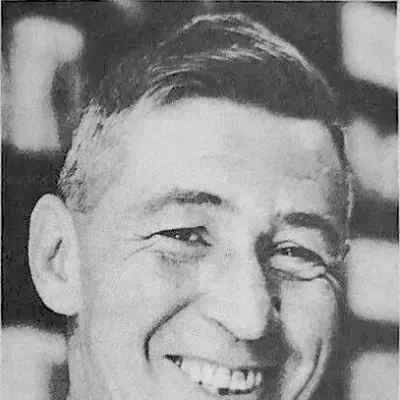
Andrew Fire
Human Design Chart
Biography
The Human Design of Andrew Fire: Projector 6/2
Projector 6/2 — Design at a Glance
Andrew Fires Design shows a tendency towards focused, penetrating perception. As a Projector, he has an aura that acts like a bright flashlight: it directs itself towards areas in the environment that are still in the dark, revealing systematic errors or inefficiencies immediately. This ability to identify the core of problems is characteristic of this type, but it carries a risk. If these insights are communicated unsolicited or too directly, others may perceive it as an uncomfortable, blinding light rather than helpful guidance.
Therefore, Andrew Fire's optimal strategy did not lie in actively pushing his analyses but in waiting for an honest, appreciative invitation. By radiating his own competence and clarity – similar to how a harmonious relationship attracts – he naturally became a go-to advisor whom others would then seek out for his "inside tips." Since Projectors do not have a constant, intrinsic energy center (Sacral), they are subject to phases of high productivity followed by necessary rest periods for regeneration. If he ignored this rhythm, he risked burnout. However, if he lived by the principle of invitation and respect for his energy limits, he was rewarded with success; deviating from this could lead to a sense of bitterness. His path was not one of constant action but of targeted, requested guidance.
Splenic Authority
Andrew Fires Design points towards spontaneous, instinctive decision-making. His inner authority resides in the Spleen Center, which functions as a health and alarm system. For this authority to be effective, the Emotional and Sacral Centers needed to be open – a configuration found only in Projectors or Manifestors. This gave him a pronounced survival intelligence: a spontaneous inner knowing about whether a situation, environment, or society was right for him. Physical well-being and intuition served as reliable indicators.
Decisions had to be made in the moment. The first, spontaneous impulse was the right one and immediately served his health. This enabled him to take good care of himself and rigorously distance himself from harmful influences. However, this Spleen voice was a very fine impulse that only came once in the moment and could easily be ignored or drowned out. This required high vigilance; retreating to make a decision could be helpful.
Since he could only know what was right in the moment, plans could change at short notice. Long-term commitments were difficult. He needed a lot of space and flexibility rather than being tied down. Spontaneously figuring things out suited his nature better than rigid planning.
The 6/2 Profile — Role Model / Hermit
Andrew Fires Design points towards a two-phase development: initially a phase of experimental learning, followed by a phase of detached reflection. Before the age of thirty, the 6/2 line ("Role Model/Natural Talent") functioned like a 3-line. This meant that trial and error were the driving principles. In this early period, Andrew Fire was someone who learned through personal experiences, withdrew after setbacks, and thus built his resilience.
Around the age of thirty, the 6-line activated. The design now demanded a withdrawal – metaphorically into a "cave on the mountain" – to look back at past experiments with distance. This period served for intense reflection, healing, and deep self-knowledge. Only after this inner clarification was complete did Andrew Fire re-emerge, now as a wise person, whose insights attracted others.
This structure was shaped by specific energies. Gate 27 on the 6-line developed care and altruism, but protected against the misuse of generosity. It was about building fairness and trust in helping others. Simultaneously, Gate 19 on the 2-line, which means "Service," was selectively engaged in the use of personal resources and sought an exchange between giving and receiving. Thus, Andrew Fires Design combined the ability to serve with the necessity of finding the right form of care through personal experience and later distance before he could act as a role model for others.
Single Definition — Defined & Open Centers
Andrew Fire's Human Design profile indicates a tendency towards a stable, internal orientation, coupled with a high sensitivity to the immediate moment. His defined G Center grants him a reliable sense of self-identity and a clear direction, without being dependent on others. This inner security allows him to show others new perspectives without having to direct them. Additionally, his defined Spleen Center serves as a source of spontaneous intuition and existential awareness. It provides him with the ability to make trustworthy judgments in the 'now' and respond to subtle warning signals, helping him feel healthy and protected. His also defined Root Center supplies the necessary pressure to move forward in the world and nourish existential awareness, with this stress being utilized in a way that promotes survival and well-being.
At the same time, Andrew Fire is characterized by several open centers, making him susceptible to external influences. His open Head Center means he lacks a constant source of mental inspiration and can be easily overwhelmed by doubts or questions from others if he does not trust his inner authority. Similarly, his open Ajna Center can take in concepts and ideas from the environment but cannot hold them as his own, firm truth, leading to a flexible but sometimes confusing thought process. His open Throat Center shows that he is not designed to constantly demand attention; instead, he naturally attracts attention when he waits for the right invitations. His open Heart Center makes him vulnerable to the pressure to prove himself, despite not having a constant willpower for it. Finally, his open Sacral and open Solar Plexus centers reflect the energies and emotions of his environment, meaning he must learn not to personalize them to avoid exhaustion and emotional overload.
Channels for intuitive elegance, logical scrutiny and meaningful struggle.
Andrew Fire's design indicates a tendency towards intuitive adaptability, paired with an unrelenting drive to correct patterns. The Channel of Perfect Form 57-10 connects the Spleen Center with the G Center. Through Gate 57, intuitive insight, and Gate 10, self-behavior, a spontaneous clarity arises. This behavior is guided by deep, acoustic awareness – less through words, more through tone and atmosphere. It allows him to move existentially and unburdened through the world, perfecting survival in the now, without unjustified future fears.
At the same time, the Channel of Judgment 58-18, connecting the Root Center with the Spleen, comes into play. Gate 58, vitality, drives the impulse 'better and more,' while Gate 18, correction, checks what is healthy or balanced. This logic functions as a sentry, questioning patterns to regain joy lost through conditioning. Andrew Fire shows himself as someone ready to offer solutions when asked, rather than wasting unnecessary energy.
The Channel of Life Struggle 38-28 adds a stubborn determination. Gate 38, the Fighter, preserves individual integrity against external distractions, while Gate 28, the Player, recognizes which struggles have value. This gives him the ability to find meaning in difficulties and resist the status quo to advance evolution.
Additionally, prioritized gates shape his profile: Gate 27 brings genetic care and self-preservation, Gate 19 seeks resources and safe territory for the community. Gate 33 demands reflection and withdrawal to process experiences. On the personality level, Gate 48 with its deep pattern recognition and Gate 39, which provokes mutations through provocation and analysis, come into play. Gate 60 accepts limitations as a prerequisite for transcendence, while Gate 7 projects leadership and hierarchy.
Individual Circuitry — Circuit Signature
Andrew Fire's design indicates a tendency towards pragmatic endurance and strategic clarity. As a Simple Defined, he has a coherent energetic flow connecting the Spleen and Root Centers. This connection creates a direct line from instinctive perception to concrete energy.
In the Knowledge Circuit, the Channel of Life Struggle (Gates 28-38) is active. It connects the Spleen with the Root Center, describing a capacity for survival strategy through experiential knowledge. This shows as the power to learn from past challenges and transform this resilience into concrete action impulses.
Parallel to this, energy flows through the Understanding Circuit via the Channel of Judgment (Gates 18-58). Here too, the Spleen connects intuitive knowledge with root energy. This promotes a logical, focused approach, where intuitive pattern recognition is translated into structured, rational decisions – free from emotional distortion.
The Integration Circuit completes the picture through the Channel of Perfect Form (Gates 10-57). This connects the Identity Center with the Spleen. Here it is about securing survival through proper behavior and intuitive knowledge. Andrew Fire's design thus links his deeper identity directly with his instinctive perception, enabling high adaptability and the ability to self-affirm in the here and now. All three circuits use the Spleen as a central node, directing intuition, strategy, and identity to the action-oriented energy of the Root Center or the stable basis of identity.
Left Angle Cross of Alignment 1
Andrew Fire's Human Design shows a tendency towards a clear, inner alignment. He was someone who did not direct his energy through external impulses or reacting to others, but rather through a firm, inner commitment. This attitude stemmed from the configuration of the left alignment cross 1. In Human Design mechanics, this cross describes a specific kind of focus: attention is directed towards the essential, defining one's path. It's not about seeking answers in the world, but about deepening into what is already experienced as right and deeply personal. Andrew Fire was brought to rely on his own rhythm and truth by this structure. The mechanics of this cross support a consistent, almost ascetic dedication to one's goal, free from distractions by societal expectations or fleeting trends. His energy flowed most efficiently when he trusted this inner compass. This created a foundation for steady work that did not depend on the mood of the day, but on a deeply rooted conviction. Alignment 1 emphasizes the purity of intention; it's a design that works through clarity and directness, without detours or compromises with one's nature. Andrew Fire's path was thus marked by this structural ability for focused, self-determined alignment.
Saturn Return · Uranus Opposition · Chiron Return · 2nd Saturn Return — Life Cycles
Andrew Fire's Human Design shows a tendency towards profound, structural breakthroughs, often accompanied by a sense of temporal urgency or sudden upheaval. This configuration describes an energy that questions established patterns and paves new, revolutionary paths.
In 1998, at the age of 39, Andrew Fire, together with Craig C. Mello, discovered RNA interference. For his design, this was a typical moment of Uranus opposition: a cycle in which long-held questions often condense into a groundbreaking, unexpected result. The energy of this transit promotes breaking old boundaries and introducing radically new perspectives, which here culminated in the identification of a fundamental biological mechanism.
Later, in 2006 at the age of 47, he received the Nobel Prize in Physiology or Medicine. This fell during the phase of Chiron return. In Human Design mechanics, this cycle marks not a healing, but a bloom time of one's life task. If the person follows their strategy, the inner sense becomes experiential and the work receives full recognition. The Nobel Prize did not stand alone but as confirmation that the original potential of the design has unfolded and reached its peak in reality.
Projector · Splenic Authority — Synthesis
A central red thread in this design is the ability to recognize subtle patterns and integrate them in a way that promotes both one's own well-being and that of others. The defined G Center love and direction (paired with the channel of the Perfect Form) points to a deep sense of one's correct life direction, manifesting in behavior that is intuitive and self-assured. This is reinforced by the Spleen Authority, signaling a fine sense of one's well-being and the ability to set boundaries. The role as a role model, initially shaped through experimentation and later reflection, underscores the development of deep wisdom that can be made accessible to others.
The central paradox lies in the combination of the ability to project – recognizing mistakes and 'shining into the dark' of others – and the need to balance this with the fine Spleen Authority. While the design possesses a clear impulse towards leadership and the dissemination of knowledge, the inner authority requires a cautious approach to avoid being perceived as intrusive. Successful events (discovery of RNA interference, Nobel Prize) seem to be connected with the expression of this wisdom and the timing of Spleen Authority.
3 Defined Channels
Incarnation Cross - Left Angle Cross of Alignment 1
Solar Return
The Solar Return shows the moment when the sun returns to its exact birth position - your personal solar year.
Life Cycles
Discover the life cycles with a detailed triple view (birth chart, cycle chart, composite).
Human Design Profile
- Type
- Projector
- Strategy
- Wait for the respectful invitation
- Authority
- Splenic Authority
- Profile
- 6/2 - Role Model / Hermit
- Definition
- Single Definition
- Incarnation Cross
- Left Angle Cross of Alignment 1
- Date of Birth
- 27.04.1959 13:21
- Place of Birth
- Palo Alto, CA, United States
Frequently Asked Questions
What is Andrew Fire's Human Design type?
What Profile does Andrew Fire have in Human Design?
What Authority does Andrew Fire have?
Which incarnation cross is active for Andrew Fire?
When was Andrew Fire born?
Discover your own Human Design
Are you also a Projector? Find out in a personal reading how to unfold your leadership qualities and recognize the right invitations.
More Personalities
Back to overviewSissy Spacek

Alain-Fournier

Anémone

Ann-Margret

Bourvil
Hergé