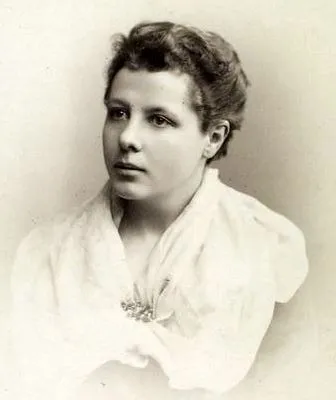
Annie Besant
Human Design Chart
Biography
She became a prominent speaker for the National Secular Society (NSS), as well as a writer, and a close friend of Charles Bradlaugh. In 1877 they were prosecuted for publishing a book by birth control campaigner Charles Knowlton. Thereafter, she became involved with union actions, including the Bloody Sunday demonstration and the London matchgirls strike of 1888. She was a leading speaker for both the Fabian Society and the Marxist Social Democratic Federation (SDF). She was also elected to the London School Board for Tower Hamlets, topping the poll, even though few women were qualified to vote at that time.
In 1890 Besant met Helena Blavatsky, and over the next few years her interest in theosophy grew, whilst her interest in secular matters waned. She became a member of the Theosophical Society and a prominent lecturer on the subject. As part of her theosophy-related work, she travelled to India. In 1898 she helped establish the Central Hindu School, and in 1922 she helped establish the Hyderabad (Sind) National Collegiate Board in Bombay (today's Mumbai), India.
The Human Design of Annie Besant: Generator 5/1
Generator 5/1 — Design at a Glance
Annie Besant's design indicated a tendency towards great endurance and strength of work. She was someone with abundant sacral energy, comparable to a strong working horse that provides power when used for its task. This configuration described her as a Generator type. The central mechanics of her experience were the strategy of reaction rather than initiation. Her energy became effective by responding to signals from life and then acting when she received a clear “yes” internally.
This led to a clear duality in her experience. When she followed this inner guidance, deep satisfaction and a sense of fulfillment emerged. In contrast, frustration or a lack of energy was evident if she initiated things without internal desire or was prevented from continuing with her heart project despite wanting to do so. Also, the waste of her strength on tasks that did not serve her led to states of exhaustion up to burnout. Her design allowed her to achieve things in life but only through responding to gut instincts, not by self-driven pushing forward. If she lived according to this pattern, no one could stop her; if she deviated from it, she faced persistent frustration.
Emotional Authority
Annie Besant showed a decision-making structure that did not rely on immediate intuition but rather on the management of emotional waves. Her design indicated that her defined Solar Plexus Center functioned as an internal authority. This meant that her feelings and moods were always at the forefront, regardless of other defined centers in her chart. She experienced the world colored by her current emotional state: In one moment she could be enthusiastic about something, in the next negatively evaluate the same situation.
This fluctuation was not a mistake but rather the mechanism of her authority. A spontaneous judgment was seen as a misleading snapshot, not yet her truth. Quick decisions made from the heat of emotion often had negative repercussions. Instead, her process required time and distance from the current mood wave. She needed to exercise patience and sleep on decisions multiple times to break through the deception of fleeting emotions.
Only when intense feelings subsided did she gain the necessary emotional distance. Then true clarity and calmness set in. This cycle of excitement, fading, and settling into peace was essential for all long-term life decisions. Through hesitation and repeatedly questioning her initial impulses, she arrived at a deeper, more comprehensive understanding that went beyond the mere first impression.
The 5/1 Profile — Heretic / Investigator
Annie Besant's design indicated a tendency towards synthesizing deep personal knowledge with the ability to offer solutions for others. As a 5/1 profile (Hero/Researcher), she found herself in a tension field between the need for withdrawal for study and external pressure from projected expectations of others. Line 1 conveyed her need for security and intensive study to overcome obstacles and choose negative relationships. This created a solid knowledge base. Simultaneously, line 5 worked magnetically: Others sought answers for their problems with her. This configuration described a collective process of exchange where relationships were crucial since individual forces alone did not suffice. Therapeutic dynamics are reflected here; long-term isolation could lead to psychological instability, while exchange allowed correction. The challenge lay in setting clear boundaries to avoid exhaustion from excessive requests. Only through learning to say “no” could she maintain the balance between private research and public problem-solving. Thus, her gift was optimally utilized: She used the depth of her analysis (line 1) to become effective as a hero (line 5), without falling into the role of an all-knowing expert who ends up drained in the end. This mechanism shaped her path, not just collecting knowledge but purposefully and protectively passing it on.
Split Definition — Defined & Open Centers
Annie Besant's design tends towards constant mental tension coupled with immense reactive vitality. Her defined Head Center and Ajna Center created a continuous pressure for inspiration and concept formation. This mental process operated independently of her energy source; since these centers were not connected to motors, there was no power available for direct implementation of thoughts. Instead, she served as an inspirational source for others while accepting the pressure herself without acting on it to avoid frustration.
In contrast, Annie Besant had a defined Sacral Center that generated massive vital energy. This force was only available through reaction – not initiation. Her strategy involved waiting for questions or opportunities and then responding with a clear yes-or-no answer from her gut instinct. This ensured her endurance and prevented exhaustion from false engagements.
Her emotional authority lay in the defined Solar Plexus Center. The rule here is: There is no truth in 'now'. Annie Besant was designed to wait out the ups and downs of the emotional wave before making decisions. Only at the end of the cycle did clarity emerge; impulsive action on the waves led to chaos. A steady pressure from her defined Root Center propelled her physically forward and helped her cope with stress as long as it was guided by her authority.
The open centers shaped her vulnerabilities. The open G Center meant no fixed identity; Annie Besant reflected her environment and had to wait until she was initiated into correct relationships rather than seeking a personal direction. Her open Heart Center lacked consistent willpower; she tended to question whether she needed to prove who she is or make promises to demonstrate value – which ended in cycles of failure. The open Spleen Center made her vulnerable to conditioned health and survival fears; spontaneous decisions were risky as she could absorb unhealthy vibrations from others. Finally, the open Throat Center drew attention without her actively speaking; attempts to control her communication only led to stress and unpredictable statements.
Channels for maturation, logical doubt and emotional release.
Annie Besant showed a fundamental attitude that combined intellectual rigor with emotional intensity. Her design tends towards filtering and expressing truth not just through thinking but also through a provocative, capricious lens. This tension between collective mind and individual emotion propelled her development.
The Logic Channel 63-4 connects her Head Center to the Ajna Center via the Gate of Doubt (63) and the Gate of Formulation (4). This created a doubting mind that constantly filtered patterns to check their consistency. For Annie Besant, skepticism was essential; logic could be formally correct yet still false. Only when an answer proved itself as a consistent, verifiable pattern did she accept it. This channel served the collective by posing questions and making predictions based on data without room for unfounded belief.
Simultaneously, the Channel of Emotional Release 39-55 connected her Root Center to the Solar Plexus through the Gate of Provocation (39) and the Gate of Spirit (55). This set a pulsating emotional wave in motion. It generated capriciousness as a deep, creative force that swung between ecstatic joy and melancholic uncertainty. Annie Besant was designed not to rationalize these moods but to live authentically. Her provocation served to awaken the minds of others and induce transformative changes. She knew how to find the right resonance partners through her own emotional authenticity and bring out new qualities in others.
The interaction of these two channels shaped her: Logical doubt sought verifiable structures, while emotional provocation often challenged or transformed them. Living between the need for logical confirmation and the unpredictability of her emotional waves allowed her to gain profound insights by fully engaging both mind and feelings without suppressing either.
Collective Circuitry — Circuit Signature
Annie Besant's design tends towards an inner tension: between emotionally driven individual expression and cool, future-oriented logic. For Annie Besant, the Knowledge Circuit was active, promoting a unique path and transformation through personal identity. Her Channel 55-39 connected her Solar Plexus Center to the Root Center, generating pulsating acoustic energy that released emotions and supported the expression of individuality.
Simultaneously, she had an Understanding Circuit aimed at cool logic and rational insight without conditioning. Her Channel 63-4 linked her Head Center with the Ajna Center, enabling focused visual energy for developing logical strategies for the future. Since Annie Besant had a Split Definition, these two circuits existed as separate, parallel forces. There was no direct energetic flow between the emotional Solar Plexus-Root block and the rational Head-Ajna block; they operated independently.
A third aspect was the Meaning Circuit, reflecting past experiences cyclically to learn collectively from history. For Annie Besant, her Channel 42-53 connected her Sacral Center with the Root Center, creating a cyclical energy that promoted maturation and sharing of felt insights. This connection also stood in its own group. The tension between emotionally driven expression in the Knowledge Circuit and rational structure in the Understanding Circuit shaped her dynamics, while the Meaning Circuit enabled processing past experiences.
Left Angle Cross of Upheaval 2
Annie Besant's Human Design chart indicated a structural orientation towards profound transformations and the deliberate dismantling of outdated systems. She was someone ready to break with the status quo not out of a desire for destruction, but because old forms had lost their function. This attitude stemmed from the influence of her left cross of Revolution 2 in her chart.
This configuration signaled a life task essentially focused on deconstructing existing belief systems and institutional structures. It was not about achieving static stability or preserving traditions, but rather employing the dynamic power of revolution. Such changes were necessary to make room for new possibilities where old things blocked progress.
The mechanics of this cross described an archetypal path of change and dissolution of what existed. Annie Besant thus acted as an agent of transformation. Her nature was marked by the necessity to dissolve old patterns so that development could occur. This shaped her way of acting: she identified structures that no longer worked and promoted their dismantling to free up new possibilities. It was a process of deconstruction for the purpose of renewal, embedded in a larger movement towards necessary changes.
Saturn Return · Uranus Opposition · Chiron Return · 2nd Saturn Return — Life Cycles
Annie Besant's life followed a clear structure of four astrological cycles, each marking structural turning points. Two of these phases appeared as crises, two as foundations of new structures. In 1873, at age 26, she separated from her husband Frank Besant. This occurred during her first Saturn Return, a period often leading to reevaluation and restructuring of fundamental life bonds. The separation was not just an event but part of this maturation process.
In 1887, at the age of 40, she participated in protests against unemployment and Lord Salisbury's restrictive Irish policy. This fell during her Uranus Opposition, a phase often marked by a drive for freedom and social change. Her political activism aligned with this mechanical impulse to free oneself from established constraints.
At age 51, in 1898, she helped found the Central Hindu School. This marked her Chiron Return, the cycle of fulfillment and bloom. Here, the unfolding of her incarnation purpose was seen in concrete educational work, not as healing injuries but as realizing personal meaning.
In 1902, at age 55, during her second Saturn Return, she joined the Freemasonry lodge Le Droit Humain in Paris. This cycle solidified her position and anchored her in a new, stable structure. The sequence of separation, protest, foundation, and membership illustrates how these cycles served as frameworks for concrete life decisions.
Generator · Emotional Authority — Synthesis
Annie Besant lived a life marked by a deep inner tension between the desire for logical clarity and the experience of emotional depth. Her defined Head and Ajna Centers (Mind Circuit) gave her an unstoppable inclination towards questioning, analysis, and the pursuit of understanding – a process always modulated by the cyclical nature of her emotional center. This constant shift between rational thinking and emotional reaction shaped her ability to grasp complex issues and articulate them while simultaneously maintaining a deep connection to human experience. The combination of the need for intellectual coherence (Channel 63-4) and the cyclical processing of experiences (Channel 53-42) points towards a character always learning, reflecting, and striving to impart knowledge.
A central paradox in Annie Besant's design lies in the tension between her defined Solar Plexus Center and open centers for identity (G Center) and willpower (Heart Center). While her emotional center offered clear inner authority based on waiting out the emotional wave, she lacked a firm self-image and constant energy source for assertiveness. This led to a dynamic interaction between deep internal certainty regarding her feelings and an ongoing search for external validation and direction – a pattern evident in recurring crises (separation, political protests) and career peaks (founding schools, Freemasonry).
3 Defined Channels
Incarnation Cross - Left Angle Cross of Upheaval 2
Solar Return
The Solar Return shows the moment when the sun returns to its exact birth position - your personal solar year.
Life Cycles
Discover the life cycles with a detailed triple view (birth chart, cycle chart, composite).
Human Design Profile
- Type
- Generator
- Strategy
- To respond - wait for something to respond to
- Authority
- Emotional Authority
- Profile
- 5/1 - Heretic / Investigator
- Definition
- Split Definition
- Incarnation Cross
- Left Angle Cross of Upheaval 2
- Date of Birth
- 01.10.1847 17:29
- Place of Birth
- London, South Africa
Frequently Asked Questions
What was Annie Besant's Human Design type?
What profile did Annie Besant have?
What authority did Annie Besant possess?
What incarnation cross did Annie Besant have?
When was Annie Besant born?
Discover your own Human Design
Are you also a Generator? Find out in a personal reading how to use your sacral energy correctly and discover deep satisfaction.
More Personalities
Back to overviewAaliyah

Alexia

Angèle

Anne-Marie

Arcángel

Arno