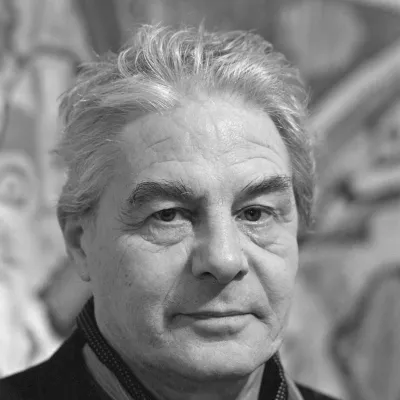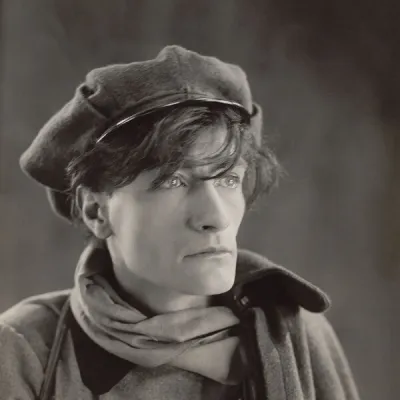
Antonin Artaud
Human Design Chart
Biography
Antonin Artaud — Manifestor with Profile 1/4
Manifestor 1/4 — Design at a Glance
Antonin Artaud's Design established him as a pioneer and visionary whose nature was to lead the world in a new direction. His character matched the metaphor of an emperor: He possessed the great vision for his realm but did not wage wars himself. Instead, he delegated the execution to others to conquer foreign territories on his behalf. This structure created a specific pain point. Because his thoughts often reached further than those around him, he was misunderstood and polarized strongly. Some people loved his grand dreams and followed him, while others rejected or even hated him precisely because of this superiority.
To minimize this resistance and find the right following, it was crucial for his Design to inform others timely and accurately about his intentions. This strategy of informing served to reduce friction points. If Antonin Artaud lived according to this guideline and his inner authority, his system rewarded him with a sense of inner peace. However, if he violated this design by trying to fight against resistance or failing to communicate clearly, it resulted in persistent, deep anger. His life was thus marked by the tension between his leading vision and the necessary communication to avoid conflicts.
Emotional Authority
Antonin Artaud's inner authority was emotionally defined, carried by the Solar Plexus Center. This configuration fundamentally shaped his decision-making: He was subject to a constant wave of ups and downs in his feelings. The world always appeared colored by his current mood; a moment full of enthusiasm could transform into deep negativity in the next instant. For his design, this was not an error but a mechanism. A feeling in the moment merely represented a snapshot, a first impression that did not necessarily reflect its truth.
Quick, spontaneous decisions stemming directly from such emotion were risky for him and could have negative consequences. His inner voice required time to gain clarity. The longer he let a decision rest, the deeper and more comprehensive his understanding of the situation became. This process demanded patience and consciously "sleeping on" important questions multiple times. He should allow himself to be delayed, asking himself repeatedly. Over time, intense feelings subsided, emotional distance developed, and calmness emerged. Only then had he gone through the process and could access his true authority. This rule applied regardless of other defined centers in his chart: Whenever the Emotional was activated, it dictated the path of decision-making, especially for long-term steps with significant influence on his life course.
The 1/4 Profile — Investigator / Opportunist
Antonin Artaud's Design set a tendency to initially isolate and deeply explore knowledge before sharing it within a familiar social network. As a person with Profile 1/4 (Researcher/Networker), he sought the "pivot point" amidst confusion. This Line 1 energy, combined with Gate 64, formed the foundation for abstract mental processes. Often, the pressure of Mars could lead to rash actions until clear progress was possible – especially without the stabilizing effect of Gate 47.
This intense inner work stood in tension with Line 4 (Gate 35), which is oriented towards transpersonal change and fixated on transformation. Here it was about making personal experiences and realizing this energy from the Solar Plexus within a community. For Antonin Artaud, however, this was connected to a specific fear: The fear of not knowing enough or being exposed in front of familiar people. Such a misunderstanding would have caused him deep heartache, as Line 4 is strongly dependent on a loving environment and a deep trust foundation. Only within this protected framework could his profound knowledge come into its own and make him an authority in his heart themes. The dynamics between the drive for thorough exploration and the need for network-based validation shaped how he processed and shared insights. Experience collection was the main goal, even if the insatiable appetite for progress could lead to counter-accusations when not misunderstood as personal attacks.
Single Definition — Defined & Open Centers
Antonin Artaud's design established a tendency towards a constant, willful, and emotionally deep expression structure. His defined Heart Center provided the willpower and ego, while the Solar Plexus offered emotional depth that became inner authority through waiting for the wave. The Throat manifested this as a reliable voice speaking from this "I". In contrast, Head, Ajna, G Center, Sacral, Spleen, and Root were open. This made him extremely receptive to external conditioning in areas of mentality, identity, energy levels, security, and pressure. Without constant mental inspiration (Head/Ajna) or a fixed identity (G), he tended to orient outwardly to fill these gaps. The open Sacral Center lacked generative energy for work or sexuality, leading to exhaustion from "borrowed" energy. The open Spleen brought fundamental survival anxiety, while the open Root absorbed and amplified external stress. This permeability stood in stark contrast to the firm structure of the Triangle (Heart, Solar Plexus, Throat). Artaud showed himself as someone who possessed a clear voice and willpower but needed to learn not to fill his open centers through conditioning. Instead, he should have trusted strategy and authority to navigate the attraction of external influences in mentality, identity, and energy without being overwhelmed by them.
Channels for ego-driven goals and emotional transformation.
Antonin Artaud's Design laid a tendency towards authoritarian control in the material realm, paired with an restless emotional longing for new experiences. This tension between willpower and transience shaped his lifestyle. The Money Line 21-45 connected the Heart Center to the Throat Center through the Hunter Gate (21) and the Collector Gate (45). This created an authoritative voice that took responsibility to survive materially. Artaud had to assert his will to gain independence, worked best as his own boss, and controlled what and when he acted. Gate 45 demanded the final word ("I have or I do not"), while Gate 21 served but needed control to ensure rest. Success lay in achieving material mastery through willpower without being controlled.
At the same time, transience 36-35 worked in the Solar Plexus-Throat area. This Channel connected the Crisis Gate (36) with the Change Gate (35). It drove Artaud to seek adventures and move things towards new experiences, often against logical caution. The emotional Gate 36 perceived inexperience as inadequacy and sometimes generated crises to set movement. Gate 35 constantly sought the new ("I have already been there"). This restless longing led him to gain wisdom through emotional depth but also made him unstable when experiences did not meet expectations. He learned to accept feelings as transient and make use of the moment.
Additionally, Gates like 64 (Clarity from past experience) and 63 (Doubt for improvement), which promoted mental processes, were at work. Gate 5 emphasized rhythm and energy buildup through habits. These mechanisms showed that Artaud had to connect material control with emotional depth to find a stable rhythm.
Collective Circuitry — Circuit Signature
Antonin Artaud's Design established a tendency towards a dual structure: emotional-cyclical meaning-making from the past versus traditional, resource-oriented support in the collective. Both cycles were timeless and formed the structural foundation of his interaction. The Meaning-Maker circuit linked his Throat and Solar Plexus Centers through Channel "Transience." This created a wave-like processing of past emotions to share insights with the collective and learn collectively from history. Parallel to this, the Ego circuit connected his Throat and Heart Centers via Channel "The Money Line." This circuit organized resource-based cooperation and reciprocity – a principle of giving and taking without Sacral drive. The absence of a connection to the Sacral Center required necessary pauses for resource regeneration here. The tension between the wave-like, emotional reflection in the first cycle and the ratchet-like, reciprocal support in the second shaped his dynamics. While the Meaning-Maker circuit visually-emotionally processed waves from the past, the Ego circuit focused on conservative, traditional structures of material exchange. Both systems existed as separate parts within his simple definition, connected only through their shared Throat Center, not energetically fused. This configuration showed a constant interplay between the need to collectively process past experiences and the necessity to manage resources within mutual dependencies.
Right Angle Cross of Consciousness 3
Antonin Artaud's Human Design profile established a specific internal structure characterized by the right cross of consciousness 3. This configuration did not merely indicate a tendency towards introspection but rather a deeply rooted need for clear, unshakable inner truth. It was an architectural foundation of his being that sought stability through absolute certainty, independent of external confirmations or doubts.
In Human Design mechanics, this cross represents a connection between the Head Center and the G-Spot, often linked with the necessity to transform ideas not just into thoughts but into existential certainties. It was less about conventional intellectual analysis than reducing the essence of something to its core and establishing this insight as an unshakeable basis for one's existence. Those living with this structure sought after the One that holds everything together – a foundation that could not be swayed by the contingencies of circumstances.
For Antonin Artaud, this meant his inner compass was always aligned towards this unconditional certainty. It was a constant process of strengthening in his own center, an effort to transform fleeting thoughts into something enduring and authentic. This mechanism created a person whose identity depended strongly on the depth and clarity of their internal convictions rather than their adaptability to social norms or external expectations. The energy of this cross demanded a kind of integrity that could only be achieved through total dedication to this inner truth.
Saturn Return · Uranus Opposition · Chiron Return — Life Cycles
Antonin Artaud's life was marked by two significant planetary turning points, initiating profound breaks and transitions. In 1936, at the age of 40, an Uranus opposition hit his design. This transit often marks a breaking down of old structures. Indeed, he undertook a journey to Mexico, lived among the Tarahumara Indians, and experimented with peyote – a radical step away from established order towards new experiences.
Ten years later, in 1946, at around age 50, his Chiron Return occurred. In Human Design mechanics, this is not a healing process in a medical sense but rather an unfolding fulfillment cycle where the incarnation cross becomes experiential. This period coincided with his release from Rodez asylum and the start of his work for radio broadcasting. It was not merely a recovery but an entry into a new life phase where his specific purpose became active. The mechanics of these transits underscore how external events reflect internal developmental cycles: first breaking old patterns through Uranus, followed by anchoring one's own purpose through Chiron Return. Artaud thus followed a typical pattern for this configuration, with disruptive phases necessary to find the true life mission.
Manifestor · Emotional Authority — Synthesis
Antonin Artaud lived a life marked by the search for authentic expression. A central red thread runs through his entire design: the need to channel and manifest energy (as a Manifestor), coupled with deep sensitivity towards others' energies (open Root and Sacral Centers). This combination led to an ongoing interplay between the drive to create something new – whether through language, theater, or experience – and vulnerability to external influences. He was a catalyst trying to steer the world in a new direction but simultaneously overwhelmed by the emotions and energies of his environment. The prioritization of Gates 64 and 31 points towards a deep process of understanding and transference, an ongoing search for clarity and the necessity to share his visions with others.
A central paradox in Artaud's design lies in the tension between his manifesting drive and open energy centers. He was destined to spark things and shape them, yet lacked the consistent life force of the Sacral Center and a reliable inner compass through the open Spleen Center. This led to an ongoing search for inspiration and validation from outside, coupled with the risk of getting lost in conditioning and making impulsive decisions. The emotional wave (emotional authority) intensified this dynamic by delaying clarity and placing him in a state between creative energy and internal dissonance.
2 Defined Channels
Incarnation Cross - Right Angle Cross of Consciousness 3
Solar Return
The Solar Return shows the moment when the sun returns to its exact birth position - your personal solar year.
Life Cycles
Discover the life cycles with a detailed triple view (birth chart, cycle chart, composite).
Human Design Profile
- Type
- Manifestor
- Strategy
- To inform others before acting
- Authority
- Emotional Authority
- Profile
- 1/4 - Investigator / Opportunist
- Definition
- Single Definition
- Incarnation Cross
- Right Angle Cross of Consciousness 3
- Date of Birth
- 04.09.1896 08:00
- Place of Birth
- Marseille, France
Frequently Asked Questions
What was Antonin Artaud's Human Design type?
Which Profile did Antonin Artaud have?
What Authority did Antonin Artaud have?
What incarnation cross was active for Antonin Artaud?
When was Antonin Artaud born?
Discover your own Human Design
Are you also a Manifestor? Find out in a personal reading how to use your initiation power peacefully and dissolve resistance.
More Personalities
Back to overviewAlain-Fournier

Angeli

Christian-Jaque
Juninho

Kesha

Lucebert