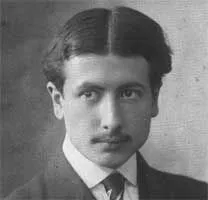
Photo: Wikimedia Commons
Armi Aavikko
Human Design Chart
Biography
Human Design Analysis: Armi Aavikko as Projector 3/5
Projector 3/5 — Design at a Glance
Armi Aavikko had a focusing aura that acted like a bright flashlight, revealing system errors in his environment immediately. However, this intense perception required sensitivity: Direct criticism often triggered resistance because it felt like glaring light in the face. Instead, Armi Aavikko was most effective through harmonious example. When he lived functional connections himself, others were drawn to him seeking his insights. His strategy involved waiting for a respectful invitation before taking on a leadership role, ensuring that his deep insights were perceived as valuable help rather than an attack.
Since his Sacral Center was undefined, Armi Aavikko lacked a constant source of life energy. His rhythm consisted of phases of high efficiency followed by mandatory rest periods for regeneration. Ignoring this necessity led to burnout; respecting it allowed him to work sustainably. Living according to this design and waiting for the invitation brought success. Deviations from it, however, resulted in bitterness as an expression of his non-self. His mechanics required patience: Waiting for the right invitation structure transformed his sharp observational skills into respected leadership, while ignoring this principle wasted his energy without achieving lasting results.
Emotional Authority
Armi Aavikko's design inclined him to never make decisions emotionally but rather use waiting time and sleep as filters for clarity. This resulted from his inner authority: Emotional Authority. With the Emotional Center defined in Armi Aavikko, it automatically functioned as his internal guiding force, independent of other defined centers in his chart. This mechanism subjected him to a constant emotional wave with continuous ups and downs of feelings. The world appeared colored by the current mood; a moment of excitement could quickly turn into a negative evaluation of the same thing.
His immediate feeling was only a snapshot, not a guaranteed truth value. Spontaneous decisions made in this emotional heat often risked negative consequences. Instead, his design required patience and the conscious process of multiple nights' sleep on an issue. Only with time did intense feelings subside; emotional distance grew. Then true clarity and calm set in – the state where Armi Aavikko had navigated through the decision-making process. This mechanism particularly shaped long-term life decisions, whose influence was far-reaching. Through waiting for this emotional calm zone, he gained deeper, more comprehensive insights that went beyond the first often misleading impression.
The 3/5 Profile — Martyr / Heretic
Armi Aavikko showed himself as someone who did not accept knowledge theoretically but acquired it through his own, often painful experimentation. His design demanded humility: Only after many failed attempts and phases of necessary withdrawal to ward off negative influences did his practical experience mature into a stable foundation. This process along Line 3 was essential because true insight is only gained through trial and error.
Simultaneously, Armi Aavikko carried the internal tension of Line 5. He tended to see himself as a 'spoilsport' – skeptical about his own talent and dismissive of external recognition. These self-doubts kept him from using his abilities for the collective until a profound transformation occurred. Only then did he accept his role: The one who solves others' problems with their wealth of lived experiences, functioning as a hero or savior.
The appeal of this profile lay precisely in this authentic knowledge from personal experience. Others were drawn to his stories and solutions because they were not abstract but proven. Yet, this heroic role could also be painful, especially when public attempts failed or the sense of inadequacy was felt acutely. Armi Aavikko's path was thus marked by the balance between necessary protection through withdrawal and later service to the whole, where he had to learn to acknowledge his talents rather than hide them out of insecurity.
Single Definition — Defined & Open Centers
Armi Aavikko was characterized by a stable willpower and emotional depth, while mental processing, communication, and energy remained situationally open. His defined Heart Center gave him a strong sense of self-determination; he preferred to determine his life himself, kept promises reliably, and sought recognition for his contribution. This constant ego strength formed the foundation of his actions. Simultaneously, his defined Solar Plexus Center made him an emotional authority: He waited patiently for the emotional wave to pass before deciding, gaining clarity instead of acting impulsively. This combination created inner peace and depth that he utilized in relationships and negotiations.
At the same time, seven open centers revealed his vulnerabilities to external conditioning. His open Head Center left him exposed to mental pressure from others; he tended to engage with questions not his own rather than trusting internal guidance. His open Ajna Center allowed for flexible thinking but without distance, there was a risk of adopting foreign opinions as personal truth. The open Throat drew attention without active pursuit; attempts to control communication often led to stress instead of clarity.
His open G Center meant a lack of firm identity; Armi Aavikko sought direction through initiation by others and places rather than asserting it himself. His open Sacral made him vulnerable to exhaustion from borrowed energy, lacking his own consistent energetic rhythm. The open Spleen amplified survival fears and the tendency to cling to unhealthy situations for perceived safety. Finally, his open Root absorbed external stress, leading him to relieve pressure through hectic activity instead of disengagement. These opennesses required constant mindfulness towards the environment.
Channel 40-37: Community — Channels & Gates
Armi Aavikko was someone who did not accept the structure of communities as given but actively shaped them by building trusting bridges between individuals. His design inclined him to base social contracts on reciprocity: “I do this for you, if you do that for me.” This attitude was significantly influenced by Channel 37-40, which connected his emotional Solar Plexus Center with the willful Heart Center.
This configuration meant Armi Aavikko never entered agreements spontaneously. The Community Channel 37-40 required a careful examination over time to ensure that arrangements were sustainable for both sides and based on genuine affection as well as the willingness to provide support. Spontaneous deals contradicted his mechanics; instead, he sought a personal invitation or “touch” signaling a true connection before integrating into a collective. His focus was less on material hierarchy than ensuring each member a respected place and function. The energy of this channel linked the need for recognition (Gate 37) with the willingness to work for loved ones (Gate 40), placing loyalty to the group above individual profit.
Alongside this central social mechanism, other gates influenced his personality. Gate 16 drove him to identify through experimentation and mastering new skills within the collective, while Gate 9 endowed him with the ability to focus sharply on details and perfect processes through repeated correction. In the realm of material life, Armi Aavikko sought control and direction over resources via Gate 21, needing recognition in service to the community. Gate 26 enabled him to anchor innovations within conservative structures, while Gate 36 showed how he used emotional crises as cyclical movements to enable new experiences and dissolve old patterns.
Tribal Circuitry — Circuit Signature
Armi Aavikkos design inclined towards structured cooperation where material well-being and mutual support were central. As someone with Simple Definition, Armi Aavikko was a person whose energetic power worked in clearly defined areas without being uncontrollably influenced from outside.
Central was the Ego Circuit, which connected Armi Aavikkos Heart Center with his Solar Plexus Center. This connection, concretized through Channel 37-40, created a clear understanding of giving and taking: “Today I give to you, tomorrow you give to me.” It wasn’t about individual ego in the conventional sense but rather tribal dynamics and communal resource creation. Armi Aavikko conveyed a traditional, conservative approach to community structures characterized by timeless stability and focus on essentials.
Without connection to his Sacral Center, there was no constant life force as an inexhaustible source. Instead, Armi Aavikkos design required mandatory pauses for regenerating resources. Without these breaks, the capacities for the tribe were exhausted. The energy worked in waves followed by necessary phases of recovery to gain new strength. This mechanism shaped Armi Aavikkos way of working and cooperating: effectively within defined limits but dependent on strategic pause to sustainably impact.
Right Angle Cross of Planning 3
Armi Aavikko's design showed a tendency towards strategic foresight. He was someone who saw the big picture and recognized patterns for future developments. This ability to push visions into reality stemmed from his archetypal energy of planning. It was a process of understanding complex interconnections. Armi Aavikko lived with the task of grasping this deeper structure and making it useful. His chart indicated the need not only to observe the obvious but also to penetrate underlying mechanisms. This shaped his way of making decisions and taking paths. He sought the logic behind events to derive a solid foundation for future actions from them. Planning was more than just an organizational tool for him; it was a means to uncover meaning. Through this approach, he could structure uncertainties and open up action spaces. His essence oriented itself towards the clarity of the whole rather than isolated details. This perspective allowed him to pursue long-term goals while identifying necessary steps. Armi Aavikko used this inner compass needle to navigate through complex situations. His strength lay in making the hidden visible and translating it into concrete intentions. This was the core of his strategic competence.
Saturn Return · Uranus Opposition — Life Cycles
Armi Aavikko's design could not be characterized in this section due to the presence of only astrological transits in the available data. There were no Human-Design-specific mechanisms such as Gates, Channels or Centers which are necessary to derive energetic focal points or typical behavioral patterns. Without these structural foundations, no specific character trait based on Armi Aavikko's individual blueprint could be described. The mentioned events – his first Saturn return and Uranus opposition – are general astrological markers for life phases of maturation or change but provide no information about how Armi Aavikko managed energy or made decisions. A Human-Design reading requires the analysis of inner architecture, not just external temporal cycles. Therefore, this chapter remained mechanically empty; it was impossible to make any statement about what strategy or authority was effective for Armi Aavikko or how his incarnation purpose manifested. The absence of HD data prevented any well-founded classification of his nature or life task within this system.
Projector · Emotional Authority — Synthesis
Armi Aavikko lived a life marked by a deep ability to recognize patterns and make connections – both in other people as well as in systems. This inclination, arising from the combination of her Projector strategy and emotional authority center, allowed her to perceive subtle disharmonies and show ways how things could be improved. Her profile as an experimenter/hero (3/5) intensified this urge for exploration and experimentation, where she gained wisdom through personal experiences that she then passed on to others. The open design of many centers suggests that she was strongly influenced by her environment but also possessed a special gift to amplify and reflect the energy of others.
A central tension field in Armi Aavikko's design lay between her need for recognition (Gate 37) and her ability to initiate change through insight (Channel 37-40). She was dependent on being invited by others to bring her expertise, yet also eager to exert a positive influence on the community. This dynamic carried the risk of getting entangled in unproductive patterns or wasting energy if she did not carefully heed her inner authority and wait for the right invitations.
1 Defined Channel
Incarnation Cross - Right Angle Cross of Planning 3
Solar Return
The Solar Return shows the moment when the sun returns to its exact birth position - your personal solar year.
Life Cycles
Discover the life cycles with a detailed triple view (birth chart, cycle chart, composite).
Human Design Profile
- Type
- Projector
- Strategy
- Wait for the respectful invitation
- Authority
- Emotional Authority
- Profile
- 3/5 - Martyr / Heretic
- Definition
- Single Definition
- Incarnation Cross
- Right Angle Cross of Planning 3
- Date of Birth
- 01.09.1958 09:15
- Place of Birth
- Helsinki, Finland
Frequently Asked Questions
What was Armi Aavikko's Human Design type?
Which Profile did Armi Aavikko have?
What Authority guided Armi Aavikko?
What incarnation cross did Armi Aavikko have?
When was Armi Aavikko born?
Discover your own Human Design
Are you also a Projector? Find out in a personal reading how to unfold your leadership qualities and recognize the right invitations.
More Personalities
Back to overviewSissy Spacek

Aaliyah

Alain-Fournier
Alexia

Alizée

Anémone