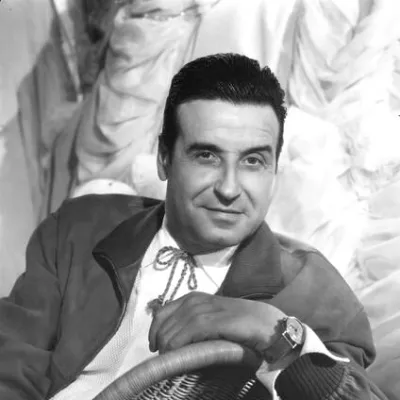
Arthur Penn
Human Design Chart
Biography
Penn's folks divorced when he was three and he was raised by his mother in New York City until he was 14, going to 13 different schools. His dad died in 1943. He married on 27 January 1955; two kids.
Successful and lucky as a Broadway theatre director 1958-1961, his films include "Two for the Seesaw" and "Toys in the Attic." He produced and also directed "The Miracle Worker," winning an Oscar nomination as Best Director on 23 May 1962. He then had a period of poor luck when nothing came together, 1962-1965, after which his luck turned with "Bonnie and Clyde," released on 13 August 1967. In 1970, he put out "Little Big Man."
Penn died of congestive heart failure at his home in Manhattan, New York on 28 September 2010, one day after his 88th birthday.
The Human Design of Arthur Penn: Projector 1/3
Projector 1/3 — Design at a Glance
Arthur Penn's Human Design profile was characterized by the specific dynamics of a Projector. He did not have a constant intrinsic source of life energy in his Sacral Center, leading to a rhythmic flow of energy: phases of high intensity and rapid productivity alternated with necessary rest periods to prevent exhaustion. This pattern often conflicted with societal structures like school systems or standardized work models that require consistent output.
His aura appeared focused and dense, comparable to a bright flashlight directed at weaknesses in his environment. Arthur Penn had the natural ability to immediately recognize systemic errors or inefficient processes. However, this direct confrontation was often perceived as aggressive, making his most effective strategy not active problem-solving but radiating a harmonious presence. By being an example of functional relationships himself, he attracted others who would then seek his advice.
His central life task involved waiting for value-based and honest invitations from others before offering leadership or advice. If Arthur Penn lived according to this strategy of waiting and invitation, he was rewarded with success. Ignoring this principle and acting without such confirmation led to feelings of bitterness as an expression of his non-self. His design challenged him to bring light into darkness not through coercion but through attractive clarity.
Splenic Authority
Arthur Penn's inner compass was the defined Spleen Center, which served as a source of authority. This configuration required open emotional and sacral centers, making him either a Projector or Manifestor. His design endowed him with pronounced survival intelligence: an immediate internal knowledge about whether situations, people, or environments were beneficial to his health. This instinct was not a reflective process but an instant impulse in the present moment. Arthur Penn had to make decisions on the spot; the first thought was always right and served as protection against harmful influences.
However, this Spleen voice was subtle and appeared only once. It could easily be overlooked or drowned out by external advice, necessitating high vigilance. Sometimes a brief retreat helped him hear this delicate impulse clearly. Since his knowledge was situational and momentary, his preferences changed short-term. Long-term rigid commitments hindered him from adapting to new, healthier possibilities. His design therefore required much flexibility and freedom; he should not be overly bound so as to follow the spontaneous wisdom of his body. This structure allowed Arthur Penn to set strict boundaries effectively and take care of himself, provided he trusted the first impulse rather than delaying it through reflection.
The 1/3 Profile — Investigator / Martyr
Arthur Penn's Human Design profile was characterized by Profile 1/3 – The Investigator and Experimenter. This configuration shaped a lifestyle based on trial and error: He learned not primarily through abstract theory alone but by practically applying things and drawing conclusions from the resulting experiences. His judgment was particularly trustworthy, as it combined theoretical foundation with hard practical experience; if he deemed something good, he had thoroughly examined it.
Line 1 of his profile anchored him in conservative principles and the building of stable foundations. It promoted a stance of gradual change while preserving traditional patterns. Simultaneously, Line 3 drove him to actively experiment, regarding mistakes as necessary teachers. This line represented a learning process through direct experience; often external pressure or necessity helped him focus and practice skills. Arthur Penn thus appeared as someone who respected deeply rooted structures but continually tested them through his own actions and experimentation. His authority did not stem from mere assertion but from the validation of his insights in reality. This dual focus – on one hand, the foundation, on the other, experimental practice – created a dynamic tension that propelled him to constantly revalidate and adapt knowledge.
Split Definition — Defined & Open Centers
Arthur Penn's design predisposed him to a constant mental pressure. The definition between the Head Center and Ajna Center created an ongoing stream of questions, inspiration, and the need to understand connections. This state was not a choice but a set way of thinking that led him to develop concepts and encourage others to think through his aura. However, since these centers did not have direct access to the motors for action, attempts to immediately implement ideas often resulted in frustration or disappointment. His strength lay in enduring mental pressure without hastily converting it into actions, instead waiting for the right moment to share his insights.
At the same time, Arthur Penn had defined Spleen and Root Centers. The defined Spleen Center gave him a strong body awareness and intuition in the present moment. It allowed spontaneous judgments based on what was relevant for his well-being and survival at that moment. The defined Root Center provided a steady, adrenalized push that propelled him forward and helped him deal with stress, especially concerning material security and existential awareness. This combination of intuitive clarity and constant life impulse formed the foundation of his physical presence.
In contrast, his Throat, G, Heart, Sacral, and Solar Plexus Centers were open. The open Throat Center made him vulnerable to the pressure to gain attention or constantly speak if he did not wait for the invitation. His open G Center meant that he had no fixed identity but reflected in relationships and environments; he needed to learn that he would automatically find the right direction at the right place. The open Heart Center led him often to try proving his worth through promises or performance, even though he was not designed for consistent willpower. His open Sacral Center let him absorb and amplify foreign energy, which could lead to exhaustion if he did not pause. Finally, his open Solar Plexus absorbed the emotions of the environment, putting him at risk of identifying with foreign moods or avoiding confrontations out of fear of rejection.
Channels for critical mind and precise judgment.
Arthur Penn's design established a fundamental attitude of skeptical analysis. His mind sought verifiable patterns rather than blind faith. This attitude stemmed from the Channel of Logic 63-4, connecting Head and Ajna Centers. Here, constant doubt filtered information until a consistent logical structure emerged. Only what practically worked and was verifiable was considered true.
This analytical rigor was complemented by the Channel of Judgment 58-18. It connected root energy with Spleen and drove an insatiable urge for correction. Arthur Penn judged patterns based on whether they shaped life constructively or destructively. Gate 58 (Vitality) demanded more and better, while Gate 18 (Correction) ensured this energy remained balanced. The goal was to master processes for the collective's benefit.
Additionally, Gates like 17 (Succession, logical teaching), 52 (Concentration, Silence), and 43 (spontaneous insight) supported his ability to understand complex connections and clearly communicate new insights. Yet, his core remained critical examination: he asked questions to find answers that stood the test of time. If mental pressure could not be alleviated by a solution, fear arose. His design served to benefit the collective through precise, reasoned predictions and corrections, speaking only when his mind found a consistent answer.
Collective Circuitry — Circuit Signature
Arthur Penn's design predisposed him to clear, strategic thinking. He used logical structures to grasp connections and look into the future. This attitude resulted from the Understanding Circuit, which in him did not function as an uninterrupted flow but split into two isolated parts due to its divided definition.
The first part connected Head Center with Ajna Center via the Channel of Logic (Gates 63 and 4). This created a direct link between spontaneous thought impulses and the ability to visually and focus-structured translate them. Arthur Penn could thus take in information and convert it into clear, strategic concepts free from emotional coloring since Solar Plexus was not involved here.
Parallel to this existed a second energetically separated section: the Channel of Judgment (Gates 18 and 58) connected Spleen with Root Center. This part provided an intuitive evaluation of situations that directly translated into action impulses or stress reactions. Crucial is that these two areas – strategic thinking above and intuitive judgment below – did not communicate in Arthur Penn. They were separate fields: one served cognitive order and future vision, the other immediate instinctive orientation here and now. This separation meant his rational planning was not automatically supported by his intuitive safety sense but existed as an independent process line.
Right Angle Cross of Service 3
Arthur Penn's design carried the signature of the right cross of service. This configuration established a fundamental disposition characterized by deep empathy and a desire for harmonious relationships. Arthur Penn was someone who could intuitively put himself in others' shoes and feel their emotional needs without getting lost in them.
In Human Design, this cross describes a specific character orientation: it combines the ability to resonate emotionally with a serving attitude. Arthur Penn had a natural talent for providing support and creating spaces of care. His energy did not work through dominant leadership or aggressive assertiveness but rather through a gentle, connecting presence. He sought ways to help others feel understood and supported.
This mechanism meant that Arthur Penn's greatest strength lay in nurturing relationships. He was designed to function as an emotional anchor that provides stability and comfort. The right cross of service challenged him to consciously use his empathetic gift instead of being overwhelmed by it or neglecting himself. Arthur Penn's path involved using his natural care as a tool for connection and healing, learning to set boundaries so as not to deplete his own energy. His design marked him as someone who found their place in the world through compassion and service to others.
Saturn Return · Uranus Opposition · Chiron Return · 2nd Saturn Return — Life Cycles
Arthur Penn's design indicated a tendency towards profound transformation processes that often intensified later in life. This dynamic was evident in 1962 when, at age 40, he was nominated for an Oscar as Best Director for
Projector · Splenic Authority — Synthesis
([
2 Defined Channels
Incarnation Cross - Right Angle Cross of Service 3
Solar Return
The Solar Return shows the moment when the sun returns to its exact birth position - your personal solar year.
Life Cycles
Discover the life cycles with a detailed triple view (birth chart, cycle chart, composite).
Human Design Profile
- Type
- Projector
- Strategy
- Wait for the respectful invitation
- Authority
- Splenic Authority
- Profile
- 1/3 - Investigator / Martyr
- Definition
- Split Definition
- Incarnation Cross
- Right Angle Cross of Service 3
- Date of Birth
- 27.09.1922 20:40
- Place of Birth
- Philadelphia, PA, United States
Frequently Asked Questions
What was Arthur Penn's Human Design type?
Which Profile did Arthur Penn have in Human Design?
What Authority guided Arthur Penn's decisions?
What incarnation cross was assigned to Arthur Penn?
When was Arthur Penn born?
Discover your own Human Design
Are you also a Projector? Find out in a personal reading how to unfold your leadership qualities and recognize the right invitations.
More Personalities
Back to overviewSissy Spacek

Alain-Fournier

Anémone

Ann-Margret

Bourvil

Christian-Jaque