Photo: Wikimedia Commons
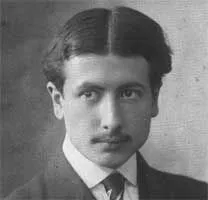
August Strindberg
Human Design Chart
Biography
Supporting himself as a painter, journalist, tutor and librarian, he began writing on the side. His first important play, "Master Olaf," was produced in 1872. He won renown for his satirical novel, "The Red Room," in 1879.
Strindberg spent an unhappy childhood and suffered through three poor marriages that left him a very bitter man and woman-hater. His first marriage was in 1877, to Swedish actress, Siri von Essen. His misogyny was suggested in his following works, "Married," "The Father" and "Miss Julie."
He died of cancer 14 May 1912 Stockholm, Sweden.
August Strindberg as a Generator 1/3 in Human Design
Generator 1/3 — Design at a Glance
August Strindberg possessed immense sacral endurance that turned him into a powerful workhorse – provided he acted in harmony with his inner resonance. His design is characterized by the principle of reaction: His energy did not unleash itself through spontaneous initiatives but as a response to impulses from the outside world. The motto was clear: Not initiate, but react.
Two central conflicts shaped his dynamics. On one hand, he tended to invest energy into tasks that didn't give him inner joy. This 'wasting' of power led quickly to exhaustion and burnout when lacking intrinsic pleasure, as the workhorse without enthusiasm became overburdened. On the other hand, he suffered deeply if kept from his heart project despite still having available energy. The interruption despite existing pressure created deep frustration.
His most successful strategy was waiting for signals from life and only then acting when his sacral center gave a clear 'yes'. Living by this pattern rewarded him with a feeling of profound fulfillment and satisfaction. Ignoring this inner compass and instead trying to actively initiate things or work against his gut feelings, however, met with persistent frustration and a lack of energy. His strength thus lay not in pushing forward but in the powerful response to life.
Emotional Authority
August Strindberg's design inclined towards emotional turbulence that significantly shaped his decision-making process. He was someone whose inner authority resided in the defined Solar Plexus Center. This meant he was subject to a constant wave of emotional ups and downs; his perception of the world was always colored by the current mood. What appeared inspiring at one moment could turn negative in the next. Yet, this spontaneous emotional reaction did not represent a reliable truth but merely a fleeting snapshot. Quick, impulsive decisions often proved problematic for his design as they were based on this ephemeral surface.
The mechanics of his emotional authority required time and patience. By not making immediate decisions but letting them 'sleep' overnight, the initial emotional heat could subside. This waiting process allowed him to gain emotional distance. Only when the intense feelings had subsided did clarity and calmness emerge. This delay was no obstacle but rather the essential mechanism for penetrating deeper truths about a situation. Especially in long-term life decisions that influenced his course, this discipline of waiting was central. Only by going through this emotional wave could he arrive at well-founded conclusions instead of being led by momentary moods.
The 1/3 Profile — Investigator / Martyr
August Strindberg appeared as someone whose judgments only gained absolute credibility when they were the result of intense theoretical study and practical application, often riddled with errors. His design inclined towards this cyclical process: Profile 1/3 Line 1 demanded inner reflection and investigation into the right feelings for limitation, coupled with Neptune energy that promoted mystery and veiling emotions. Simultaneously, Line 3 through Gate 28 urged adventure and risk-taking.
This configuration created a tension field between the need for a complete knowledge base before action and the impulsive urge to experimentally test things. Sometimes, the energy of Line 1 took control, leading to fear about moving from planning into implementation because it felt like not knowing enough yet. This conflicted with Line 3's desire to learn from mistakes. Through Saturn energy, however, he learned to be cautiously adventurous and weigh important decisions rationally instead of blindly taking risks.
The authenticity of his judgment only emerged through the completion of this cycle. When August Strindberg confirmed that an activity or object was truly good, he had previously both intellectually grounded it and practically validated it with heart and soul. Self-discovered insights were thus central to his life task, uncovering hidden connections and confirming them through direct experience.
Triple Split Definition — Defined & Open Centers
August Strindberg's Human Design profile indicated a tendency towards intense internal urging that could not be resolved through immediate action. His Head and Ajna Centers were defined, creating constant mental pressure for inspiration and concept formation. This state was often marked by questions and confusion as there was no energy available to directly implement thoughts. Constant thinking was his nature, but it led to frustration when he tried to force these ideas out of his mind.
At the same time, August Strindberg had a defined Sacral Center providing a massive vital energy source. However, this power could only be correctly utilized through reaction to external impulses; initiation led to exhaustion. His emotional authority lay in the Solar Plexus Center, meaning that decisions should only be made after waiting for an emotional wave to gain clarity. Additionally, his defined Spleen Center offered spontaneous intuitive security in the present moment, while his Root Center provided a fixed stress pressure to maintain life force.
In contrast, his open centers presented challenges. His open Throat Center led to situational communication without a set manifestation; he tended to worry about attention or speak under pressure if not waiting for the right invitation. His open G Center lacked a fixed identity or direction, causing him to adapt to his environment and seek the right place. Furthermore, his open Heart Center lacked constant willpower; he avoided promises and competition as it would otherwise lead him into cycles of self-doubt and unfulfilled commitments. The challenge was to resist mental urging and wait until Sacral energy and emotional clarity allowed for a correct response.
Channels for doubt, values, impulse and mental images.
August Strindberg's Human Design profile indicated a tendency towards intense, root-driven restlessness. The Sun stood in Gate 41 (Restriction), making the Channel of Recognition 41-30 his energetic focus (~70% of total energy). This channel connected the drive from the Root Center with the emotional wave of the Solar Plexus. A genetically anchored hunger for new experiences was driven by fear of boredom and the expectation to be satisfied through action. Emotions further fueled this impulse, leading to a deep longing to feel life intensely and explore the limits of personal experience.
This powerful drive was flanked by other structures. The Channel of Logic 63-4 connected his Head Center with his Ajna Center via Gate 63 (Doubt) and Gate 4 (Formulation). This created a skeptical mind that constantly tested patterns to verify their consistency. Doubt was essential here; logic could be formally correct yet still be wrong. Only through logical experimentation and proving consistent, verifiable patterns did August Strindberg arrive at a valid answer. Unfounded belief found little room; the mind served to question and provide well-considered predictions for the collective rather than definitively solve personal life questions.
Parallel to this was the Channel of Preservation 27-50 connecting his Sacral Center (Gate 27, Care) with his Spleen (Gate 50, Values). This energy cared for what had been created and took responsibility for the clan. It involved selfless interest in others and defending traditional values necessary to maintain order. August Strindberg radiated an aura that invited trust; he was called upon to care for those who could not take care of themselves – whether through direct provision or by preserving communal structures.
The final piece was the Channel of Abstraction 64-47 between Head (Gate 64, Confusion) and Ajna (Gate 47, Understanding). This mind filtered every experience through a kaleidoscope of mental images to construct meaning. It sought stories that explained life's mysteries. Although this process often came with mental confusion, patience led to points condensing into an inspiring perspective. This abstracting spirit helped weave a coherent narrative structure from the impressions gathered through the Recognition Channel, which he then communicated.
Collective Circuitry — Circuit Signature
August Strindberg's Human Design profile showed three isolated energetic poles that did not form an integrated overall strategy. His logic operated independently of his emotional waves and instinctive protective mechanisms, leading to situational use of these forces without central guidance. The Understanding Circuit connected his Head and Ajna Centers through the Channel of Logic. This shaped a stance oriented towards strategy and future orientation, sharing rational insights free from emotional coloring. Parallel to this was the Meaning Finding Circuit as a separate unit. It included two unconnected segments: on one side, Head and Ajna Centers (here via Abstraction), on the other, Solar Plexus and Root Centers (via Recognition). This generated cyclical emotional waves aimed at deriving meaning from the past and sharing these experiences with the collective. The third pole was the Protector Circuit, which in August Strindberg exclusively connected his Sacral and Spleen Centers through the Channel of Preservation. This connection activates instinctive energies for protection, preservation, and nurturing genetic heritage. As there were no channels between these three circuits, there was no automatic translation between what was understood, felt, and instinctively protected. Energy remained fragmented; logic, emotion, and survival instincts worked alongside each other without forming a cohesive flow.
Right Angle Cross of the Unexpected 4
August Strindberg's design established an existential axis that was governed by the mechanics of the Right Cross of the Unexpected. This structure did not function as a freely controllable trait but rather as a constant background tension that profoundly and often unconsciously shaped his life. It defined his destiny theme through a fundamental attitude in which the unexpected was not seen as a disturbance, but as the normative condition.
This cross implied a way of being marked by sudden turns, breaks, and the continuous necessity to reorient oneself in unpredictable situations. The underlying energy required the integration of chaos, which could act both as a creative impulse and a destructive force. For August Strindberg, this meant that stability was not achieved through predictability but rather through the ability to cope with the inherent unpredictability of his life's energy. The mechanics of this cross created a tension that pushed him to continuously adapt to new realities without being able to control them beforehand. It was not a choice, but a given dynamic that shaped his experiential world and forced him into an ongoing process of realignment within a chaotic framework.
Saturn Return · Uranus Opposition · Chiron Return · 2nd Saturn Return — Life Cycles
August Strindberg's design structured relationships through cyclical crisis points and tested himself in this context. This dynamism manifested concretely in his relationship life: In 1877, at the age of 28, he married Siri von Essen. This marked his first Saturn Return, a time when years of inner groundwork often condenses into a viable life structure and commitments are entered into.
The testing of this structure did not follow a linear path but went through intense trial phases. In 1897, at the age of 48, he divorced Frida Uhl. This point fell in his Chiron Return, an fulfillment cycle between the ages of 49 and 51 (beginning here), during which one's incarnation cross unfolds. If a person lives according to their strategy, meaning becomes experiential; this occurred as a profound turning phase that dissolved old bonds to clear the way for their true life task.
The process of clarification and structuring continued. In 1904, at the age of 55, he separated from Harriet Bosse. This corresponded to his second Saturn Return. While the first return often lays the foundation, the second serves to strengthen these structures or shed unnecessary burdens to achieve a mature, sustainable form of existence. Strindberg's design did not use these astrological turning points as random blows of fate but as mechanical rhythms that shaped, tested, and ultimately aligned his interpersonal bonds with his individual purpose.
Generator · Emotional Authority — Synthesis
August Strindberg lived an inner drive that expressed itself in constant search and testing. As a Generator with emotional authority, he needed time to let decisions mature, yet his defined Head Center (Logic Channel) created a continuous pressure to question and test patterns for their durability. This combination of sacral drive and mental inspection led him to experience encounters intensively and validate insights both theoretically and practically – a work method that allowed him deep understanding but also brought mental concern with it. The repeated turning points in relationships (1877, 1897, 1904) appeared as phases of intense testing and realignment, navigating emotional waves to reach personal truth.
Central for August Strindberg was a paradox between the need for deep emotional validation and an unstoppable drive towards logical analysis. His Emotional Center required time for maturation processes while the Logic Channel (Gate 63/4) generated constant questions and doubts. This tension led to an inner struggle between feeling and mind – on one hand, the desire for stability and clarity in relationships, on the other hand, the relentless search for logical coherence and readiness to question established patterns anew.
4 Defined Channels
Incarnation Cross - Right Angle Cross of the Unexpected 4
Solar Return
The Solar Return shows the moment when the sun returns to its exact birth position - your personal solar year.
Life Cycles
Discover the life cycles with a detailed triple view (birth chart, cycle chart, composite).
Human Design Profile
- Type
- Generator
- Strategy
- To respond - wait for something to respond to
- Authority
- Emotional Authority
- Profile
- 1/3 - Investigator / Martyr
- Definition
- Triple Split
- Incarnation Cross
- Right Angle Cross of the Unexpected 4
- Date of Birth
- 22.01.1849 08:00
- Place of Birth
- Täby, SWED
Frequently Asked Questions
What was August Strindberg's Human Design type?
Which Profile did August Strindberg have?
What Authority guided August Strindberg?
What incarnation cross did August Strindberg have?
When was August Strindberg born?
Discover your own Human Design
Are you also a Generator? Find out in a personal reading how to use your sacral energy correctly and discover deep satisfaction.
More Personalities
Back to overviewAaliyah

Alain-Fournier
Alexia

Angèle

Angeli
Anne-Marie