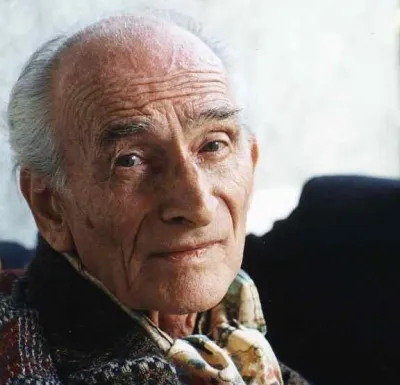
Bernie Madoff
Human Design Chart
Biography
Madoff founded a penny stock brokerage in 1960, which eventually grew into Bernard L. Madoff Investment Securities. He was the company's chairman until his arrest on December 11, 2008. That year, the firm was the sixth-largest market maker in S&P 500 stocks. While the stock brokerage part of the business had a public profile, Madoff tried to keep his asset management business low profile and exclusive.
At the firm, he employed his brother Peter Madoff as senior managing director and chief compliance officer, Peter's daughter Shana Madoff as the firm's rules and compliance officer and attorney, and his sons Mark Madoff and Andrew Madoff. Mark hanged himself in 2010, exactly two years after his father's arrest, Peter was sentenced to 10 years in prison in 2012, and Andrew died of lymphoma on September 3, 2014.
On December 10, 2008, Madoff's sons Mark and Andrew told authorities that their father had confessed to them that the asset management unit of his firm was a massive Ponzi scheme, and quoted him as saying that it was "one big lie".
The Human Design of Bernie Madoff: Manifesting Generator 2/4
Manifesting Generator 2/4 — Design at a Glance
Bernie Madoff's Design set a tendency towards hybrid energy: the speed of a Manifestor combined with the constant sacral power of a Generator. This configuration allowed him to skip steps and quickly draw results into his life. Yet, this speed carried risks. Often he was too fast and skipped important stages, which later required catching up and caused frustration – his specific Non-Self theme. Additionally, he tended to pursue multiple things at once by reacting to various impulses. When inner consent was lacking, the joy of creation quickly turned into dissatisfaction. To use his energy effectively, his strategy was to react rather than initiate. He had to wait until his sacral center signaled a clear "yes." Only then could he start and work on several projects simultaneously without getting distracted. In this state of inner confirmation, an enriching play mode entered, where variety enhanced his creative power instead of depleting it. His ability to draw deeper satisfaction from his actions depended directly on whether he followed the rhythmic response to life or worked against the flow of his own authority.
Emotional Authority
Bernie Madoff's decision-making was characterized by a compelling need for emotional detachment; spontaneous impulses proved to be misleading in his design. His inner authority lay in the defined Emotional Center, meaning he was subject to constant waves of ups and downs in feelings. The world appeared colored by his current mood: A moment could be marked by total enthusiasm, while the same object might be negatively evaluated in the next instant. This immediate feeling, however, was only a snapshot, a first impression that did not yet represent his truth. Consequently, quick, spontaneous decisions made directly from an emotion often had negative consequences.
The mechanics of his authority required patience and time to let a decision mature. Only through multiple "sleeping on it" could he distinguish between the temporary mood and deeper clarity. Over time, intense feelings subsided, allowing him to gain emotional distance. In this state, calmness set in, marking the process as complete. This approach was particularly important for long-term decisions, which could have a significant impact on his life course. Without this time delay, emotional coloring remained dominant and prevented clear insight into the actual situation.
The 2/4 Profile — Hermit / Opportunist
Bernie Madoff's Human Design shows a fundamental tension between the need for isolated reflection and the attraction of social networking. He constantly oscillated between two poles: Line 2, which acts as an "Hermit," and Line 4, oriented towards community and mutual dependence. In his withdrawal phase, he immersed himself in internal processes to gain clarity and evaluate the collected knowledge from his network. This phase served to develop brilliant ideas before he again turned outward.
However, Line 2 also brought with it a tendency to project newness without inner comparability. This could lead to conflicts if these projections were not clearly communicated. At the same time, Line 4 drew him into a system of mutual dependence where he relied on cooperation and quick adaptation from his environment. The danger lay in the emergence of arrogance or meanness when there was no respect for this cyclical rhythm—such as overestimating one's own performance or perceiving others as insufficiently adaptable.
For Bernie Madoff, it was crucial to clearly articulate his needs: when he sought company and when he wanted to be left alone. Only in this way could he utilize the energy of Line 4 without falling into the traps of projection or fixed expectations towards others. His design demanded a conscious navigation between cave and network to minimize inner conflicts and effectively employ his intellectual resources.
Split Definition — Defined & Open Centers
Bernie Madoff's Human Design profile indicated a tendency towards constant, reliable presence driven by defined energy centers. His Throat Center, G Center, Sacral Center, Solar Plexus Center, and Root Center were all defined. This created a consistent ability to express himself clearly, with a strong sense of identity and vital force. He had a firm sense of direction and could channel emotions and stress in specific ways. The connection between these centers allowed him to communicate easily and assert his truth as long as he trusted his inner authority.
At the same time, his chart revealed vulnerabilities through open centers: Head Center, Ajna Center, Heart Center, and Spleen Center were undefined. His open Head Center made him susceptible to mental confusion and pressure to find answers that did not come from within. He tended to get entangled in other people's questions or avoid intellectual pursuits when the mental pressure became too great. The open Ajna Center meant he absorbed concepts and theories from his environment without owning them as his own truth.
The open Heart Center led him to lack a steady drive of willpower. Instead, he often sought validation or tried to prove his worth through external success, which could lead him into cycles of promise and disappointment. The open Spleen Center made him sensitive to the well-being of others and vulnerable to dependencies on people or situations that gave a false sense of security. He tended to hold onto things that were not good for him out of fear of losing this conditioned safety. This configuration shows how defined energy sources interact with open mirrors: while he possessed immense power, he was dependent on external impulses to find mental and emotional clarity, making him vulnerable to environmental pressure.
Channels for resource management, manifesting power and emotional intuition.
Bernie Madoff's Human Design profile established a structure based on the connection between material resource control and higher knowledge. This configuration generated an aura of mutative innovation that could set new directions for the collective. The energy was generative and empowering when it trusted sacral reactions; it served to transform the mutation impulse into material reality.
The Beat Channel 14-2 connected his Sacral Center with his G Center through Gate 14 (Power Competence, Material Resources) and Gate 2 (Higher Knowledge, Cohesion). As one of the tantric channels, it carried characteristics like mutation, innovation, and uniqueness. Bernie Madoff had access to resources necessary to transform the mutative impulse into a material direction. He could bring innovative, empowering new directions by trusting the reaction from his Sacral Center. His first task was to be honest with himself and live his own life purpose. If he trusted that life made decisions through him, he strengthened others mechanically. People beyond his healthy aura might find their own direction.
The Charisma Channel 34-20 connected his Sacral Center (Gate 34: Power) with his Throat Center (Gate 20: Now). This was the classic Manifesting Generator channel where the drive to manifest was guided by sacral reaction. The speed at which generative power met manifestation was so fast that it almost bypassed the reaction. Without awareness of the inner guidance from Sacral, the same driving energy could show obsession or spontaneous eruption. Bernie Madoff possessed the power to maintain activity over long periods. It was essential for him to give his energy only to things he truly enjoyed doing. His genuine vitality and self-empowerment spontaneously surfaced with the potential to inspire others naturally.
The Recognition Channel 30-41 connected his Root Center (Gate 41: Restriction) with his Solar Plexus Center (Gate 30: Feeling Awareness). The pressure from the Root began with restlessness and energized countless scenario fantasies. Emotions from the Solar Plexus heated the drive, resulting in an intense need to seek new experiences. Bernie Madoff was a person of great imagination and endless desire to deeply feel life. His restlessness was balanced by developing patience and self-control needed to follow his emotional authority. The secret lay in simply enjoying his dreams and every experience for himself without succumbing to the pressure of expectations.
Additionally, Gates like 44 (Awareness), 19 (Resources, Territory) and 33 (Reflection) were active. Gate 8 (Contribution) and 27 (Care) promoted acknowledgment for group goals. Gate 54 connected worldly success with mystical insight.
Individual Circuitry — Circuit Signature
Bernie Madoff's Human Design profile unfolded through two separate but parallel operating energetic streams. The Knowledge Circuit linked his Identity Center to the Sacral Center via the Beat Channel (Gates 2 and 14). This gave him a pulsing rhythm for expressing his unique individuality. Simultaneously, the Purpose Circuit operated independently by connecting his Solar Plexus Center with his Root Center (Channel Recognition, Gates 30 and 41). Here flowed the cyclical processing of emotional waves from the past to draw collective lessons. These two systems – the drive towards individual transformation on one hand and the reflective search for purpose on the other – were not directly connected but existed as separate forces alongside each other. The integration acted as a connecting element in the Now moment: The Charisma Channel (Gates 20 and 34) linked his Throat Center with his Sacral Center. This allowed Bernie Madoff to draw power from reacting to life and make it acoustically effective and immediate. This configuration set a dialectic between the pulsing drive for new knowledge and emotional processing of past experiences, where the expression was always channeled through the charismatic Now moment.
Right Angle Cross of the Four Ways 1
Bernie Madoff's Human Design profile bears the signature of the right cross of the four paths. This configuration points to a deeply rooted tension between the desire for security and the necessity to assert oneself in an often hostile or unpredictable world. It is a pattern that frequently appears among people who face structural challenges not due to their own fault but through external circumstances or family imprinting.
This cross links specific energies: the drive for control and structure (Gate 14) with the ability to adapt and survive in difficult situations (Gate 23). At the same time, it involves the gates for inner integrity (Gate 57) and the search for a safe harbor (Gate 30). The result is often an internal conflict: on one hand, the need to create order and exercise power; on the other, the feeling of being constantly threatened or disadvantaged.
For Bernie Madoff, this meant a life shaped by a perception of danger. His design suggests that he developed mechanisms to control this insecurity. The energy of this cross promotes strategies aimed at dominance and protection, often in response to perceived weakness or instability in his environment. It does not describe a specific act but rather a fundamental psychological orientation: the pursuit of an unassailable position in a world felt as threatening. This dynamic created internal pressure that should be alleviated through control and structuring of external reality.
Saturn Return · Uranus Opposition · Chiron Return · 2nd Saturn Return — Life Cycles
Bernie Madoff's life followed a rhythm of cyclical review and restructuring. His design was marked by recurring phases where inner development met outer reality. These patterns did not appear as isolated events but as deeply rooted life stages that shaped his actions and decisions.
The first Saturn Return marked the transition from youth to adult responsibility. In this phase, early ambitions crystallized into concrete structures. It was a time when it became clear which foundations were solid and which were not. This experience laid the groundwork for his later actions.
The Uranus Opposition brought a period of inner unrest and transformation. It demanded a realignment where old patterns were questioned. For Bernie Madoff, this meant pressure to break away from established paths or radically change them. It was a moment of decision between continuity and rupture.
The Chiron Return represented the peak of his personal unfolding. As a fulfillment cycle, it allowed him to express his deepest purpose if he had followed his inner authority. Here, his life mission entered its bloom phase, accompanied by a strong sense of meaning and destiny.
The second Saturn Return closed this circle. It brought another phase of consolidation and conclusion. Previous achievements were tested for their durability. For Bernie Madoff, it was the time when what truly stood the test of time became clear from what was merely temporary. This cyclical structure shaped his entire life.
Manifesting Generator · Emotional Authority — Synthesis
He was a Manifesting Generator whose life seemed marked by a constant dynamic between initiation and reaction. The connection of the Sacral Center (sacral energy) with the Throat Center allowed him quick action and the implementation of ideas (quickly pulling things into his life), yet the defined emotional center required maturation of decisions over time – an internal conflict that played out in a dance between impulsiveness and the need for emotional clarity. This inner tension was amplified by his profile as a Natural Talent/Networker, oscillating between the desire to withdraw (Line 2) and the search for connection with others (Line 4).
A central paradox lay in the ability to generate energy and quickly initiate things (Channel of Beats), coupled with the necessity to filter this energy through emotional processes (emotional authority). The Knowledge Circuit emphasized the development of a unique identity, yet quick action could lead to skipping important steps. Thus, he lived in a tension field between the desire for innovation and the need to anchor decisions emotionally, making him an actor whose approach was often characterized by swift movements followed by reflection.
3 Defined Channels
Incarnation Cross - Right Angle Cross of the Four Ways 1
Solar Return
The Solar Return shows the moment when the sun returns to its exact birth position - your personal solar year.
Life Cycles
Discover the life cycles with a detailed triple view (birth chart, cycle chart, composite).
Human Design Profile
- Strategy
- To respond - wait for something to respond to
- Authority
- Emotional Authority
- Profile
- 2/4 - Hermit / Opportunist
- Definition
- Split Definition
- Incarnation Cross
- Right Angle Cross of the Four Ways 1
- Date of Birth
- 29.04.1938 13:50
- Place of Birth
- New York, New York, United States
Frequently Asked Questions
What was Bernie Madoff's Human Design type?
What Profile did Bernie Madoff have in Human Design?
Which Authority guided Bernie Madoff?
What incarnation cross was Bernie Madoff assigned?
When was Bernie Madoff born?
Discover your own Human Design
Are you also a Manifesting Generator? Find out in a personal reading how to unfold your multi-talents and direct your energy wisely.
More Personalities
Back to overviewAldair

Alizée

Angeli

Arletty

Artus

Balthus