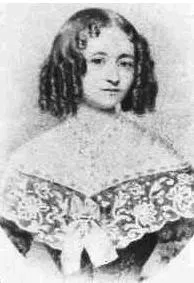
Bertha von Marenholtz-Bülow
Human Design Chart
Biography
Bertha von Marenholtz-Bülow as a Reflector 4/6 in Human Design
Reflector 4/6 — Design at a Glance
Bertha von Marenholtz-Bülow revealed herself as someone whose inner experience was not shaped by constant personal energies. Her design lacked defined centers, indicating that she did not have a firmly established and unchanging internal structure. Instead, she acted like a mirror of her surroundings: She perceived the energy of other people as well as nature—including seasons and astronomical constellations—particularly intensely. This receptivity required a specific lifestyle. For Bertha von Marenholtz-Bülow, it was crucial to live in harmony with natural cycles. When making important decisions, she waited at least one month, or a complete lunar cycle. Through this patience, she automatically found environments and people that were good for her. If she lived according to this design, she observed the world without attachment and identification. As a reward, she experienced a feeling of joyful surprise. However, if she softened against her nature or ignored this strategy, it led to deep, lasting disappointment regarding herself and the state of the world. Her essence was therefore not defined by constant self-production but by the ability to precisely reflect the moment and environment, provided she respected the necessary rhythm of waiting.
No Inner Authority
Bertha von Marenholtz-Bülow's design lacked an inner, physical authority—a rare configuration. As a mental projector, she had no defined centers below her Throat Center. Her decision-making did not rely on internal impulses but rather on exchanges with other people. Through the energetic interactions in her open centers, dormant potentials were activated and provided specific information. This allowed her to view issues from numerous perspectives and express them differently. Her high resonance ability helped her identify the appropriate environment as well as the right conversation partners for this exchange.
Evaluating these diverse impressions was a complex process that required time and solitude. Over the years, Bertha von Marenholtz-Bülow learned to recognize the thread of meaning and distinguish what made sense and truly belonged to her. She developed a specific intelligence: filtering out the essential from a mass of information, organizing it meaningfully, and structuring it. This formed her capital for success as a projector. A key element in her life was staying in an environment where she felt comfortable. There, she met people with whom she could trustfully discuss decision-making processes. This regular exchange deepened over time her sense of what was right for her and how to best utilize her unique intelligence.
The 4/6 Profile — Opportunist / Role Model
Bertha von Marenholtz-Bülow's design showed a tendency towards intense experimentation in the first three decades of life before her focus changed. As someone with Profile 4/6, Line 6 initially appeared similar to Line 3: She actively sought connections and tested various roles in relationships and friendships. This early phase was marked by the search for belonging, a core drive of Line 4.
With the activation of Line 6, typically around the third decade, an internal conflict emerged: The desire for communal connection stood in tension with the need for distance and wise reflection on life's meaning. This field of tension between heart and head shaped her development. In later years, she was expected to serve as a role model through cooperation. A characteristic caution became apparent: Her large heart did not open indiscriminately but carefully chose to prevent injuries.
This attitude was supported by Gate 63, which fostered strong memory and fixation on details and comparisons. It enabled her to externalize doubts to receive answers from the environment and required precise communication for a secure future. At the same time, Line Six taught that unforeseen events should not be seen as disruptions but as opportunities for growth and ego development. The combination of detailed analysis and the ability to use universal flow shaped her path towards becoming a wise yet cautious networker.
No Definition — Defined & Open Centers
Bertha von Marenholtz-Bülow's design showed a lack of defined centers, which indicated an exceptional openness to external influences. Since all nine centers were open, she did not have a consistent internal energy source in the areas of thinking, communication, or emotions. Instead, she tended to absorb mental pressure patterns without identifying them as her own. Her open Head Center made her easily overwhelmed by others' doubts, while her open Ajna Center led her to reflect on concepts and theories rather than holding firm opinions.
In communication, her open Throat Center was evident: She did not actively seek attention but waited for the right invitation to speak. Her open G Center meant that her identity and life direction were shaped through interactions with others; she relied on her environment to initiate her so as to find the right place and direction. The open Heart Center protected her from getting involved in contests of willpower, as she was not designed to make promises out of a need to prove her worth.
Energetically, her open Sacral Center was vulnerable to overloading through other people's life force; she had to learn to set boundaries and rest rather than run on borrowed energy. Emotionally, her open Solar Plexus absorbed the climate of her environment, requiring her to distinguish between her own feelings and those of others. Her open Spleen Center made her sensitive to health signals but warned against spontaneous decisions out of fear. Finally, her open Root Center took in stress that she did not generate herself but merely amplified. This configuration allowed her to act as a mirror for humanity by absorbing various perspectives and energies without becoming fixed.
Channels & Gates
Bertha von Marenholtz-Bülow's inner rhythm was marked by a deep need for security and mental clarity. Her design inclined her not just to passively experience events but actively translate them into conceptual structures, with doubt serving as the driving force to improve uncertain patterns.
This process was initiated by Gate 64 in the cross, which described an imaginative mental process aimed at interpreting past experiences and forming clear concepts in the Ajna Center. Before its completion, this gate caused confusion; it represented a transitional stage on the path to clarity, where temporal experience was crucial for making correct decisions - especially relevant when the Emotional Center is defined. Simultaneously, Gate 63, the Doubt Gate, propelled the mental process by urging understanding and answering security-seeking questions. Satisfaction arose only through resolving these doubts and improving existing patterns. These two gates were mirror-symmetric in the Council and revealed hidden wishes of the collective sound circle.
The implementation of this mental work occurred via Gate 35, which represented change and progress through interaction and exchange. It required readiness to make new experiences and derive advice from them; true satisfaction came later through understanding the meaning of these experiences. Since this gate was in direct contact with the Solar Plexus Center, it allowed strong emotional reactions to these exchange processes. The foundation was Gate 5, which embodied the fundamental rhythm of all life processes. For Bertha von Marenholtz-Bülow, it was important to move within her own essence and follow firm habits and rituals that determined her pace and built energy. This pattern perfection led to clarity in the Energy Channel and enabled the proper use of her strength.
Circuit Signature
Bertha von Marenholtz-Bülow's design indicated a tendency towards complete energetic openness. She was someone who did not have internally hard-wired energy flows that automatically steered her actions or feelings. Her Human-Design chart showed the type 'No Definition', meaning all of her centers were undefined, and thus she did not represent a closed energy type like Generator or Manifestor. Instead, her system functioned as an open channel for the energies around her. She was highly receptive to the moods, impulses, and expectations of those around her since she lacked her own isolated energetic structure that could filter or isolate these influences. This configuration described a life task of not relying on a rigid self-image but embodying the diversity of human experience through reflecting others. Bertha von Marenholtz-Bülow lived in constant interaction with her environment; her identity and actions were directly dependent on which energies she was currently absorbing. There were no separate groups or isolated power centers within her, as there was a complete lack of definition. This shaped an existence characterized by adaptability and the ability to immerse herself into various roles and situations without having a fixed inner core that distinguished her from others. Her experience of the world was thus always shared, never exclusively her own.
Right Angle Cross of Consciousness 1
Bertha von Marenholtz-Bülows Human Design profile featured the right cross of consciousness. This configuration characterized a fundamental stance marked by a profound connection to her inner compass. She naturally inclined towards making decisions not primarily based on external expectations but oriented around an internal truth. For her system, authenticity was not an optional ideal but the central structure of her experiential world.
The right cross of consciousness describes a specific energetic alignment in Human Design. It connects the power of self-determination with a clear perception of what feels true and right. People with this configuration tended to shape their lives so that they aligned with their deepest convictions. Deviations from this internal standard often led to a noticeable loss of vitality or clarity.
In Bertha von Marenholtz-Bülow's case, this manifested as an ongoing search for integrity. Her design suggested she evaluated situations and relationships based on whether they allowed space for her inner authenticity. This was not a rigid moral stance in the societal sense but rather a personal resonance test. If something aligned with her internal compass, she could support it fully. If it did not fit, she would withdraw without necessarily becoming conflictual. This ability to selectively commit served to preserve her energetic integrity and protected her from overextension by others' agendas.
Saturn Return · Uranus Opposition · Chiron Return · 2nd Saturn Return — Life Cycles
Bertha von Marenholtz-Bülow's design was marked by a deep dedication to her life work, which showed its true strength during phases of external crises. This orientation was put to the test in 1851 when she was 41 years old: Kindergartens in Prussia were banned, and she fought for the preservation of educational institutions. The Uranus opposition cycle marked a point of radical transformation and challenge to the status quo. Instead of retreating, Bertha von Marenholtz-Bülow used this turbulent energy to defend her beliefs and protect structures central to her.
The true bloom of this life phase occurred with the Chiron return. In Human Design, this cycle (around 49-51 years) does not signify healing wounds but rather fulfilling the incarnation purpose: fully unfolding one's potential and making it effective in life. In 1860 at age 50, the absurd ban was lifted with her support. This was no coincidence but the visible fruit of years of strategically lived work. The success confirmed that her path followed the right alignment; her inner authority had translated into concrete results, and her sense of purpose became tangible and recognized through this turning point.
Reflector · No Inner Authority — Synthesis
Bertha von Marenholtz-Bülow lived as an open reflector who intensely perceived and reflected the energy of her environment (Design View). This openness extended to all centers, meaning she did not possess constant personal energies. Instead, she absorbed collective influences from nature and fellow humans and processed these mentally (Centers, Circuitry). The profile as a networker/role model suggests that throughout her life, she oscillated between the desire for community and the search for deeper meaning (Profile Role), with Line 4 indicating a longing for connection and Line 6 suggesting a tendency towards reflection and abstraction. Gate 64, connected to an imaginative mind, pointed to a process of clarity finding shaped by past experiences (Channels/Gates).
A central paradox in her design lay in the tension between her ability to resonate and the resulting mental pressure (Centers). As a reflector without defined centers, she experienced the world as a mirror, yet the undefined Head Center led to confusion and doubt (Channels/Gates). This was evident during phases of crisis and success – for example, in the fight for educational institutions (Cycles) – where external influences shaped her inner landscape while she simultaneously sought clarity and developed a personal stance.
Incarnation Cross - Right Angle Cross of Consciousness 1
Solar Return
The Solar Return shows the moment when the sun returns to its exact birth position - your personal solar year.
Life Cycles
Discover the life cycles with a detailed triple view (birth chart, cycle chart, composite).
Human Design Profile
- Type
- Reflector
- Strategy
- Wait a lunar cycle (approx. 28 days)
- Authority
- No inner authority - learn more
- Profile
- 4/6 - Opportunist / Role Model
- Definition
- No Definition
- Incarnation Cross
- Right Angle Cross of Consciousness 1
- Date of Birth
- 05.03.1810 21:00
- Place of Birth
- Braunschweig, Germany
Frequently Asked Questions
What was Bertha von Marenholtz-Bühl's Human Design type?
What Profile did Bertha von Marenholtz-Bühl have in Human Design?
What Authority did Bertha von Marenholtz-Bühl have according to Human Design?
What incarnation cross did Bertha von Marenholtz-Bühl have?
When was Bertha von Marenholtz-Bühl born?
Discover your own Human Design
Are you also a Reflector? Find out in a personal reading how to find the right environment and understand your unique mirror effect.
More Personalities
Back to overviewAlain-Fournier

Angeli

Baekhyun

Jihyo

Juninho

Martial