
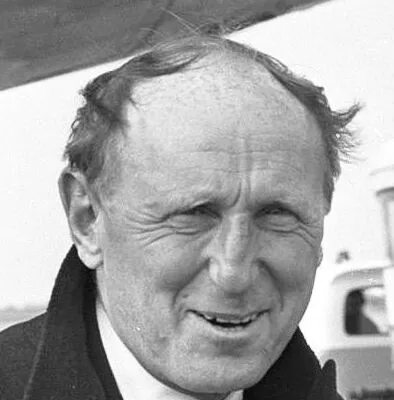
Bertrand Blier
Human Design Chart
Biography
He was the son of famous French actor Bernard Blier. His 1996 film Mon Homme was entered into the 46th Berlin International Film Festival. His 2005 film How Much Do You Love Me? (Combien tu m'aimes?) was entered into the 28th Moscow International Film Festival where he won the Silver George for Best Director.
Bertrand Blier was married three times and had three children. He died at his residence in Paris on 20 January 2025 at age 85.
The Human Design of Bertrand Blier: Projector 1/3
Projector 1/3 — Design at a Glance
Bertrand Blier revealed himself as someone who could identify systemic flaws with sharp precision. His Projector Design endowed him with a dense, focused aura, comparable to a bright flashlight that targeted weaknesses in his environment directly. However, this ability to see immediately what was not working effectively only worked when he did not use it in a direct and confrontational manner. Direct criticism often triggered defensiveness in others; instead, Blier was most effective through his own harmony and charm. His strategy involved waiting for a respectful invitation rather than intervening independently.
Since his Sacral Center was open, he lacked a constant source of intrinsic life energy. Instead, he experienced phases of high activity that needed to be balanced with necessary rest periods to prevent exhaustion. Managing these cycles was crucial for his endurance. If he respected this rhythmic structure and waited for the right invitation, his path led to success. Ignoring this design and trying to fight against it or lead without invitations eventually resulted in bitterness as an expression of his non-self. His life task therefore did not lie in constant action but in the art of indirect leadership through radiant presence and patient waiting for recognition of his unique perspective.
Splenic Authority
Bertrand Blier demonstrated decision-making based on a fine, spontaneous impulse: his survival instinct. His inner authority lay in the defined Spleen Center, while the Emotional and Sacral Centers remained open – a configuration that only Projectors or Manifestors can carry. This center functioned as his health and alarm system, providing him with immediate intuitive knowledge about whether a situation, environment, or society was right for him. His physical well-being served as a reliable indicator.
For Bertrand Blier, this meant that decisions had to be made in the moment. The first spontaneous impulse was the truth and directly protected him from harmful influences. He possessed the ability to rigorously distance himself to maintain his well-being. However, this Spleen voice was a very subtle signal that only appeared once at the moment; it could easily be drowned out or ignored by other influences, requiring high vigilance. Sometimes a brief retreat helped him clearly hear this fine impulse.
Since he only knew what was right for him in each moment, his plans often changed short-term. Long-term commitments were difficult; instead, Bertrand Blier needed much freedom and flexibility. He lived more spontaneously than according to rigid guidelines, as only then could his instinctive knowledge about health and safety remain effective.
The 1/3 Profile — Investigator / Martyr
Bertrand Blier was someone whose judgments rested on a double foundation: deep theoretical analysis and practical validation through experience. His design inclined him towards cyclical processes that oscillated between the need for complete security before action and the urge to experimentally test ideas. This dynamic stemmed from his Profile 1/3, the Researcher-Experimenter. Line 1 conveyed a strong resistance against crises and uncertainty; it demanded thorough exploration of connections before steps were taken. Without this intellectual preparation, the path towards implementation felt threatening.
At the same time, however, Line 3 drove him to test ideas through trial and error. Here, the principle of adaptation applied: concepts were transient and had to be tested in practical life to prove their validity. This apparent contradiction between fear of ignorance (Line 1) and necessary experimentation (Line 3) created a unique credibility. When Bertrand Blier believed something was right or good, he had thoroughly examined it both theoretically and practically experienced it beforehand. His insights were thus not mere speculations but self-discovered truths that had stood the test of reality. Life served him as a laboratory where theory and practice merged to reach well-founded conclusions.
Split Definition — Defined & Open Centers
Bertrand Blier demonstrated a constant, independent willpower and consistent mental structure that was expressed through reliable communication channels. His defined Heart Center provided him with permanent access to willpower and the desire for control over his own resources; he valued keeping promises and following his inner mechanisms during work and breaks. Simultaneously, his defined Ajna Center ensured a specific, trustworthy mental function. He thought consistently, processed data creatively, and was mentally less influenced by others. This internal stability was complemented by his defined Spleen Center, which gave him deep, momentary intuition. His judgments were based on an instinctive 'now' awareness, allowing him to make spontaneous decisions and stand out for well-being.
In contrast, he lacked a firm identity or direction due to his open G Center. Instead of a consistent personality, he reflected the environment situationally; his identity crystallized only in correct relationships, depending on the 'right place'. Similarly, emotional waves through his open Solar Plexus Center were not independent. He absorbed emotions from the environment and amplified them, tending to wonder if he should avoid conflicts to prevent rejection. Generative energy was also variable: His open Sacral Center had no constant energy flow, making him vulnerable to exhaustion from 'borrowed' energy of others and learning to set boundaries. Finally, his open Root Center absorbed external stress pressure, which could make him rush or seek new experiences to escape this pressure rather than trusting his inner authority.
Channels for insatiable curiosity and instinctive devotion.
Bertrand Blier was shown as a creative communicator whose design was characterized by a unique synthesis of narrative curiosity and instinctive salesmanship. His Human Design included the Channel of Curiosity 56-11, connecting Ajna Center with Throat Center. This mechanism drove an insatiable urge to seek new ideas and tell them not as dry facts but as stories or parables. Gate 56 constantly sought inspiration while Gate 11 translated these into philosophical perspectives to entertain or teach others. It was less about pure information than the magical connection of ideas that stimulated imagination and feelings.
Parallelly, the Channel of Devotion 44-26, connecting Spleen Center with Heart Center, gave Bertrand Blier an instinctive ability to grasp the market and needs of his 'tribe'. Through Gate 44 (Awareness), he intuitively sensed what people needed – often before they knew it themselves – and used Gate 26 (Ego) to convincingly sell these insights. He functioned as an entrepreneur or promoter, generating resources and offering products or ideologies that represented improvement.
The combination of these two channels resulted in a profile that attracted attention through storytelling curiosity and transformed this into concrete support through instinctive devotion. Bertrand Blier used his ability to weave stories not only for self-expression but also as a tool to assess and address his audience. His creativity was evident in how he linked ideas, while his entrepreneurial sense ensured these contents resonated with the audience and mobilized resources. He was less interested in pure facts than in illustrating something through his stories and teaching them, supported by a natural talent for offering the right thing at the right time.
Collective Circuitry — Circuit Signature
Bertrand Blier demonstrated someone who processed past experiences wave-like to gain collectively shareable insights. His design was marked by the Meaning Circuit, specifically activated by the Channel of Curiosity (Gates 11 and 56). This channel connected his Ajna Center with Throat Center. As these centers were in the same group, a direct flow emerged: Emotions and feelings from the past were not only individually felt but visually structured and verbally shared. The emotional wave ran cyclically – with beginning, middle, and often a crashing end – shaping his way of finding meaning behind events and sharing this with others.
Parallel to this was a second, separate energetic structure: the Ego Circuit. Here, the Channel of Devotion (Gates 26 and 44) connected Heart Center with Spleen Center. This connection lay in a separate group and was not directly linked to the Meaning Flow. It fostered dynamics of giving and taking as well as cooperation based on mutual support and resource mediation. As there was no direct link to Sacral Center, this configuration required break periods for regeneration. Bertrand Blier's design thus consisted of two coexisting forces: a wave-like, partly emotional meaning-seeking process and a more traditional cooperative ability based on exchange.
Right Angle Cross of Eden 1
Bertrand Blier's Human Design carries the archetypal structure of the right cross of Eden 1. This configuration fundamentally shaped his life energy and destiny path by embedding a specific dynamic quality within him. The right cross of Eden 1 is not merely the sum of individual points but an integral pattern that determines how energy flows through the body and manifests outwardly. It represents a deeply rooted imprint, less about conscious decisions than an automatically acting force structuring his existence.
This structure acts as a fundamental foundation upon which all other aspects of his design build. It defines the framework within which Bertrand Blier experienced life and reacted to life events. The energy of this cross is characteristic for certain archetypal challenges and opportunities that recurred throughout his life. This was not about arbitrary fate but rather a consistent rhythm dictated by the nature of his design. Emphasis lies on this structural integrity: The right cross of Eden 1 created an inner logic guiding his actions and experiences, regardless of whether he was aware of it or not. It was an invisible compass aligning his life path in a specific direction and giving him a unique energetic signature setting him apart.
Saturn Return · Uranus Opposition · Chiron Return · 2nd Saturn Return — Life Cycles
Bertrand Blier emerged as someone whose creativity was marked by cyclical phases of intense transformation and rebellion against established structures. His design set an impulse to break free from the past and find new, often provocative forms of expression seeking public recognition.
This dynamic became effective when Uranus opposed – a phase linking internal unrest with a drive for external change. In 1979, at age 40, this energy condensed into concrete success: The film 'Woman to Give Away' won the Oscar for best foreign language film. This marked a peak where his rebellious impulse culminated in an acknowledged artistic achievement.
Ten years later followed the phase of Chiron Return. In Human Design mechanics, this is not a process of wound healing in the traditional sense but a fulfillment cycle where one's incarnation cross unfolds and meaning becomes tangible. Bertrand Blier lived this moment of bloom in 1989 at age 50 when his film 'Too Beautiful for You' received the Grand Prix of the Jury at the International Cannes Film Festival. This success confirmed the deeper alignment of his design: The ability to generate personal and public resonance through creative provocation and structural innovation, transcending mere entertainment and carrying his inner truth outward.
Projector · Splenic Authority — Synthesis
Bertrand Blier stood out with a sharp observational skill and the ability to recognize flaws in existing systems (Gate 11). This curiosity and drive to uncover were not aimed at direct confrontation. Instead, he worked subtly, projecting insights like a beam of light (Projector Type) and attracting others through harmony within his being. He was an explorer (Profile 1/3), arriving at profound insights by experimenting with ideas – insights he then shared as stories (Channel 11/56). His ability to recognize patterns and learn from experiences was reinforced by a defined Ajna Center, giving him a consistent way of thinking.
A central tension field in his design lay between the need for peace and constant stimulation through his open Root and Sacral centers. He was receptive to others' energy but could not sustain it indefinitely himself. This dynamic led to an internal tension between the desire for self-actualization and the necessity to protect against overstimulation – a theme reflected in his work by questioning social conventions and illuminating human nature with all its contradictions.
2 Defined Channels
Incarnation Cross - Right Angle Cross of Eden 1
Solar Return
The Solar Return shows the moment when the sun returns to its exact birth position - your personal solar year.
Life Cycles
Discover the life cycles with a detailed triple view (birth chart, cycle chart, composite).
Human Design Profile
- Type
- Projector
- Strategy
- Wait for the respectful invitation
- Authority
- Splenic Authority
- Profile
- 1/3 - Investigator / Martyr
- Definition
- Split Definition
- Incarnation Cross
- Right Angle Cross of Eden 1
- Date of Birth
- 14.03.1939 07:35
- Place of Birth
- Boulogne Billancourt, France
Frequently Asked Questions
What is Bertrand Blier's Human Design type?
What Profile did Bertrand Blier have in Human Design?
Which authority guided Bertrand Blier's decisions?
What incarnation cross was assigned to Bertrand Blier?
When was Bertrand Blier born?
Discover your own Human Design
Are you also a Projector? Find out in a personal reading how to unfold your leadership qualities and recognize the right invitations.
More Personalities
Back to overviewSissy Spacek

Alain-Fournier

Anémone

Ann-Margret

Bourvil
Christian-Jaque