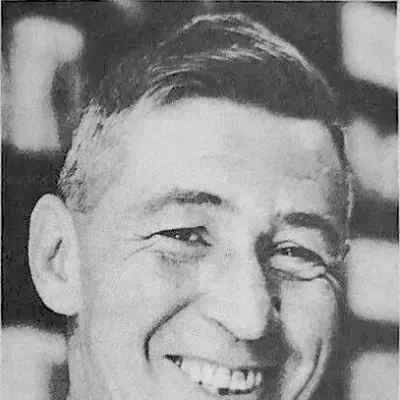
Brian Josephson
Human Design Chart
Biography
Josephson has spent his academic career as a member of the Theory of Condensed Matter group at Cambridge's Cavendish Laboratory. He has been a Fellow of Trinity College, Cambridge, since 1962, and served as Professor of Physics from 1974 until 2007.
Josephson was awarded several important prizes for his discovery, including the 1969 Research Corporation Award for outstanding contributions to science, and the Hughes Medal and Holweck Prize in 1972.
In the early 1970s, Josephson took up Transcendental Meditation and turned his attention to issues outside the boundaries of mainstream science. He set up the Mind–Matter Unification Project at Cavendish to explore the idea of intelligence in nature, the relationship between quantum mechanics and consciousness, and the synthesis of science and Eastern mysticism, broadly known as quantum mysticism. He has expressed support for topics such as parapsychology, water memory and cold fusion, which has made him a focus of criticism from fellow scientists.
The Human Design of Brian Josephson: Projector 4/6
Projector 4/6 — Design at a Glance
Brian Josephson's design tends towards focused perception. As a projector, his aura acted like a concentrated beam of light that directly targeted weaknesses in systems or relationships around him. This mechanism means he often recognized errors and inefficiencies before others became aware of them.
The challenge lies in interaction: A direct indication of these flaws is frequently perceived by the other as aggressive or unpleasant, similar to being blinded by bright light. Thus, Brian Josephson needed a more subtle approach. Instead of actively addressing issues, it was strategically better to shine through his own harmony and clarity. When he radiated this inner order, others were automatically drawn to him, asking about his insights on their own accord.
Central to his energy level was the undefined Sacral Center. This meant Brian Josephson did not have a constant, intrinsic source of life energy. Instead, his capacity moved in waves: phases of high productivity and fast work speed alternated with necessary rest periods. These pauses were essential to prevent burnout, as modern working environments often ignore these natural rhythms.
His design strategy involved waiting for an honest invitation from others. Only when he was invited into contexts that valued him could he effectively deploy his leadership qualities and be rewarded for it. Missing this path led to the theme of bitterness – a sign that his potential was not appropriately recognized or utilized.
Splenic Authority
Brian Josephson's design tends towards immediate, instinctive decision-making. His inner authority resides in the defined Spleen Center – a system for survival intelligence and health. This configuration is only possible if the Emotional and Sacral Centers are open; thus, it specifically marks Projectors or Manifestors.
The Spleen Center acts as an alarm system. It provides spontaneous inner knowledge about whether a situation, environment, or society is beneficial or harmful. The first impulse here is the most reliable indicator of one's well-being and serves to protect against negative influences. Since this impulse is very subtle and occurs only once in the moment, it requires high vigilance not to be drowned out by external voices.
Decisions must therefore be made in the moment. Long-term planning often contradicts this mechanism as short-term inner perception can change. Brian Josephson's design thus shows a need for flexibility and freedom: Setting oneself rigidly hinders access to the right answer. Instead, a spontaneous attitude positively affects one's ability to rigorously set boundaries and always act in harmony with current bodily intuition. A brief retreat can help clarify this subtle impulse.
The 4/6 Profile — Opportunist / Role Model
Brian Josephson's design showed a tendency that changed over time: In his first thirty years, he appeared more experimental and searching, similar to someone with Line 3. This corresponded to Profile 4/6, where Line 6 was initially not fully active yet. People with this configuration often try many things in their youth, especially in the realm of relationships and friendships.
Once Line 6 became effective, an internal conflict emerged: The desire to belong to a community (Line 4) stood against the need to withdraw and contemplate the meaning of life (Line 6). Life thus revolved around the tension between heart and head.
In later years, he was expected to take on the role of a wise mentor. Line Four emphasized analysis, trust, and waiting for suitable alliance partners; aggression hindered this process. Simultaneously, Line Six through Gate 48 enabled self-actualization and sharing deep inspiration. Collective suggestions helped him further develop his own depth. His large heart remained cautious to avoid opening up to the wrong people and getting hurt. Thus, he combined individual processes with the ability to pass patterns on to others.
Split Definition — Defined & Open Centers
Brian Josephson's design tends towards clear, identity-based communication. His defined G Center gave him a firm sense of personal direction and self-love; he knew who he was without needing to prove it. This inner security flowed into his defined Throat Center: His voice spoke not from impulsive urge or emotional wave motion but from this reliable identity. He could express his truth with ease and honesty, as the source of his words was stable.
This clarity was supported by his defined Spleen Center, which gave him spontaneous intuition and existential awareness in the present moment. Combined with the defined Root Center, he had a constant inner pressure to maintain the life impulse. This stress factor was not chaotic but served material existence and correction of what did not work. He could trust warning signals from his body and act out of a deep embedding in physical reality.
At the same time, Brian Josephson revealed himself through several open centers as a sensitive receiver of his environment. His open Head Center made him vulnerable to mental confusion; he tended to engage with questions that were not his own and sought external inspiration to relieve internal pressure. The open Ajna Center amplified this: He absorbed concepts from others and often understood them better than their originators, risking holding these foreign ideas as personal truths.
His open Heart Center led him to prove his worth through willpower but also fell into the trap of making promises to gain recognition – which often led to failure and self-doubt. Additionally, his open Solar Plexus absorbed emotions from the environment, making him emotionally vulnerable; he mirrored others' moods and had to learn not to personalize these feelings as his own. Finally, his open Sacral Center meant that he did not have a constant generative energy but reacted to availability from outside – often at risk of overloading through 'borrowed' energy from others.
Channels for life meaning in struggle and logical leadership.
Brian Josephson's design tends towards logical, collective leadership paired with an inner drive that finds meaning in resistance and confrontation. This configuration shows someone who does more than give instructions; he gains trust by working through tested patterns and a deep understanding of the current context before guiding.
This attitude is rooted in the Alpha Animal Channel 7-31. It connects the G Center to the Throat Center: Gate 7 delivers the logical role of 'the power behind the throne,' while Gate 31 speaks as a collective leader. This combination means that Brian Josephson was designed to understand trends and lead from an influential position – but only successfully when invited by the majority. It's not about absolute authority, but showing the way for others based on what works in the moment.
At the same time, the Life Struggle Channel 38-28 shaped his inner dynamics. This channel connects the Root Center to the Spleen Center and drives through Gate 38 the pressure to defend individual integrity against external forces. Gate 28 ensures that this struggle is only taken up when intuitively recognized as valuable. For Brian Josephson, it was essential to choose fights that personally mattered rather than blindly plunging into collective conflicts. This channel forces individuation and uses adrenaline-charged energy to challenge the status quo and drive evolution.
Additionally, Gates like 39 (Mutation through Provocation) and 48 (deep pattern recognition) worked in the background, hinting at a capacity to question existing systems through analytical depth and open new directions without losing necessary security from the collective.
Individual Circuitry — Circuit Signature
Brian Josephson's design tends towards focused, strategic communication that flows directly from his innermost identity. This structure showed as separate power from another parallel energy: the instinctive survival struggle. In Brian Josephson, there was no direct connection between these two areas; they existed side by side as independent poles of his character.
The Understanding Circuit connected his Throat Center to the Identity Center through the Alpha Animal Channel. This meant that his ability to articulate logical and rational insights was inextricably linked with his self-worth. He did not just pass on information but expressed his unique, unconditioned identity while doing so. This energy was visually oriented and future-focused, driven by a desire to improve society through clear structure.
Parallel to this, the Knowledge Circuit connected Brian Josephson's Spleen and Root Centers. Here it was about 'the life struggle' – a pulsating, acoustic energy of survival and individual fortification. This connection ensured an instinctive focus on what is essential in here and now. As these two circuits were not connected, his strategic identity-forming communication operated independently from his instinctive survival drive. Both systems ran parallel: one for clear, rational articulation of personal identity, the other for intuitive handling of life struggle.
Right Angle Cross of Tension 4
Brian Josephson's design indicates a tendency towards inner disintegration, manifesting as constant oscillation between two opposing poles. This configuration is known in Human Design as 'The Right Cross of Tension 4'. It describes not a harmonious unity but an ongoing conflict where the individual simultaneously strives for two different goals or experiences conflicting needs.
For Brian Josephson, this meant that his internal compass often pointed in opposite directions. Instead of following a clear path, he found himself repeatedly in situations requiring a decision between equally valid yet incompatible options. This mechanical tension did not produce static peace but dynamic friction, shaping his experiential world with a sense of imbalance which is to be understood as a driving force rather than a flaw.
The challenge was to experience this duality not as paralysis but as a source for deeper understanding. Brian Josephson had to learn that true insight often emerges in the tension field between extremes. His design challenged him to acknowledge both sides without fully committing to either, creating an inner complexity that enabled him to see nuances hidden from others who would perceive only one pole. The constant movement between poles was thus not a hindrance but the actual path towards integrating his personality.
Saturn Return · Uranus Opposition · Chiron Return · 2nd Saturn Return — Life Cycles
Brian Josephson's design indicates a tendency toward cyclical phases of consolidation and transformation. His first Saturn Return marked the beginning of a period where years of groundwork often condensed into a viable result. This phase served to structure and build stability in life.
Simultaneously, his Uranus aspect showed a dynamic of sudden change. He faced challenges forcing him to break old patterns and forge new paths. This aspect accelerated processes that would otherwise proceed slowly, promoting innovation at the cost of stability.
The Chiron Return, a fulfillment cycle between 49 and 51 years, brought forth a period of flourishing. During this time, his incarnation cross increasingly unfolds in life if lived according to strategy and authority. Meaning and purpose become experiential without being about healing past wounds.
His second Saturn Return rounded off this development. It was a phase of maturity and conclusion where earlier achievements were evaluated and integrated. Thus, Brian Josephson's design shows a path from foundation through transformation to fulfillment and finally reflection and integration. Each cycle contributed to shaping his personality and life journey.
Projector · Splenic Authority — Synthesis
A central red thread in this design is the ability to recognize patterns and make them useful for collective purposes. The projection of energy onto the environment (Projector type) combined with the instinctive health awareness of Spleen Authority allows identifying weaknesses in the system (fault-finding perception). This is reinforced by the Alpha Animal Channel (Gate 7/31), which provides logical leadership and the ability to anticipate future developments. Line 4 in Profile points to a deep need for belonging, which connects with the desire for independent reflection (Line 6) – a dynamic that strengthens the focus on recognizing connections and offering solutions for groups.
The central paradox lies in the tension between the urge to lead and provide orientation (Alpha Animal Gate) and the necessity to wait for the right moment before offering this leadership (Projector Strategy). The Spleen Authority demands spontaneous decisions in harmony with one's own well-being, while Profile 4/6 navigates a life-long balance between the desire for community and the search for individual truth. This discrepancy generates an inner dynamic that can lead to deep insights as well as feelings of alienation.
2 Defined Channels
Incarnation Cross - Right Angle Cross of Tension 4
Solar Return
The Solar Return shows the moment when the sun returns to its exact birth position - your personal solar year.
Life Cycles
Discover the life cycles with a detailed triple view (birth chart, cycle chart, composite).
Human Design Profile
- Type
- Projector
- Strategy
- Wait for the respectful invitation
- Authority
- Splenic Authority
- Profile
- 4/6 - Opportunist / Role Model
- Definition
- Split Definition
- Incarnation Cross
- Right Angle Cross of Tension 4
- Date of Birth
- 04.01.1940 03:00
- Place of Birth
- Cardiff, United Kingdom
Frequently Asked Questions
What is Brian Josephson's Human Design type?
Which Profile does Brian Josephson exhibit?
What authority does Brian Josephson have?
What incarnation cross does Brian Josephson have?
When was Brian Josephson born?
Discover your own Human Design
Are you also a Projector? Find out in a personal reading how to unfold your leadership qualities and recognize the right invitations.
More Personalities
Back to overviewSissy Spacek

Alain-Fournier
Anémone

Ann-Margret

Bourvil
Hergé