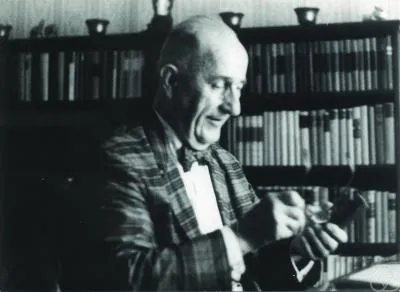
Carl Ludwig Siegel
Human Design Chart
Biography
Amongst his teachers were Max Planck and Ferdinand Georg Frobenius, whose influence made the young Siegel abandon astronomy and turn towards number theory instead. His best student was Jürgen Moser, one of the founders of KAM theory (Kolmogorov–Arnold–Moser), which lies at the foundations of chaos theory. Another notable student was Kurt Mahler, the number theorist.
Siegel was an antimilitarist, and in 1917, during World War I he was committed to a psychiatric institute as a conscientious objector. According to his own words, he withstood the experience only because of his support from Edmund Landau, whose father had a clinic in the neighborhood. After the end of World War I, he enrolled at the Georg-August University of Göttingen, studying under Landau, who was his doctoral thesis supervisor (Ph.D. in 1920). He stayed in Göttingen as a teaching and research assistant; many of his groundbreaking results were published during this period.
He died on 4 April 1981, aged 84, in Göttingen, West Germany.
What does Manifesting Generator 2/4 mean for Carl Ludwig Siegel?
Manifesting Generator 2/4 — Design at a Glance
Carl Ludwig Siegel was someone who possessed the ability to quickly draw things into his life. As a Manifesting Generator, he had constant sacral energy, which gave him a hybrid nature: Although he relied on responding to impulses rather than initiating himself like other Generators, his connection of Motor Centers to Throat Center allowed him to skip steps. This speed fundamentally shaped his work style.
However, this trait also carried specific risks. Carl Ludwig Siegel tended to do multiple things at once because he reacted to many different impulses and started projects in parallel. If strategy and inner authority were not aligned, the initial creative enthusiasm could quickly turn into frustration – a hallmark of this type's non-self theme. To use his energy effectively, it was crucial for him to regularly check whether his sacral energy still resonated with the undertakings he had begun. Only when this internal resonance persisted could he draw deep satisfaction from his creations. In this state, handling multiple tasks simultaneously was no obstacle but rather enhanced his play mode and creative power. The challenge lay in not moving too quickly and skipping important steps, which would otherwise require backtracking.
Emotional Authority
Carl Ludwig Siegel's design tended towards emotional depth and delayed clarity. His inner authority was Emotional Authority, carried by the defined Emotional Center. This mechanism operated independently of all other defined centers in his chart; it always took precedence in decisions. This meant that he was subject to a constant wave of emotional ups and downs. The world appeared either enthusiastically positive or strongly negative depending on his current mood. However, an initial emotional impression was only a snapshot, not necessarily the truth. Spontaneous decisions made in the heat of the moment could therefore have negative consequences.
The mechanics of his authority required patience and time. Instead of acting immediately, it was necessary to let decisions ripen through multiple nights of contemplation and allowing intense emotions to subside. Only with growing emotional distance did clarity and calmness set in. This process was particularly crucial for long-term life decisions as he could only then recognize his deeper, more comprehensive truth. Carl Ludwig Siegel thus showed himself to be someone who internally waited until the emotional wave had subsided before acting. The need for delay shaped his approach to significant turning points in life.
The 2/4 Profile — Hermit / Opportunist
Carl Ludwig Siegel was someone who constantly oscillated between two fundamental needs: the urge for deep withdrawal and the desire to connect with his closest community. His design as a 2/4 Profile established a tension that required setting clear boundaries – both for his
Triple Split Definition — Defined & Open Centers
Carl Ludwig Siegel's design featured six defined centers: Sacral, Heart, Root, Solar Plexus, Spleen, and Throat. This configuration endowed him with a vast, available energy base. His defined Sacral Center generated continuous vital force that waited for correct answers to become effective. His defined Solar Plexus served as an inner authority; he needed time to wait out emotional waves before clarity emerged in decisions. Impulsive reactions were avoided in favor of a deep truth revealed over time.
The defined Heart Center provided willpower and the ability to keep promises while controlling personal resources. It was important for him to express his ego strength without being suppressed by others. The connection to the defined Throat Center allowed clear, consistent communication that spoke directly from these inner sources – Will, Emotion, Instinct (Spleen), and Life Force. His voice was a reliable expression of his internal mechanics.
At the same time, he carried three open centers: Head, Ajna, and G-Center. The open Head and Ajna Centers meant that mental inspiration and conceptual thinking were not constant. He tended to take on mental pressures or questions from others without identifying them as his own truth. His intelligence was flexible, open to new ideas but prone to confusion when he tried to force answers with the mind rather than trusting his emotional authority.
The open G-Center lacked a fixed identity or direction. He often adapted to his environment and gathered directions through interaction. The question 'Who am I?' was not a permanent inner truth but a conditioned trap. His true orientation was found not by mental searching, but by being in the right place and waiting for initiation from the environment. There he could reflect other people's identities and thus discover his own role in context without having to define it.
Channels for intimacy, self-worth and meaningful struggle.
Carl Ludwig Siegel sought deep, almost physical intensity in interpersonal bonds. This inclination rooted in Channel Pairing 59-6, linking sacral sexuality with emotional friction and establishing intimacy as a core need. Simultaneously, he was driven by a strong will for material sovereignty. The Money Line channel 21-45 gave him the energy to take responsibility and gain control over resources, connecting the Hunter Gate (21) with the Collector's authoritative claim on loyalty at Gate 45. This created tension between wanting to be his own boss and needing to maintain structures.
Parallel to this, he was marked by a stubborn determination to follow his own path, driven by the Life Struggle channel 38-28. This connection of Root pressure with Spleen perception allowed him to find meaning in conflicts and defend his integrity against external distractions. However, the energy of this channel also required physical release to reduce inner stress.
Additionally, isolated Gates influenced his design: Gate 39 brought selective analysis and provocation as fuel for mutation; Gate 48 enabled recognizing deep patterns but often led to frustration in implementation. In personality aspects, Gate 9 with its ability for precise perfection through repetition and Gate 60 teaching acceptance of limitations as a prerequisite for transcendence stood out. Gate 40 required recognition and recovery after hard work, while Gate 14 promoted skillful handling of power and direction-seeking. In his design, Gate 57 supported intuitive clarity in the here and now, and Gate 12 in the Throat Center emphasized the influence of emotional mood on communication and creative expression, often linked with poetry and restraint.
Tribal Circuitry — Circuit Signature
Carl Ludwig Siegel was marked by a Triple Definition, creating three separate, non-overlapping energy blocks in his design. This structure meant he operated with parallel independent forces that had no direct connection to each other.
The Knowledge Circuit was active through Channel 28-38 ("Life Struggle") and connected the Spleen Center with the Root Center. This generated an instinctive, pulsing energy aimed at survival and preserving individuality without flowing into other areas of his design.
Independently, the Ego Circuit operated over Channel 21-45 ("The Money Line"). It linked the Throat Center with the Heart Center and promoted the ability to organize resources and material support through words. Since this circuit did not connect to the Sacral Center, this activity required necessary pauses for regenerating energy for collaborative creation.
The third block formed the Archer Circuit with Channel 59-6 ("Pairing"). It directly connected the Sacral Center with the Solar Plexus Center. This configuration generated a primal, instinctive energy for preserving and protecting genetic heritage and familial environment. The emotional wave of this channel drove life force to ensure survival.
These three groups – Spleen-Root, Throat-Heart, and Sacral-Solar Plexus – existed alongside each other as independent systems. Carl Ludwig Siegel did not need to integrate these different requirements into a single flow but could use them situationally and independently, allowing a clear separation between instinctive survival struggle, resource-oriented communication, and protective care.
Right Angle Cross of Tension 4
Carl Ludwig Siegel exhibited a fundamental disposition marked by profound inner tension. His Human Design profile featured the right cross of Tension Four, a configuration that did not permit a calm acceptance of life but rather fostered an incessant, almost tormenting urge for change and dissolution of old structures. This mechanical alignment meant he often felt himself as an obstacle to his own path or was pushed into positions by external circumstances that didn't fit him well. It wasn't a conscious will for conflict but an energetic necessity: Life seemed meaningful and truthful only when it offered resistance he had to overcome. This tension served as the engine of his development; it compelled him to redefine himself repeatedly and discard old identities once they no longer aligned with current reality. For Carl Ludwig Siegel, this state was not a choice but a given condition of his existence. He lived in an ongoing process of letting go and starting anew, driven by the realization that stagnation was impossible for him. The energy of this cross ensured he could never fully settle until unresolved conflicts or unprocessed past remained. This shaped his entire experience: A continuous striving for freedom from any form of constraint or expectation that limited his autonomy.
Saturn Return · Uranus Opposition · Chiron Return · 2nd Saturn Return — Life Cycles
Carl Ludwig Siegel's professional career was marked by clear phases of return and consolidation. His Human Design indicated a structure requiring realignment or confirmation of one's position in certain life stages. This became evident in 1938, at the age of 42, when he returned to Göttingen as a professor. This step fell during a Uranus opposition period, often associated with sudden changes or the establishment of new structures. For Siegel, this return marked a decisive career shift where he reestablished and solidified his position.
Another defining pattern emerged later in life. In 1951, at age 55, he returned to Göttingen once more, eventually retiring in 1959. This period coincided with his second Saturn return. In Human Design, this cycle signals a phase of maturity and conclusion where long-term achievements fully unfold their significance and lay the groundwork for retirement. Siegel's return and subsequent emeritus status illustrate this mechanism: The years preceding it were dedicated to building up work, while this segment represented validation and an orderly transition into a new life stage. His career thus followed not a chaotic pattern but a rhythmic sequence of arrival, affirmation, and finally dignified withdrawal as dictated by his astrologically conditioned cycles.
Manifesting Generator · Emotional Authority — Synthesis
Carl Ludwig Siegel lived a life deeply influenced by inner dynamics. As a Manifesting Generator (MG), he possessed the ability to quickly initiate things – an energy amplified by the connection between his Sacral Center and Throat Center. Simultaneously, however, his emotional authority required time and maturation for decisions, waiting until clarity emerged from the emotional wave. This combination led to a constant interplay between the impulse for immediate action and the necessity of engaging in internal processes (Profile 2/4) to make authentic decisions. His defined Throat indicated that his communication always sprang from a deeply rooted source nourished by both the Sacral and Solar Plexus Centers.
A central paradox in Siegel's design lay in the tension between the drive for quick initiation – typical of the manifesting aspect – and the need for emotional clarity (emotional authority). He could seize opportunities presented to him, yet without going through the emotional wave, he risked skipping crucial steps. The cycles showed return movements, a re-engagement with themes, suggesting life continually challenged him to find balance between speed and thorough decision-making.
3 Defined Channels
Incarnation Cross - Right Angle Cross of Tension 4
Solar Return
The Solar Return shows the moment when the sun returns to its exact birth position - your personal solar year.
Life Cycles
Discover the life cycles with a detailed triple view (birth chart, cycle chart, composite).
Human Design Profile
- Strategy
- To respond - wait for something to respond to
- Authority
- Emotional Authority
- Profile
- 2/4 - Hermit / Opportunist
- Definition
- Triple Split
- Incarnation Cross
- Right Angle Cross of Tension 4
- Date of Birth
- 31.12.1896 23:59
- Place of Birth
- Berlin, GER
Frequently Asked Questions
What was Carl Ludwig Siegel's Human Design type?
Which profile did Carl Ludwig Siegel have?
What authority did Carl Ludwig Siegel possess?
What incarnation cross did Carl Ludwig Siegel have?
When was Carl Ludwig Siegel born?
Discover your own Human Design
Are you also a Manifesting Generator? Find out in a personal reading how to unfold your multi-talents and direct your energy wisely.
More Personalities
Back to overviewAldair

Alizée

Angeli

Arletty

Artus
Balthus