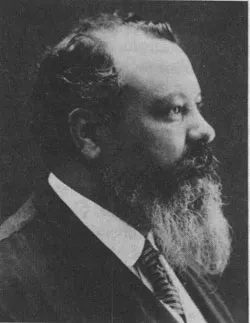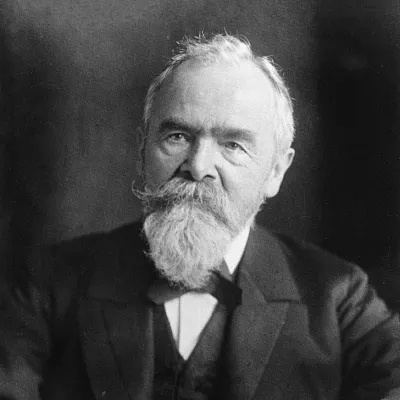
Carl Von Linde
Human Design Chart
Biography
Linde invented the first portable compressor refrigerator, a methyl ether refrigeration machine, in 1873, and three years later he designed a more reliable system, the Kühlschrank, which was the first practical ammonia-compressor driven refrigerator. In 1878 he established the Society for Lindes Ice Machines, now the Linde AG conglomerate, which was and remains a leading manufacturer of refrigerators on the European continent. In 1894 he developed a process using the Joule-Thomson effect to liquefy gases, and in the following year he used this technique to produce liquid air in mass quantities. In 1902 he and his staff at Linde AG developed a system that separates liquid oxygen and nitrogen from liquefied air.
In 1897, Linde was appointed to the Merit Order of the Bavarian Crown and ennobled in accordance with its statutes.
In addition to Linde's technical and engineering abilities, he was a successful entrepreneur. He formed many successful partnerships in Germany and internationally, working effectively to exploit the value of his patents and knowledge through licensing arrangements.
He died 16 November 1934, Munich.
Carl Von Linde — Manifestor with Profile 4/6
Manifestor 4/6 — Design at a Glance
Carl Von Linde revealed himself as a pioneer and visionary whose design predisposed him to lead the world in new directions. Similar to an emperor in ancient Rome, he possessed the grand vision of a comprehensive whole but did not personally wage the necessary wars and battles. Instead, he sent others to conquer foreign lands for him. This approach led to his plans often failing to resonate with everyone. His greatest pain point was being misunderstood because he frequently thought ahead of his environment. This created polarization: some loved his enormous dreams and followed him, while others hated him precisely because of these visions. For the right followership to find him, it was crucial that he informed others about his intentions in a timely and precise manner. This strategy of informing before acting was key for him. When Carl Von Linde adhered to this strategy and obeyed his authority, he was rewarded with an inner sense of peace. However, if he lived against his design, he instead felt a persistent, deep-seated anger within himself. His path therefore involved minimizing resistance through clear communication and attracting those who were ready to accept his leadership.
Emotional Authority
Carl Von Linde demonstrated a decision-making stance characterized by emotional wave movements. His inner authority lay in the defined Emotional Center, meaning that he was always subject to natural fluctuations of his feelings. The world appeared colored by his current mood: at one moment something could totally excite him, while moments later the same thing would be viewed negatively. However, this immediate feeling was only a snapshot, not an ultimate claim on truth. Quick, spontaneous decisions stemming directly from such emotions often proved problematic for his design. Instead, his system required patience and time to gain clarity. By letting decisions sleep and reviewing them multiple times, intense feelings subsided. This process of waiting allowed him to emotionally distance himself and develop a deeper, more comprehensive understanding. Only when this calmness set in was the decision-making process complete for him. This mechanism was particularly relevant for long-term choice options with significant influence on his life course. Carl Von Linde therefore had to consciously take time out and not succumb to the pressure of immediate reactions to ensure the quality of his decisions.
The 4/6 Profile — Opportunist / Role Model
Carl Von Linde emerged as someone who, in the first three decades of his life, was experimental and exploratory. His Profile 4/6 at that time still appeared like a Line 3: He actively sought connections and tested various roles in relationships and friendships, driven by a natural need for exchange and belonging.
With the return of Saturn, his orientation fundamentally shifted. The sixth line became active and brought an inner conflict to light: the contradiction between wanting to be part of a community (Line 4) and the urge to withdraw to ponder higher questions of meaning (Line 6). This reflected the tension field between Heart versus Head.
In his later years, he became a role model. Through Gate 22, he brought a mutation into life – a nonconformist openness that enabled new societal models. Simultaneously, he utilized the ability of Gate 45 to shape material actions in such a way as to benefit the
Split Definition — Defined & Open Centers
Carl Von Linde revealed himself through his defined G Center as someone with a firm internal direction and self-love, knowing where he belonged. This reliable identity formed the basis for his actions. His defined Heart Center also gave him clear willpower; he could make promises and keep them, which helped him control resources and be successful without relying on others. The connection of these centers to his also defined Throat allowed him to directly translate his intentions and will into the world. Thus, his communication was not just talking but an expression of his deepest identity and desire, clearly and honestly formulated.
Parallel to this, his defined Solar Plexus acted as emotional authority. He learned to give space to the emotional wave before deciding what was right for him. This patience ensured that his decisions were not impulsive but based on a deeper clarity. The defined Root Center provided the necessary pressure and energy to move forward and transform stress into constructive movement.
At the same time, his vulnerability was revealed through his open Head and Ajna Centers. Here he lacked a constant mental source; he tended to be influenced by external inspirations or doubts of others rather than relying on his own conceptual certainties. His open Sacral Center made him sensitive to the energy of his environment. He was not designed to work continuously but had to learn to protect himself from exhaustion through borrowed energy and set boundaries. Finally, the open Spleen Center led him to avoid spontaneous decisions as these were often driven by conditioned fears or false feelings of security rather than true intuition.
Channels for pioneering spirit, emotional depth and release.
Carl Von Linde was marked by a deep emotional wave that significantly shaped his social interactions and creation. His design included the Channel of Openness 22-12, connecting the Solar Plexus Center with the Throat Center. This configuration created a specific form of articulation: His ability to achieve an emotional impact through voice and words strictly depended on his current mood. He possessed the gift of truly touching or transforming others only when he felt internally inclined; forced social situations often led to misunderstandings or harshness.
Parallel to this, the Channel of Initiation 51-25 in the Heart Center connected the ego-driven competitive energy (Gate 51) with the universal love and spiritual potential of Higher Self (Gate 25). This gave him a natural competitiveness that was not only material but also mystical. He could encourage others to transcend their individual limits by providing the necessary initiation shock – provided they were invited. His ambition thus served the individuation and progress of the collective through personal triumphs.
Another defining aspect was the Channel of Emotions Release 39-55 between Root and Solar Plexus Centers. This channel set in motion a pulsating wave of joy and melancholy. Carl Von Linde used this provocation to awaken the minds of others and find fitting environments for himself. His authenticity lay in not fighting against his moods but accepting them as creative power. Only when he was in the right emotional state could he fully unleash his transformative impact; otherwise, he withdrew to preserve his inner truth. These mechanisms showed: His strength did not lie in constant availability but in the right timing of his emotional and social expressiveness.
Individual Circuitry — Circuit Signature
Carl Von Linde revealed himself through two separate yet parallel acting energetic poles. On one hand, the Knowledge Circuit shaped his actions: Here Throat, Solar Plexus, and Root Centers formed a direct flow. The Channels „Openness“ (Gates 12, 22) and „Emotions Release“ (Gates 55, 39) enabled him to transform new insights through emotional waves and express them acoustically. This promoted pulsating creativity and the ability to bring change into the world by articulating his unique knowledge.
Independently of this, the Centering Circuit acted as a second isolated force. It connected Identity with Heart Center solely via the Channel „Initiation“ (Gates 25, 51). This configuration created inner firmness and strong self-worth. Since no connection to Throat Center existed, these deep convictions often remained unspoken or hard to verbalize. They worked more as a silent, individual affirmation („I am who I am“), strengthening others in their uniqueness without directly addressing them.
The Shared Definition meant for Carl Von Linde that these two systems – the external expression of knowledge and inner identity reinforcement – were not energetically merged. He had to learn to distinguish between the impulsive urge for innovation and the calm, internal certainty as both streams possessed different rhythms and forms of expression.
Right Angle Cross of Rulership 2
Carl Von Linde exhibited a fundamental disposition marked by the right Governing Authority cross. This Human Design configuration points to a specific inner drive: the desire to bring order and structure into seemingly chaotic or unclear situations. It was not an external quest for power in the traditional sense, but rather a deeper motivation to set up systems so that they function efficiently and stably.
For Carl Von Linde, this meant that he often strove in his actions to create clarity and optimize processes. The right Governing Authority cross grants the ability to see through complex relationships and derive clear action guidelines from them. This was evident in how he approached problems: not through improvised action but by developing structures intended to ensure long-term stability.
This inclination towards creating order served as an inner compass. It helped him find a firm point of reference during moments of uncertainty and make decisions based on logical analysis. The right Governing Authority cross thus supported him in not only observing his environment but actively shaping it so that it served a higher purpose – namely, the creation of reliable frameworks for others. This characterized his entire work and approach to challenges.
Saturn Return · Uranus Opposition · Chiron Return · 2nd Saturn Return — Life Cycles
Carl Von Linde was someone who did not just develop technical innovations but also anchored them structurally. His design showed a tendency to solidify ideas through disciplined work and later integrate them into established systems. This mechanism became visible in 1871: At the age of 29, he published an article on improved cold technology methods. This first Saturn Return marked the point where years of groundwork condensed into a viable public result – a typical moment of consolidation for his chart.
The search for autonomy and new structures characterized his mid-thirties. In 1879, at age 37, he left his teaching position to found the Society for Linde's Ice Machines in Wiesbaden. This Uranus Opposition signaled a break with old ties in favor of self-determined innovation.
Later came the cycle of fulfillment. In 1890, at age 48, he transferred the board chairmanship to Friedrich Schipper and became chairman of the supervisory board. This Chiron Return was not an end but a bloom: His incarnation purpose continued to unfold as he handed over operational responsibilities and expanded his role into strategic leadership. The meaning of his work became tangible through this structural development.
Finally, his status solidified in the second Saturn Return. In 1897, at age 55, he received the Bavarian Crown Order and elevation to nobility. This was the logical consequence of a life lived according to his inner strategy: Long-term work found its external recognition and institutional anchoring.
Manifestor · Emotional Authority — Synthesis
He was a Generator who developed a unique dynamic through the connection of emotional authority and the Openness Channel (22/12). His life seemed marked by an internal tension between the need for deep emotional maturation – sleeping on decisions was essential – and an impulsive expression of these feelings, which was amplified by his channel connection to the Throat Center. This ability to transmute emotions into communication served him as a motor for innovation and change, especially in the context of new insights from the Knowledge Circuit.
A central paradox lay in being both a pioneer with visions (Manifestor) whose energy was nourished by Line 6 in his Profile with a longing for recognition and belonging. This led to an ongoing interplay between the desire to be perceived as an independent role model and the search for validation within community. The documented events – from publications through founding a society to elevation to nobility – showed how this conflict of heart versus head propelled him, time and again, to seek new paths while also pursuing both his own impulses and external validation.
3 Defined Channels
Incarnation Cross - Right Angle Cross of Rulership 2
Solar Return
The Solar Return shows the moment when the sun returns to its exact birth position - your personal solar year.
Life Cycles
Discover the life cycles with a detailed triple view (birth chart, cycle chart, composite).
Human Design Profile
- Type
- Manifestor
- Strategy
- To inform others before acting
- Authority
- Emotional Authority
- Profile
- 4/6 - Opportunist / Role Model
- Definition
- Split Definition
- Incarnation Cross
- Right Angle Cross of Rulership 2
- Date of Birth
- 11.06.1842 08:30
- Place of Birth
- Berndorf (Thurnau), GER
Frequently Asked Questions
What was Carl Von Linde's Human Design type?
What Profile did Carl Von Linde have in Human Design?
What Authority did Carl Von Linde have?
What incarnation cross did Carl von Linde have?
When was Carl Von Linde born?
Discover your own Human Design
Are you also a Manifestor? Find out in a personal reading how to use your initiation power peacefully and dissolve resistance.
More Personalities
Back to overviewChristian-Jaque
Kesha

Lucebert
Marilyn

Masaccio
Papus