
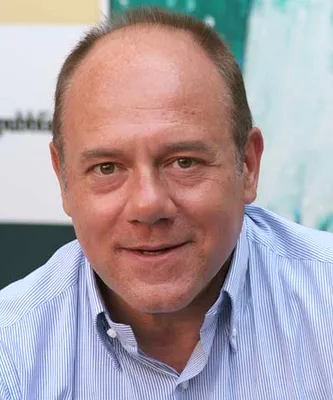
Carlo Verdone
Human Design Chart
Biography
Carlo Verdone is the son of Mario Verdone, an important Italian film critic, and during his youth he earned a degree in Modern Literature at Sapienza University of Rome and a degree in Film Direction at the Centro Sperimentale di Cinematografia. During the 1970s he started a television career highlighting his varied comic style.
Verdone made his debut as director in 1980 with the movie Un sacco bello, in which he played three different characters. He used the same formula of the first work in 1981, when he directed Bianco, rosso e Verdone, a funny movie about three different men during election day in Italy. The movie, produced by Sergio Leone, was a great success in Italy, thanks to his brilliant comic energy and to his odd characters. Carlo Verdone, in a long directing career, has refined very well his style, using very much the typical standard of the commedia all'italiana and paying attention to social themes and to pondering stories. In 2005 he took part in the Italian blockbuster romantic comedy named Manuale d'amore, and in the sequels named Manuale d'amore 2 - Capitoli successivi (2007) and Manuale d'amore 3 (2011), both directed by Giovanni Veronesi.
He starred in Paolo Sorrentino's The Great Beauty in 2013.
Carlo Verdone as a Manifesting Generator 6/3 in Human Design
Manifesting Generator 6/3 — Design at a Glance
Carlo Verdones Design revealed a tendency towards hybrid dynamics: He showed himself as someone who combined the constant energy of a Generator with the lightning-fast implementation power of a Manifestor. This configuration allowed him to skip steps and quickly pull things into his life. Yet, this speed held two specific pitfalls. First, he tended to miss important stages, which inevitably led him back to fill in missing foundations – a process that quickly turned into frustration when not accepted. Second, Carlo Verdone often reacted to multiple impulses simultaneously and started several projects at once. Without clear inner consent, his creative drive threatened to turn negative.
The mechanics of his design as a Manifesting Generator dictated not initiating but reacting to life. Only when his sacral center gave a clear "yes" and he slipped into a playful mode did his speed become beneficial. In this state of proper application, Carlo Verdone drew deep satisfaction from his work. Paradoxically, the requirement for him to finish one thing before starting another was hindering. His creative power flourished precisely when he sought variety and worked on multiple strands simultaneously, as long as his inner authority supported it. Thus, potential frustration transformed into lasting satisfaction as he learned to see his hybrid nature as a space of opportunity rather than a burden.
Sacral Authority
Carlo Verdone showed a decision-making stance based on direct, physical reactions. His inner authority lay in the defined Sacral Center, marking him as a Generator. This configuration fundamentally simplified his decision-making process: he didn't need long analysis but reacted to external stimuli with an immediate impulse. This impulse felt like a surge of energy or an "inner voice," often audible through short sounds like grunts or affirming mhm's. Such signals were for him the reliable compass to recognise whether something was energising or depleting.
When his Sacral motor kicked in, he felt vital and alive, with seemingly inexhaustible energy at his disposal. This allowed him to carry out tasks with great enthusiasm and without rigid purposefulness – simply from joy in doing them. Additionally, his activated Spleen Center acted as a supportive instance. It gave him quick, spontaneous reaction capability and an instinctive access to physical well-being. Through this connection, Carlo Verdone could make decisions not only with energy but also with rapid intuitive certainty directly stemming from his physical sensations.
The 6/3 Profile — Role Model / Martyr
Carlo Verdones Design fosters a continuous tendency towards experimentation paired with the desire for an extraordinary life far from standard patterns. As a person of Profile 6/3 – Role Model and Experimenter –, he lived in the first three decades like a pure adventurer (Line 3), driven by numerous self-experiments. This phase served to collect experiences through trial and error, where Gate 29 taught that inactivity is often wiser than hasty action. Jupiter in this gate also promoted principled withdrawal behavior to ensure self-correction and deeper commitment.
After his first Saturn return around the age of 30, this dynamic shifted. The experimenting slowed down but never fully ceased, as Line 3 remains permanently anchored in the profile. Carlo Verdone now used his unusual experiences to become a wise and humorous role model. Line 6 (Gate 43) introduced elements of breakthrough and mutation during this period. His mind quickly recognized what leads to new order. He engaged only where he felt support for this transformation. However, there was a risk of losing touch with the ground through this focus on the new and finding himself above everyday matters. The inner restlessness of an old spirit seeking the perfect, unconventional path left a lasting imprint on his character while responsibility and wisdom became an intuitive foundation.
Single Definition — Defined & Open Centers
Carlo Verdones Human Design shows a tendency towards constant mental clarity and a firmly established inner direction. His defined Ajna Center ensures a continuous, trustworthy thought process that is not easily influenced from the outside. This works together with his defined G Center, which gives him a clear sense of his own identity and life mission. He had the ability to inspire others through his conceptual presence without feeling unsure himself.
This mental stability was underpinned by his defined Sacral Center, providing an enormous source of vitality. As custodian of this energy, he possessed natural endurance and a deep need for satisfying expression. His defined Throat enabled him to reliably convey his thoughts and inner truth into the world. This was complemented by his defined Spleen Center, which gave him a sharp instinct for health and well-being in the present moment.
At the same time, Carlo Verdone was prone to certain vulnerabilities arising from his open centers. His open Head Center made him susceptible to external mental pressure; he tended to take on questions or problems of others as urgent personal issues, leading to confusion if he did not trust his inner authority. The lack of consistent willpower in his open Heart Center meant a risk of wanting to prove himself through promises to demonstrate worth – often ending in frustration. Additionally, his open Solar Plexus absorbed the emotions of his environment, causing him to experience foreign moods as personal instability and avoid conflicts out of fear of rejection. Finally, his open Root Center took on external stress, making him sometimes feel overwhelmed or try to escape this pressure through hectic activity despite it not originating from himself.
Channels for structure, leadership, discovery and power.
Carlo Verdone showed a basic attitude of logical, collective leadership: he sought patterns recognized by the community to provide direction. The Alpha Channel 7-31 connects the G Center with the Throat Center. Gate 7 provides the logical role as 'power behind the throne,' while Gate 31 represents the voice of the collective leader. This configuration requires that leadership only becomes effective when invited by a majority; it is less about absolute authority and more about guiding from an influential position, gaining trust through perceived trends.
Parallel to this was the ability to clearly express innovative perspectives. The Channel of Structuring 43-23 connects the Ajna Center with the Throat Center. Gate 43 receives spontaneous insights that are assimilated and formulated by Gate 23. This allows complex ideas to be conveyed in a way that promotes efficiency and changes thought patterns. Success here depends on waiting for the right timing so these unique insights are not rejected as foreign but integrated as valuable.
Another characteristic was a tendency towards deep experience and discovery. The Channel of Discovery 29-46 connects the Sacral Center with the G Center. Gate 29 offers access to the wellspring of endurance through positive affirmation, while Gate 46 represents the resolve of self. This requires letting go of expectations and fully immersing oneself in the process to ultimately make a meaningful discovery that can expand collective understanding.
Additionally, there was strong intuitive vigilance. The Channel of Power 34-57 connects the Spleen Center with the Sacral Center. Gate 57 checks the environment for vibrations and dangers, while Gate 34 mobilizes sacral life force. This combination serves individual survival through spontaneous, intuitive reactions that function independently of mental planning, helping to maintain healthy vitality.
Individual Gates complement this picture: Gate 30 explores feelings and desires, Gate 14 handles power with grace, Gate 4 formulates logical protective formulas, Gate 25 brings mystical innocence, Gate 1 emphasizes unique creativity in the present moment, Gate 28 decides on risks at the moment, and Gate 47 seeks meaning connections in past experiences.
Individual Circuitry — Circuit Signature
Carlo Verdones design sets a tendency towards structured emotional communication. His Knowledge Circuit connects Ajna with Throat Center (Channel 43-23). This allowed him to bring inner thoughts and visions into clear, audible form – structuring rather than mere inspiration.
Parallel to this was his Understanding Circuit connecting Throat with Identity Center (Channel 31-7). Here it was about sharing logical, rational insights free from conditioning. This connection created a bridge between his external expression and inner essence: he could authentically live out and convey strategic future visions.
A third aspect was his Purpose Circuit linking Identity with Sacral Center (Channel 46-29). This involved reflecting on past experiences. Unlike the cool logic of the Understanding Circuit, this dealt with emotional waves from the past. Carlo Verdone could share felt insights to learn together from earlier events.
His Integration Circuit finally connected Sacral with Spleen Center (Channel 34-57). This ensured intuitive reactions in the present moment. Power from life experience was guided by intuitive knowledge for immediate, individual adjustments.
As a person of Simple Definition, all these centers – G-, Throat-, Ajna-, Sacral-, and Spleen Centers – formed one cohesive energetic group. The various aspects of structure, logic, emotion, and intuition did not work separately alongside each other in Carlo Verdone but flowed together into an integrated overall experience.
Left Angle Cross of Dedication 2
Carlo Verdones Human-Design supports a tendency towards deep, often quiet devotion to a higher goal or specific task. This fundamental attitude was not expressed as loud declarations but rather through inner discipline and endurance in service of what he believed to be true or important.
The left cross of devotion describes a path where energy is directed toward fully dedicating oneself to a purpose without seeking immediate recognition or validation from the outside. It's a configuration that promotes silence and restraint, as the strength comes from an internal conviction about being on the right path. Those who carry this cross tend to focus their energy often in the background, achieving results that endure over time.
For Carlo Verdone, this meant living a life where the quality of work and loyalty to one's inner self stood above external appearances. The mechanics of this design support a kind of leadership or impact that arises not through dominance but through exemplary devotion. It is a design that rewards patience and aims to ultimately make a lasting contribution through consistent action in the background. Energy flows into deepening one's own path rather than broadening public perception.
Saturn Return · Uranus Opposition · Chiron Return · 2nd Saturn Return — Life Cycles
Carlo Verdones Human-Design supports a tendency towards structured, time-intensive groundwork that only after years of maturation achieves its full viability. This configuration describes a process where inner clarity and outer form slowly condense before becoming visible in concrete achievements. The first Saturn return often marks the turning point at which long-term efforts lead to stable results.
In 1980, at age 30, Carlo Verdone made his directorial debut with the film 'Un sacco bello'. A typical moment for his design: The first Saturn return, where years of groundwork often condense into a viable result. This illustrates the mechanics of Saturn's influence on the profile and authority – not as a sudden impulse but as cumulative power built through discipline and patience.
The energy of this cycle favors translating inner visions into outer reality, provided they have been carefully developed beforehand. Carlo Verdone used this phase to solidify his artistic identity and lay the groundwork for future creative phases. The structure of the design supports that such milestones are not random but the result of a conscious, long-term development.
Manifesting Generator · Sacral Authority — Synthesis
A central red thread in this design is the dynamic interaction between initiation and reaction. The configuration as an Manifesting Generator (with sacral center) implies constant energy availability, which should not be used for self-initiated action. Rather, it's about reacting to external stimuli – a principle underscored by sacral authority. This readiness to react is complemented by the ability to skip steps and quickly bring things into life, creating an accelerated dynamic (Alpha Animal Channel). The profile as Role Model/Experimentator reinforces this aspect by suggesting a constant search for new experiences and expressions – a continuous cycle of action and adaptation.
The central paradox lies in the tension between the need for individuality and the ability to lead collectively. The Knowledge Circuit emphasizes developing a unique identity and the desire to create and transform (Channel 20-57). At the same time, the defined Mental Center and especially the Alpha Animal Channel point towards a natural talent for logical, future-oriented leadership. This constellation creates a field of tension between striving for self-realization and the responsibility to inspire and guide others – an interplay that manifests in the documented event of career beginnings (directorial debut).
4 Defined Channels
Incarnation Cross - Left Angle Cross of Dedication 2
Solar Return
The Solar Return shows the moment when the sun returns to its exact birth position - your personal solar year.
Life Cycles
Discover the life cycles with a detailed triple view (birth chart, cycle chart, composite).
Human Design Profile
- Strategy
- To respond - wait for something to respond to
- Authority
- Sacral Authority
- Profile
- 6/3 - Role Model / Martyr
- Definition
- Single Definition
- Incarnation Cross
- Left Angle Cross of Dedication 2
- Date of Birth
- 17.11.1950 10:20
- Place of Birth
- Roma, Italy
Frequently Asked Questions
What is Carlo Verdone's Human Design type?
What profile does Carlo Verdone have?
What authority does Carlo Verdone have?
What incarnation cross does Carlo Verdone have?
When was Carlo Verdone born?
Discover your own Human Design
Are you also a Manifesting Generator? Find out in a personal reading how to unfold your multi-talents and direct your energy wisely.
More Personalities
Back to overviewSissy Spacek

Aldair

Alizée
Anémone

Angeli
Ann-Margret
