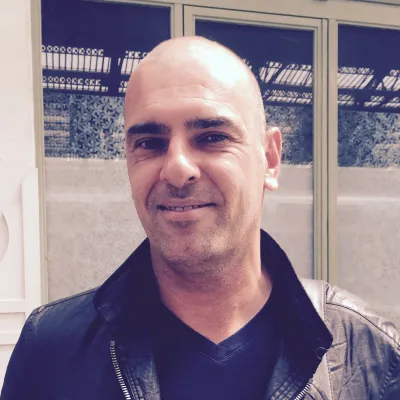
Cédric Pioline
Human Design Chart
Biography
The Human Design of Cédric Pioline: Manifesting Generator 2/5
Manifesting Generator 2/5 — Design at a Glance
Cédric Pioline revealed himself as someone with a hybrid energy structure: He possessed the constant power of the Sacral Center, similar to Generators, combined with the ability to skip steps and achieve results quickly. This design suggested that he did not primarily act on initiatives but responded to inner impulses. His strength lay in pulling things into his life quickly, yet this speed carried risks. Often, he skipped necessary intermediate steps, leading him to return later and fill gaps - a process that could cause frustration if he didn’t wait for the approval of his Sacral Center. Additionally, Cédric Pioline tended to pursue multiple projects simultaneously, driven by various impulses. This worked smoothly only when his inner authority and strategy aligned with this diversity; otherwise, the joy of creation quickly turned into overburdening. With correct application - that is, waiting for the “Yes” signal from within - he found deep satisfaction in his actions. His design promoted a playful mode where variety and parallel work did not serve as distractions but rather as sources of energy. He derived contentment so long as activities were enjoyable and resonated with his inner self.
Sacral Authority
Cédric Pioline displayed a decision-making structure based on direct physical resonance. As a Generator, he possessed sacral authority, meaning that his strategy and inner guidance were identical: He reacted to life rather than actively initiating it. This configuration greatly simplified his process as no cognitive analysis was needed to find the right path.
His responses came from his gut, often as spontaneous sounds like an approving “Hmm” or a disapproving grunt. These physical signals were reliable and indicated whether a situation gave or took energy. When his sacral motor kicked in, he felt vital and acted with great enthusiasm, completely without external compulsion.
Additionally, the Spleen Center functioned as supportive authority here. This endowed him with the ability to react particularly quickly and spontaneously. He had immediate access to his instinctive perception and physical well-being. This combination of sacral confirmation and spleen-supported speed allowed Cédric Pioline to immerse himself fully in activities that brought him joy, and make intuitive yet efficient decisions.
The 2/5 Profile — Hermit / Heretic
Cédric Pioline exhibited a fundamental disposition of “Natural Talent,” characterized by the tension field between deep withdrawal and the role as rescuer. His Profile 2/5 grants him the ability to offer practical solutions in crises (Line 5), yet this requires a conscious handling of his energy. Line 2, marked by purification and isolation, compels him to an unyielding retreat to sort out unclear emotions and gain inner clarity. Without this phase of solitude - comparable to a monk in his cave - he risks losing himself in social demands or developing nervous self-deception.
The challenge lies in not automatically responding to every request for help. Others instinctively seek answers from him (Line 5), which can threaten his need for privacy. Therefore, Cédric Pioline must strategically use his “me time” to discover what he truly wants to engage with. Only through this disciplined inner work can he decide when and for whom he will deploy his rescuing power without forgetting himself or falling into boredom and uncertainty. His strength emerges only when he uses the distance of Line 2 to target the effectiveness of his Line 5.
Single Definition — Defined & Open Centers
Cédric Pioline revealed himself through a constant, reliable way of expression and a deep, generative life force. His defined Throat Center shaped his communication as a fixed pivot for messages; he did not speak impulsively but from a clear source, which fostered honesty and clarity in his words. This voice was closely linked to his defined Sacral Center, the motor of his energy. Here lay the ability to react: Cédric Pioline possessed enormous vital force that only activated through consent. His design required waiting for questions or offers before feeling an "yes" or "no" from the gut. This protected him from exhaustion and ensured the endurance needed for tasks he truly wanted to fulfill.
In contrast, his design revealed a high sensitivity to external influences in several areas. His open Head Center made him vulnerable to mental pressure and doubt; he tended to engage with questions not of his own making, which could cause confusion. Similarly, his open Ajna Center: He absorbed concepts and opinions from his environment without anchoring them as personal truth, making him flexible but also vulnerable to intellectual conditioning.
His open G Center meant that he did not possess a fixed, unchanging identity but defined himself through relationships and places. He did not actively seek direction but waited to be initiated to discover who he was in a particular context. This went hand in hand with his open Heart Center, which should protect him from making promises or proving his worth through willpower – a trap that often led to frustration as he lacked the constant energy for it.
Additionally, his open Solar Plexus absorbed foreign emotions, making him appear emotionally unstable if he did not distance himself from others' moods. His undefined Spleen Center was vulnerable to fears and clinging to unhealthy situations out of false security. Finally, his open Root Center took on external stress, which could lead to hyperactivity as he tried to escape this pressure through action rather than letting go. Cédric Pioline's path lay in using these open windows as mirrors for the world without identifying with them, instead trusting in his sacral reactions and clear voice.
Channel 20-34: Charisma — Channels & Gates
Cédric Pioline exhibited a foundational stance of self-empowered activity: the ability to maintain energy over longer periods when guided by inner resonance. This stems from Channel 34-20, which connects the Sacral Center (Gate of Power) with the Throat Center (Gate of Now). This configuration acts as a classic mechanism for Manifesting Generators: the raw urge to act must yield to the sacral reaction and wait for external stimuli so that charismatic power flows correctly into the world. Without this connection to inner guidance, however, energy can manifest as obsession or uncontrolled outbursts due to little room for reflection between impulse and expression.
Alongside this driving life force, other aspects shaped his inner self. Gate 12 in the Cross brought restraint and a mutative quality to dealing with temptations, while Gate 11 used visual memories and collective ideas to assess situations. Emotional waves were processed through Gate 6 as elemental friction for growth, with Gate 36 seeing crises as cyclical movements towards development. In his design, gates like 27 (Nurture) and 14 (Skillful Power Handling) supported social embedding. Sacral gates 3, 9, and 42 suggested a tendency toward mutation through confusion, detail-oriented perfectionism, and the completion of processes to new commitments. Overall, Cédric Pioline distinguished himself as someone who gave his energy only to things that truly served him, thereby developing authentic vitality and inspiring presence—free from external pressures or "shoulds."
Individual Circuitry — Circuit Signature
Cédric Pioline revealed himself as someone whose energy was fueled by a direct reaction to life. His design connected the Sacral Center with the Throat Center through Channel 34-20, also known as the Charisma Channel. This connection created an unbroken flow: The power of intuition and proper behavior in the Sacral Center flowed freely into the ability to radiate this energy acoustically or through presence. Since Cédric Pioline has a simple definition, these two centers formed one coherent unit without internal breaks. The mechanics of this integration circuit emphasized the "now." It was not about long-term planning but rather drawing strength from the immediate moment and making it effective immediately. This shaped his way of expressing himself in his highest individuality—not through thinking but through simply being and radiating presence. The energy was always available as long as he reacted to life without forcing it. This configuration set a tendency towards natural attraction, which, however, always depended on the quality of the immediate reaction. It was a system of survival and self-reinforcement that found its strength in the direct implementation of intuitive impulses.
Right Angle Cross of Eden 2
Cédric Pioline revealed himself as someone deeply marked by a profound and often silent dedication to life itself. His Human Design profile bears the signature of Eden 2's right cross, a configuration that does not dictate an external mission or specific goal in the traditional sense. Instead, the focus is on pure experience and acceptance of what is. This mechanism describes a stance of radical presence: Life is not solved as a problem or managed as a project but accepted as a gift.
For Cédric Pioline, this meant that his path was less determined by strategic action or intellectual analysis, but rather by an intuitive resonance with the moment. The energy of this cross supports a deep connection to the earth and natural rhythms. It is not about changing the world, but finding one's place within it and observing it with open eyes. This orientation fostered inner peace and calm that could operate independently of external circumstances. Through his existence, Cédric Pioline lived this truth: by simply being, he participated in the great whole without needing to evaluate or control it. His strength lay in the ability to accept life as it came – with gratitude and without resistance. This is not a passive stance but an active affirmation of reality that allowed him to exist authentically and holistically.
Saturn Return · Uranus Opposition · Chiron Return · 2nd Saturn Return — Life Cycles
Cédric Pioline showed himself challenged by external events during specific phases of his life, prompting him to review his inner structure. In 1997, at the age of 28, he reached the Wimbledon final – a moment corresponding to his first Saturn return. This cycle condenses years of groundwork and tests the viability of the path taken so far; here this process manifested as a sports peak demanding confirmation or realignment.
Later in 2011, at the age of 42, he participated in 'Danse avec les stars'. This falls into the Uranus opposition phase, often marked by unexpected changes and a need for freedom or new bonds. His involvement in this dance show signified a shift towards interpersonal dynamics and public visibility on an emotional level. This configuration describes not linear development but impulses breaking established patterns and requiring new relationship forms. Cédric Pioline's design suggested that such external catalysts were necessary to resolve internal tensions between structure and spontaneity. These events served not merely as entertainment, but mechanisms realigning his life direction in these years and allowing him to prove himself outside of his usual role.
Manifesting Generator · Sacral Authority — Synthesis
Cédric Pioline seems marked by a deep inner dynamism arising from the interplay of reactive energy and manifesting power. The defined sacral center (centers) provides constant life energy, which is transformed into an immediate expression through its connection to the throat center (channels/gates) – a hybrid of Generator and Manifestor qualities (design view). This interplay runs visibly throughout his life, with rapid implementation of impulses (Charisma channel in Integration circuit) tied to the need for conscious direction choice (Profile 2/5), to avoid rash action.
A central paradox lies in the tension between the desire for withdrawal and inner clarity (Line 2 in Profile) and others' expectation as problem-solver and savior (Line 5). This ambivalence is reinforced by sacral authority: a strong gut feeling reacts to external stimuli, yet deciding how this energy will be used requires conscious reflection. This reflects in documented events – both success (1997) and relationships (2011) – where spontaneous reaction and strategic alignment coexist.
1 Defined Channel
Incarnation Cross - Right Angle Cross of Eden 2
Solar Return
The Solar Return shows the moment when the sun returns to its exact birth position - your personal solar year.
Life Cycles
Discover the life cycles with a detailed triple view (birth chart, cycle chart, composite).
Human Design Profile
- Strategy
- To respond - wait for something to respond to
- Authority
- Sacral Authority
- Profile
- 2/5 - Hermit / Heretic
- Definition
- Single Definition
- Incarnation Cross
- Right Angle Cross of Eden 2
- Date of Birth
- 15.06.1969 18:00
- Place of Birth
- Neuilly sur Seine, France
Frequently Asked Questions
What is Cédric Pioline's Human Design type?
What Profile does Cédric Pioline have in Human Design?
What Authority guides Cédric Pioline?
What incarnation cross determines Cédric Piolines life theme?
When was Cédric Pioline born?
Discover your own Human Design
Are you also a Manifesting Generator? Find out in a personal reading how to unfold your multi-talents and direct your energy wisely.
More Personalities
Back to overviewAldair

Alizée

Angeli

Arletty

Artus
Balthus