
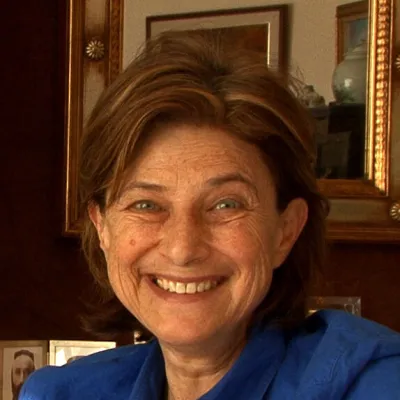
Chantal Akerman
Human Design Chart
Biography
Chantal Akerman — Generator with Profile 4/6
Generator 4/6 — Design at a Glance
Chantal Akerman revealed herself as someone with immense, enduring strength that only became effective when responding to external impulses. Her design established a fundamental stance of reaction: Initiating actions was not the primary focus; instead, she waited for signals from life to respond. This sacral energy functioned like that of a workhorse – extremely strong and constant if available for its task.
The mechanics of her design contained two central pitfalls. One was being forced: When Chantal Akerman had to do things she did not feel an inner urge to do, she wasted this valuable energy and tended towards burnout. The other danger lay in being prevented from doing her actual work even though the internal drive remained fully present.
Her path to deep satisfaction lay in saying “yes” with her gut feeling. When the sacral center signaled: “Let’s get started,” she responded with action. Living in harmony with this strategy – that is, reacting rather than initiating – rewarded her with a sense of profound fulfillment. Deviations from it, especially trying to constantly initiate herself, led sooner or later to persistent frustration and a lack of energy. Her endurance was thus not blind perseverance but the result of a conscious reaction to inner confirmation.
Sacral Authority
Chantal Akerman displayed a fundamental stance based on an internal impulse: She waited for the right moment rather than initiating herself. As a Generator, her design established that her strategy and inner authority were identical – reacting to external stimuli through physical signals. This configuration greatly simplified her decision-making process as she did not need to search in her head but could listen to her defined sacral center.
This sacral authority manifested for Chantal Akerman in a palpable gut feeling or sudden surge of energy. When something caught her attention, her body responded with sounds like “Mhm” or “Hm-hm,” grunts or groans. These signals were the key to her authenticity. Once her sacral motor started up, she felt vital and alive. She had seemingly inexhaustible energy and carried out her tasks with great enthusiasm.
This mechanism allowed Chantal Akerman to fully immerse herself in her activities without needing an external purpose. She was born to go through life with joy and satisfaction. The necessity of not jumping ahead but waiting for the inner impulse guaranteed endurance and action joy. Her design challenged her to use these physical sounds as reliable guideposts to stay in the flow of her own energy rather than fighting against resistance.
The 4/6 Profile — Opportunist / Role Model
Chantal Akerman revealed herself as someone marked by a deep tension between the need for belonging and the drive towards detached wisdom. Her design laid out a developmental line: In the first thirty years, experimental energy from line four dominated. She actively sought experiences and progress, especially in relationships, driven by an insatiable appetite for change. This early phase served to collect impressions, during which she learned not to take setbacks personally but rather accept them as necessary parts of the learning process.
After this phase, line six was activated, causing a shift in her attitude. The focus shifted from pure experimentation to searching for meaning and guidance. Chantal Akerman now faced the dialectical task of navigating the conflict between heart and head: On one hand, she wanted to cooperate and be part of a community; on the other, she needed the distance of “the mountain” to think about life. This line six demands overcoming old doubts to ask new, valuable questions. Nostalgia played a role here not as looking back but as a tool for identity formation. In her later years, it was expected that she would take on the role of a wise role model. She had to be careful with her big heart throughout this period to protect herself from being hurt by false communities and establish her authority on a solid foundation of transpersonal experience.
Single Definition — Defined & Open Centers
Chantal Akerman had a constant, reliable inner direction and a deep sense of her own identity. Her defined G Center gave her a stable internal compass as well as the knowledge that she was loved without being dependent on others. This foundation allowed her to show new perspectives to others while respecting the freedom that not everyone could or would follow her path.
At the same time, Chantal Akerman had an enormous vital energy source in her defined Sacral Center. This motor generated daily power but could only be released through reaction. The strategy was to wait for invitations and respond with yes or no tones to avoid frustration and exhaustion. When she reacted, her full energy stood behind the decision; if she initiated independently, this broke the connection to the source.
In contrast, Head, Ajna, Throat, Heart, Solar Plexus, Spleen, and Root Centers were open. These centers reflected situational environmental impulses but did not belong to her continuous personality. The open Head Center tended to absorb mental pressure waves or confusion from the environment, which could be misinterpreted as personal uncertainty. Similarly, the open Ajna Center was flexible for various concepts without possessing them as a constant truth.
The open Heart Center often felt pressured to prove itself or make promises despite not being designed to constantly exert willpower. This could lead to a cycle of disappointment if external expectations were not met. The open Solar Plexus Center absorbed and amplified the emotions of the environment, leading to experiencing other people's moods as personal inner states.
Moreover, the open Spleen Center took on fears or feelings of lacking well-being from the environment, while the open Root Center intensified external stress and adrenaline. These open areas required boundaries since they otherwise fostered conditioning patterns like seeking security through others or trying to reduce stress. Chantal Akermans design thus demanded trust in her inner authority from G- and Sacral Centers to not personalize these external influences but perceive them as transient information.
Channels for fixed rituals and extreme life span.
Chantal Akerman showed herself as someone whose internal rhythm generated a strong, constant energy flow that drew her environment into its rhythm. This stream was vital and based on impersonal logic that moved her forward as long as she followed her own timing; deviations led to chaos. This dynamic stemmed from the Rhythm Channel 5-15 connecting Sacral Center with G Center. Gate 5 held onto fixed habits and rituals, while Gate 15 through its love for human extremes leveled the playing field and integrated societal diversity into the life flow. Together they formed a universal rhythm serving as a pillar of biological processes unaffected by intellect or emotional waves. The collective magnetism of this channel projected a universal love for humanity that drew others magnetically into her energy flow and synchronized groups.
Additionally, further energetic patterns were at work: Gate 35 sought change and progress through interaction, with true satisfaction arising later from the meaning of experience. Gate 63 drove mental processes forward through doubt to gain security and improve uncertain patterns. Gate 64 stood for a figurative mental process interpreting past experiences to form clarity in Ajna Center. On the personality side, Gate 27 represented a genetic role of care and self-preservation qualifying activities with warm concern. Finally, Gate 7 projected leadership patterns for the future tested in social hierarchies. These configurations shaped Chantal Akermans specific way of moving through life and interacting with her environment.
Collective Circuitry — Circuit Signature
Chantal Akermans design laid a tendency towards strategic structure and focused communication of insights. She showed herself as someone who used logical connections to guide society toward a better future – an approach acting free from emotional conditioning. This resulted from her Simple Definition, where all defined centers were directly connected.
Central was the Understanding Circuit. For Chantal Akerman, this circuit exclusively linked Identity Center and Sacral Center. This connection occurred through the Rhythm Channel (Gates 15 and 5). This means that her inner identity and deepest life rhythm were directly coupled. She shared rational insights not out of impulsive emotion – Solar Plexus Center was excluded from this circuit – but from clear, visual, and format-focused energy. The left side of her chart represented here energies of the future.
As it was a Simple Definition, only one group of connected centers existed. There were no separate parallel power fields within the design; instead, energy flowed continuously between Identity and Sacral Center. This shaped her way of processing and conveying information: as emotionless ratio aiming at improvement and structure. The connection of these two centers allowed her to translate complex strategic content into an accessible rhythm without subjective feelings distorting the process.
Right Angle Cross of Consciousness 2
The given raw content does not provide specific mechanical details or psychological manifestations for the right cross of consciousness 2. There is no description of the energetic dynamics that would have shaped Chantal Akerman's design in this area. Without these underlying data, it is impossible to derive any character emphasis. The chapter remains empty regarding concrete behavioral patterns or inner drives that could arise from this configuration. A specific characterization based on the provided facts is not possible due to the missing mechanical translation. Therefore, no connection can be made to Chantal Akerman's actual expression or her internal experience. The structure of the reading requires a direct derivation from the chart; here, only the name of the configuration is available without further explanation. Consequently, the analysis of this component remains incomplete and contains no meaningful information about Chantal Akerman. Neither an event nor a specific property described in the raw data can be identified. Therefore, no text segment can be created that goes beyond merely stating the fact or offers interpretive classification. The absence of descriptive content in the raw material inevitably leads to a blank spot in the characterization.
Saturn Return · Uranus Opposition · Chiron Return · 2nd Saturn Return — Life Cycles
Chantal Akerman established her independent artistic identity at the age of 25 in 1975 with the success of the film 'Jeanne Dielman'. For her design, this moment marked the first Saturn return, a period of great testing. It raises questions about self-worth beyond parental expectations. The issue is establishing a structure that one carries themselves. Success with this work condensed years of groundwork into a viable result. This was confirmation of her own path. The mechanics of this phase demand a clear answer to 'Who am I?'. Chantal Akerman did not find this answer in rejection but in the creation of a new framework. Her design suggested that true strength comes from carrying inner values outward. The film served as proof of this internal fortitude. It stood for maturity beyond mere age. Through this work, she defined herself. She separated her identity from others' expectations. This was not an abrupt break but the result of a process of self-discovery. The Saturn return acted here as a catalyst for differentiation. Chantal Akerman used this moment to find her voice. She showed that authenticity arises from confrontation with oneself. Success was thus not only external recognition but internal confirmation. It validated the correctness of her path. This shaped her further work sustainably.
Generator · Sacral Authority — Synthesis
Chantal Akerman was a Generator whose life was marked by deep inner authority and a constant flow of sacral energy. Her design points to someone who, through reacting to external impulses, reached a state of profound fulfillment – provided that the Sacral Center signaled agreement. The ability to give in to life rather than initiate it seems to have manifested in continuous experimentation and a search for authentic connections (Profile 4/6), with social engagement balancing introspective reflection playing a central role. The connection between the Sacral Center and G Center through the Rhythm Channel suggests a natural, almost magical rhythm that guided her actions and drew others into its flow.
Akerman lived in a paradox between the need for community (Line 4 in Profile) and an inner drive towards self-reflection and distancing (Line 6). This tension was also reflected in the open centers: An undefined Head Center and Ajna Center made her receptive to external influences, while an open Heart Center implied a constant search for validation and meaning. The pressure from the environment, coupled with the lack of internal compass in these centers, may have led to an unending process of questioning and deep engagement with personal values and beliefs.
1 Defined Channel
Incarnation Cross - Right Angle Cross of Consciousness 2
Solar Return
The Solar Return shows the moment when the sun returns to its exact birth position - your personal solar year.
Life Cycles
Discover the life cycles with a detailed triple view (birth chart, cycle chart, composite).
Human Design Profile
- Type
- Generator
- Strategy
- To respond - wait for something to respond to
- Authority
- Sacral Authority
- Profile
- 4/6 - Opportunist / Role Model
- Definition
- Single Definition
- Incarnation Cross
- Right Angle Cross of Consciousness 2
- Date of Birth
- 06.06.1950 07:15
- Place of Birth
- Etterbeek, Belgium
Frequently Asked Questions
What is Chantal Akerman's Human Design type?
Which Profile did Chantal Akerman have in Human Design?
What Authority did Chantal Akerman have?
What incarnation cross did Chantal Akerman have?
When was Chantal Akerman born?
Discover your own Human Design
Are you also a Generator? Find out in a personal reading how to use your sacral energy correctly and discover deep satisfaction.
More Personalities
Back to overviewAaliyah

Alexia

Angèle

Anne-Marie

Arcángel

Arno
