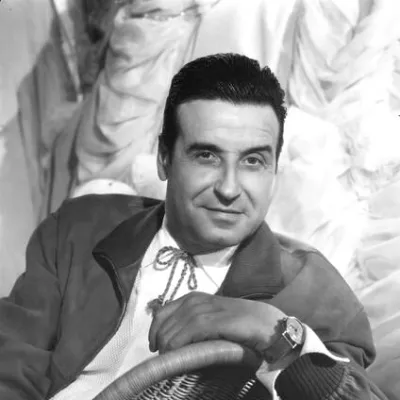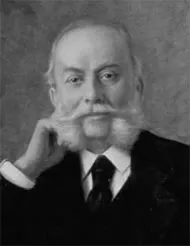
Charles Pfizer
Human Design Chart
Biography
Erhart died in 1891, and Pfizer remained as the head of the company until 1900, when it was incorporated and Charles Pfizer, Jr. became its first president.
Pfizer died on 19 October 1906 at age 82 at his summer home "Lindgate" in Newport, Rhode Island. His death came a few weeks after a fall down stairs in which he broke an arm and was otherwise badly injured.
Today, Pfizer Inc. is one of the world's largest pharmaceutical companies.
Human Design Analysis: Charles Pfizer as Projector 4/6
Projector 4/6 — Design at a Glance
Charles Pfizer revealed himself as someone who could immediately recognize systemic flaws. His Human Design type is Projektor, which describes a very dense and focused aura – comparable to a bright flashlight that shines directly on dark spots in the environment. This configuration gave him the ability to instantly identify inefficient processes or problems in others.
However, he lacked a constant internal energy source due to his undefined Sacral Center. Instead, he worked in phases of high intensity followed by necessary rest periods for regeneration. Directly addressing recognized flaws would often cause resistance or anger from those around him, similar to blinding someone with bright light directly into their eyes. A more effective strategy was to attract others through his own harmony and clarity, so that they would seek advice on their own.
For Projectors, the waiting period for an honest invitation is crucial. Without this recognition, the design tended to get stuck in bitterness if insights were not valued. However, when he lived according to the strategy of patient expectation and targeted shining, he was rewarded with success. His influence did not come from constant activity but through precise, inviting leadership once his light was noticed.
Splenic Authority
Charles Pfizer demonstrated decision-making based on immediate bodily intuition. His design carries inner authority in the Spleen Center, which functions as a health and alarm system. For this configuration, both the Emotional and Sacral Centers are open, typical for Projectors or Manifestors. This structure gave him pronounced survival intelligence: A spontaneous internal impulse clearly signaled whether a situation or environment was beneficial. This first impulse directly served his health and allowed him to rigorously protect himself from harmful influences. Since the Spleen voice is a very fine, single momentary impulse in the present moment, it required high vigilance not to be drowned out by external voices. Retreats for decision-making were helpful. Because what was right became known only at the moment, plans often changed frequently; long-term commitments were thus difficult, and he preferred flexibility and freedom to act spontaneously without unnecessary restrictions.
The 4/6 Profile — Opportunist / Role Model
Charles Pfizer's design showed a tendency towards social experimentation in his first three decades of life. As someone with Profile 4/6, Line 6 appeared initially as Line 3 before Saturn returned, which led him to try various relationships and friendships extensively through networking.
With the activation of the sixth line, he experienced an internal conflict between a deep desire for community belonging (Line 4) and the need to withdraw to contemplate life's meaning (Line 6). This tension between heart and mind shaped his development. In later years, it was expected that he would take on the role of a wise role model through cooperation.
The sixth line went through three phases: Martyrdom, a phase with potential hypocrisy during peak times, and finally authenticity from age 50 onwards. Only in this late phase did he understand perfect behavior as individual survival strategy rather than performance. His Line 4 also made him aware of the danger of opening up to the wrong people and getting hurt, which always surrounded his social interactions with a certain caution.
Single Definition — Defined & Open Centers
Charles Pfizer's Human Design profile suggests a tendency towards intuitive, moment-based action. His defined Spleen Center endowed him with a reliable instinct for survival and health; he could make spontaneous judgments without needing to rationalize them. This worked in conjunction with his defined Root Center, which provided a constant adrenalized push to move forward in the world and climb materially. This combination created a foundation of existential clarity and consistent energy.
In contrast, his open centers strongly shaped his experience through external influences. His open Head Center made him susceptible to mental confusion; he tended to get entangled in questions that were not his own, often seeking inspiration outside himself to relieve internal pressure. Similarly, his open Ajna Center caused him to adopt concepts and opinions from others without identifying them as his own truth, making him a flexible thinker but at risk of getting lost in endless theoretical considerations.
His open Heart Center lacked consistent willpower; he was not designed to give promises or prove his worth through competition. Instead, he risked falling into cycles of self-doubt and overexertion to gain recognition. His open Sacral Center also did not provide a constant energy flow; he was sensitive to the energy of his environment and could easily overextend himself with borrowed vitality if he didn't listen to his inner authority. Additionally, his open Solar Plexus absorbed the emotions of others, making him emotionally vulnerable and experiencing foreign moods as his own. His wisdom lay in using these open fields as mirrors rather than identifying with them.
Channels for logical clarity and ambitious transformation.
Charles Pfizer's Human Design profile suggests a tendency towards relentless improvement and strategic ascent. He was someone who not only observed patterns but actively corrected them to ensure efficiency and continuity. This attitude was shaped by the Judgment Channel 58-18, connecting Root Center with Spleen Center, driving a logical impulse that constantly assesses what is healthy or faulty. Gate 58 demands 'better and more', while Gate 18 provides the correcting force. For Charles Pfizer, this meant an inner vigilance: he evaluated situations based on whether they contributed to collective satisfaction or required correction. His energy acted like a filter identifying imbalances and seeking solutions applicable to all – provided he was invited.
Parallel to this, the Transformation Channel 54-32 shaped his path. This channel connects Ambition (Gate 54) with Continuity Instinct (Gate 32). It drove Charles Pfizer to improve his position through constant effort and navigate out of given situations. The drive was not just individual success but survival and strength for the 'tribe' – his community or organization. Gate 32 always sought talents and resources to master crises, while Gate 54 provided the will for change. This combination created a desire to gain recognition through competence and loyalty and build stable structures.
Additionally, Gates like 25 (Innocence/Mysticism) and 46 (Devotion/Presence) fostered a deep connection to the process itself. Gate 10 supported the integration of complex behavioral rules, while Gate 15 secured the natural rhythm of collective flow. In the background stood Gate 52 with its ability for focused pattern correction in silence, complemented by Gates like 38 setting boundaries and defending integrity when pressure arose. Charles Pfizer's design was thus geared towards a balance of critical analysis, strategic ascent, and maintaining stable, functioning systems.
Collective Circuitry — Circuit Signature
Charles Pfizer's Human Design profile suggests a tendency towards focused, emotionless rationality. This attitude resulted from the Understanding Circuit, which in him was active through the Judgment Channel (Gate 18-58), connecting Spleen Center with Root Center. As both centers belong to the same energetic group, intuitive perception from the Spleen flowed directly into the stress reaction of root energy over. This allowed Charles Pfizer to develop logical structures and strategic improvements for the future free from emotional conditioning or influence of Solar Plexus.
Parallel to this, the Ego Circuit worked through the Transformation Channel (Gate 32-54). Similarly, this connected Spleen Center with Root Center, forming the same closed energetic group as the Understanding Circuit. The Ego Circuit emphasizes cooperation, resource creation and mutual support within a tribe. Through the connection of Spleen and Root here, Charles Pfizer showed an ability to transform through intuitive adaptation to circumstances to achieve shared goals. Crucial was the absence of a link to Sacral Center in this circuit: without constant life force, such resource creation required necessary rest pauses for energy regeneration. Both circuits thus utilized the same central axis from Spleen and Root, imprinting an intensive linkage between strategic judgmental acumen with transformative adaptability serving collective structures.
Right Angle Cross of the Vessel of Love 1
Charles Pfizer's Human Design profile featured the right cross of the Love Vessel. This configuration placed a specific emphasis on unconditional devotion and protection for others in his energetic makeup. It was not an active strategy but rather a passive receptive position: He possessed the energy to nourish and support others, yet only when approached or invited from outside.
The term 'Love Vessel' describes an inner reservoir of care and emotional support ready to offer stability to others. The right side positioning in this cross indicated a more receptive quality. Charles Pfizer lived out this dynamic not through aggressive initiative but by creating space where others felt secure. His energy acted as a stabilizing factor in interpersonal bonds, provided the other party initiated.
This mechanism meant that his contribution to the world often happened behind the scenes: taking responsibility for the well-being of others, providing emotional stability and establishing a protective framework. It was an energy of giving without expecting direct reciprocity but dependent on resonance from outside. Without this external activation, this potential remained dormant within him. His design thus suggested that his greatest strength lay in strengthening others through silent presence and unconditional support when called upon.
Saturn Return · Uranus Opposition · Chiron Return · 2nd Saturn Return — Life Cycles
Charles Pfizer's profile showed a tendency towards structural anchoring and the building of long-term, robust systems. This orientation characterizes the first Saturn Return phase, where years of groundwork often condenses into concrete institutional results. In 1849 at age 25, Karl Pfizer – here considered part of the family or business unit – co-founded the pharmaceutical giant Pfizer with his cousin Charles F. Erhart. This event marked the material realization of an inner necessity: forming a stable organization from individual impulses that would endure beyond personal life. The design favored no fleeting ideas but rather the creation of lasting and reliable structures.
The second Saturn phase around age 54 deepened this structuring through integrating new technological realities into existing frameworks. In 1878, the first telephone was installed in the office at Maiden Lane 81. For this design, it wasn't merely a technical advancement but a logical consequence of the need to secure communication channels and enhance efficiency in the established system. The mechanism here showed someone who adopts innovations only when they contribute to stabilizing and optimizing already created structures. Charles Pfizer thus lived in a rhythm that constantly tested external changes for their ability to support and sustain the inner core of the organization.
Projector · Splenic Authority — Synthesis
Charles Pfizer was a Projector whose life was marked by a profound need to bring light into darkness for others. His defined Spleen Channel (Judgment) gave him sharp perception of what wasn't right in the system, along with an instinctive sense of healthy decisions. This ability to recognize patterns and make corrections formed a red thread through his work – from early professional beginnings (1849) to integrating new technologies (1878). He lived out the role of observer and guide, intuitively sensing what was necessary for well-being.
Simultaneously, a central paradox in his design revealed itself: Line 4 of his profile sought belonging and cooperation while Line 6 made him an independent thinker and role model. This internal conflict between wanting connection and needing to judge from a distance shaped his decisions and created tension between social engagement and individual path. This field of tension was evident in his ability to act within networks as well as contemplate the meaning of life.
2 Defined Channels
Incarnation Cross - Right Angle Cross of the Vessel of Love 1
Solar Return
The Solar Return shows the moment when the sun returns to its exact birth position - your personal solar year.
Life Cycles
Discover the life cycles with a detailed triple view (birth chart, cycle chart, composite).
Human Design Profile
- Type
- Projector
- Strategy
- Wait for the respectful invitation
- Authority
- Splenic Authority
- Profile
- 4/6 - Opportunist / Role Model
- Definition
- Single Definition
- Incarnation Cross
- Right Angle Cross of the Vessel of Love 1
- Date of Birth
- 22.03.1824 07:00
- Place of Birth
- Ludwigsburg, GER
Frequently Asked Questions
What was Charles Pfizer's Human Design type?
What profile did Charles Pfizer have in Human Design?
Which authority guided Charles Pfizer's decisions?
Which incarnation cross determined Charles Pfizer's life path?
When was Charles Pfizer born?
Discover your own Human Design
Are you also a Projector? Find out in a personal reading how to unfold your leadership qualities and recognize the right invitations.
More Personalities
Back to overviewSissy Spacek

Alain-Fournier

Anémone

Ann-Margret

Bourvil
Christian-Jaque