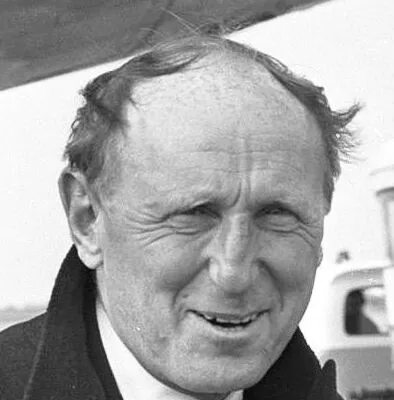
Chip Reese
Human Design Chart
Biography
He is widely regarded as having been the greatest cash game poker player.
Reese died on 4 December 2007, at his Las Vegas home, aged 56.
What does Projector 4/6 mean for Chip Reese?
Projector 4/6 — Design at a Glance
Chip Reese was someone who stood out with his sharp ability to identify systemic flaws in his environment. His Human Design type is Projector; this configuration gave him a dense, focused aura that he directed like a bright light beam onto weaknesses in others. He immediately saw what wasn't functioning or 'in the dark' within his counterpart. This skill of identifying errors in the system came with a specific challenge: When he addressed these flaws directly, it often felt to those around him like blinding light and provoked defensiveness.
Since Projectors do not have a defined Sacral Center, they lack a constant internal energy source. Instead, Chip Reese lived through phases of high activity followed by necessary rest periods for regeneration to prevent burnout. His best strategy was not to take the initiative himself but to wait for an honest and appreciative invitation from his environment. Through this patience and the example of his own harmony, he naturally attracted others who came to him seeking advice. When he lived according to this principle of expectation, he was rewarded with success. Ignoring this mechanism and trying to impose his insights led sooner or later to his Non-Self theme: bitterness over others' inability to recognize his value.
Splenic Authority
Chip Reese demonstrated decision-making based on a fine, immediate inner impulse. His design carried the authority of the Spleen Center, which presupposed that both his Emotional and Sacral Centers were open – a configuration only Projectors or Manifestors exhibit. The Spleen Center served as his health and alarm system. It provided him with pronounced survival intelligence manifesting as spontaneous knowledge about whether a situation, environment, or society was right for him. His instinct and physical well-being acted as reliable indicators of what was correct for him.
However, this voice from the Spleen was a very subtle impulse that only appeared once in each moment, posing the risk of being easily ignored or drowned out by external influences. This required high alertness; occasionally, withdrawal helped to listen to these fine signals. Decisions had to be made in the moment since the first spontaneous impulse immediately served his health and enabled him to rigorously distance himself from harmful influences. Because he could only know what was right at that moment, his plans often changed short-term. Long-term commitments were therefore difficult; he needed a lot of freedom and flexibility to avoid restricting his natural adaptability.
The 4/6 Profile — Opportunist / Role Model
Chip Reese showed himself as someone who acted experimentally in the first thirty years of his life. His 4/6 Profile worked like a pure Line 3 during this phase: He tried many things, especially in relationships and friendships, to find his role. This early period served for collecting experiences through trial and error.
With the return of Saturn, his focus shifted fundamentally. The Profile 4/6 now brought the internal conflict between the desire for community (Line 4) and the drive for a broad, reflective perspective (Line 6) to light. Chip Reese had to learn to protect the big heart of Line 4 without prematurely opening himself to false people while simultaneously fulfilling the high demand to act as a role model.
His ability to recognize deeper motivations in others – shaped by the fourth line of the Bodygraph – allowed him to place people into meaningful order and assign them the right roles. This gift always carried the risk of manipulation accusations since it seemed prescriptive. Parallel, he pushed practical improvements through self-stimulation. He only gave his energy when experiments had social value and preserved his identity. This process required time across three life phases, marked by infatuation to self-sacrifice in service of correction.
Single Definition — Defined & Open Centers
Chip Reese's design inclined him towards intuitive, moment-based action. His defined Spleen Center ensured constant body awareness and an instinct that worked in the present. This mechanism allowed spontaneous judgments about health and well-being without rational delay; warning signals were unique and required immediate trust in bodily intelligence. Simultaneously, his defined Root Center presented a persistent physical pressure driving him forward. This energy served survival and material correction by nurturing existential awareness. The stress was not seen as a burden but rather as a driving force for thriving in the world when guided by inner authority.
In contrast, several undefined centers revealed specific vulnerabilities to conditioning. His open Head Center lacked consistent mental inspiration; Chip Reese tended to get entangled in others' doubts or seek answers that weren't his own. Instead of engaging in mental monologues, he was dependent on observing his thoughts and trusting his intuitive Spleen Center. Similarly, the open Ajna Center allowed flexible thought processes but led to the risk of interpreting foreign concepts or opinions as personal truth. He had to learn not to take ideas personally but rather view them as transient information.
The open G Center also meant he lacked a fixed identity or life direction. Instead, he relied on initiation through interaction with others and the right places. Attempts to find this direction himself often led astray; instead, his orientation crystallized when he encountered the right people at appropriate locations. The open Heart Center showed sensitivity to the pressure of needing to prove one's worth. Without consistent willpower, he risked making promises he couldn't keep and spiraling into self-deprecation. The solution lay in not taking on commitments for recognition but only those tasks confirmed by his inner authority.
Channels for logical analysis and corrective clarity.
Chip Reese's design inclined him towards critical analysis. Channel 58-18 connected the Root Center with the Spleen Center through Gate of Vitality (Gate 58) and Gate of Correcting (Gate 18). This created an insatiable drive to question and perfect patterns. Logic had to prove it offered the best answers; this process nourished the art of mastery. Gate 58 fueled a love for life, while Gate 18 reined in and pointed out imbalances. Judgment served as a sentry to assess whether perceptions hindered or promoted collective well-being.
Additionally, gates like 17 (Following, logical teaching) and 52 (Concentration, pattern correction) were influential. Gate 38 represented pressure in the struggle for life's meaning and set boundaries to preserve individual integrity. Gate 54 linked worldly success with mystical insight, where a partner supported development. Gate 19 dealt with resources, territory, and spirituality within the community. Gate 57 enabled intuitive clarity and self-awareness here and now.
This configuration showed someone constantly seeking errors or striving for correction. When this assessment was uninvited, an endless data stream about what was wrong emerged. However, when asked for his solution, he found joy in providing practical answers. The challenge lay in carefully choosing battles and only correcting what others were open to. Mutual agreement thus saved relationships and restored peace.
Collective Circuitry — Circuit Signature
Chip Reese's design revealed him as someone prioritizing logical clarity and strategic judgment. His chart had a simple definition, meaning his energetic connections were clear and direct without the complex internal tensions of shared or triple definitions.
Central to this orientation was the Understanding Circuit. For Chip Reese, this circuit specifically connected the Spleen Center with the Root Center through Channel 58-18 (Gates 18 and 58). This connection created a direct flow between the intuitive perception of patterns in the Spleen and the energetic urgency of the Root Center. The result was an ability to not only analyze situations but also translate this analysis into concrete, urgent action impulses.
Since Chip Reese's Solar Plexus Center was not part of this circuit, his ratio remained free from emotional coloring. He sought objective, rational insights free from conditioned reactions. His focus lay on identifying logical structures and formulating or applying these insights to improve the current situation. The energy thus flowed directly from intuitive pattern recognition into motivation for implementation, helping him quickly grasp complex relationships and strategically align them without being distracted by disruptive emotions.
Right Angle Cross of Service 1
Chip Reese revealed himself through a deep, almost instinctive orientation towards the well-being of the community. His design was marked by what is known as the 'Right Cross of Service', a configuration that did not prioritize individual career or personal fame but consistently directed his gaze outward and toward other people. This structure acted like an inner compass driving him to understand himself as a tool for greater purposes. It wasn't a conscious moral decision in everyday terms, but rather a deeply rooted energetic alignment: His sense of value and life force derived from being useful to others.
For Chip Reese, this meant finding his natural energy in situations where he could support, care for, or help others. The 'Right Cross' described less a specific action than the quality of intention – an unadulterated readiness to serve that was free from selfish calculation. He lived this attitude not as duty but as an expression of his own nature. In such a design, the ego merged with the need of another; his own well-being depended directly on how well he fulfilled this serving role. It was a way of life dedicated to enabling him to unfold his true strength in collective structures or helping professions without losing himself, but rather confirming and strengthening it through service to others.
Saturn Return · Uranus Opposition · Chiron Return — Life Cycles
Chip Reese demonstrated an impressive ability to act precisely under extreme pressure and strategically deploy his inner energy. This attitude crystallized in 1978 at the age of 27 when he won a $1000 Seven Card Stud tournament at the World Series of Poker. This success marked his first Saturn Return: a phase where years of groundwork and discipline culminated in tangible, graspable results. The design indicated that such milestones did not occur randomly but served as confirmation of a consistently lived strategy.
This configuration proved itself again in 1991 at the age of 40 when Reese was inducted into the Poker Hall of Fame as its youngest player to date. This moment coincided with his Uranus Opposition, an aspect often associated with sudden recognition and breakthrough to a new level. The mechanics here show how inner constancy meets external opportunities: Long-term perseverance found public validation. Chip Reese's path thus illustrated how specific astrological-human design cycles can shape concrete life stations – less as fate, more as logical consequence of living in alignment with one's own energetic conditions.
Projector · Splenic Authority — Synthesis
Chip Reese was a projector whose life was marked by a deep need to bring light into darkness for others. His defined Spleen Center (health alarm system) and the Channel of Judgment (58-18) gave him the ability to immediately recognize what wasn't right in the system – an instinctive 'scanning' of situations for potential dangers or inefficiencies. This gift, combined with his role as a networker and role model (Profile 4/6), led him always to seek sharing his knowledge and empowering others to make better decisions. Thus, he lived a path where recognizing errors and intuitive perception were inseparable from the dissemination of these insights.
At the same time, his design revealed a central paradox: The Line 6 in his Profile pointed to an inner tension between the desire for social connection (Line 4) and the need for detached reflection. He was destined to serve as an example and work with others, yet he was repeatedly drawn back into isolation to ponder fundamental questions of life. This ambivalence also showed itself in the interplay between the spontaneous instinct of the Spleen (in the present moment) and the logical drive toward correction (Channel 58-18), making him a sharp observer whose judgments were always informed by deep understanding of underlying systems.
1 Defined Channel
Incarnation Cross - Right Angle Cross of Service 1
Solar Return
The Solar Return shows the moment when the sun returns to its exact birth position - your personal solar year.
Life Cycles
Discover the life cycles with a detailed triple view (birth chart, cycle chart, composite).
Human Design Profile
- Type
- Projector
- Strategy
- Wait for the respectful invitation
- Authority
- Splenic Authority
- Profile
- 4/6 - Opportunist / Role Model
- Definition
- Single Definition
- Incarnation Cross
- Right Angle Cross of Service 1
- Date of Birth
- 28.03.1951 08:35
- Place of Birth
- Dayton, OH, United States
Frequently Asked Questions
What Human Design type was Chip Reese?
What Profile did Chip Reese have in his Human Design?
What Authority did Chip Reese possess?
What incarnation cross did Chip Reese have?
When was Chip Reese born?
Discover your own Human Design
Are you also a Projector? Find out in a personal reading how to unfold your leadership qualities and recognize the right invitations.
More Personalities
Back to overviewSissy Spacek

Alain-Fournier
Aldair

Anémone

Ann-Margret

Bourvil