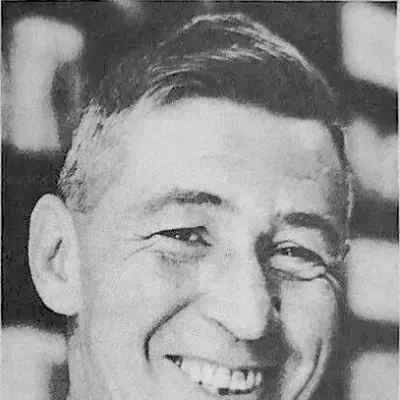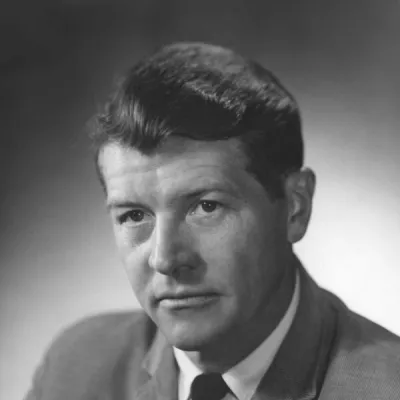
Christian Anfinsen
Human Design Chart
Biography
He married on 29 November 1941; three kids, with a second marriage in 1979.
Anfinsen died of a heart attack 14 May 1995, Pikesville, MD.
What does Projector 3/5 mean for Christian Anfinsen?
Projector 3/5 — Design at a Glance
Christian Anfinsen had a dense, focusing aura that acted like a bright flashlight, revealing system errors in his environment immediately. However, this perceptiveness could be perceived as unpleasant or confrontational by those around him when he articulated his observations directly. His design suggested that direct criticism often triggered defensive reactions rather than contributing to solutions. Instead, Christian Anfinsen was most effective through his own harmony and inner balance, which naturally drew others to him. His strategy involved waiting for an honest, appreciative invitation before offering his insights or leadership roles. This protective mechanism prevented conflicts and ensured the acceptance of his advice.
Furthermore, Christian Anfinsen lacked a defined Sacral Center, meaning he did not have constant life energy available to him. His activity followed a rhythmic pattern with phases of high productivity that had to be balanced by targeted rest periods to avoid burnout. Ignoring this need would quickly deplete his energy. By waiting for invitations and respecting his energy balance, Christian Anfinsen lived in alignment with his Projector design. This led to successful rewards while deviating from this path could have resulted in bitterness.
His influence did not rely on constant presence or assertiveness but rather on precise, sought-after leadership and the ability to illuminate others' paths without blinding them.
Splenic Authority
Christian Anfinsen demonstrated decision-making based on a fine, spontaneous impulse. His design featured the inner authority of the Spleen Center, meaning his defined Spleen Center functioned as a health and alarm system for him. This center endowed him with pronounced survival intelligence: an immediate internal awareness signaled whether a situation, environment, or society was right for him. His instinct and physical well-being served as reliable indicators.
For Christian Anfinsen, the first spontaneous impulse was the truth. Decisions had to be made in the moment; any hesitation or overthinking risked missing this delicate signal. Since this impulse only came once and could easily be drowned out by other influences, it required high vigilance. Sometimes a brief retreat helped to hear the silence where the answer lay.
This mechanism made long-term planning difficult. As he only knew what was right in the moment, his needs could change short term. Therefore, Christian Anfinsen needed much freedom and flexibility. He had to commit little and act spontaneously. This ability allowed him to rigorously protect against harmful influences and thus effectively care for his health. The Spleen Authority prioritized this immediate protective instinct over all other considerations.
The 3/5 Profile — Martyr / Heretic
Christian Anfinsen revealed himself through his Profile 3/5 as someone who derived knowledge not from dogma but from personal practice. His Line 3, rooted in Gate 17, shaped an attitude of radical experimentation: He trusted only what he had experienced and understood personally. This path of "trial and error" required patience for detailed work and rejected shortcuts, which often led to incomplete understanding. Failure was not an end but a necessary source of experience.
These accumulated insights flowed into his role as Line 5. As a "Hero" or rescuer, Christian Anfinsen used his tested knowledge to offer practical solutions for the collective. The configuration 58.5 emphasized the aspect of defense and protection; he directed his energy specifically towards concrete resistance or remedy. It was crucial to carefully weigh each experiment so as not to be distracted from the true goal by external temptations.
The tension in his design lay between the private space of experimentation – where mistakes were allowed – and the public expectation of a competent rescuer. His appeal to others resulted from this authenticity: He offered no theoretical ideals but proven strategies gained through personal failure and learning. Thus, he transformed individual experiences into collective benefit, always with the awareness that true understanding only arises through the circuitous route of personal testing.
Split Definition — Defined & Open Centers
Christian Anfinsen revealed himself through a stable inner structure: defined G-, Spleen- and Root Centers created a foundation of clear identity, intuitive instinct, and constant life pressure. This energy flowed into his defined Throat Center, which acted as a reliable channel. His communication was not just speaking thoughts but the transmutation of these internal forces into clear words and actions. He spoke from his personal direction (G) and momentary knowledge (Spleen), supported by the necessary push for forward movement (Root).
This firm framework contrasted with his open centers. His open Head and Ajna Centers did not mean constant mental inspiration or conceptual clarity; he was vulnerable to external confusion and had to learn not to follow every thought. The open Heart Center lacked consistent willpower, making him prone to conditioning, feeling the need to prove his worth through achievement rather than simply being. His open Sacral Center lacked generative life force; he could absorb and amplify others' energy but risked overloading if he did not listen to his inner authority. Finally, his open Solar Plexus reflected the emotions of the environment instead of having stable personal feelings.
Christian Anfinsen's design challenged him to use these open areas as windows to the world without personalizing them. His strength lay in maintaining his defined voice and identity while observing mental, emotional, and energetic influences from the environment rather than being led by them. The clarity of his Throat served to carry the wisdom of his Spleen and G Centers into the world, free from the noise of conditioned open centers.
Channels for reflection, critical judgment and transformative ambition.
Christian Anfinsen showed himself as someone whose life was marked by logical structuring and teaching for the future. This solar imprint through Gate 17 defined the core of his existence: it was about succession, maintaining human rights, and serving leadership. Doubt was not an obstacle but an integral part of his learning process through trial and error.
This attitude was supported by specific mechanisms. The Lost Son Channel 13-33 connected hearing with withdrawal. Christian Anfinsen gathered experiences and secrets, then withdrew to reflect on them before passing these insights forward. This process of patience and waiting for deeper truth served as a foundation for his logical teaching.
Simultaneously, the Judgement Channel 58-18 was at work. It connected the drive for vitality with correcting patterns. Christian Anfinsen logically questioned what was healthy or balanced and sought perfection in application. This helped him refine the organization he aimed to achieve through Gate 17 by testing patterns on their feasibility.
Furthermore, the Transformation Channel 54-32 fueled his ambition. Through constant effort and a desire for social recognition, he strove to improve his position and realize talents in a social context. This energy supported the implementation of his teachings in the material world.
Overall, Christian Anfinsen filtered all these influences through the lens of Gate 17: did it serve clear, logical dissemination of knowledge and emancipation of individuals? His ability to learn from the past (13-33), logically correct patterns (58-18), and work his way up through ambition (54-32) always served the overarching goal of organizing for the future.
Collective Circuitry — Circuit Signature
Christian Anfinsen showed a dualistic orientation: on one hand, striving for logical, forward-looking structure; on the other, the necessity of cooperation and mutual support. His design connected these poles through separate energetic systems. The Understanding Circuit activated in him the Judgement Channel (18-58). This linked Spleen and Root Centers directly, creating a capacity for clear, emotionless judgement. This energy served to share rational insights free from conditioning and lead society towards a better future. Parallelly, the Ego Circuit worked through the Transformation Channel (32-54). Here too, Spleen and Root Centers were connected but with different focus: it was about cooperation, creating resources together, and traditional bonds. Christian Anfinsen used this connection to transform material foundations through exchange and maintain stable support systems. Both circuits underscored an intuitive, survival-relevant strategy based on the Spleen-Root axis. As he had a Shared Definition, these forces existed side by side without directly flowing into each other. Another piece was the Meaning Circuit with the Lost Son Channel (33-13). This connected Throat and Identity Centers. Here it was about sharing emotional insights from the past to learn together. This cyclical energy contrasted with the cool logic of the Understanding Circuit, yet complemented the overall picture through processing past experiences for the collective. Christian Anfinsen thus worked as someone who linked rational future visions with traditional resource management and emotional past resolution.
Right Angle Cross of Service 1
Christian Anfinsen's design placed a deeper motivation at the core of his being, one that was centered on serving others. His life purpose was not driven by egoistic ambitions but rather focused on making a concrete contribution and actively supporting or healing other people. This orientation stemmed from the specific configuration of the right service cross 1.
This particular structure in Human Design describes an inner driving force defined by selflessness and the desire to be useful to the whole. For Christian Anfinsen, this meant that his energy flowed best when he served others. It was not about personal fame or isolated success but rather about the effectiveness of his help for others. The mechanics of this cross indicate that true potential only fully unfolded when the focus was on the well-being and support of the environment. Christian Anfinsen lived out this dynamic by using his skills to serve others and guide them in their process or heal them. This was not a random character trait but a direct result of his energetic blueprint structure. His essence sought ways to contribute most effectively rather than act solely for himself. This attitude significantly shaped his interactions and decisions.
Saturn Return · Uranus Opposition · Chiron Return · 2nd Saturn Return — Life Cycles
Christian Anfinsen exhibited a life structure marked by two distinct phases of maturation. In 1941, at the age of 25, he married during his first Saturn return, a cycle often marking the transition from youth to adult responsibility and stabilizing personal bonds. The structuring of his daily routine found its initial firm anchoring here.
Years later in 1972, at the age of 56, he shared the Nobel Prize for Chemistry. This occurred during his second Saturn return. This later cycle condenses long-term work into a solid result and confirms inner structure through external success. For his design, this meant that years of groundwork now reached its full extent.
The two Saturn return cycles thus formed the framework of his development: The first created the private foundation through marriage, the second crowned his professional career with highest recognition. This sequence underscores how his design was oriented towards structuring and maturation. The mechanics of these cycles ensured that clear milestones were set both in private and professional life, making his life mission visible. Christian Anfinsen moved within a rhythm of consolidation where each cycle brought a new level of stability and affirmation.
Projector · Splenic Authority — Synthesis
Christian Anfinsen navigated life with a deeply rooted ability to recognize patterns and make corrections (Channel 58-18). This tendency towards analysis and perfection was not confined to the intellect but closely linked to an instinctive awareness for the health and well-being of others (defined Spleen Center). He seemed experienced in uncovering hidden flaws in systems – not to criticize, but to initiate improvements through logical steps. His inner authority guided him to decisions that sprang from the present moment yet contributed to long-term continuity and stability. The ability to accumulate experiences, reflect on them, and pass knowledge forward (Channel 13-33) shaped his way of approaching the world and supporting others.
A central tension lay in his pronounced analytical capability not being underpinned by a constant drive from the Sacral Center. Instead, he seemed dependent on the energy of others (Projector Type), making him vulnerable to conditioning and requiring careful consideration when sharing insights or retreating. This combination of analytical sharpness and need to heed external impulses created a dynamic between the desire to actively shape and the wisdom to respect limits of his own energy.
3 Defined Channels
Incarnation Cross - Right Angle Cross of Service 1
Solar Return
The Solar Return shows the moment when the sun returns to its exact birth position - your personal solar year.
Life Cycles
Discover the life cycles with a detailed triple view (birth chart, cycle chart, composite).
Human Design Profile
- Type
- Projector
- Strategy
- Wait for the respectful invitation
- Authority
- Splenic Authority
- Profile
- 3/5 - Martyr / Heretic
- Definition
- Split Definition
- Incarnation Cross
- Right Angle Cross of Service 1
- Date of Birth
- 26.03.1916 21:45
- Place of Birth
- Monessen, PA, United States
Frequently Asked Questions
What was Christian Anfinsen's Human Design type?
What Profiles did Christian Anfinsen have?
What Authority did Christian Anfinsen have?
What incarnation cross did Christian Anfinsen have?
When was Christian Anfinsen born?
Discover your own Human Design
Are you also a Projector? Find out in a personal reading how to unfold your leadership qualities and recognize the right invitations.
More Personalities
Back to overviewSissy Spacek

Alain-Fournier

Anémone

Ann-Margret

Bourvil

Hergé