
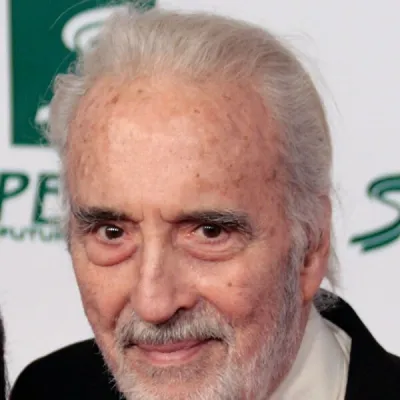
Christopher Lee
Human Design Chart
Biography
Lee gained fame for portraying Count Dracula in seven Hammer Horror films. His other film roles include Francisco Scaramanga in the James Bond film The Man with the Golden Gun (1974), Count Dooku in three Star Wars films (2002–2005) and Saruman in both The Lord of the Rings film trilogy (2001–2003) and The Hobbit film trilogy (2012–2014). Lee frequently appeared opposite his friend Peter Cushing in horror films and had roles in five Tim Burton films late in his career, including Sleepy Hollow (1999), Corpse Bride (2005), Charlie and the Chocolate Factory (2005), Alice in Wonderland (2010) and Dark Shadows (2012). Lee's other notable roles include The Curse of Frankenstein (1957), Dracula (1958), A Tale of Two Cities (1958), Castle of the Living Dead (1964), The Wicker Man, (1973), The Return of Captain Invincible (1983), Gremlins 2: The New Batch (1990), Jinnah (1998), Glorious 39 (2009) and Hugo (2011).
Christopher Lee — Manifesting Generator with Profile 6/2
Manifesting Generator 6/2 — Design at a Glance
Christopher Lee was revealed as someone who possessed hybrid energy: the constant power of a Generator paired with the lightning-fast execution power of a Manifestor. His design suggested that he could draw things into his life by skipping steps and acting quickly. However, this speed was a double-edged sword; often, he tended to move too fast or take on multiple projects simultaneously, leading to frustration when there wasn't internal consent – his specific Non-Self theme.
The mechanics of his type, the manifesting Generator, called for him not to initiate himself but to react to impulses from the environment. Only when his Sacral Center responded with a clear “Yes” and his inner authority agreed could he effectively utilize his immense creative power. He was successful when he strategically employed this response and entered into a playful mode. Then he enjoyed variety and worked on various tasks in parallel without frustration. However, if he moved against his internal signal or tried to do everything at once without the necessary pauses for checking his energy, he quickly found himself in resistance and dissatisfaction. His path was to channel his speed through conscious reaction rather than letting it run unchecked.
Emotional Authority
Christopher Lee exhibited an inner decision-making structure characterized by emotional wave movements. His design carried Emotional Authority in a defined Emotional Center – a mechanism that always claimed priority over all other defined centers when making decisions. This meant for him that his perception was always colored by current mood feelings: moments of intense enthusiasm alternated with phases of negative evaluation. However, these feelings were only snapshots, not ultimate truth. Quick, spontaneous reactions to these initial impressions would often lead him in false directions. Instead, his system required patience and the conscious delay at important steps. He had to reconsider decisions multiple times “overnight” to let intense emotions subside. Only with temporal distance did he gain emotional detachment, bringing clarity and calmness into play. This process was particularly crucial for long-term, life-defining turning points. Through this delay, he could reach the deeper, comprehensive understanding of his system rather than being led by the superficial intensity of the moment. His inner voice thus didn’t speak immediately but needed time to formulate a clear answer from the emotional noise.
The 6/2 Profile — Role Model / Hermit
Christopher Lee’s design laid out a tendency towards late wisdom: In the first three decades of his life, he was dominated by a pattern of experimenting, trial and error, and necessary withdrawal after failures. This phase of the 6/2 line served for learning through personal experiences without immediate confirmation. Only around age thirty did the sixth line of his profile activate. Then he withdrew into a metaphorical cave to reflect on his previous life experiences with distance. This period of intense reflection was both a process of healing and deep self-knowledge.
His inner mechanics described a path towards authenticity in role modeling. The sixth line enabled him to practically apply understanding, shifting from individual empowerment to transpersonal wisdom. Simultaneously, the second line projected outward from Gate 37, leading to some lack of awareness about his actual abilities. He sought individual responsibility within an organic community and often felt uplifted in spiritual contexts while familial values were less accessible to him. After finding his wisdom, he emerged from isolation. Others recognized this maturity and came to him to partake in his life wisdoms and learn the ability for deep introspection from him. Thus, he became a natural role model whose value to society lay in his authentic presence.
Split Definition — Defined & Open Centers
Christopher Lee's Human Design shows a tendency towards persistent, powerful expression driven by an always available willpower and generative energy. His defined Throat Center served as a reliable channel for communication and action; it did not speak from fleeting thoughts but transmuted information from his motor centers into clear messages. This voice was shaped by his defined Heart Center, which gave him natural ego strength and the desire to control his own resources. He tended to take promises seriously and used his willpower to achieve goals while seeking recognition for his contributions.
At the same time, he had a defined Sacral Center, the source of his vital energy. His design required waiting for an inner response – a “yes” or “no” from the gut – before engaging in tasks. Only through this reaction could he sustainably use his immense power without falling into frustration or exhaustion. Additionally, his defined Solar Plexus Center colored his decisions emotionally; he was dependent on waiting out waves of feelings to gain emotional clarity rather than reacting impulsively to highs and lows.
In contrast, Christopher Lee showed himself in his open centers as vulnerable to external influences. His open Head Center made him receptive to mental inspiration from the environment; he tended to interpret other people's pressure as his own urgency and often sought answers that were not his own. The open Ajna Center strengthened this flexibility of thought but left him without a consistent conceptual truth, so he took in and reflected on ideas rather than generating them himself. His open G Center meant a lack of fixed identity; he adapted to the people and places around him, gathered “borrowed” directions, and sought the right environment where he felt comfortable. Finally, his open Root Center absorbed stress from the environment, leading to a cycle of adrenalized pressure that he often understood as his own drive, although it did not originate with him.
Channels for intuitive power, charisma and deep connection.
Christopher Lee's Human Design showed an intense, almost insatiable urge for immediate implementation. This trait came from Channel 34-20 (Charisma), which channeled raw physiological energy directly from the Sacral Center to the Throat Zone. Here, the inner impulse to act had to connect with the ability to speak or act in the present moment. The result was a person who struggled to sit still; their charismatic power worked correctly only when reacting to external stimuli and not acting out of mental “shoulds.” Without this internal guidance, the energy tended to break out chaotically.
This generative force was further sharpened by Channel 34-57 (Power), which connected the sacral life energy with the intuitive insight of the Spleen. Christopher Lee possessed a deep survival intelligence that kept him perpetually alert to his environment. His reactions were quick and instinctive, free from temporal delay through thoughts or emotions. This helped him assert himself as an individual and recognize dangers based on pure physical awareness.
At the same time, he had Channel 57-20 (Flash of Genius). This channeled intuitive perception directly to the voice in the present moment. Christopher Lee could thus speak spontaneous, penetrating truths based on ancient primal instincts. His verbal outbursts reached the core of a matter faster than thoughtful analyses by others. However, this ability required full attention for the current moment; ignoring these intuitive impulses led to lost immediate knowledge.
In interpersonal relationships, Channel 37-40 (Community) shaped his approach. He sought his place in the whole and built bridges to others based on mutual benefit and emotional clarity. Christopher Lee waited for the right invitation to become part of a group and understood the nature of fair agreements. His energy served to stabilize communities through loyalty and the will to cooperate, while he oscillated between the need for recognition and the necessity of pauses.
Individual Circuitry — Circuit Signature
Christopher Lee's Human Design shows a tendency towards impulsive, creative inspirations that directly manifest in expression. This resulted from the Knowledge Circuit where Channel 20-57 (Flash of Genius) was active, connecting his Throat Center with the Spleen. This configuration promoted innovative ideas based on intuitive knowledge and immediately verbalized them. Parallel to this, a separate energetic structure emerged: The Ego Circuit connected Christopher Lee's Heart and Solar Plexus Centers through Channel 37-40 (Community). This created dynamics between emotional reaction and the will to support others, yet without direct connection to his creative impulses. Shared Definition meant that these two areas – creative intuition on one hand and emotional cooperation on the other – existed as parallel, not directly merging forces. Another aspect came from the Integration Circuit. Here Channels 20-34 (Charisma) and 34-57 (Power) connected his Throat Center with the Sacral Center and Spleen. This gave his voice a radiant quality based on life force and intuitive reaction. So Christopher Lee lived with a complex architecture: On one hand, quick, acoustic creativity from the Spleen, on the other, deep emotional connection in the Heart, as well as powerful charismatic presence fueled by his Sacral energy. These separate groups worked alongside each other without forming a single continuous flow.
Left Angle Cross of Duality 1
Christopher Lees Design reveals a tendency towards a deep, often unspoken longing for wholeness and connection. He appeared as someone who carried an inner sense of fundamental separation or incompleteness, coupled with the strong desire to close this gap through true unity. This configuration corresponds to the left cross of Duality 1, an archetypal pattern in Human Design that describes the pain of division and the resulting search for reunification.
This cross does not function as an active strategy for action but rather as an emotional and spiritual undercurrent of his character. It shapes the way Christopher Lee experienced relationships and his own identity: always with the background knowledge that everything is divided yet belongs together. The mechanics of this pattern explain a lifelong persistent striving for harmony between seemingly opposing poles – mind and body, self and other. This was not a task he had to overcome but rather an ongoing inner landscape that shaped his perception of the world. Living with this dualistic tension gave Christopher Lee a particular sensitivity to the complexity of human connections without necessarily manifesting in external actions.
Saturn Return · Uranus Opposition · Chiron Return · 2nd Saturn Return — Life Cycles
Christopher Lees Design points to a tendency towards a late and profound unfolding of his true life purpose. This was particularly evident during the period of his Chiron Return, a cycle between the ages of 49 and 51, which in Human-Design mechanics is considered a phase of "blooming". During this time, the potential of the individual Incarnation Cross increasingly condensed into tangible reality, provided that one's own strategy had been observed beforehand. This was not about healing injuries but rather reaching the peak of meaning discovery and purpose fulfillment.
This was concretely demonstrated in 1973 when Christopher Lee, at age 51, recited "The Tinker of Rye" in The Wicker Man. This event served as an exemplary illustration of the mechanics of Chiron Return: what had previously existed perhaps only as latent ability or untapped potential now became active and visible. Reciting the ballad was not a random occurrence but rather an expression of how Christopher Lee's specific design matured during this period of his life. The mechanics here describe the transition from inner knowledge to outer, meaningful action that aligns with the core of one's own design.
Manifesting Generator · Emotional Authority — Synthesis
Christopher Lee lived a life profoundly marked by an inner dynamism. The connection between sacral energy (defined Sacral Center) and manifesting impulses (Manifestor Generator type) created a personality that responded to external stimuli while also being capable of quickly initiating actions. This ability to respond to the moment and simultaneously possess a strong internal drive shaped his expression and interaction with the world (Channel Charisma). However, emotional authority required a period of maturation and weighing options, which directed this quick energy into deeper understanding.
A central paradox lay in the tension between the need for swift action and the necessity of emotional clarity. Christopher Lee seemed destined to react swiftly to opportunities (Gate 20), yet the emotional wave demanded patience and reflection to ensure that these impulses were authentic. This internal struggle between spontaneity and the need for inner confirmation led to a deep wisdom that developed over time – a process of experimentation (6/2 Profile) followed by intense self-reflection.
4 Defined Channels
Incarnation Cross - Left Angle Cross of Duality 1
Solar Return
The Solar Return shows the moment when the sun returns to its exact birth position - your personal solar year.
Life Cycles
Discover the life cycles with a detailed triple view (birth chart, cycle chart, composite).
Human Design Profile
- Strategy
- To respond - wait for something to respond to
- Authority
- Emotional Authority
- Profile
- 6/2 - Role Model / Hermit
- Definition
- Split Definition
- Incarnation Cross
- Left Angle Cross of Duality 1
- Date of Birth
- 27.05.1922 14:45
- Place of Birth
- London, England, United Kingdom
Frequently Asked Questions
What was Christopher Lee's Human Design type?
What Profile did Christopher Lee have in Human Design?
What Authority did Christopher Lee possess?
What incarnation cross did Christopher Lee have?
When was Christopher Lee born?
Discover your own Human Design
Are you also a Manifesting Generator? Find out in a personal reading how to unfold your multi-talents and direct your energy wisely.
More Personalities
Back to overviewSissy Spacek

Aldair

Alizée

Anémone

Angeli

Ann-Margret
