
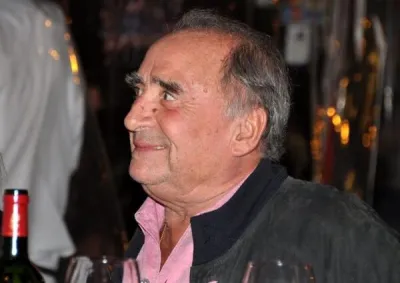
Claude Brasseur
Human Design Chart
Biography
What does Manifestor 2/4 mean for Claude Brasseur?
Manifestor 2/4 — Design at a Glance
Claude Brasseur carried the design of a Manifestor. This configuration marked him as a pioneer and visionary, whose task was to lead the world into a new future. His chart contained the mechanics of leading energy, comparable to an emperor in ancient Rome: He possessed the vision of a great whole but did not wage wars himself; instead, he sent others out to expand his realm.
This nature often led him to be misunderstood and polarizing. Because his thoughts frequently reached further than those around him, he inspired love and following from some people while others rejected or even hated him due to these vast visions. This was a central pain point of his design.
To find the right followership, it was crucial for Claude Brasseur to inform others about his intentions in a timely and precise manner. This strategy of informing formed the core of his life approach. When he followed this strategy, he was rewarded with an inner sense of peace. Living against his design, however, he felt a persistent, deep-seated anger within him. His path thus revolved around the tension between the necessity to communicate his vision and the inevitable reaction from the outside world to this leadership.
Emotional Authority
Claude Brasseur exhibited an internal decision-making structure that was characterized by waiting for emotional clarity rather than acting on spontaneous impulses. His design carried Emotional Authority, meaning his defined Emotional Center always dictated important life decisions – independent of other defined Centers in his chart. This configuration subjected him to a natural rhythm of emotional waves: moods swung between enthusiasm and skepticism, with each moment only a transient coloring of perception, not the ultimate truth of a situation.
Quick gut reactions often proved misleading in this system as they were based on fleeting emotional impulses. Instead, his inner compass required patience and time. Claude Brasseur had to let decisions “overnight” to observe whether the initial emotional reaction persisted or faded away. Only when the intense waves subsided and a feeling of calmness and clarity set in could he recognize his true direction. This process of waiting was not a sign of weakness but an essential mechanical necessity to gain deeper insights and avoid long-term mistakes. His authority thus lay not in the first impulse, but in the calm after the storm of emotions.
The 2/4 Profile — Hermit / Opportunist
Claude Brasseur revealed through Profile 2/4 as someone who oscillated between the deep need for withdrawal and the urge towards community. This design created an inner tension: On one hand, he sought the isolation of a hermit (Line 2) to gain clarity; on the other hand, it drew him into the circle of his trusted companions (Line 4). For his well-being, it was crucial to clearly communicate these needs – when he needed company and when he wanted to be left alone.
During solitary times, he immersed himself in internal processes, cleansed himself from unclear emotions, and found peace. This phase of isolation served the discipline and reduction of boredom through inner work. Once this Line 2 was satisfied, he returned from his “cave.” Then he used his ability as a networker (Line 4) to gather experiences and process secret information. Through kindness, he created connections that helped him reflect on what he had learned in the network and develop new ideas from it. His design thus required constant switching: first withdrawing to cleanse himself, then going out to connect and exchange knowledge. Only through this clear communication of his boundaries could he harness the power of both lines – the depth of solitude and the breadth of the network.
Single Definition — Defined & Open Centers
Claude Brasseur revealed himself through a defined G Center as someone with a firm inner direction and a clear sense of his own identity. He had a reliable foundation to be loved and to love others without dependency. This constancy contrasted with his open Heart Center: Here, he lacked the consistent energy for willpower and competition. Instead, he tended to take on the pressure of proving his worth through promises or performance – a classic pattern for open hearts trying to compensate for low self-worth.
His communication was marked by his defined Throat Center: He spoke with clarity and honesty, using his voice as a pivot point for messages originating from other parts of his design. Yet this expressiveness was moderated by his defined Solar Plexus Center. As an inner authority, this Solar Plexus required patience; Claude Brasseur had to wait out the emotional wave before acting or speaking. Impulsive decisions based on highs and lows of his mood were counterproductive for him. True clarity emerged only after going through the emotional cycle, often overnight.
This process of emotional maturation was necessary because his mental centers – Head and Ajna – were open. He had no consistent access to inspiration or logical concepts as his own truth. Instead, he took on the thoughts and doubts from his environment. Without holding these external impulses as his own, he could open himself up to intellectual stimulation without falling into mental confusion. His open Root Center also absorbed stress from the environment; he was vulnerable to amplifying adrenalized pressure from others and getting caught in a cycle of frenzy if he did not recognize it as foreign. By waiting for his emotional authority, he protected himself from such overloads and acted from a deep, time-refined truth.
Channels for emotional drama and conscious presence.
Claude Brasseur revealed himself as someone who radiated a profound, often quiet presence. His design tended to fulfill the potential for self-love and acceptance through mere existence to survive and thrive. This happened through Channel Awakening 10-20, linking his G Center with his Throat Center. It expressed the wisdom that one must fulfill their potential as an awakened expression of self-love by simply staying true to oneself and inspiring others to be themselves.
At the same time, his social interaction was marked by a strong emotional wave. Channel Openness 22-12 connected his Solar Plexus Center with his Throat Center, expressing moodiness, passion, and drama. Here, the caution of Gate 12 regulated the openness of Gate 22 so that he only socially engaged when his mood allowed it. This created a receptive environment for transformative awareness but required patience to avoid acting impulsively and misunderstanding others.
Additionally, several gates influenced his experiential world. Gate 36 stood for darkening light and enabled strong emotional energy to be released in crises, setting the stage for new experiences. Gate 6 functioned as an elemental building block for further development through friction and regulated biological boundaries. Gate 11 promoted visual memories and collective ideas for situational assessment before action. Gate 15 represented collective behavior and logical flow in societies while Gate 45 expressed tribal level and willpower. Gate 55 brought extreme mood swings and emotional awareness. Gate 30 helped recognize feelings and accept limitations as destiny. Finally, Gate 62 supported pattern recognition through patience, logic, and fact-finding to see facts logically and convince others.
Individual Circuitry — Circuit Signature
Claude Brasseur revealed himself through a clear, coherent energetic structure. His simple definition linked the G Center with the Throat and Solar Plexus Centers into one flow. This marked him as someone whose inner alignment directly translated into his emotional expression.
The Knowledge Circuit worked through him via Channel Openness between Throat and Solar Plexus Centers. This channel connected his emotional depth to his voice. He used this connection to authentically express feelings. The description of this circuit emphasizes the creation of new knowledge and transformation through emotional expression. For Claude Brasseur, it manifested as the ability to translate inner waves of emotion into words or actions without activating other channels in this circuit.
The Integration Circuit carried Channel Awakening between Throat and Identity Centers. Here, it was about securing survival through right action now. This channel linked his outer expression with his deepest identity. He did not act impulsively but from a grounded, intuitive certainty. The integration of power and proper behavior allowed him to act in the present moment.
Together, these channels formed a coherent system: His identity flowed into his voice, which was fed by his emotional center. There were no separate groups; all defined centers were directly connected. This created a unity of being, feeling, and expression. Claude Brasseur lived this mechanism as an integrated experience where inner truth and outer communication were inseparable.
Right Angle Cross of Eden 2
Claude Brasseur was marked by the right cross of Eden 2, a configuration that implied a deep connection to the spiritual dimension and an understanding of human essence. This design element promoted inner alignment with truth and authenticity, often involving exploration beyond the material world. The energy of this cross supported him in addressing questions that went beyond the everyday, such as finding meaning or understanding consciousness itself. It was not just intellectual engagement but rather existential dedication to these themes. For Claude Brasseur, this likely meant constantly striving to grasp deeper connections and integrate them into his life. His personality was strongly influenced by this spiritual component, which may have been evident in how he perceived the world and interacted with others. The right cross of Eden 2 bestows a special sensitivity for the invisible and unsaid – an aspect that was particularly pronounced in him.
Saturn Return · Uranus Opposition · Chiron Return · 2nd Saturn Return — Life Cycles
Claude Brasseur lived through marked phases of structuring and letting go throughout his life. His first Saturn return around age 30 served as a major test of identity: early impulses solidified into a viable, though often heavier, life structure here. It was a moment when he learned to take responsibility for his own existence and set boundaries that stabilized him.
Later came the Uranus opposition, typically around age 40. This cycle brought a necessary crisis: previously established structures were questioned or broke down to make way for new freedom. Claude Brasseur had to confront old bonds and redefine his autonomy, often accompanied by a strong desire for change and independence.
The Chiron return between ages 49 and 51 marked the peak of personal unfolding. If he followed his inner authority up until then, this phase saw a kind of bloom: his essence and life mission became clear and meaningful. It was not a process of healing old wounds in a psychological sense but rather the realization of his potential.
The second Saturn return around age 60 concluded this arc. Here it was no longer about building or rebelling, but integrating and letting go of material burdens. Claude Brasseur focused on what mattered, shed excess, and prepared the ground for his final life phase, marked by wisdom and acceptance of impermanence.
Manifestor · Emotional Authority — Synthesis
Claude Brasseur lived a life characterized by an inner tension between the drive for independence and the need for connection. As a Manifestor with emotional authority, he possessed a strong internal vision (Awakening Channel) that propelled him to chart new paths and initiate changes – yet these impulses had to mature through the emotional wave to ensure their authenticity. The profile as a natural talent and networker amplified this oscillation between retreating into his own world (Line 2) and seeking exchange with chosen reference persons (Line 4), a rhythm that could grant him clarity and energy.
The central paradox in his design lay in the combination of strong, initiating power – the Manifestor type – and profound emotional processing. He was destined to set things in motion (Gate 10), yet emotional authority required a patient engagement with his feelings before he acted. This dynamic led to an internal tension between the desire for immediate implementation and the necessity of letting decisions mature in peace, which might have made him appear unpredictable or contradictory.
2 Defined Channels
Incarnation Cross - Right Angle Cross of Eden 2
Solar Return
The Solar Return shows the moment when the sun returns to its exact birth position - your personal solar year.
Life Cycles
Discover the life cycles with a detailed triple view (birth chart, cycle chart, composite).
Human Design Profile
- Type
- Manifestor
- Strategy
- To inform others before acting
- Authority
- Emotional Authority
- Profile
- 2/4 - Hermit / Opportunist
- Definition
- Single Definition
- Incarnation Cross
- Right Angle Cross of Eden 2
- Date of Birth
- 15.06.1936 07:50
- Place of Birth
- Neuilly sur Seine, France
Frequently Asked Questions
What was Claude Brasseur's Human Design type?
What profile did Claude Brasseur have?
What authority did Claude Brasseur have?
What incarnation cross did Claude Brasseur have?
When was Claude Brasseur born?
Discover your own Human Design
Are you also a Manifestor? Find out in a personal reading how to use your initiation power peacefully and dissolve resistance.
More Personalities
Back to overviewSissy Spacek

Anémone

Ann-Margret

Arletty

Arno

Artus
