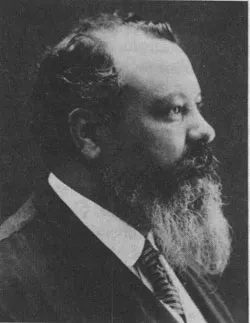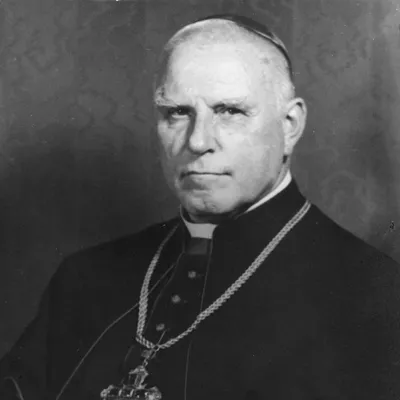
Clemens Von Galen
Human Design Chart
Biography
Galen was confined to Munster but the Nazis did not openly challenge him until 1944, when he was sent to a concentration camp. He survived Sachselhausen to be rescued at the close of the war, but died not long after, on 22 March 1946, Munster, Germany.
The Human Design of Clemens Von Galen: Manifestor 4/6
Manifestor 4/6 — Design at a Glance
Clemens Von Galen revealed himself as someone who not only observed the world but actively sought to steer it in new directions. His design as a Manifestor set him on the role of a pioneer and visionary – comparable to an emperor in ancient Rome, who designed great plans for an empire but left their implementation to others. This configuration brought with it a specific dynamic: his ideas often went beyond the understanding of his environment, inevitably leading to polarization. While some people recognized his visions and followed him, he encountered rejection or even hatred from others due to misunderstandings.
This split factor was a central pain point in his design. To find the right following and minimize resistance, his ideal strategy lay in informing: he had to timely and precisely inform others about his intentions. If he adhered to this strategy, his system rewarded him with an inner sense of peace. Living against this principle, however, resulted in persistent, deep-seated anger. His life was thus marked by the tension between the necessity to spread his vision and the challenge of managing friction through misunderstandings.
Emotional Authority
Clemens Von Galen showed an internal decision-making structure that did not rely on immediate clarity but rather on emotional wave movements. His inner authority was Emotional Authority, carried by the defined Emotional Center. This center was subject to constant ups and downs of feelings; his perception of the world was always colored by his current mood state. What appeared inspiring in one moment could turn negative in the next. His immediate feeling formed merely a snapshot, not a final claim on truth. Quick, spontaneous decisions from this emotional heat often proved problematic and misleading.
The mechanics of his authority required patience: he had to allow time for intense feelings to subside and emotional distance to develop. Only after this process of calm did serenity and true clarity set in. This approach was particularly crucial for long-term life decisions that shaped his future path. Emotional Authority always took precedence over other defined centers in his design; regardless of any other definitions, the Emotional Center dictated the rhythm of his inner truth. Clemens Von Galen lived this necessity of 'sleeping on it' and multiple reflections to reach deep insight rather than succumbing to the first impulse.
The 4/6 Profile — Opportunist / Role Model
Clemens Von Galen revealed himself as someone who in his youth learned through intense experimentation in relationships before later becoming a trustworthy authority figure. His design as a 4/6 Profile ("Networker/Role Model") shaped this path: initially, Line 6 acted like a 3, leading to much experimenting. Later, an internal conflict arose between the Heart (desire for belonging) and the Head (need for wise distance). This tension formed his role as a Role Model that worked through cooperation but carefully guarded his "big heart" to avoid being hurt by false people.
Line Four promoted networking through friendliness and seeking right opportunities. It allowed him to gather secret information and make contacts – often with the attitude of a double agent, using confidential knowledge to master crisis experiences. At the same time, Line Six taught adaptability to transitions and impermanence. Clemens Von Galen recognized the right moment for interventions in the collective flow. Ideas were transient; their implementation required flexibility. So his design combined the ability to deeply penetrate networks with the foresight to oversee cyclical processes and adjust accordingly.
Split Definition — Defined & Open Centers
Clemens Von Galen's Human Design shows a tendency towards constant mental pressure and deep emotional reflection. His defined Head and Ajna centers created a permanent inner drive to question and develop concepts. However, this mental process was not directly linked to energy for implementation; it served more as inspiration than immediate action. Simultaneously, his defined Solar Plexus center shaped his internal authority: decisions required an emotional wave to gain clarity. He demonstrated patience until the emotional mood subsided before acting or speaking.
This stable mental and emotional foundation contrasted sharply with his open centers. His open G Center indicated a lack of fixed identity; he tended to question who he was in relationships rather than assert his own direction. Similarly, his Heart, Sacral, and Spleen Centers were also open. The open Heart Center made him vulnerable to the pressure of proving his worth through promises, despite lacking consistent willpower for it. His open Sacral Center led to taking energy from the environment, which could lead to exhaustion if he did not pause. The open Spleen Center amplified fears about survival and drove him to cling to false sources of security. Finally, his open Root Center absorbed external stress, putting pressure on him to do more than his design allowed to escape this unpleasant feeling. Clemens Von Galen thus lived in a tension between clear mental structure and emotional depth on one hand, and vulnerability through external influences on identity, energy, and security on the other.
Channels for analytical doubt and emotional openness.
Clemens Von Galen was characterized by a mind marked by healthy skepticism and a drive for testable patterns. The Logic Channel 63-4 connected Head and Ajna centers, making doubt an essential filter: Only what consistently and practically worked was considered logically true. This created little room for unfounded belief; answers had to be proven through experimentation. Parallel to this, the Openness Channel 22-12 between Solar Plexus and Throat Center allowed Clemens Von Galen to translate his emotional wave into articulated words that touched or transformed others through voice quality. However, this social interaction strictly depended on his inner mood; he spoke only when the timing was right to avoid misunderstandings and create a receptive environment for transformative ideas.
Additionally, specific Gates shaped his profile: Gate 36 (Crisis) and Gate 6 (Conflict/Fertility) underscored the cyclical nature of his development through emotional challenges, while Gate 11 (Visual Memory/Ideas) fostered a harmonious assessment of the situation. On the personality side, Gates 30 (Feeling Recognition/Fate), 8 (Contribution/Identity), 45 (Tribe Level/Hierarchy), and 17 (Succession/logical Teaching) contributed to his engagement with themes of leadership, human rights, and serving sovereignty. His energy was directed towards promoting structure and change through clear principles and sharing ideas – as hinted at by Gate 23 (Understanding/Assimilation) in the collective – always guided by the need to understand patterns and emotionally attune.
Individual Circuitry — Circuit Signature
Clemens Von Galen was marked by two separate, parallel operating energetic streams. As he had a Split Definition, these forces existed as independent poles, not as an integrated whole. One stream connected Head with Ajna center via the Logic Channel (Gates 63 and 4). This created focused visual energy aimed at improving things through pure ratio and strategy – free from emotional coloring since Solar Plexus Center was not involved here. It was about sharing logical insights for a better future.
The second, completely separate stream flowed between Solar Plexus and Throat center via the Openness Channel (Gates 12 and 22). Here, the emotional wave was at the center: pulsating, acoustic energy that allowed translating feelings directly into expression. This part of his design emphasized individuality and creativity, often accompanied by melancholy or inspiring moments.
While one end of his character was based on cold strategic analysis, the other acted from spontaneous emotional impulse. This separation meant that rational planning and emotional expression did not automatically interconnect in Clemens Von Galen; they were two separate tools he had available individually according to situation without directly fueling each other or harmonizing.
Right Angle Cross of Eden 1
Clemens Von Galen carried the 'Right Cross of Eden 1' in his Human Design. This configuration fundamentally determined his inner orientation: it combined a deep, almost mystical devotion to spiritual or higher principles with an urgent need to make these truths practical and tangible. It was not just a contemplative stance but an active search for the one true order in life.
In Human Design mechanics, this cross represents the connection between belief and action. Clemens Von Galen showed himself as someone who did not separate inner conviction from outer deeds. What he felt to be right or holy had to also become visible in reality. This energy drove him to not only think about his deepest values but to implement them with full force. He aimed at the realization of an ideal world order based on his personal spiritual insight.
This impulse created a tremendous inner tension: on one hand, the striving for absolute purity and truth, on the other, the pressure to establish this in the often imperfect daily life. Clemens Von Galen lived in this permanent flow between vision and implementation. His design suggested that he derived his authority not from external confirmation but from this inner, almost prophetic certainty. He acted according to what appeared to him as divine or highest truth without compromise. This attitude shaped his entire work and made him a figure who defended their beliefs with unwavering intensity.
Saturn Return · Uranus Opposition · Chiron Return · 2nd Saturn Return — Life Cycles
Clemens Von Galen showed himself through a structure that relied on internal confirmation to bundle energy. As a Generator, he responded most effectively to external stimuli; his design required waiting first and then responding from deep gut authority rather than acting impulsively. This mechanism shaped his path: actions gained strength when carried by an inner 'yes'.
The first Saturn Return often marked the transition into a phase of structural anchoring. In 1904, at age 26, Clemens Von Galen received his priestly ordination through Bishop Hermann Jakob Dingelstad. This event condensed years of groundwork into a solid foundation and strengthened his role within the ecclesiastical hierarchy. It was a moment when personal potential translated into a clear, socially recognized position.
Later, during the second Saturn Return, there was another deepening of this structure. In 1935, at age 57, he published an essay as an official supplement to the church's bulletin and took a critical stance against Rosenberg's theses in a pastoral letter. This step underscores the typical development in the second Saturn cycle: the previously established structure is now used to take responsibility and adopt clear positions. Clemens Von Galen utilized his established authority to articulate himself clearly during a crisis, which stood as an expression of matured, confirmed energy.
Manifestor · Emotional Authority — Synthesis
Clemens Von Galen lived a life marked by a profound inner tension between the drive for independent insight and the necessity of emotional maturity. The defined Head and Ajna Centers (Logic Channel) generated a constant mental pressure to question and filter patterns – an unending process of questioning and understanding. This intellectual energy was channeled through emotional authority, which required a maturing phase before decisions could be made. The profile as Networker/Role Model indicates that he tended towards sharing knowledge and inspiring others in his later years after having walked a long path of experience and experimentation.
A central paradox lay in the interplay between vision and doubt. As a Manifestor, he was destined to lead and show new paths, yet the Logic Channel (Gate 63-4) constantly cast doubt on the constancy of these visions. This inner skepticism led to thorough examination but may have also delayed the implementation of his ideas. The cycles showed that he made career progress in his youth while a later cycle revealed a crisis when dealing with controversial theses – an expression of the Knowledge Circuit and the necessity to defend one's own convictions.
2 Defined Channels
Incarnation Cross - Right Angle Cross of Eden 1
Solar Return
The Solar Return shows the moment when the sun returns to its exact birth position - your personal solar year.
Life Cycles
Discover the life cycles with a detailed triple view (birth chart, cycle chart, composite).
Human Design Profile
- Type
- Manifestor
- Strategy
- To inform others before acting
- Authority
- Emotional Authority
- Profile
- 4/6 - Opportunist / Role Model
- Definition
- Split Definition
- Incarnation Cross
- Right Angle Cross of Eden 1
- Date of Birth
- 16.03.1878 21:30
- Place of Birth
- Dinklage, GER
Frequently Asked Questions
What was Clemens Von Galen's Human Design type?
What profile did Clemens Von Galen have?
What authority did Clemens Von Galen possess?
What incarnation cross did Clemens von Galen have?
When was Clemens Von Galen born?
Discover your own Human Design
Are you also a Manifestor? Find out in a personal reading how to use your initiation power peacefully and dissolve resistance.
More Personalities
Back to overviewChristian-Jaque

Kesha

Laurent-Eynac
Lucebert
Masaccio

Papus