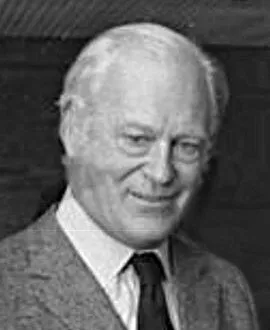
Curt Jurgens
Human Design Chart
Biography
He married five times and died of heart failure, on 18 June 1982, Vienna.
Curt Jurgens — Projector with Profile 4/6
Projector 4/6 — Design at a Glance
Curt Jurgens was someone who immediately recognized weaknesses in systems and others. His Human Design type was Projektor, which describes an aura that focuses like a bright flashlight directed towards dark spots. However, this ability to identify flaws instantly could be perceived as unpleasant when it was delivered directly and unexpectedly.
The mechanics of his design suggested that direct confrontation with these insights often provoked resistance. Instead, his true strength lay in attracting others through his own harmonious actions. People would then come to him naturally for advice, driven by fascination with his clarity. His central strategy involved waiting for an honest and appreciative invitation from the environment before taking on a leadership role.
Since his Sacral Center was undefined, Curt Jurgens did not have a constant source of intrinsic life energy. This meant that he had to alternate phases of high productivity and fast work speed with periods of necessary rest to prevent burnout. If he respected these rhythms and waited for invitations from others, he would be rewarded successfully. However, if he failed this path and tried to push his energy against the resistance of the environment, it eventually led to the typical Projektor theme: Bitterness. Therefore, his design required patience and trust in his own magnetism rather than constant activity.
Self-Projected Authority
Curt Jurgens was a Projektor with rare authority within himself. This configuration shaped an extreme openness that made him vulnerable to distraction by external motoric energies. The greatest danger lay in losing oneself in this receptivity and constantly seeking external energy. His inner truth anchored itself in his identity. Decisions arose through self-dialogues or conversations with others, provided he was invited to do so. Crucial was listening to his own speaking and distinguishing spontaneous expression from the mind. What he spoke without thinking revealed his true essence and made his uniqueness recognizable to others. Alternatively, a physical feeling led him in a specific direction – geographically or thematically towards or away from something. By following this inner orientation, he could become a guide for others; there lay his specific potential for success. This mechanism emphasized that his leadership function only became effective through inner clarity and the recognition of his own direction, not through active action or chasing after confirmation.
The 4/6 Profile — Opportunist / Role Model
In his youth, Curt Jurgens appeared as an experimental person who intensively tested relationships and friendships. This behavior matched Profile 4/6: In the first thirty years, the sixth line still acted like a third, leading to excessive curiosity about interpersonal dynamics.
With maturity, an internal conflict emerged. Curt Jurgens faced the tension between the desire for community belonging (Line 4) and the need for distant reflective meaning-making (Line 6). His design suggested that he had to weigh heart against head – a process often confusing.
Especially influential was the constellation of Thor Line 26 with Gate 47 Line 6. The fourth line at Thor 26 conveyed a skill in targeted information control for the protection of the clan. It involved consciously forgetting or censoring certain things to maintain the status quo; bringing up old conflicts was seen as dangerous. Simultaneously, the sixth line from Gate 47 brought a sober overview of cyclical patterns with it. It allowed distinguishing meaningful from meaningless, but also tended towards phases of meaning-making that slipped into complaining – often in vain.
In his later years, Curt Jurgens was expected to take on the role of a wise mentor. His large heart remained cautious; it only opened to those who would not harm him. Cooperation with others was central, yet always accompanied by inner discipline to maintain an overview and avoid emotional overreactions.
Single Definition — Defined & Open Centers
Curt Jurgens revealed himself through a defined G Center as someone with a firm, reliable self-identity and a clear sense of direction. This inner security allowed him to love others without becoming dependent on them, as well as showing other people new paths. Simultaneously, he had a defined Throat Center that served as a pivot point to translate messages from his inner world into the outside world. His voice thus did not speak out of arbitrary thoughts but transmuted information from his defined centers into clear communication and action.
This stable foundation stood in contrast to his high sensitivity towards external influences, conditioned by his open centers. His open Head Center made him vulnerable to mental pressure; he tended to identify with others' questions and doubts or seek inspiration to resolve mental confusion. The open Ajna Center amplified this: He absorbed concepts and opinions from his environment, leading him to interpret answers as his own truth or feel the pressure to appear logical.
Emotionally, Curt Jurgens through his open Solar Plexus Center was a barometer for his surroundings. He absorbed and amplified foreign feelings, making him vulnerable to emotional waves and prone to avoiding confrontations to avoid negative reactions. His open Heart Center lacked consistent willpower; he easily fell into the cycle of giving promises to prove his worth, although he could not sustain this energy long-term. Additionally, his open Sacral Center was sensitive to others' generative energy, leading to exhaustion when overexerted or boundaries ignored. His open Spleen Center carried a fundamental survival fear that made him seek security from others and make spontaneous decisions to dispel fears. Finally, his open Root Center absorbed environmental stress, leading to cycles of adrenalized pressure and attempts to escape it through hyperactivity.
Channels for logical leadership and reflective memory.
Curt Jurgens revealed himself as someone who sought leadership not through coercion but through logical organization and collective acceptance. His design tended towards understanding patterns and clearly articulating them to guide others safely. This was effectively achieved through the Alpha Animal Channel 7-31, connecting his G Center with his Throat Center. Gate 7 provided the logical role of a manager or general – often described as "the power behind the throne" – while Gate 31 represented the voice of the collective leader. This combination required Jurgens to first gain the trust of the community and be invited before his leadership could become effective; it was about shared authority within existing structures, not absolute rule.
Parallel to this, he exhibited the attitude of a patient observer. The Lost Son Channel 13-33 also connected G and Throat Centers. Here, Gate 13 gathered information and secrets as a listener, while Gate 33 withdrew to reflect on these experiences before passing them along. This mechanism fostered wisdom that was revealed only after thorough consideration and at the right moment – less for predicting the future than for contextualizing past lessons in a meaningful way.
Additionally, other gates shaped his essence: Gate 45 brought the energy of tribal hierarchy and material order, coupled with an attraction to like forces. Gate 47 helped clarify from past experiences and transform confusion into collective sense. Gate 26 allowed him to bring innovation through gentle pressure on conservative structures, while Gate 22 created openness for mutations in the social environment, calmly awaiting rather than imposing them. Finally, Gate 15 supported understanding of collective rhythms and modest adaptation to the natural flow of society. Gate 56 contributed to translating mental processes into vivid narratives, simplifying communication of complex connections.
Collective Circuitry — Circuit Signature
Curt Jurgens' design leaned towards clear, strategic communication. He revealed himself as someone who structured and focused on logical insights, free from emotional distortion. This orientation stemmed from the Understanding Circuit, which was active in him through the Alpha Animal Channel. This channel connected his Throat Center directly to his Identity Center. As Curt Jurgens had a Simple Definition and both centers belonged to the same group, this energy flowed as a coherent stream: His inner identity found expression in precise, future-oriented statements.
Parallel to this, the Meaning Circuit also worked. Here too, a channel – The Lost Son – connected his Throat Center with his Identity Center. This circuit referred to the past and emotional wave movements. It served to learn from earlier experiences and make these shared insights emotionally relatable. Since both circuits in Curt Jurgens involved the same centers, a specific dynamic emerged: His communication united cool logic with processing of past emotions. He used his voice not only for rational strategies but also to reflect on emotional patterns from the past and bring them into the present. Both energies flowed through the same physical structure, allowing an integrated way of sharing – once strategically focused, once emotionally cyclical.
Right Angle Cross of Rulership 4
Curt Jurgens carried the Human Design pattern of the Right Authority Cross. This configuration shaped his inner stance and the way he dealt with authority. The Right Authority Cross is a specific energetic structure that often comes with a deep connection to traditional or established power structures. It indicates that Curt Jurgens had a natural affinity for working within systems that follow clear hierarchies and rules. His energy did not focus on breaking old patterns but rather on confirming and strengthening them.
This design element often gives the carrier a sense of legitimacy within existing orders. Thus, Curt Jurgens was someone who sought stability and continuity. He felt at ease when he saw his role clearly defined in a larger whole. The mechanics of this cross support a leadership role based on respect for the past. It is less about revolutionary change than preserving values that are seen as proven. For Curt Jurgens, this orientation was a central part of his identity and his work in the world.
Saturn Return · Uranus Opposition · Chiron Return · 2nd Saturn Return — Life Cycles
Curt Jurgens’ design carried a tension between profound validation and sudden public emergence. This dynamic became concrete in 1944: At age 29, he experienced his first Saturn Return, a cycle of structuring and responsibility. Instead of stable consolidation, this period led to deportation from Hungary for unclear political reasons. The first Saturn Return often marks the transition into full adult responsibility; here, this burden condensed into an existential crisis that tested his resilience.
A decade later, this energy transformed fundamentally. In 1955, at age 40, he was hit by the Uranus Opposition – an astrological moment often bringing unexpected breaks and liberations. From earlier constraints developed now an international breakthrough with the film “The Devil’s General”. This opposition to the Saturn Return clarified a central life movement: What began as limitation or misfortune transformed through inner maturity and time pressure into a moment of global visibility. His design did not follow linear progression but worked with extreme poles of restriction and expansion, where later recognition built on overcoming earlier severe trials.
Projector · Self-Projected Authority — Synthesis
Curt Jurgens’ life was marked by a deep drive to recognize patterns and convey them in understandable form (Channel of the Alpha Animal). As a Projector, he always sought opportunities to contribute his knowledge and bring “light into darkness” for others – not through direct instructions but by pointing out flaws in systems. This ability to analyze structures and highlight improvement potential was particularly evident during moments of success (Uranus Opposition), when new paths were taken. However, inner authority demanded that he always follow his impulses and not be distracted by external influences – a process fostered by self-dialogue and listening to his own truth.
A central tension in his design lay between the desire for belonging (Line 4) and the need for independent thought and reflection (Line 6). This paradox was evident in seeking connections through cooperation while also needing moments of isolation and contemplation to develop his unique perspective. The experience of crises (Saturn Return) suggests that this inner conflict burdened him at times, while simultaneously forming the basis for his deep insight and leadership ability.
2 Defined Channels
Incarnation Cross - Right Angle Cross of Rulership 4
Solar Return
The Solar Return shows the moment when the sun returns to its exact birth position - your personal solar year.
Life Cycles
Discover the life cycles with a detailed triple view (birth chart, cycle chart, composite).
Human Design Profile
- Type
- Projector
- Strategy
- Wait for the respectful invitation
- Authority
- Self-Projected Authority
- Profile
- 4/6 - Opportunist / Role Model
- Definition
- Single Definition
- Incarnation Cross
- Right Angle Cross of Rulership 4
- Date of Birth
- 13.12.1915 05:00
- Place of Birth
- München, Germany
Frequently Asked Questions
What was Curt Jurgens' Human Design type?
Which Profile did Curt Jurgens have in Human Design?
What authority did Curt Jurgens possess?
What incarnation cross did Curt Jurgens have?
When was Curt Jurgens born?
Discover your own Human Design
Are you also a Projector? Find out in a personal reading how to unfold your leadership qualities and recognize the right invitations.
More Personalities
Back to overviewSissy Spacek

Alain-Fournier

Anémone

Ann-Margret

Arletty
Arno