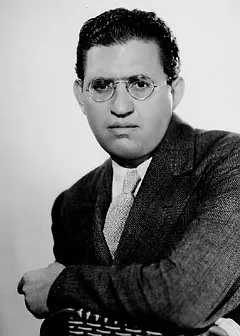
David O. Selznick
Human Design Chart
Biography
Selznick was called an enthusiastic, arrogant, crazy dreamer who started "Gone With The Wind" while he was still finishing up another major project. At the time, he was on Benzedrine. A disorganized perfectionist, Selznick never had a final script for "Gone With The Wind," it was all in his head and the final lines were his. He just wanted to get the damn thing finished, as there were so many problems with production and everything was a mess.
His biographer calls Selznick "at times a fool, a coward, a liar, a scoundrel and a bore, as well as an unfaithful husband, a poor father, a compulsive gambler, an obsessive, chain-smoking, Benzedrine-driven workaholic so physically awkward that once, examining himself in a mirror at the Waldorf, he shut his privates in a drawer."
The third son of a film producer, David made his first movie at age 21. By 1936 he had launched Selznick International Pictures. Selznick was married twice, first to the daughter of Louis B. Mayer, Irene Mayer, with whom he had two sons before divorcing in 1949. His second marriage was to a young actress, Phyllis Isley whom he renamed Jennifer Jones, on a yacht off the coast of Italy on 13 July 1949. He devoted himself masterminding her career. In his later years, burdened with huge debts from poor business decisions and extravagance, he was still hyping projects for Jones at the same time as alienating those who sought to help him.
Selznick died from an acute coronary on 22 June 1965, Hollywood, CA.
The Human Design of David O. Selznick: Manifestor 1/3
Manifestor 1/3 — Design at a Glance
David O. Selznick's design predisposed him to proactive action and the initiation of new directions. As a Manifestor, he was destined to lead the world into a new future, much like an emperor in ancient Rome who pursued visions of a great empire without engaging in battles himself. Instead, he delegated tasks to implement his plans. This style of leadership often polarized opinions: His far-reaching ideas were loved and followed by some but misunderstood or even rejected by others because they transcended the contemporaries' horizons. This pain point of not being understood was central to his experiential world. To find the right following and minimize resistance, his design required a clear strategy: informing others precisely about his intentions in advance. If David O. Selznick adhered faithfully to this strategy, his system rewarded him with an inner sense of peace. Acting against this need for information often resulted in prolonged, deep-seated anger. His path was thus marked by the tension between his visionary pioneering role and the necessary communication to create acceptance and avoid conflicts.
Emotional Authority
David O. Selznick showed himself as someone who never made decisions immediately. His design predisposed him to emotional delay: he needed time to gain clarity. This stemmed from his inner authority, located in a defined Emotional Center. In Human Design mechanics, every defined Emotional Center automatically carries authority, regardless of other configurations. Selznick was subject to a wave-like emotional dynamics with permanent ups and downs. The world appeared colored by his current mood – sometimes enthusiastic, sometimes negative. An immediate impulse, however, was only a snapshot, not yet the deep truth. Quick reactions based on this fleeting emotion often proved false. The mechanism required patience: decisions had to mature ideally overnight. Only when intense feelings subsided and emotional distance emerged did calmness set in. This process was essential for long-term course corrections that shaped his life path. Selznick had to let himself be persuaded, ask multiple times, and wait until the emotional wave ebbed before he could see what truly mattered. This need for delay was not a lack of resolve but a structural requirement of his system to distinguish transient moods from lasting insight.
The 1/3 Profile — Investigator / Martyr
David O. Selznick's design established a fundamental stance as a researcher and experimenter. His Profile 1/3 drove him to collect knowledge not just theoretically but through direct practice. This configuration created an inner tension: Line 1 sought authority through deep study and planning, while Line 3 promoted the urge to act and experiment. Often this led him to hesitate because he felt he didn't know enough yet to act confidently. But only in action, even in confrontation with mistakes, did his insight gain credibility. When Selznick made a decision or rendered judgment, it was based on double validation: theoretical penetration and practical testing. His judgments were thus weighty as they combined the introspection of Line 1 with the hard reality experience of Line 3. The energy of his lines also addressed breaking established rules and dealing with dissatisfaction towards outdated structures. This marked him as someone ready to question or even destroy old orders to make way for new, self-discovered truths. His path was characterized by trial and error, where each mistake served as a necessary step toward refining his own authority.
Single Definition — Defined & Open Centers
David O. Selznick's Human Design profile indicated a tendency towards constant mental pressure and deep emotional processing. He was someone who stood under a permanent internal demand to question and develop concepts, coupled with the need to make decisions not impulsively but after careful consideration of his feelings. This configuration describes a life task of translating mental inspiration into clear communication while waiting for the emotional wave to gain clarity.
His defined Head and Ajna Centers created a steady stream of ideas and questions; he was not designed to execute these thoughts directly with energy, but rather to make them available to others. His defined Solar Plexus functioned as an inner authority: truth revealed itself to him only over time as he let the emotional waves pass before acting. His defined Throat enabled him to reliably express mature concepts and feelings.
In contrast, his G Center was open. Selznick tended to question who he really was or which direction was correct for him rather than possessing a fixed identity. He relied on initiation through the environment to find his place and role. His open Heart Center made him vulnerable to the pressure of having to prove his worth; he tended to make promises he could not keep in order to gain recognition, often ending up in self-doubt. Furthermore, his Sacral Center was also open, meaning that he did not have a constant vital energy but absorbed and amplified the energies of others, which could lead to exhaustion if he ignored boundaries. His open Spleen and Root Centers additionally made him sensitive to environmental stress and survival fears, causing him to often succumb to spontaneous decisions or external pressure rather than trusting his inner authority.
Channels for structuring, emotional openness and rational awareness.
David O. Selznick's Human Design profile indicated a tendency towards emotionally guided but reserved communication. He used his social skills only when the internal mood aligned with it. This resulted from Channel 22-12, which connected the Solar Plexus Center to the Throat Center. This channel expressed passion and drama but was regulated by Gate 12, which required caution and selectivity in interactions. Selznick waited until he felt ready to engage socially; if forced, he could appear abrupt or misunderstood. His voice served as a catalyst to move others emotionally, yet only in sync with his own rhythms.
Parallel to this, innovative thinking characterized his work. Channel 23-43 connected the Ajna Center to the Throat Center. This channel produced spontaneous insights through Gate 43, which were then assimilated and expressed via Gate 23. Selznick developed techniques for efficiency and formed unique perspectives that could change collective thought patterns. His mind often felt like an outsider waiting to be invited to share its knowledge. Success required patience until the timing was right; otherwise, rejection loomed.
The foundation of this thinking was Channel 24-61 between the Head Center and Ajna Center. It received inspiration from Gate 61 as sudden breakthroughs or "Satori," which were then rationalized through Gate 24. Selznick did not actively control his thoughts but allowed knowledge to emerge at its own pace. This process clearly distinguished what was worthy of knowing from what was not.
Additionally, Gates like 49 (Transformation/Principles), 4 (Logical Formulas for Future Security) and 20 (Here and Now/Authenticity) played roles in his design. Gates 55 (Emotional Awareness/Mood Changes), 30 (Recognizing Feelings/Fate) and 35 (Change Through Experience) contributed to his emotional depth and drive for development. This configuration created a person whose expression depended on inner truth and emotional resonance.
Individual Circuitry — Circuit Signature
David O. Selznick's Human Design profile revealed a tendency towards pulsating creativity and the urge to explore new paths. He was someone who shaped his unique identity through the expression of innovations. This approach stemmed from his simple definition: all his defined centers – Head, Ajna, Solar Plexus, and Throat Center – were directly connected, forming one continuous energetic flow.
This interconnectedness was made possible by the Knowledge Circuit. In Selznick's case, this circuit specifically linked the Head to the Ajna Center (Channel 24-61), fostering innovative insights. Additionally, the Ajna Center was connected to the Throat Center (Channel 12-22) and this in turn to the Solar Plexus (Channel 43-23). This structure allowed him not only to think new ideas but also to articulate them through emotional waves from the Solar Plexus into words. The energy thus moved from inspiration, through structuring, to an emotionally colored expression.
Selznick lived this mechanism as a unified process: the impulse from the Head Center flowed unimpeded through the Ajna mind, was charged with emotion in the Solar Plexus, and finally found its way to the Throat Center for articulation. This defined him as a creator who initiated change by directly bringing his individual awareness and creativity into the world without breaking these energies through undefined gaps.
Right Angle Cross of Explanation 2
David O. Selznick's Human Design profile indicated a tendency towards clarifying and dissecting complex relationships through structured analysis. He was someone who not only accepted but actively broke down intricate connections into understandable parts to reveal the underlying logic. This approach stemmed from his Incarnation Cross, which describes a cognitive structure that sorts information precisely before further processing or communication. For David O. Selznick, this meant his strength lay in eliminating ambiguities through structured analysis rather than vague interpretations. He sought exact determinations of facts and processes, serving to prevent misunderstandings and establish a common ground for decisions. His mind acted like a filter separating the essential from the trivial, bringing clarity to often confusing situations. This characteristic defined how he approached problems: systematically, thoughtfully, with the goal of understanding every component before acting or judging. It was a process of decryption where transparency in information took precedence.
Saturn Return · Uranus Opposition · Chiron Return · 2nd Saturn Return — Life Cycles
David O. Selznick's Human Design profile indicated a tendency towards sudden, disruptive breakthroughs that often contradicted established norms. This configuration described an internal pressure to break existing structures and take radical new paths – a process not through gradual adaptation but shock clarity. The Uranus Opposition in Human Design marks phases where one’s inner truth collides with external expectations, often necessitating a rupture to restore authenticity.
In 1941, at the age of 39, David O. Selznick received his second Oscar for Best Picture with “Rebecca.” This was not a random success but an expression of this mechanical dynamic: A moment when accumulated tension between visionary intuition and industrial reality released into visible triumph. The success confirmed his work and demonstrated the power of this cyclical pressure to overcome old and establish new. For his design, this period proved how disruptive energies, following their natural rhythm, could lead to groundbreaking results. It showed that his strength lay not in serving the status quo but transforming it through unexpected impulses – a quality that shaped his creative output and allowed him to make clear, revolutionary decisions during moments of greatest uncertainty.
Manifestor · Emotional Authority — Synthesis
David O. Selznick was a Manifestor whose life was marked by an unstoppable drive for innovation and shaping new realities (Manifestor Type). His defined Head Center generated constant mental pressure to question things and understand them, making him a restless researcher – a trait further emphasized by his Researcher/Experimentor Profile (1/3). He lived out testing and verifying ideas to gain self-discovered insights, inspiring others with his visions even when they were not immediately understood. Emotional authority required time for decisions to mature, contrasting the impulsive nature of a Manifestor.
A central paradox in his design lay in the connection between the Knowledge Circuit and his emotional wave (Channel 22-12). He was driven to generate new knowledge and initiate changes, yet emotional authority demanded careful consideration and sleeping on decisions. This led to tension between the desire for rapid progress and the necessity of fully experiencing one’s emotions before acting. A notable event showed repeated success (Oscar in 1941), indicating a capability to implement creative visions once emotional clarity was achieved.
3 Defined Channels
Incarnation Cross - Right Angle Cross of Explanation 2
Solar Return
The Solar Return shows the moment when the sun returns to its exact birth position - your personal solar year.
Life Cycles
Discover the life cycles with a detailed triple view (birth chart, cycle chart, composite).
Human Design Profile
- Type
- Manifestor
- Strategy
- To inform others before acting
- Authority
- Emotional Authority
- Profile
- 1/3 - Investigator / Martyr
- Definition
- Single Definition
- Incarnation Cross
- Right Angle Cross of Explanation 2
- Date of Birth
- 10.05.1902 10:00
- Place of Birth
- Pittsburgh, PA, United States
Frequently Asked Questions
What was David O. Selznick's Human Design type?
What profile did David O. Selznick have?
What authority did David O. Selznick have?
What incarnation cross did David O. Selznick have?
When was David O. Selznick born?
Discover your own Human Design
Are you also a Manifestor? Find out in a personal reading how to use your initiation power peacefully and dissolve resistance.
More Personalities
Back to overviewChristian-Jaque
Kesha

Lucebert
Marilyn

Masaccio

Papus