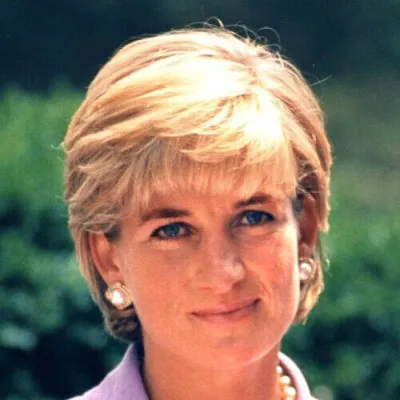
Diana Princess of Wales
Human Design Chart
Biography
Diana was born into the British nobility and grew up close to the royal family, living at Park House on their Sandringham estate. In 1981, while working as a nursery teacher's assistant, she became engaged to Charles, the eldest son of Queen Elizabeth II. Their wedding took place at St Paul's Cathedral in July 1981 and made her Princess of Wales, a role in which she was enthusiastically received by the public. The couple had two sons, William and Harry, who were then respectively second and third in the line of succession to the British throne. Diana's marriage to Charles suffered due to their incompatibility and extramarital affairs. They separated in 1992, soon after the breakdown of their relationship became public knowledge. Their marital difficulties were widely publicised, and the couple divorced in 1996.
As Princess of Wales, Diana undertook royal duties on behalf of the Queen and represented her at functions across the Commonwealth realms. She was celebrated in the media for her beauty, style, charm, and later, her unconventional approach to charity work.
Diana Princess of Wales — Projector with Profile 1/3
Projector 1/3 — Design at a Glance
Diana Princess of Wales revealed herself through an aura that made systemic weaknesses immediately apparent. Her design indicated a tendency to act as a focusing light source that exposed problems in her environment directly. This trait matched the Projector Type: Her energy worked like a bright flashlight, shining on areas where others were still "in the dark." She instantly recognized where systems or relationships were rough.
However, the mechanics of her design were specific. A direct intervention or immediate addressing of these issues often caused resistance or anger in others, similar to a blinding light beam into someone's face. The more effective strategy was to shine through her own harmony and attract those who would then seek advice. Diana Princess of Wales lived by the necessity of waiting for a respectful invitation before bringing forth her knowledge.
Additionally, she did not have a defined Sacral Center, meaning that she lacked a constant intrinsic energy source. Instead, she went through phases of high activity followed by necessary rest periods to avoid burnout. The usual societal pace often did not accommodate this need for regeneration. When Diana Princess of Wales lived in alignment with this structure, she was rewarded with success; when she deviated from it, the theme of non-self bitterness emerged. Her path involved channeling her projecting power through patience and invitation rather than fighting against the natural resistance of her environment.
Emotional Authority
Diana Princess of Wales exhibited an internal decision-making structure based on patience and navigating emotional waves. Her inner authority was Emotional Authority, carried by the defined Emotional Center. In Human-Design mechanics, this means that once this center is defined, it takes charge in all important life decisions—regardless of other defined centers or type.
This design set a tendency for constant mood swings. Diana Princess of Wales saw her surroundings colored by her current mood. What seemed absolutely right at one moment could appear negative the next. Her immediate feeling was only a snapshot, not the final truth. Quick, spontaneous decisions made in this emotional heat carried the risk of proving wrong later.
The mechanics of her authority required time. To gain clarity and calmness, she had to let decisions mature. This often meant sleeping on them multiple times and waiting for intense feelings to subside. Only then did the necessary emotional distance set in, allowing her to recognize the deeper truth of a situation. This process was especially crucial for long-term steps that would shape her life trajectory. Diana Princess of Wales therefore had to "dally," ask questions, and wait until the emotional wave subsided to find her authentic direction.
The 1/3 Profile — Investigator / Martyr
Diana Princess of Wales revealed herself as someone who did not just collect knowledge theoretically but tested it through direct, often painful practice. Her design showed a tendency to first seek security and understanding (Line 1) before taking action. This researcher aspect required study and mental selection to analyze obstacles and avoid negative reactions. Yet the Profile 1/3, the Experimenter, pushed her simultaneously to validate these theoretical foundations through trial and error (Line 3).
This internal process meant that her judgment only solidified after going through mistakes and confronting superior forces. Line 3 demands engagement with reality, where experiences of powerlessness could arise if she entered into dependencies or did not follow her own path. For her development, it was crucial to avoid these dependencies. Only through the synthesis of theoretical study and practical experience did a highly trustworthy judgment emerge. When Diana Princess of Wales recognized something as right, she had previously tested it both intellectually and existentially on heart and gut. This cycle of learning and experimenting shaped her way of understanding and positioning herself in the world.
Split Definition — Defined & Open Centers
Diana Princess of Wales exhibited a constant internal architecture characterized by defined Head Center, Ajna Center, Heart Center, Solar Plexus Center, and Root Center. This created a permanent mental pressure towards inspiration as well as firm willpower and emotional authority. Her design required waiting for the emotional wave to gain clarity, supported by a steady adrenal life impulse.
In contrast, there was situational openness in Throat (Communication), G Center (Identity/Direction), Sacral Center (Vitality/Work), and Spleen (Health/Intuition). These open centers reacted to environmental impulses, creating mechanical tension: inner energy had to be used to avoid prematurely acting out on the impulses in these areas.
The defined Heart Center gave her the ability to keep promises and control her own resources, while the Solar Plexus Center served as an internal authority. She tended to make emotional decisions only after going through the wave. The open centers made her vulnerable to conditioning: the open G Center sought borrowed identity from the environment, the Sacral Center could take in 'borrowed' energy leading to exhaustion, and the open Spleen Center was sensitive to well-being in the environment but prone to fears about survival security. The open Throat drew attention without actively seeking it.
Diana Princess of Wales lived with the pressure to solve mental questions while waiting for external initiation for direction and endurance. Her strength lay in waiting for inner emotional clarity rather than acting impulsively from her open centers. The combination of defined willpower and open identity required a constant balance between inner guidance and outer adaptability.
Channels for doubt, inner restlessness and true connection.
Diana Princess of Wales was someone who combined a sharp, skeptical mind with a deep emotional longing for belonging. Her design inclined towards critically questioning patterns while simultaneously seeking fair agreements and a place in the collective.
The Logic Channel 63-4 shaped a doubting mind that required evidence. Through the Gate of Doubt (63) and the Gate of Formulation (4), she constantly filtered for consistent patterns. Skepticism was essential here; unfounded belief found little room. An answer was only considered true if it showed up in a verifiable, consistent pattern. This active mind served to ask questions and make well-founded predictions to be useful to the collective.
Parallel to this, the Recognition Channel 41-30 drove through restlessness the urge for new experiences. The pressure from the Root (Gate 41) created a feeling of impatience and fueled imaginative notions. Connected with the Gate of Recognizing Feelings (30), the emotional wave intensified this need to embrace the new. It was about jumping from inexperience to experience, driven by the expectation of being satisfied at the end, even if this hunger could only be temporarily quelled.
Furthermore, the Community Channel 37-40 defined a need for belonging and fair agreements. Through the Gate of Friendship (37), she sought recognition and her place within the whole, while the Gate of Solitude (40) linked readiness to work for loved ones with a desire for reward. This channel emphasized that good deals must be carefully considered over time to benefit all parties involved. It was about building bridges to live in a community where everyone has an honorable place.
Collective Circuitry — Circuit Signature
Diana Princess of Wales showed a duality between cool future vision and emotional past processing. Her Understanding Circuit connected Head Center and Ajna Center through the Logic Channel (63-4). This allowed rational, emotionless strategies for societal improvement free from conditioning. In contrast, her Meaning Circuit flowed through Solar Plexus and Root Center via the Recognition Channel (30-41). Here cyclic emotions dominated; she reflected past experiences in wave movements to learn collectively.
Her Ego Circuit connected Heart Center and Solar Plexus Center through the Community Channel (37-40). This created a dynamic of giving and taking within her tribe based on mutual support. Since this circuit lacked connection to Sacral Center, there was no constant life force. Diana Princess of Wales therefore needed necessary rest periods to regenerate resources for her community. These separate energy groups – rational planning, emotional reflection, and cooperative resource utilization – existed parallel without direct flow between the areas.
Right Angle Cross of Tension 2
Diana Princess of Wales carried the right cross of tension 2. This configuration established a fundamental stance where inner tension was not seen as a disturbance but rather as a central driving force. It manifested through a design that drew structure and focus from this dynamic energy.
In Human Design, this cross describes a specific life task: to use tension to find clarity and direction. It wasn't about arbitrary pushing but a natural mechanism that transformed inner contradictions or challenges into structural capability for action. Diana Princess of Wales lived with an architecture where this tension served as the engine for her personal alignment.
The emphasis was on the ability to define and organize oneself through pressure rather than retreating from obstacles. Instead of withdrawing in the face of resistance, her system used these moments to set priorities and push forward a clear path. This characterized her approach to dealing with complex situations: she did not seek calm stagnation but found validation in actively managing tension. This process was integral to her inner logic and significantly determined how she seized impulses and translated them into structured forms.
Saturn Return — Life Cycles
In 1992, at the age of 31, Diana Princess of Wales faced a profound reality layer: the official confirmation of her separation from Prince Charles marked her first Saturn Return – a phase where youthful identity meets structural limits and serious responsibility.
The first Saturn Return acts as a turning point. It forces confrontation with what is stable and enduring. The previous way of life often no longer suffices; there's pressure to reorder oneself and lay down personal foundations. Diana Princess of Wales experienced this as a crisis, but one that was necessary for her transition from a more fluid existence to a clearly defined position.
This cycle does not merely affirm the status quo but presents a harsh test of previous paths. The structure now emerging did not serve to restrict but rather provided a framework for a new, mature expression form. Through this confrontation with reality, Diana Princess of Wales learned to anchor her own authority within a fixed system. The Saturn Return was thus not an end but the beginning of a more conscious engagement with her role and boundaries.
Projector · Emotional Authority — Synthesis
She was a Projector whose energy was geared towards recognizing patterns and bringing light into darkness (Projector Type, Channel of Logic). However, this ability to uncover flaws in the system (Gate 63) came with a constant mental pressure to question everything and understand it thoroughly (defined Head Center). Her profile as an Investigator and Experimenter (1/3) amplified her drive for deep knowledge and practical verification. She needed time for information to mature – a necessity underscored by her emotional authority, which required waiting and observing before decisions could be made.
A central paradox in her design lay in the interplay of logic and emotion. On one hand, she was geared towards recognizing patterns and rational analysis (Understanding Circuit), on the other, she was subject to an emotional wave that clouded judgment and hindered quick decision-making. This led to an inner tension field between the need for clarity and the experience of fluctuating emotions, which manifested during crisis times (Saturn Return 1992).
3 Defined Channels
Incarnation Cross - Right Angle Cross of Tension 2
Solar Return
The Solar Return shows the moment when the sun returns to its exact birth position - your personal solar year.
Life Cycles
Discover the life cycles with a detailed triple view (birth chart, cycle chart, composite).
Human Design Profile
- Type
- Projector
- Strategy
- Wait for the respectful invitation
- Authority
- Emotional Authority
- Profile
- 1/3 - Investigator / Martyr
- Definition
- Split Definition
- Incarnation Cross
- Right Angle Cross of Tension 2
- Date of Birth
- 01.07.1961 18:45
- Place of Birth
- Sandringham, Norfolk, United Kingdom
Frequently Asked Questions
What was Princess Diana's Human Design type?
Which Profile did Princess Diana have in her Human Design?
What Authority did Princess Diana have in her Human Design?
What incarnation cross did Princess Diana have?
When was Princess Diana born?
Discover your own Human Design
Are you also a Projector? Find out in a personal reading how to unfold your leadership qualities and recognize the right invitations.
More Personalities
Back to overviewSissy Spacek

Alain-Fournier

Anémone

Ann-Margret

Bourvil
Hergé