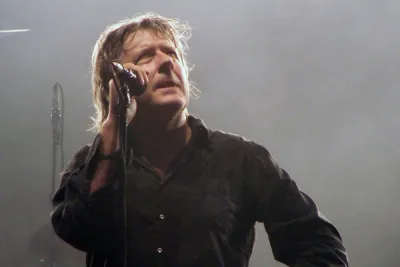
Doc Antle
Human Design Chart
Biography
Antle began raising and caring for animals at an early age, and started a private zoo operation in Myrtle Beach, South Carolina in 1983. He has also appeared in several documentaries and television shows and has worked on films including Ace Ventura and Dr. Doolittle. He was featured in the 2020 Netflix true crime documentary series Tiger King, which follows Carole Baskin and Joe Exotic's escalating feuds over exotic animals in private zoos; in the series, Antle's facility is described as a personality cult.
Antle has faced accusations of animal cruelty throughout his career, and in 2020 was indicted on animal cruelty and wildlife trafficking charges after an investigation by the Virginia Attorney General.
The Human Design of Doc Antle: Generator 4/6
Generator 4/6 — Design at a Glance
Doc Antles' design inclined towards great endurance if the activity resonated internally. As a Generator, he had abundant sacral energy – comparable to a strong workhorse – which could only be unleashed in response to external impulses rather than through sheer willpower. The central mechanics of his design were not initiating himself but waiting for life to signal and receive a clear
Emotional Authority
from his Sacral Center. This inner feedback from the gut was key to releasing energy effectively.
If Doc Antle lived by this strategy, reacting to such impulses, his design rewarded him with deep satisfaction and inexhaustible power. Conversely, two specific pitfalls threatened: either he burned out on tasks without internal joy, leading to frustration or burnout, or he was held back from his heart project despite the power being present. The distinction between energy-rich endurance in resonance versus exhaustion due to compulsion or false initiation shaped his energetic profile significantly.
The 4/6 Profile — Opportunist / Role Model
Doc Antles' design established an inner decision-making authority rooted not in the head but in the emotional wave. As someone with defined Emotional Authority, he was subject to a constant ebb and flow of feelings; his perception of the world was always colored by the current mood. What seemed inspiring one moment could turn negative the next. This fluctuation did not mean that immediate feeling was truth – it merely represented a snapshot or first impression.
Therefore, the mechanics of his authority required strict patience. Quick, spontaneous decisions made directly from an emotional peak carried the risk of negative consequences due to incomplete information. Instead, his structure demanded time for decision maturation. The process of multiple sleeps was crucial: intense feelings subsided over time, allowing emotional distance to be gained. Only then did true clarity and calmness set in – the state of
Split Definition — Defined & Open Centers
Doc Antles design shows a tendency towards constant internal pressure, coupled with the necessity to wait for emotional clarity before taking action. The defined Head and Ajna centers generated a steady stream of inspiration and questions – yet without the direct energy to implement them. Thoughts here were impulses, not commands; the urge for immediate results only led to frustration. Instead, Doc Antle acted as a source that encouraged others to think while her own mental work followed its own timing.
This inner dynamic was stabilized by the defined G Center: It offered a reliable identity and a clear sense of personal direction. Doc Antle intuitively knew who she was and where life was leading, without needing to control or impose this guidance on others. The driving force came from the defined Sacral Center. Here lay an enormous, constant vitality that was only available through reacting to external impulses. Initiatives from outside were answered with a clear yes or no tone; this sacral response determined whether energy flowed for a task or not.
As an inner authority, the defined Solar Plexus Center functioned. It required patience: Decisions could only be made after the emotional wave had passed and clarity emerged. Impulsive actions in emotional highs or lows were avoided in favor of a deeper, time-matured truth.
At the same time, the design revealed specific vulnerabilities. The open Throat Center tended to feel pressured to seek attention through constant talking rather than waiting for natural invitations to speak. The open Heart Center was vulnerable to trying to prove worth through competition and promises – a spiral that could plunge Doc Antle into self-doubt without inner authority. Additionally, the open Root Center absorbed external stress, leading to a feeling of chaos if not recognized as not being her own pressure. The open Spleen Center was sensitive to health and survival fears from the environment, often resulting in spontaneous decisions based on conditioned impulses rather than true intuition.
Channels for intimacy, skeptical logic and persistent discovery.
Doc Antles design shows a tendency towards cyclical crises that serve as necessary dark periods for personal growth. This movement did not aim at personal failure but served to release strong emotional energy through the full cycle from beginning to end. The Logic Channel 63-4 connects Head and Ajna centers, creating a doubting mind that filters patterns to test consistency. Doubt was essential here for formulating true answers; unfounded belief had no place as only verifiable, functional patterns were accepted logically. This skeptical spirit sought consistent evidence before drawing conclusions.
The Pairing Channel 59-6 connects Sacral and Solar Plexus centers through sexuality and emotional friction. This created a powerful foundation for intimacy that required patience and nurturing over time. The emotional wave determined the timing of inner connections; quick action led to confusion, while waiting brought clarity. The Discovery Channel 29-46 connects Sacral with G Center through saying yes and determination. Here it was about letting go of expectations and losing oneself in an experience to be at the right place at the right time. Persistence was crucial as meaning often only became visible at the end of the process.
Additionally, gates like Gate 11 with visual memory and collective ideas, Gate 12 with individual mutation and poetry, Gate 55 brought extreme mood swings as part of emotional awakening, while Gate 13 promoted collective memory and continuity. Gate 10 integrated complex behavioral rules, Gate 7 projected leadership patterns for the future, and Gate 25 enabled mystical individuation. Detail work and perfection came through Gate 9, while Gate 1 emphasized unique creativity in the here and now. The fundamental rhythm of all processes was set by Gate 5, supporting firm habits for energy building.
Collective Circuitry — Circuit Signature
Doc Antles design shows a tendency towards situationally activated, separate energetic poles. There was no continuous 'I' strategy but two parallel functional ways: cool future orientation on one side and felt past resolution on the other.
The Understanding Circuit connected Doc Antle's Head and Ajna centers (Logic Channel 63-4). This allowed a rational, emotionless analysis with focus on structure and strategic sharing of insights for the future. The energy was visually and logically clear.
Completely independent of this, the Seeker and Warrior Circuits worked as a second, separate unit. The Seeker Circuit connected Identity and Sacral centers (Discovery Channel 46-29). Here it was about cyclic processing of past experiences to find meaning through emotional wave movement. Parallel to this, the Warrior Circuit connected Sacral and Solar Plexus centers (Pairing Channel 59-6). This activated primal instincts for protecting genetics, family, as well as themes like food and care. This energy was timeless, tactile, and smell-based.
The Split Definition separated these areas: Doc Antle switched between the rational logic of understanding (Head-Ajna) and intuitive emotional processes of seeking meaning and protection (Identity-Sacral-Solar Plexus). Both systems existed side by side without direct energetic flow to each other.
Right Angle Cross of Eden 1
Doc Antles design points towards a deep, often unconscious orientation towards spiritual or karmic patterns. This configuration, known as the right cross of Eden 1, does not describe an everyday action strategy but rather a subtle background current that influences perception and decision-making in hidden ways. It is an archetypal energy associated with themes of reconnection, destiny, or the dissolution of old bonds.
For Doc Antle, this means his inner self was marked by dynamics going beyond pure rationality. The design does not support direct control over these forces; instead, it acts as a passive recipient of impulses stemming from deeper layers of being. This energy can manifest in moments of intuition or recurring life situations where the feeling of higher order or a specific path prevails. It is not an active strategy but an inherent quality of personality that led Doc Antle to experience events not just as random, but as part of a larger, perhaps even predestined structure. The challenge lies in perceiving these subtle signals without confusing them with conscious will. The design offers no direct lever for control but invites observing and understanding one's reactions to these deep currents.
Saturn Return · Uranus Opposition · Chiron Return · 2nd Saturn Return — Life Cycles
Doc Antles design showed during his second Saturn return a phase of rigorous stock-taking. This mechanism tests the foundation of life for stability and ethical integrity by making the consequences of long-term structures visible. It is not just change, but confrontation with what has been built up or neglected over decades.
In 2020, at age 60, this test became concrete for Doc Antle as a crisis: He was accused of animal cruelty and wildlife trafficking. This event illustrates the harsh reality of the second Saturn return. It does not confirm but serves to clarify definitively what has lain hidden or violated inner ethical standards, now becoming publicly and legally relevant. The mechanism forces confrontation with responsibility and consequences of one's actions. It is about whether the lived life stands up to the internal structure or if cracks in the foundation break open. Doc Antles situation shows how this cycle not only reflects old patterns but through external events compels accountability. The stability of his life work is put to the test, often painfully, yet necessary for true maturation or collapse of false constructs.
Generator · Emotional Authority — Synthesis
A central red thread runs through the design: deep conditioning to define oneself through achievement (Gate 46, Heart Center open) in conjunction with strong sacral energy (Generator type), but not aligned towards initiation. Instead, this design constantly seeks reaction and engagement to use this energy correctly – a process further complicated by the emotional wave pattern (emotional authority). The combination of an open center for self-worth and the need for validation leads to a pattern where identity is measured against external circumstances, driving a constant search for meaning and direction (Gate 29).
The central paradox lies in the interplay of deep emotional sensitivity (defined Solar Plexus Center) and the ability to receive and exchange information through the open Throat Center – a combination that predisposes both to profound connection with others as well as vulnerability to conditioning. The design is thus geared towards making intense experiences and expressing them authentically while being shaped by external influences, creating an ongoing struggle between inner truth and outer pressure.
3 Defined Channels
Incarnation Cross - Right Angle Cross of Eden 1
Solar Return
The Solar Return shows the moment when the sun returns to its exact birth position - your personal solar year.
Life Cycles
Discover the life cycles with a detailed triple view (birth chart, cycle chart, composite).
Human Design Profile
- Type
- Generator
- Strategy
- To respond - wait for something to respond to
- Authority
- Emotional Authority
- Profile
- 4/6 - Opportunist / Role Model
- Definition
- Split Definition
- Incarnation Cross
- Right Angle Cross of Eden 1
- Date of Birth
- 16.03.1960 01:09
- Place of Birth
- Phoenix, AZ, United States
Frequently Asked Questions
What is Doc Antle's Human Design type?
What Profile does Doc Antle have in Human Design?
What authority does Doc Antle possess?
What is Doc Antle's incarnation cross?
When was Doc Antle born?
Discover your own Human Design
Are you also a Generator? Find out in a personal reading how to use your sacral energy correctly and discover deep satisfaction.
More Personalities
Back to overviewAaliyah

Alexia
Angèle

Anne-Marie

Arcángel

Arno