
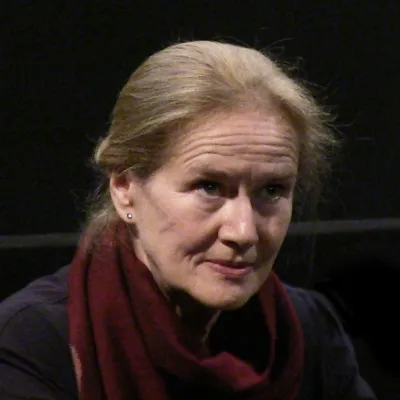
Dominique Sanda
Human Design Chart
Biography
In 1993 at the Théâtre de la Commune, in Aubervilliers, France, she played Melitta in Madame Klein (by Nicolas Wright), directed by Brigitte Jaques-Wajeman. In 1995 in Italy, she played the Marquise de Merteuil in Les liaisons dangereuses, based on Choderlos de Laclos's novel, directed by Mario Monicelli. From 1995–1996 in France and Belgium, she has been Lady Chiltern in An Ideal Husband by Oscar Wilde, directed by Adrian Brine.
In the 1970s, she lived with actor/director Christian Marquand, with whom she had a son, Yann Marquand.
In 2000, she married Nicolae Cutzarida, a philosopher and University professor of Romanian origin.
She won the award for Best Actress at the 1976 Cannes Film Festival for her role in the film The Inheritance.
Dominique Sanda — Generator with Profile 3/6
Generator 3/6 — Design at a Glance
Dominique Sandas design points to a tendency towards great endurance, comparable to a workhorse that generates power when it burns for its task. As a Generator, she had abundant sacral energy, which was released not through self-initiation but by responding to impulses from the environment. Her design motto was: Not start, but respond. When life sent a signal and her inner voice responded with a clear 'yes', she could act in response and thus use her energy effectively.
This mechanism protected against two specific dangers. Firstly, frustration or energy depletion threatened if she acted against her gut feelings or initiated things that did not interest her – a waste of resources. Secondly, her potential suffered when prevented from working on her heart project despite still wanting to continue with full power. Living in harmony with this strategy of responding rewarded the system with a sense of deep fulfillment and satisfaction. Deviating from it, by constantly initiating without inner confirmation, led instead to persistent frustration. Her strength lay not in controlling the start but in powerfully answering what she encountered – deciding from the gut and then consistently implementing.
Sacral Authority
Dominique Sandas design points towards intuitive, body-based decision-making. As a Generator, she had sacral authority, which simplified her process: strategy and inner guidance merged here. A prerequisite was an open emotional center so that decisions were not based on fleeting moods but on stable internal resonance.
This authority manifested as a direct reaction to external stimuli through a noticeable 'gut feeling' or surge of power. Dominique Sanda learned to pay attention to these bodily signals – acoustically as grunting, humming, or an affirming 'mm-hm'. As long as her sacral motor was engaged, she felt vital and alive. She then had seemingly inexhaustible energy and tackled tasks with great enthusiasm. Her path involved moving through life with joy and satisfaction, fully immersed in activities without them being strictly goal-oriented.
Additionally, an activated spleen center supported this leadership. It allowed her particularly quick, spontaneous reactions and immediate access to instinctive perception as well as physical wellbeing. She could be guided by this reliable inner voice, making her actions authentic and in harmony with her nature.
The 3/6 Profile — Martyr / Role Model
Dominique Sandas design points towards a tendency for continuous experimentation paired with an internal feeling of being torn between the need for playful openness and the urge to reflective withdrawal. Until her first Saturn return, around 29.5 years old, she primarily acted from Line 3: a state of constant testing and error. Only afterward did Line 6 activate, fostering a desire for distance from her past and synthesis of accumulated experiences.
This shift is reinforced by Gate 22 (Line 3), which develops enchantment and perfect grace through a long process of trial and error. Bonds were often formed and dissolved here, characterizing fleeting openness. Simultaneously, Gate 26 (Line 6) works as a family gate that tests and confirms influence. It demands perseverance as well as pauses for reflection before the ego acts at the right time in the right place.
The result of this configuration is a person who carries both the playful 'inner child' and the wise 'inner elder'. While control often prevailed outwardly, internally there was uncertainty about the needed space for thinking or playing. Around 50 years old, this tension should resolve: The experimental energy of Line 3 gains the wise guidance of Line 6. Dominique Sanda thus became a role model whose charm and accumulated wisdom served others – not just through knowledge but through lived experience and practical benefit to the family.
Split Definition — Defined & Open Centers
Dominique Sanda revealed herself as someone with a deeply rooted, unshakeable self-identity and a clear sense of her own direction. Her defined G Center gave her the ability to love others without becoming dependent on them, as well as a natural authority that she could use to show others new perspectives or paths. This inner stability was fueled by her defined Sacral Center: a constant source of vital energy, which only became effective when she responded rather than initiated. Through this sacral responsiveness, she found deep satisfaction and avoided exhaustion, ensuring that her energy was available for what was correct for her.
Her actions were further shaped by her defined Spleen Center, giving her a reliable instinct and spontaneous body awareness. She could make intuitive judgments in the "now," helping her stay healthy and trust her existential intelligence rather than preferring rational deliberation. Additionally, she had a defined Root Center, providing a steady internal pressure—not as negative stress but as a driving force for material prosperity and survival, grounding her.
In contrast to this stable core structure stood her vulnerability in the open centers. Her open Head Center made her receptive to mental inspiration from the environment, yet it tended to get caught up in doubts or questions that were not her own issue. She had to learn not to personalize this mental pressure but rather see it as transient information. Similarly, her open Ajna Center was flexible for concepts, risking interpreting others' answers as her own truth or feeling uncertain when no clear theory existed.
Her open Throat Center naturally drew attention without her actively seeking it; attempting to control her communication would have led only to frustration. Her open Heart Center meant she wasn't designed to make promises or prove her worth through willpower—a process often ending in a cycle of self-doubt if attempted. Finally, her open Solar Plexus absorbed the emotions of others, leading her to experience foreign moods as her own and avoid confrontation to bypass emotional resistance. The art lay in not identifying with these open fields but using them as mirrors for the environment while relying on her defined inner authority.
Channels for evolutionary change and intuitive life art.
Dominique Sandas Design shows a tendency towards evolutionary change and intuitive adaptability. This fundamental trait stems from two central channels that shaped their energy.
The Mutation Channel 60-3 connected the Root Center with the Sacral Center through Gate 60 (Limitation) and Gate 3 (Order). This connection generated a pulsating, adrenaline-charged frequency that brought about evolutionary change. The energy was often accompanied by melancholy as it waited for the right moment to begin anew. Dominique Sanda had to learn to accept this limitation and trust in the inner confusion of starting over rather than intellectually deciphering it. This channel worked like music: unexpected and in the pauses between impulses. It demanded patience until a new mutation revealed itself, deeply influencing everything around her.
Parallel to this, the Channel of Perfect Form 57-10 shaped her behavior. It connected the Spleen Center with the G Center through Gate 57 (Intuitive Insight) and Gate 10 (Self Behavior). This allowed for spontaneous reactions guided by deep instinct to the environment. Instead of planning or analyzing, Dominique Sanda acted from an acute perception of tone and atmosphere. This behavior served perfect survival in the present moment and radiated a natural dignity that attracted others. She lived her uniqueness without seeking recognition but purely out of love for her own process.
Additionally, Gates like 22 (Openness), 47 (Purpose in the Collective), and 26 (Innovation in the Clan) contributed to her calmly observing or initiating change, always supported by the deep intuition of the Channel of Perfect Form.
Individual Circuitry — Circuit Signature
Dominique Sandas Design shows a tendency towards inner, separate structure. Her energy does not flow in one single stream but consists of two parallel, unconnected fields of power. This is typical for the Split Definition: different aspects of personality work alongside each other without directly overlapping.
One field was the Knowledge Circuit. Here, Dominique Sanda connected the Sacral with the Root Center through Channel of Mutation (Gates 3–60). This connection created a pulsating, acoustic energy aimed at deviation from the known and new identity. It was about initiating change supported by deep, rhythmic endurance.
The second field was the Integration Circuit. Here, she linked the Identity with the Spleen Center via Channel of Perfect Form (Gates 10–57). This area provided intuitive security and self-confirmation in the present moment. The energy here was individual, reacting to life and guiding power through proper behavior and intuitive knowledge.
Between these two groups – the impulsive Knowledge field and the intuitive Integration field – there was no direct energetic bridge. Dominique Sanda had to consciously relate these separate forces rather than experiencing them as one flow. This shaped her world experience by clearly separating impulsive creative force from intuitive self-assurance.
Right Angle Cross of Rulership 1
Dominique Sandas Design showed a tendency towards clear and often authoritarian alignment. She was someone who did not hesitate to take responsibility and enforce structures when the situation required it. This attitude is an expression of the right authority cross, a configuration known in Human-Design circles as "the Power Cross." It is a specific energy that aims for direct leadership and the enforcement of will. Unlike other forms of influence which can be subtler or more cooperative, this configuration often operates with a certain hardness and inevitability. It demands respect and obedience not out of malice but as part of a natural order principle. Dominique Sanda was called to recognize her own authority and use it consciously through this element. This wasn't about suppressing others but creating clarity in chaotic situations. Those who carry this energy must learn to handle their power without slipping into tyranny. The challenge always lay in combining the necessary hardness of leadership with a certain humanity so that its influence would not be off-putting. Dominique Sanda had to live this balancing act: strong enough to lead but wise enough not to stand alone. This design element shaped her approach to conflicts and hierarchies – direct, decisive, and often unyielding in consequence. It was a driver for her actions, making her take clear positions and leave no room for half measures.
Saturn Return · Uranus Opposition · Chiron Return · 2nd Saturn Return — Life Cycles
Dominique Sanda revealed herself as someone whose inner structure demanded a clear and often unmediated presence. Her design tended to change situations simply by her arrival, which early on presented the challenge of using this energy purposefully rather than letting it act uncontrollably.
In 1976, at age 25, Dominique Sanda reached her first Saturn return. During this period, years of groundwork often crystallized into a solid result. For her design, this cycle marked the transition from an experimental phase to established authority in her field. The role of Ada in Bernardo Bertolucci's "1900" and the accompanying Best Actress award at Cannes was no coincidence but rather the concrete expression of this structural maturation. The Saturn return functioned here as a catalyst, translating her inherent ability for presence into an acknowledged professional position.
This development underscores the mechanics of her type: Without the strategy of informing before acting, the design tends to generate resistance or waste energy. However, the success in 1976 shows the moment when her inner authority harmonized with external expectations. The role required an intensity that could only be lived sustainably through clear communication of her own boundaries and intentions. Dominique Sanda's chart indicates that such milestones are not to be understood as external rewards but rather as confirmation that her specific way of operating—direct, penetrating, and uncompromising—hit fertile ground at the right moment. This cycle solidified her self-understanding as an actress who defines spaces through her presence.
Generator · Sacral Authority — Synthesis
Dominique Sandas' Human Design is characterized by a deep, sacral-driven energy (sacral authority), which manifests as an unstoppable flow of life force. This energy seeks out activities that truly resonate and avoids wasting it through resistance or forced paths (Generator Type). The profile as an experimenter and later role model indicates a development where initial explorations and attempts lead over time to solidified wisdom. This inner maturity allows her to walk her own authentic path – a process amplified by the defined G Center as a compass for identity and purpose (Knowledge Circuit).
A central paradox lies in the combination of the pulsating, mutative Channel 3-60 and the need for internal direction-finding. The energy of this mutation drives towards new experiences and changes, while the defined G Center provides a firm anchor point for self-identity. This creates a tension between the desire for innovation and the necessity to remain true to oneself in this constant transformation – a blend of melancholy and creative power, particularly evident during a phase of experimentation marked by success (award).
2 Defined Channels
Incarnation Cross - Right Angle Cross of Rulership 1
Solar Return
The Solar Return shows the moment when the sun returns to its exact birth position - your personal solar year.
Life Cycles
Discover the life cycles with a detailed triple view (birth chart, cycle chart, composite).
Human Design Profile
- Type
- Generator
- Strategy
- To respond - wait for something to respond to
- Authority
- Sacral Authority
- Profile
- 3/6 - Martyr / Role Model
- Definition
- Split Definition
- Incarnation Cross
- Right Angle Cross of Rulership 1
- Date of Birth
- 11.03.1951 03:15
- Place of Birth
- Paris, France
Frequently Asked Questions
What is Dominique Sanda's Human Design type?
What Profiles does Dominique Sanda have in Human Design?
What authority determines Dominique Sanda's decisions?
Which incarnation cross is assigned to Dominique Sanda?
When was Dominique Sanda born?
Discover your own Human Design
Are you also a Generator? Find out in a personal reading how to use your sacral energy correctly and discover deep satisfaction.
More Personalities
Back to overviewSissy Spacek

Aaliyah

Alexia

Anémone

Angèle

Ann-Margret
