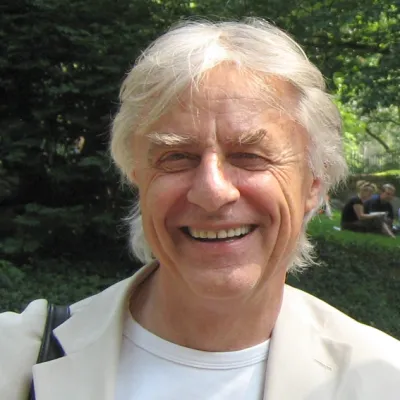
Emil Steinberger
Human Design Chart
Biography
Human Design Analysis: Emil Steinberger as Generator 2/4
Generator 2/4 — Design at a Glance
Emil Steinberger revealed himself as someone with remarkable endurance, possessing not just energy but actively generating it. His design laid the foundation for immense work capacity, comparable to a strong working horse that was, however, dependent on a specific mechanism: reacting to external impulses. The strategy of his Generator type consisted in not initiating things himself but waiting until life sent a signal and his Sacral Center – the energy seat in the abdominal area – responded with a clear "yes." Only this inner confirmation released the necessary power for sustainable action.
This mechanism carried two crucial risks within it. If Emil Steinberger acted against this internal signal and pushed forward on tasks he actually had no desire to do, he wasted his resources and risked burning out from exhaustion. Conversely, it led to frustration when he was prevented from pursuing his heart's project even though his inner self wanted to continue. The deepest satisfaction and sense of fulfillment arose only when he followed the rhythm of waiting and reacting. If he constantly initiated things himself without listening to the gut feeling impulse, persistent frustration ensued. His path to effectiveness was thus not stubbornly pushing forward but a fine-tuned calibration: wait, receive the signal, then respond with full force.
Emotional Authority
Emil Steinberger's inner compass was emotional authority, carried by his defined Emotional Center. In Human Design mechanics, this center is considered the highest priority: once it is activated, it overrides all other defined centers and dictates decision-making. This did not mean for him a constant mood state but rather a rhythmic wave of ups and downs in emotional movement. The world appeared to him always colored by the current emotional snapshot; enthusiasm could suddenly turn into rejection.
This dynamic required a specific strategy: allowing time. Spontaneous decisions made at the peak of an emotion were risky for his design, as the first impression did not yet reflect the deeper truth. Instead, Emil Steinberger had to allow himself to let decisions "ripen." Staying in indecision was not a flaw but a necessary process step. By repeatedly sleeping on questions and enduring emotional pressure, the wave smoothed out. Only when intense feelings subsided and emotional distance was gained did true clarity emerge. This calm marked the completion of his inner process, especially for long-term decisions that profoundly shaped his life course. Patience was thus not an optional behavior but a mechanical prerequisite for correct orientation.
The 2/4 Profile — Hermit / Opportunist
Emil Steinberger's design sets a tendency to constantly oscillate between two fundamental needs: the urge to withdraw and the longing for community. This tension stems from his 2/4 Profile, which connects the line of the hermit with that of the community member. In his "me-time," he immersed himself in internal processes to find peace and clarity. Only once this need for solitude was satisfied did he emerge from his "cave" to spend time with his favorite people.
This dynamic is shaped by specific lines. The second line from Gate 54 emphasized discretion and restraint. Here, a clever strategy was shown to avoid drawing on the benefits of past interactions consciously, which strengthened ambition. However, immature energy in this configuration could weaken loyalty and intensify disloyalty. Parallel to this, the fourth line from Gate 57 worked, representing a strong network need and relationship fixation as self-centeredness. For Emil Steinberger, survival through social networks was enabled. The Venus elevation of this line promoted a masterful handling of relationships for productivity and harmony. Mars in fall could, however, lead to authoritarian decisions when he perceived his own survival to be threatened.
Therefore, it was crucial for him to create a safe environment where he could communicate clearly: "Now I would like your company" or "I am withdrawing." When this alternating need was met, he could reflect on the knowledge of his network during solitary times and develop brilliant ideas from it.
Split Definition — Defined & Open Centers
Emil Steinberger's design was characterized by constant mental pressure and a clear, available willpower. His defined Head and Ajna centers generated permanent inspiration that shaped questions but did not provide direct energy for implementation; this required patience to leave ideas to others rather than executing them himself. At the same time, his defined Heart Center gave him a firm willpower that allowed him to keep promises and actively shape his life. As a Generator with a defined Sacral Center, he had a constant vital energy source, but it could only be correctly utilized through reactions to external stimuli, not through self-initiatives.
His open centers revealed specific vulnerabilities. His open G Center meant a lack of firm identity; Emil Steinberger tended to reflect in relationships or environments and sometimes sought direction that he himself could not foresee. His open Throat Center led him to feel pressured to demand attention through speaking, although spontaneous communication was often unpredictable. Additionally, his Spleen Center was open, creating sensitivity towards health and well-being; he was prone to holding onto insecure situations or making spontaneous decisions based on fear rather than wisdom. This configuration combined mental clarity with the need to wait for external initiatives and place inner authority over identity search.
Channels for intimacy, community, growth and mental comprehension.
Emil Steinberger's design inclined him towards deep intimacy paired with a strong desire for community connection and the ability to translate experiences into meaningful narratives. This configuration marked him as someone who not only enters relationships but deepens them through emotional clarity and shared history.
The Channel of Union 59-6 rooted this intensity in sacral energy and emotional wave. It allowed Emil Steinberger to quickly ease confidentiality and promote fertility in creative endeavors, yet required patience to wait out the emotional wave and avoid misunderstandings about his availability.
Parallel to this, the Channel of Community 37-40 secured a social framework. Through the Gate of Friendship (37) and Solitude (40), he sought recognition and his place within the whole while possessing the willpower to make fair agreements. This helped him build bridges between individuals and find an honorable place in groups without hierarchical constraints.
The Channel of Maturity 42-53 propelled him to reflect on completing each cycle fully. From the Gate of Beginnings (53) to the Gate of Growth (42), he learned to gain wisdom from empirical history and share it with others, thereby basing new experiences on old ones.
Mentally, the Channel of Abstraction 64-47 filtered every experience through a kaleidoscope of mental images from the Gate of Confusion (64) to the Gate of Understanding (47). This often created mental unrest but led to unique perspectives and inspiring stories that he could communicate to the collective with patience.
Additional Gates like 54 (Ambition/Spirituality), 57 (intuitive clarity), and 51 (willpower/adaptability) supported this dynamic by linking worldly success with mystical insight and fostering the ability to respond to shocks with adaptation.
Collective Circuitry — Circuit Signature
Emil Steinberger's design was marked by separate, parallel functioning energy blocks. His Split Definition split his design into two independent systems: One block connected Solar Plexus, Sacral, Root, and Heart Centers; another Head with Ajna Center. These groups did not flow into each other but existed as separate fields of power.
In the Meaning-Making Circuit, two isolated segments worked independently. The one connected Head and Ajna Centers (Channel Abstraction), the other Sacral with Root Center (Channel Maturity). They were not merged but formed separate poles of emotional wave movement and learning from the past.
The Ego Circuit linked his Heart and Solar Plexus Centers through the Channel Community. This promoted a direct relationship of giving and taking as well as mutual support, yet did not include the constant life force of the Sacral Center – which required pauses to generate resources.
The Archer Circuit connected Sacral with Solar Plexus Center through the Channel Union. Here instinctive energies from Spleen (indirectly through the connection to protective instincts) and strong emotions worked together to secure genetic survival. Themes like protection, defense, and preservation shaped this primal aspect of his design.
Together these circuits painted a picture of separate logical impulses (Head-Ajna) and intense but also not continuously connected emotional-social streams in the lower chart area.
Right Angle Cross of Penetration 4
Emil Steinberger revealed himself through a profound inclination towards analyzing complex connections and the drive to structure them. His design was characterized by a specific configuration: The right cross of penetration 4. This mechanism describes a process of mental intrusion into matter or ideas, aiming to grasp their core. It is not about superficial knowledge but rather an intensive, penetrating perception that aims to make hidden things visible and understandable.
For Emil Steinberger, this meant that he did not just passively receive information but actively broke it down and reordered it. The energy of this cross promotes the ability to derive clear patterns from seemingly chaotic or unclear situations. It is a quality of intellectual sharpness that helps overcome obstacles by precisely recognizing their cause. This kind of thinking supports strategic planning and solving difficult problems through logical penetration rather than emotional reaction. Emil Steinberger used this internal structure to analyze his environment and develop action possibilities based on deep insights.
Saturn Return · Uranus Opposition · Chiron Return · 2nd Saturn Return — Life Cycles
Emil Steinberger showed himself as someone who created structural foundations and then translated these into concrete, tangible forms. His design tended towards not just dreaming visions but bringing them into reality through disciplined implementation – often with a focus on cultural or artistic spaces.
In 1973, at the age of 40, he opened the Atelier-Kino cinema studio with 150 seats. This fell during his Uranus opposition, a phase in which internal tensions between the desire for change and existing structures are resolved. For his design, this was a moment when long-held ideas suddenly became concrete; the opposition served as a catalyst to translate the abstract into concrete infrastructure.
Later, in 1981 at age 48, he received the Prix Walo. This marked his Chiron return – not a healing process emotionally but a phase of fulfillment and bloom. Here it was visible that his life path increasingly aligned with the deepest meaning of his design; recognition came because he had consistently lived out his specific gift.
In 1988, at age 55, during his second Saturn return, he received the Hans Reinhart Ring from the Swiss Society for Theater Culture. This cycle often confirms the lasting impact of earlier decisions. For Steinberger, this showed that his structural contributions to culture were not temporary but formed a solid foundation recognized by the community. His path was marked by linking visionary impulse with enduring form.
Generator · Emotional Authority — Synthesis
A central red thread in this chart is the deep connection between creative energy and emotional richness. The sacral energy of the Generator (Design) is strengthened through the defined perception circuit, emphasizing the processing of past experiences and their communication. This leads to a steady flow of inspiration (defined Head Center), waiting to be poured into concrete forms – a process that requires emotional authority over time. The Channel of Pairing points to an intense life force that unfolds in relationships and creative ventures, while the Profile as Natural Talent/Networker couples the inner drive for self-discovery with the need for connection and exchange.
The central paradox lies in the interplay between withdrawal and community. Line 2 of the profile demands phases of isolation and internal clarification to find one's own truth (Cross of Penetration), while simultaneously line 4 signals a deep desire for exchange and connectedness with chosen people. This shift between the desire for solitude and social interaction creates tension, which is further intensified by the emotional wave – decisions need time to gain clarity, while the inner drive for expression is strong.
4 Defined Channels
Incarnation Cross - Right Angle Cross of Penetration 4
Solar Return
The Solar Return shows the moment when the sun returns to its exact birth position - your personal solar year.
Life Cycles
Discover the life cycles with a detailed triple view (birth chart, cycle chart, composite).
Human Design Profile
- Type
- Generator
- Strategy
- To respond - wait for something to respond to
- Authority
- Emotional Authority
- Profile
- 2/4 - Hermit / Opportunist
- Definition
- Split Definition
- Incarnation Cross
- Right Angle Cross of Penetration 4
- Date of Birth
- 06.01.1933 23:00
- Place of Birth
- Luzern, SWTZ
Frequently Asked Questions
What is Emil Steinberger's Human Design type?
What profile does Emil Steinberger have in Human Design?
What authority does Emil Steinberger possess?
What incarnation cross does Emil Steinberger have?
When was Emil Steinberger born?
Discover your own Human Design
Are you also a Generator? Find out in a personal reading how to use your sacral energy correctly and discover deep satisfaction.
More Personalities
Back to overviewAaliyah

Alexia

Angèle

Anne-Marie

Arcángel

Arno