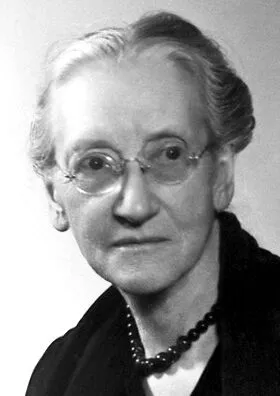
Emily Greene Balch
Human Design Chart
Biography
Born into an affluent family, she was amongst the first graduates of Bryn Mawr College in 1889. She continued to study sociology and economics in Europe and the United States, and, in 1896, she joined the faculty of Wellesley College, becoming a full professor of economics and sociology in 1913.
During World War I, she helped to found the WILPF League and campaigned against America's entry into the conflict.
When her contract was terminated by Wellesley because of her pacifist activities, she became an editor of The Nation, a well-known liberal news magazine, acted as secretary of the WILPF (a second term in 1934 without salary for a year and a half), and did much work for the League of Nations.
Balch converted from Unitarianism and became a Quaker in 1921. She never married. She died on January 9, 1961, the day after her 94th birthday.
Emily Greene Balch as a Generator 4/6 in Human Design
Generator 4/6 — Design at a Glance
Emily Greene Balch had as a Generator an enormous, enduring sacral energy. Her design did not function through spontaneous initiatives but rather by waiting for external impulses to which she then reacted with full force. She worked like a strong horse: ready and capable once the right stimulus came.
The central strategy of her design was reacting instead of initiating. Emily Greene Balch had to wait until her sacral center gave a clear signal – the inner “yes”. Only then did she release her energy. When she acted on this resonance, it led to deep fulfillment and satisfaction. If she was prevented from doing so or acted against her desire, burnout and persistent frustration threatened.
Her design was set up to materialize things in life by responding instinctively to life signals. As long as she followed this strategy, no one could stop her. If she did not live according to this pattern – for example, through constant initiating without an inner impulse – she would eventually encounter a lack of energy and frustration. Her strength thus lay in waiting for the right moments and then responding with action when her inner self urged her.
Emotional Authority
Emily Greene Balch showed a decisive tendency: spontaneous impulses were misleading snapshots for her. Her design determined that emotional detachment and time were indispensable prerequisites for clear judgments. She was subject to a constant emotional wave coloring her perception of the world through her current mood. In one moment, she could be enthusiastic about something, in the next view it negatively. This feeling, however, was only a first impression, not necessarily her truth. Quick decisions based on this emotion often had negative consequences.
Her inner authority carried the defined Solar Plexus Center. This emotional authority always took precedence over other defined centers in her chart, regardless of what else might be activated. Every type except Reflectors can possess this authority; it requires patience and multiple reconsiderations of decisions. The longer Emily Greene Balch waited, the deeper and more comprehensive she could see. Intense feelings subsided with time, emotional distance gained strength, and clarity and calmness set in. This process was particularly important for long-term decisions that significantly influenced her life course. She took proper time to reflect multiple times and used the night to reach true insight after the emotional wave had subsided.
The 4/6 Profile — Opportunist / Role Model
Emily Greene Balch's design was characterized by a profound tension: the desire for close connection on one hand and the need for wise distance on the other. In her first thirty years, she intensely experimented with relationships and friendships, driven by Line 4 in Profile 4/6. This phase was marked by a desire for recognition within a network, where the mystical quality of Gate 54 promoted a search for external validation. She sought contact to find her place, but this openness always carried the risk of being hurt by “false” people.
With the return of Saturn, her attitude fundamentally changed. Line 6 became active and led to an internal conflict between the heart (Line 4) and the head (Line 6). While she continued to seek belonging, she simultaneously withdrew to reflect on meaning. Here, the mechanics of Gate 57 were revealed: clarity alone was not enough; intuition had its limits. In difficult situations, she had to make the best out of them without relying on perfect solutions.
In her later years, she established herself as a role model. The expectation from others was that she would convey wisdom through cooperation. She integrated earlier experimental uncertainty into an advisory role. Her design challenged her to carefully guard the big heart while serving as an example to others. This path from external search for influence to internal integration and preservation shaped her entire life architecture.
Split Definition — Defined & Open Centers
Emily Greene Balch had a fixed inner identity and direction that allowed her to love herself confidently and provide guidance to others without being dependent on them. Her defined willpower gave her the capacity to keep promises and manage her resources independently, strengthening her self-esteem through consistent action. As a Generator, she possessed an immense vital energy source that was only correctly usable by reacting to external invitations; initiating steps without this confirmation led to frustration and exhaustion. Her emotional authority in the Solar Plexus Center required patience: She had to wait for her wave of feelings to gain clarity rather than making decisions impulsively based on emotional highs or lows. Intuitive moment-to-moment decisions from her Spleen Center protected her existentially and promoted her well-being, while her defined Root Center provided a constant pressure that propelled her forward and structured her stress management.
In contrast, Head, Ajna, and Throat were open. This meant that mental inspiration and concepts arrived situationally; Emily Greene Balch was vulnerable to the pressure of finding answers to questions that weren't her own problem or getting lost in endless doubts. Her mind worked flexibly, took on other people's ideas, but lacked a constant personal opinion formation. In communication, she naturally attracted attention when waiting; if she actively tried to be heard to avoid being overlooked, she fell into stress and often spoke out inappropriate things. Thus, the mechanics of her design showed as tension between a powerful reactive inner nature and the necessity to wait for mental and communicative impulses from outside rather than forcing them through effort.
Channels for synthesis, focus, form, initiation and devotion.
Emily Greene Balch's design was characterized by deep emotional sensitivity towards tribal belonging and loyalty. The Channel of Synthesis 19-49 functioned as an emotional glue that held communities together and ensured the protection of resources and traditions. This connection between Root and Solar Plexus Center created a fine perception for who belonged to the group and who did not, based on principles of trust and mutual support.
At the same time, she was someone initiated towards individualization through challenges. The Channel of Initiation 51-25 connected competitive ego-energy with mystical universal connection. This configuration in Heart Center allowed her to use 'shocks' as catalytic moments that expanded consciousness and established a deeper relationship between the individual and the collective. She awakened a spirit of competition in others to promote forward movement and personal growth without losing sight of the spiritual aspect of uniqueness.
Supporting this profile was an instinctive ability for persuasion and resource optimization. The Channel of Devotion 44-26 linked the intuitive awareness of Spleen Center with the willpower of Heart. This gave her a business sense to offer exactly what the tribe needed or could improve upon. She could selectively and persuasively use historical memories to sell ideas that promoted survival and progress for her community.
Additionally, the Channel of Concentration 52-9 acted as format energy, directing logic and focus on details. Through the Gate of Non-action (52) and the Gate of Focusing (9), she maintained a calm pressure to keep distractions at bay and concentrate precisely on patterns to perfect them. The Channel of Perfect Form 57-10 complemented this through intuitive behavior guided by inner insight, helping her act spontaneously and appropriately in social situations, thereby shaping her environment healthily and beautifully.
Tribal Circuitry — Circuit Signature
Emily Greene Balch appeared as a person with inner strength and strong individuality. The Centering Circuit, activated through the Channel of Initiation between Identity and Heart Centers, fostered deep self-worth and bold convictions. Since this circuit did not connect to Throat Center, these firm internal stances often remained unspoken or hard to communicate externally; the energy worked more individually than outwardly.
Parallel to this, the Understanding Circuit connected Sacral with Root Center through the Channel of Concentration. This gave her a focused, logical strategy for improving her environment driven by rational understanding rather than emotional impulses.
The Ego Circuit consisted of two separate parts: One part linked Heart and Spleen (Channel of Devotion), promoting cooperation and mutual support in resource areas. The other part connected Solar Plexus and Root Center (Channel of Synthesis). Since there was no direct connection to Sacral Center, this area relied on rest pauses to regenerate energy for common goals.
Finally, the Integration Circuit through the Channel of Perfect Form secured a connection between Identity and Spleen Centers. This supported her survival through intuitive knowledge and reactive power in the here and now. As a person with split definition, these energetic blocks – one around Sacral Center, another around G Center – existed side by side without directly flowing into each other, shaping her experience as parallel but not integrated forces.
Right Angle Cross of Penetration 4
Emily Greene Balch's design revealed a tendency towards direct and penetrating clarity. She was known for not circumventing complex situations but rather cutting to the core of problems, often evoking immediate reactions. This approach stemmed from her Human Design's right cross of Penetration 4.
This cross describes a specific energetic configuration aimed at overcoming obstacles and communicating truth without filters. It is not about aggression in the traditional sense, but rather the ability to see through fog and confusion. For Emily Greene Balch, this meant that her way of thinking and acting was often perceived as sharp or blunt. She did not seek diplomatic detours when they were detrimental to the cause. Instead, she used an intuitive acuity to separate what was essential from mere distractions.
This mechanism shaped her interactions with the world. Where others hesitated or emphasized the complexity of a situation, Emily Greene Balch made decisions based on an inner impulse to resolve entanglements. Her design challenged her to use this penetration ability as a tool to bring clarity into chaotic circumstances. It was less about argumentation and more about an energetic presence that challenged the status quo and forced new perspectives. This trait influenced all areas of life and significantly determined how she dealt with conflicts and challenges – always aiming to get to the heart of the matter.
Saturn Return · Uranus Opposition · Chiron Return · 2nd Saturn Return — Life Cycles
Emily Greene Balch's design followed a clear pattern of structural maturation, where inner clarity translated into outer action capability. Her first Saturn return marked the transition from a learning phase to established authority. In 1896, at age 29, she became an economics consultant at Wellesley College. This cycle condensed years of groundwork into a solid professional foundation and institutionalized her expertise.
Later, her Chiron return occurred, a fulfillment cycle where the individual's incarnation cross unfolds and meaning becomes tangible. This happened in 1915 when, at age 48, she deepened her peace engagement. Here, there was no healing of old wounds but rather the blossoming of her true purpose: The connection between intellectual analysis and the drive for social justice became effective and shaped her public role sustainably.
Her second Saturn return brought another layer of depth to the structure. In 1926, at age 59, she investigated social conditions in Haiti. This step demonstrated the maturity of her strategy: She used her established position to directly explore and understand complex social realities. The sequence of these cycles underscores a life that did not develop randomly but was characterized by recurring phases of consolidation and purpose fulfillment. Each phase built on the previous one, thereby increasing her influence both academically and socially in substance.
Generator · Emotional Authority — Synthesis
Emily Greene Balch lived a life marked by profound inner clarity and an unwavering commitment to her principles. Her defined G Center and emotional authority pointed towards a strong self-identity and sense of direction guiding her through complex decisions – always waiting for the emotional wave. This internal compass was reinforced by the Sacral Center, which provided a constant source of energy as long as she responded to the right impulses. The connection between Heart and Root Centers indicated an ability to mobilize resources and handle pressure, evident in her engagement for social causes. Her profile as a networker/role model underscored her natural inclination to inspire others and promote positive change through cooperation.
A central paradox in Emily Greene Balch's design lies in the interplay between emotional depth and the need for individual freedom. While the emotional center required thorough engagement with issues, open centers for mind and throat suggested that she was not rigid but rather a mirror of her environment – receptive to new ideas and opinions. This may have led to an internal tension between the desire for authentic expression and the necessity to conform to societal expectations or consider others' needs, which was further emphasized by the connection of Gate 57 (Intuition) and Gate 10 (Self) in Channel of Completion.
5 Defined Channels
Incarnation Cross - Right Angle Cross of Penetration 4
Solar Return
The Solar Return shows the moment when the sun returns to its exact birth position - your personal solar year.
Life Cycles
Discover the life cycles with a detailed triple view (birth chart, cycle chart, composite).
Human Design Profile
- Type
- Generator
- Strategy
- To respond - wait for something to respond to
- Authority
- Emotional Authority
- Profile
- 4/6 - Opportunist / Role Model
- Definition
- Split Definition
- Incarnation Cross
- Right Angle Cross of Penetration 4
- Date of Birth
- 08.01.1867 19:00
- Place of Birth
- Jamaica Plain, MA, United States
Frequently Asked Questions
What was Emily Greene Balch's Human Design type?
What Profile did Emily Greene Balch have?
Which Authority guided Emily Greene Balch?
What incarnation cross did Emily Greene Balch have?
When was Emily Greene Balch born?
Discover your own Human Design
Are you also a Generator? Find out in a personal reading how to use your sacral energy correctly and discover deep satisfaction.
More Personalities
Back to overviewAaliyah

Alexia

Angèle

Anne-Marie

Arcángel

Arno