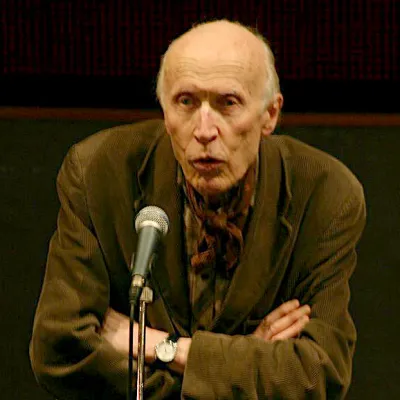
Eric Rohmer
Human Design Chart
Biography
Human Design Analysis: Eric Rohmer as Generator 3/5
Generator 3/5 — Design at a Glance
Eric Rohmer was known for his immense endurance and potential for sustained creative output. His Generator design provided the foundation for these energy reserves, comparable to a workhorse that produces power when it burns for its task. Crucial here, however, was not initiating projects independently but reacting to external signals. His energy became effective when he responded to impulses from his environment and signaled an inner "yes". This strategy of responding rather than pushing forward was the key to his effectiveness.
His design carried two specific risks: first, the danger of burnout if he engaged in tasks for which he felt no internal enthusiasm, thereby wasting his energy. Second, frustration could arise if he was hindered from continuing work on his heart projects despite having full power available. If Eric Rohmer lived in harmony with this mechanism – by listening to signals and then acting – it led to a deep sense of fulfillment. Initiating independently without such confirmation often resulted in persistent frustration or a lack of energy. His strength lay in the ability to react instinctively to life.
Sacral Authority
Eric Rohmer was a Generator whose decision-making was shaped by sacral authority. This inner leadership allowed him direct access to his life force energy without the need for external validation. With his emotional center open, he could trust this physical intuition without being distracted by short-term mood swings.
His strategy involved waiting for environmental stimuli and then awaiting his body's response. This reaction often manifested as a spontaneous surge of power or an inner confirmation, sometimes audible through soft sounds like a nodding "Hmm." Once this impulse came, he felt vitalized and acted with great enthusiasm. He did not live by a rigid plan but let himself be driven by this inner motor that provided him with inexhaustible energy for his tasks.
Crucial to this was the clear priority: sacral authority always took precedence over other defined centers or rational considerations. Eric Rohmer showed himself as someone who moved through life listening to this gut feeling. This gave his actions a natural ease and satisfaction, as he did exactly what internally resonated with him, free from constraints or artificial purposefulness. His design suggested that his greatest strength lay in fully immersing himself in the task at hand once the inner spark ignited.
The 3/5 Profile — Martyr / Heretic
Eric Rohmer's Human Design profile set a tendency towards experimental action that was validated through personal experience. As a 3/5 Profile – the Experimenter and Hero – he did not learn from doctrines but by experimenting himself in the present moment. Line 3 challenged him to initially make no assumptions, but rather to experience everything firsthand. Success was not his primary goal but a byproduct of authentic living, often accompanied by failures and shocks. This sensitivity towards the individual shaped his approach.
At the same time, he carried the burden of the fifth line, the Rebel. While Line 3 pushed him toward personal experimentation, society expected him as a 5 to question established norms. During crises, this mutated behavior acted as a guardian for necessary changes. Eric Rohmer presented others with his wealth of practical life experiences, making him attractive. Yet, this heroic role could be painful when experiments failed in public. His design described a path where questioning traditions and learning from mistakes were central, ultimately to solve other people's problems with self-acquired knowledge.
Split Definition — Defined & Open Centers
Eric Rohmer's design revealed a tendency towards constant mental activity and conceptual clarity. His defined Ajna Center ensured that his mind was always working to create concepts and form opinions without being easily influenced from the outside. This mental energy flowed directly into his defined Throat Center, allowing him to reliably express or manifest what he thought. Thus, his voice served as a direct channel for his cognitive processes.
At the same time, Eric Rohmer had a defined Sacral Center, the source of immense vital force. As a Generator, he needed external validation and questions to correctly apply his energy; initiating on his own risked frustration. His also defined Root Center provided the necessary pressure and stress management mechanism to advance in the material world and master existential challenges.
In contrast, Eric Rohmer was marked by several open centers. His open Head Center made him vulnerable to mental pressure and the temptation not to answer his own questions; he tended to get entangled in seeking inspiration or answers for others' problems. The open G Center meant a lack of fixed identity; he often reflected the environment and sought the right place rather than prescribing a rigid direction. His open Heart Center freed him from the compulsion to prove willpower or worth, while his open Solar Plexus Center led to absorbing emotions from his surroundings instead of regulating them autonomously. Finally, his open Spleen Center made him sensitive to well-being and fears, where spontaneous decisions were risky as they often relied on conditioned impulses.
Channels for focus, details and structured insight.
Eric Rohmer was someone who directed his attention with almost meditative discipline towards details. His design featured the Channel of Concentration 52-9, a format energy between Root and Sacral Centers. This connection created a calm inner pressure for silence to keep distractions at bay and maintain focus on facts. It wasn't stress in the sense of tension but rather an attitude like in yoga pose: body and senses were stilled so that the energy could act precisely. This ability allowed him to carefully examine, correct, and perfect patterns before acting.
Parallel to this, the Channel of Structuring 23-43 between Ajna and Throat Centers was active. Here his mind received spontaneous insights (Gate 43) and processed them through assimilation (Gate 23), clearly expressing innovative perspectives. This configuration promoted mutative thinking that increased efficiency and pointed out new ways. The challenge lay in letting go of control and allowing the mind to mature its knowledge at its own pace before communicating it.
Additionally, individual gates shaped his approach: Gate 25 brought spiritual innocence and individuation while Gate 46 fostered dedication to the process and presence in the here and now. Gate 10 steered complex behavior towards integration, Gate 15 ensured adaptation to collective rhythms through humility. In personality, Gate 17 stood for logical teaching and maintaining human rights through service. Design gate 60 reminded that acceptance of limits is a prerequisite for transcendence, often accompanied by melancholic phases overcome through creativity. Finally, Gate 33 promoted necessary withdrawal for reflection and memory consolidation rather than mere repetition.
Individual Circuitry — Circuit Signature
Eric Rohmer's design inclined towards clear structuring and focused concentration. His chart showed someone who combined logical insights with emotional resonance but worked in separate energetic realms. The Split Definition split his energy into two parallel streams: one for the form of emotional expression and another for the rational foundation.
In the Knowledge Circuit, Channel 43-23 connected Ajna Center to Throat Center. This enabled him to translate inner visions and thoughts into structured language. The energy was pulsing and acoustically driven by the need to express individuality through words. It wasn't just about information but the expression of a unique identity reinforced by this connection.
Parallelly, in the Understanding Circuit, Channel 9-52 between Sacral and Root Centers operated. Here there was a constant, emotionless ratio focused on concentration and future orientation. This group provided strategic clarity and sharing logical insights free from emotional coloring. Since these two circuits were not connected, they existed as separate forces: one an expressive, emotional voice; the other a calm, focused intelligence. Eric Rohmer utilized these distinct resources to develop both profound and clearly structured perspectives without their energetic realms mixing or interfering.
Right Angle Cross of the Vessel of Love 1
Eric Rohmers Human-Design profile featured the right cross of the Love Vessel. This configuration established a specific inner dynamics that manifested less through external heroism or dramatic conflicts, but rather through a deep, often silent dedication to what was felt as sacred or profoundly meaningful. It was a pattern of internal loyalty and protection for what lay closest to the heart.
In Human-Design, this cross describes an energy focused on not only receiving love but actively preserving and passing it forward as a vessel. The emphasis is on integrity between inner value system and outer action. It involves maintaining the core of one's convictions and commitments under pressure or difficult times. This structure promoted a stance of patience and waiting for the right moment rather than acting impulsively. The energy worked subtly yet persistently, similar to an invisible support stabilizing relationships or projects over extended periods. For Eric Rohmer, this likely meant a life path where the quality of connection and emotional authenticity took precedence over quantitative success or societal recognition. It was a way of inner affirmation through holding values that were indispensable to him.
Saturn Return · Uranus Opposition · Chiron Return · 2nd Saturn Return — Life Cycles
Eric Rohmers design indicated a tendency towards structural consolidation followed by later maturation. His first Saturn return around age 28 marked the transition from preparation to concrete achievement. This was evident in 1948 when, at 28 years old, he published his first article in *Revue du Cinéma* – a moment where years of groundwork condensed into a viable professional outcome.
The subsequent phase was characterized by the Uranus opposition cycle, a period of profound transformation and individual differentiation. Here, the urge for independent form-finding came to a head. In 1959, at age 39, Rohmer directed his first feature film *Im Zeichen des Löwen*. This aligned with the mechanical logic of this transit: established structures were broken through to allow a new, personal expression.
The Chiron return starting from age 50 marked the peak of his incarnation task. In this fulfillment cycle, the inner sense of design increasingly unfolded in outer life. For Eric Rohmer, this process culminated in 1972 at age 52 with the defense of his dissertation *L’Organisation de l’espace dans le Faust de Murnau*. The doctoral examination was not only an academic conclusion but also an expression of a fully integrated intellectual and creative potential. Thus, the mechanics of his chart development followed a clear arc from early publication through cinematic rebirth to later comprehensive validation of his life's work.
Generator · Sacral Authority — Synthesis
He was a Generator whose life was marked by a strong sacral drive – a continuous energy source that showed in his ability to work on projects as long as they engaged him (Sacral Center, Channel 52-9). This engagement often came with deep concentration and the need to grasp details to improve or shape something. His profile as an experimenter and hero (3/5) suggests he learned through personal experiences and shared this knowledge, making him attractive to others. Career events – publishing an article, directing his first film, promotion – underscore a process of continuous work and implementation of ideas into reality, driven by this inner energy.
A central paradox lay in the combination of his defined Ajna Center (consistent thinking) and sacral drive. While his mind developed concepts and recognized patterns, his authority required an immediate physical response to external stimuli. This led to a tension between the need for intellectual clarity and the necessity to be guided by the vital energy of the moment – a dance between mental conception and practical implementation.
2 Defined Channels
Incarnation Cross - Right Angle Cross of the Vessel of Love 1
Solar Return
The Solar Return shows the moment when the sun returns to its exact birth position - your personal solar year.
Life Cycles
Discover the life cycles with a detailed triple view (birth chart, cycle chart, composite).
Human Design Profile
- Type
- Generator
- Strategy
- To respond - wait for something to respond to
- Authority
- Sacral Authority
- Profile
- 3/5 - Martyr / Heretic
- Definition
- Split Definition
- Incarnation Cross
- Right Angle Cross of the Vessel of Love 1
- Date of Birth
- 21.03.1920 03:00
- Place of Birth
- Tulle, France
Frequently Asked Questions
What was Eric Rohmer's Human Design type?
Which Profile did Eric Rohmer have in Human Design?
What was Eric Rohmer's Authority?
What incarnation cross did Eric Rohmer have?
When was Eric Rohmer born?
Discover your own Human Design
Are you also a Generator? Find out in a personal reading how to use your sacral energy correctly and discover deep satisfaction.
More Personalities
Back to overviewAaliyah

Alexia

Angèle

Anne-Marie

Arcángel

Arno