
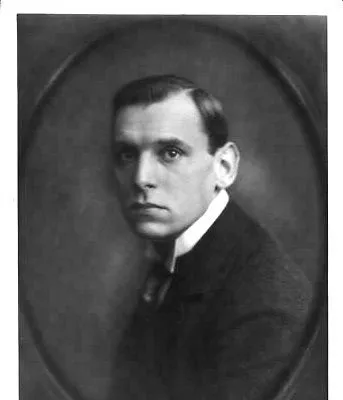
Ernst Reicher
Human Design Chart
Biography
At Continental-Kunstfilm's studios Ernst Reicher acted, wrote scripts and directed films from 1912 to 1918. In December 1912 he starred in Vorglühen des Balkanbrandes, directed by Joe May. He wrote, directed and starred in two films: Das Werk in February 1913, and Die Statue in 1914, which was banned by the Berlin police censor until 1919.
From March to May 1914 he wrote and starred in the first three of the Stuart Webbs detective films, a popular detective series directed by Joe May for Continental in which he played a gentleman detective modelled on Sherlock Holmes: Die geheimnisvolle Villa; Der Mann im Keller; and Der Spuk im Haus des Professors. When World War I broke out, Joe May split with Reicher to make his own Joe Deebs detective motion pictures.
It was not until 1918 that Reicher turned to other topics. On 1 April 1919, he moved the headquarters of his film company to Munich. His most elaborate production was The Book of Esther (1919) in which he also starred. At the beginning of the twenties he suffered a serious car accident, in which he suffered a vertebral and fractured skull. Only from 1926 he appeared again on the screen, but he could no longer build on previous successes.
After the seizure of power in 1933 by the National Socialists (Nazis), Reicher emigrated to Prague, where he fell into oblivion. His last, tiny role in the 1936 French-language remake of The Golem was cut out of the final version. He was found dead in a Prague hotel room on 1 May 1936, aged 50.
Ernst Reicher — Generator with Profile 4/1
Generator 4/1 — Design at a Glance
Ernst Reicher revealed himself as someone with remarkable endurance, comparable to a workhorse. His Generator design laid the foundation for this strength: He had plenty of sacral energy that he could continuously generate if it was available for his tasks. However, this energy wasn't released through self-initiative but only when he responded to impulses from his environment. The motto 'not initiating but reacting' defined his optimal path; his sacral center signaled an inner yes when it was time to start and become active.
If Ernst Reicher lived in harmony with this strategy – that is, by responding to signals from life – his design rewarded him with a sense of deep fulfillment. Conversely, ignoring this principle often led to two specific pitfalls: Either he wasted his energy on things he didn't care about, leading to exhaustion, or he was prevented from continuing work on his heart project even though he still had plenty of power left. In such cases of non-resonance, he encountered more frustration and energy deficiency than satisfaction. His path thus consisted in acting from the gut and trusting the inner signal to effectively use his enormous endurance.
Emotional Authority
Ernst Reicher showed a decision-making stance characterized by emotional wave movements. His design carried Emotional Authority, meaning that his defined Emotional Center always formed the internal decision-making authority – independent of other defined Centers in his chart. This configuration marked him as someone who always perceived the world through the filter of his current mood. His feelings were subject to constant ups and downs; what appeared totally enthusiastic at one moment could seem negative in the next. Since these immediate impulses were only snapshots and not necessarily reflecting his deeper truth, spontaneous decisions based on emotion often had negative consequences.
For Ernst Reicher, it was therefore essential to take time for decisions to mature. The process required patience and repeatedly sleeping over important questions. Only when intense feelings subsided and emotional distance was gained did clarity and calmness set in. This journey through the emotional cycle was particularly significant for long-term decisions that profoundly influenced his life course. Through conscious hesitation and waiting, he arrived at a more comprehensive understanding that went beyond the first, often misleading impression.
The 4/1 Profile — Opportunist / Investigator
Ernst Reicher revealed himself as someone whose essence was deeply rooted and hardly changeable. As a 4/1 Networker/Researcher, he had a big heart that needed protection from wounds. Well-meaning advice to change others was often rejected; those who did not accept him as he was were cautiously excluded from his inner circle. This stance was sometimes perceived externally as stubborn or incapable of criticism, which shook his self-confidence at times.
His emotional dynamics also shaped a dominant force. The fourth line in Gate 6 acted like an emotional steamroller that pushed outwards and dominated the environment. This energy was amplified and reflected back by others, fostering a strong urge to 'conquer' and clean up emotional fields. Simultaneously, he carried the burden of duty through Gate 15 in the first line. Here it was about existentialism and building harmonious relationships without interfering with extreme rhythms.
Ernst Reicher moved within the tension field between this intense, dominant emotion and the need for stable harmony. When he accepted his own nature and rested stably in his character, he became a rock in the storm – a reliable support for others. His path was not easy, yet the firmness of his 4/1 Profile enabled him to act as a teacher or mentor once he knew himself securely and was no longer tempted off his original course.
Split Definition — Defined & Open Centers
Ernst Reicher revealed himself through a reliable inner direction supported by his defined G Center, which provided him with a stable self-image and a clear sense of his life mission. This identity was not dependent on external validation; he could love others without becoming dependent. His energy source lay in the defined Sacral Center, a motor for constant vitality. Here, his potential to satisfy through reactive action manifested: He had an enormous reserve of power that flowed correctly only when he waited for questions or invitations and responded with inner consent. Impulsive initiation would have interrupted this connection.
His voice, guided by the defined Throat Center, served as a pivot point for expressing these energies. He did not communicate out of mere mental abundance but transmuted information from his motor centers into clear messages and actions. Yet, this ability to express was embedded in a complex emotional landscape: The defined Solar Plexus Center functioned as his inner authority. Ernst Reicher had to wait for the wave of his emotions before making decisions. Immediate judgments were misleading for him; only the temporal distance to the emotional wave revealed the clarity and depth that his design required.
At the same time, he was vulnerable to conditioning patterns in his open centers. His open Head Center made him receptive to external inspirations, which he could not misinterpret as his own mental truth to avoid confusion. His open Ajna Center allowed him to flexibly take on various concepts without binding himself to a single theory. Particularly critical was the open Heart Center: It drove him to want to prove his worth through promises or competitive thinking – a mechanism that could plunge him into spirals of failure and self-doubt, as he lacked the constant willpower needed for this approach. Additionally, his open Root Center absorbed external stress, leading to feelings of pressure not generated by himself. His open Spleen Center also made him sensitive to fears about health and well-being, with spontaneous decisions here often arising from false security. His challenge lay in using these open fields as mirrors of the environment rather than getting lost in their conditioning.
Channels for intimacy and conscious action.
Ernst Reichers design established a fundamental disposition of deep intimacy paired with the drive to articulate himself through authentic presence as an awakened voice. This configuration showed him as someone who not only sought relationships but used them as spaces for emotional and creative fertility, always guided by an inner truth that he manifested verbally.
Central to this was Channel Pairing 59-6. It connected sacral sexuality with the emotional wave of the Solar Plexus. For Ernst Reicher, this meant that intimacy was not a superficial act but a process requiring patience. His emotional wave determined the timing; he had to wait until clarity about pleasure or pain emerged. Only then could his intensity manifest as true connection rather than misunderstood overtures. This channel promoted an electromagnetic closeness that grew through physical presence and trust.
Parallel to this, Channel Awakening 10-20 worked. It connected the G Center with the Throat Center and urged him to express his self-love and confidence in words. For him, “I am” was not a hollow phrase but a living experience of survival in the present moment. Through Gate 36, he expressed what it meant simply to be himself. This authenticity often unconsciously inspired others to accept their own truth. His clarity served as a shield against criticism and resistance; by steadfastly remaining true to his identity, he created space for genuine invitations rather than conflicts.
Additionally, Gates like 36 (Crisis as Development) and 15 (Collective Rhythm) shaped his attitude. Gate 36 taught him to accept decline as a necessary part of growth while Gate 15 integrated him into the natural flow of society. His ability for abstraction through Gate 56 enabled him to translate complex mental processes into understandable narratives. Thus, his personal experience became a collective language that carried both intimacy and awakened consciousness.
Individual Circuitry — Circuit Signature
Ernst Reichers design established a tendency towards a divided, non-continuous energetic structure. His defined centers formed two isolated groups: one connecting the Solar Plexus with the Sacral Center and another linking Identity with the Throat Center. This separation meant that the emotional waves of the Solar Plexus did not directly flow into the verbal expression ability in the Throat Center; instead, these forces existed parallel without influencing each other.
The Archer Circuit connected his Sacral to the Solar Plexus Center through Channel Pairing (Gates 59 and 6). This shaped a primal energy of protection, defense, and preservation of genetics. The life force of the Sacral flowed directly into the emotional waves of the Solar Plexus here, emphasizing themes like nourishment and care – the archetypal power of “mother and father,” yet without direct connection to identity or speaking.
Parallel to this, the Integration Circuit worked through Channel Awakening (Gates 20 and 10), which connected the Throat Center with the Identity Center. Here it was about self-empowerment in the present moment: Power from reacting to life was guided by proper behavior and intuitive knowledge to become effective in the current moment. This connection allowed for high individuality that manifested acoustically and verbally, but remained energetically separate from the instinctive survival mechanisms of the other part of his design.
Juxtaposition Cross of Conflict
Ernst Reichers Design indicated a tendency towards intense, often polarizing conflicts. This configuration, known as the Juxtaposition Cross of Conflict, did not describe a mere inclination towards discourse but rather a deeper archetypal task: to bring hidden truths to light through confrontational dynamics. Here, conflict served not as a destructive end but as a necessary catalyst for clarity and transformation.
In this pattern, Ernst Reicher often acted as an instigator or mirror reflecting conflicts that transcended the personal realm. The mechanics of this cross were evident in seemingly irreconcilable positions coming together to enable a higher synthesis or new understanding. It was less about winning arguments than breaking through illusions and rigid structures. This energy shaped his interactions, creating spaces where old patterns broke down so that something new could emerge. The challenge lay in not taking the intense dynamics personally but using them as a tool for collective or individual development. Through this process of friction, light was often shed on topics that would otherwise remain hidden. Ernst Reichers path was thus marked by this specific kind of conflict, always seeking and revealing deeper levels of truth.
Saturn Return · Uranus Opposition · Chiron Return — Life Cycles
Ernst Reichers Design indicated a tendency towards strategic turning points that condensed into concrete life phases. In 1913, at the age of 28, he took on directorial work with "Das Werk". For his system, this first Saturn Return marked a typical moment: years of groundwork and internal structuring often culminated in a tangible, visible result here. The energy of this cycle condensed into a clear professional positioning that built upon earlier work.
Later, another dynamic shift was evident during the Chiron Return. This period, usually between the ages of 49 and 51, functions as an actualization cycle in Human Design where one's incarnation cross – if lived according to their strategy – increasingly becomes meaningful. For Ernst Reicher, this phase coincided with his emigration to Czechoslovakia in 1933 at age 48. This step can be interpreted as the external manifestation of internal development processes. The Chiron Return is not a mythical place of wound healing but rather a period where life's purpose becomes concrete and one's personal path further defined through decisive actions. The emigration thus marked not only a geographical change but a deepening of his individual orientation within this significant astrological-design window.
Generator · Emotional Authority — Synthesis
Ernst Reicher lived deeply in the dynamics of sacral energy and emotional depth. As a Generator with defined emotionality, he was a person who possessed immense endurance (Sacral Center), but could not make decisions spontaneously. Rather, he needed time for his feelings to mature – an emotional wave that shaped his actions and gave him clarity. This inner processor orientation was reinforced by the 4/1 Profile, which signals a deeply rooted essence that leaves little room for external influence. He protected his internal values and withdrew when faced with rejection while simultaneously seeking strong connections to others through the Pairing Channel (6-59) – an essence of creative energy that could bear fruit in relationships.
A central paradox lay in the tension between Reicher's deep need for emotional maturity and the drive to use his sacral energy for fulfilling tasks. He was a Creator whose strength was tied to emotional clarity; a delay that made him vulnerable to wasting energy on unsatisfying activities or waiting for projects denied to him. This was evident in his career (documented event 1913) and crisis phases (documented event 1933), where both creative power and emotional navigation played roles.
2 Defined Channels
Incarnation Cross - Juxtaposition Cross of Conflict
Solar Return
The Solar Return shows the moment when the sun returns to its exact birth position - your personal solar year.
Life Cycles
Discover the life cycles with a detailed triple view (birth chart, cycle chart, composite).
Human Design Profile
- Type
- Generator
- Strategy
- To respond - wait for something to respond to
- Authority
- Emotional Authority
- Profile
- 4/1 - Opportunist / Investigator
- Definition
- Split Definition
- Incarnation Cross
- Juxtaposition Cross of Conflict
- Date of Birth
- 19.09.1885 04:30
- Place of Birth
- Berlin, GER
Frequently Asked Questions
What was Ernst Reicher's Human Design type?
Which Profile did Ernst Reicher have in Human Design?
What Authority guided Ernst Reicher's decisions?
Which incarnation cross characterized Ernst Reicher?
When was Ernst Reicher born?
Discover your own Human Design
Are you also a Generator? Find out in a personal reading how to use your sacral energy correctly and discover deep satisfaction.
More Personalities
Back to overviewSissy Spacek

Aaliyah

Alexia

Anémone

Angèle

Ann-Margret
