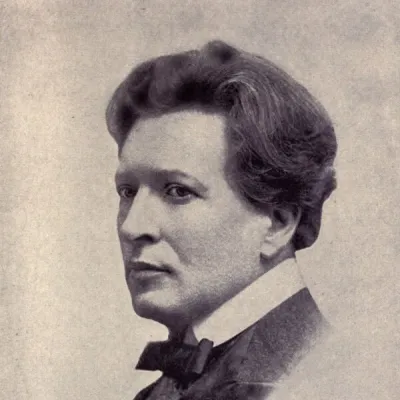
Ferruccio Busoni
Human Design Chart
Biography
Busoni's father, Ferdinando, was a clarinet player of reckless and unreliable character, as well as a severe taskmaster. Along with Busoni's mother, Anna Weiss, Ferdinando taught the young child, who traveled with his parents in southern Austria. His early childhood was spent with his grandfather at Trieste, making his first appearance as a pianist at age seven, and composing at age nine. He was a member of the Academy of Bologna at 15.
In his youth, Busoni had been a voluminous composer, publishing large quantities of musical works. In 1889, he became a pianoforte teacher at the Conservatory in Helsingfors, and as a pianist, had few equals. He went to America in 1891, to teach at the New England Conservatory, then returned to settle in Berlin, in 1894. He accepted the directorship of the Liceo Rossini at Bologna, 1913, which was a disappointment for his career. Busoni sailed for America again, in 1915, but returned to Europe after nine months. He produced the two operas, Arrlechino and Turandot, 11 May 1917, at Zurich, and went to London and Paris after the war was over. By this time he was broken in health, and returned to Berlin in 1920. His pupil, Philipp Jarnach, completed the last opera, Doctor Faust. It was first produced at Dresden on 21 May 1925.
Busoni was a thinker and philosopher, whose pupils considered him kind and thoughtful. He had a warmly compassionate temperament, and uncontainable humor.
He met Gerda Sjostrand, the daughter of a Swedish sculptor, in 1889 and they married the following year. They lived together for 34 years of marital happiness. Busoni died of kidney disease on 27 June 1924, aged 58, in Berlin, Germany.
Human Design Analysis: Ferruccio Busoni as Generator 3/5
Generator 3/5 — Design at a Glance
Ferruccio Busoni possessed immense, enduring strength that made him a powerful creative force, comparable to a workhorse. As a Generator, he had a lot of sacral energy, which was released not through independent initiatives but through reactive actions. His strategy was to wait for signals from the environment and then act only when his inner self gave a clear „yes“. This gut reaction mechanism was crucial for his well-being.
If Ferruccio Busoni tried to work against this nature – by doing things that did not resonate internally or by being prevented from pursuing his heart project – frustration or an energetic breakdown was a risk. The greatest danger lay in wasting energy on tasks that did not serve him, or forcing himself to stop despite being fully powered up. However, when he lived in harmony with this principle, by reacting to impulses and then responding vigorously, he was rewarded with a deep sense of fulfillment. This satisfaction did not come from constant initiation but from the consistent, powerful response to life that spoke to him. Thus, no one could stop him as long as he knew and used his energy rather than burning it through false actions.
Emotional Authority
Ferruccio Busoni showed himself to be someone who never made decisions immediately but always subjected them to an inner maturation period. His inner authority was Emotional Authority, carried by the defined Emotional Center. This mechanism meant that he was constantly subject to a wave of emotional movements that colored his perception of the world in each moment. What appeared inspiring in one phase could seem negative in the next moment. However, these fluctuations were only transient impressions, not the ultimate truth. Decisions made quickly based on a current mood often proved problematic for him, as they were based on an incomplete emotional snapshot. Instead, his configuration required patience and conscious hesitation. He took his time to rethink a decision multiple times and „sleep on it“. Only when the initial emotional heat subsided and a distance was established did the necessary clarity and calmness arise. This process of emotional condensation was essential for him, especially for long-term life decisions that significantly shaped his path. Through waiting, he gained deeper insight that lay beyond fleeting moods.
The 3/5 Profile — Martyr / Heretic
Ferruccio Busoni showed himself to be someone who gained his authority not through dogma but through lived practice. His design as a 3/5 profile shaped him into an experimenter and hero: he believed in nothing until he had tried it himself. This attitude of „trial and error“ (third line) forced him to confront superior forces to avoid dependencies and walk his own path. Failure was not an end but a necessary learning process.
From these personal experiences, he created a rich treasure of knowledge that he presented to others. The fifth line, which is about alienation and isolation, drove him to withdraw during crises to find solutions as a lone fighter. This self-isolation was essential for him to develop mutations – new, innovative approaches. Although this isolation could be painful, as he had to cut himself off from others, it was the engine for his role as a rescuer. He solved other people's problems by applying what he had learned in his own, often isolated, confrontation with the world. His attractiveness to his environment arose precisely from this: he embodied the cool storyteller who learned from his mistakes and now passed on these insights as a hero.
Split Definition — Defined & Open Centers
Ferruccio Busoni revealed himself as a person with a deeply rooted, unshakeable identity and a clear sense of direction. His defined G Center gave him an inner security that allowed him to lead others without needing their approval. This firm self-love contrasted with his emotional nature: His defined Solar Plexus Center made him an emotional authority. He relied on waiting for the waves of his emotions to subside before making decisions, as only in emotional stillness did clarity arise. Impulsive actions on emotional peaks or troughs led to confusion; patience was the key to his emotional intelligence.
As a Generator with a defined Sacral Center, he possessed an immense source of vitality that was only activated through reaction to invitation. Initiated actions without prior inquiry cut him off from this energy and led to frustration. His strategy was to wait until life asked him, then to respond with full force. Supported by his defined Spleen Center, he had a reliable, spontaneous instinct for health and well-being. This existential sense worked in the present and warned him intuitively of dangers without rational justification. The defined Root Center provided the necessary pressure to move forward in the world and thrive materially.
However, Ferruccio Busoni was also vulnerable to external influences in his open centers. His open Head Center made him easily distracted by foreign inspiration or mental confusion if he did not trust his inner authority. He tended to engage with questions that were not his own and sought answers he could not find. His open Ajna Center made him receptive to concepts and opinions of others, which he could interpret as his own truth, leading to intellectual chaos if he did not distinguish clearly. The open Throat Center generated a pressure to gain attention by speaking, although his true communication was spontaneous and determined by others' invitations. Finally, his open Heart Center suffered from the need to prove his worth through promises and competition, which plunged him into spirals of self-doubt if he failed.
Channels for transformation, intuitive elegance and emotional release.
Ferruccio Busoni revealed himself as an individual deeply entangled in the rhythms of chaos and order, driven by an unpredictable, mutative energy. His design was marked by the Channel of Mutation 60-3, connecting the Root with the Sacral Center. This connection generated a pulsating, adrenaline-charged frequency that fluctuated between limitation (Gate 60) and the urge for order (Gate 3). Busoni had to learn to accept the limitation and endure the melancholy that arose in the pauses between impulses, rather than rationalizing it away. His creation emerged not through constant will but through waiting for the right inner pulse, which then suddenly and unexpectedly brought innovation into the world.
Parallel to this, the Channel of Perfect Form 57-10, linking the Spleen with the G Center, united intuitive insight (Gate 57) with self-behavior (Gate 10). This gave him acute sensitivity to the quality of his environment – especially tones – and enabled spontaneous, intuitive action that secured his survival and artistic integrity. He lived existentially in the present, free from unfounded future anxieties, and perfected his form through a deep, self-referential love for his own essence.
Additionally, the Channel of Emotional Release 39-55 shaped his emotional landscape. Through the connection of provocation (Gate 39) and mind (Gate 55), he moved in a wave motion between ecstatic joy and melancholic uncertainty. This moodiness was not a weakness but a mechanical necessity to appear authentic. Busoni used this emotional depth to touch others and provoke their minds, always dependent on his own mood wave. His Gates 21, 48, 38, 32, 7, and 44 further emphasized his pursuit of control, deep pattern recognition, and the preservation of individual integrity against collective pressure.
Individual Circuitry — Circuit Signature
Ferruccio Busoni revealed himself through two separate, parallel operating energetic streams that were not directly connected. The first stream united the Sacral, Root, and Solar Plexus Centers. This connection promoted the urge to go down new, unique paths and initiate changes. Here, the mutations of Channel 3-60 worked together with the ability to release emotional waves (Channel 55-39). This produced a pulsating, acoustic energy that allowed him to realize his own identity through emotional expression strength in the present.
Parallel to this, a second, isolated stream existed between the Identity and Spleen Centers, connected by Channel 10-57. This area served to secure survival through intuitive wisdom and perfect form. It was about drawing strength from reacting to life and channeling it through proper behavior and intuitive knowledge in the present moment. Since Ferruccio Busoni had a split definition, these two systems existed side by side: on one hand, transformative, emotional creative power, on the other hand, silent, intuitive self-affirmation. Both areas functioned independently of each other, without forming a common energetic flow.
Right Angle Cross of Tension 1
Ferruccio Busoni revealed himself through a fundamental disposition that relied on the resolution of internal tensions. His design inclined him towards a tendency not to escalate conflicts through direct resistance but rather through an energetic neutralization. This mechanism, known as the right cross of tension, acted like an internal buffer that reduced pressure before it could manifest externally. Instead of getting entangled in confrontations, he tended to transform the underlying energy, causing the tension to dissipate on its own. This shaped his behavior in social and creative situations: He did not seek conflict but rather its defusing. The energy that usually leads to friction was transformed in him into a calmer, integrative force. This did not mean passivity but a specific way of dealing with situations where his presence served to remove the charge of a situation. Through this configuration, he avoided unnecessary friction and could focus on the essentials without being distracted by external resistance. The ability to neutralize tension rather than fight it was a central aspect of his inner dynamics and influenced how he approached challenges.
Saturn Return · Uranus Opposition · Chiron Return · 2nd Saturn Return — Life Cycles
Ferruccio Busoni settled in Berlin in 1894 at the age of 28. For his design, this first Saturn Return marked a turning point: The years of groundwork condensed into a solid foundation for his life, providing him with the necessary stability for the following years. This phase of consolidation shaped his further development.
Ten years later, in 1903, the Piano Concerto in Five Movements was created. At 37, Busoni was in the Uranus Opposition, a phase often characterized by deep inner upheavals and creative explosions. Here, his ability to break through established structures and create new, innovative forms that expanded his previous style was evident.
In 1915, at 49, Italy entered World War I on the side of the Entente, making Busoni an enemy alien. This Chiron Return does not represent a healing process but a fulfillment cycle in which his own incarnation cross unfolds. The external crisis forced him to prove and deepen his inner purpose and life mission in an extreme situation.
Finally, Busoni died in 1924 at the age of 58. This second Saturn Return concluded his life cycle. The structure of his design showed how the initial stabilization in Berlin developed through the creative revolution of the Uranus phase to the conscious fulfillment of the Chiron Return before the cycle naturally concluded with his death.
Generator · Emotional Authority — Synthesis
He was a Generator whose life was marked by a deep drive to generate energy and practical experience (Generator, Channel 3-60). This sacral power, combined with a defined G Center, gave him a strong inner direction and the ability to inspire others. His profile as an experimenter and hero (3/5 Profile) points to a life path characterized by experimentation, learning from mistakes, and sharing this knowledge with others – a constant search for new ways and offering solutions. The recurring events that accompanied the cycles confirmed this process of experimentation and transformation, both in professional advancement and during crisis times.
A central paradox in his design lay in the combination of emotional authority and the impulsive, mutative Channel 3-60 (Knowledge Circuit). While he needed time to let decisions mature and understand his feelings, the channel simultaneously pushed him towards unconventional paths and rapid changes. This led to an internal tension between the need for emotional clarity and the desire for innovation and breaking out of conventions, which was evident throughout his life.
3 Defined Channels
Incarnation Cross - Right Angle Cross of Tension 1
Solar Return
The Solar Return shows the moment when the sun returns to its exact birth position - your personal solar year.
Life Cycles
Discover the life cycles with a detailed triple view (birth chart, cycle chart, composite).
Human Design Profile
- Type
- Generator
- Strategy
- To respond - wait for something to respond to
- Authority
- Emotional Authority
- Profile
- 3/5 - Martyr / Heretic
- Definition
- Split Definition
- Incarnation Cross
- Right Angle Cross of Tension 1
- Date of Birth
- 01.04.1866 10:30
- Place of Birth
- Empoli, Italy
Frequently Asked Questions
What was Ferruccio Busoni's Human Design type?
What Profile did Ferruccio Busoni have in Human Design?
What Authority did Ferruccio Busoni have?
What incarnation cross did Ferruccio Busoni have?
When was Ferruccio Busoni born?
Discover your own Human Design
Are you also a Generator? Find out in a personal reading how to use your sacral energy correctly and discover deep satisfaction.
More Personalities
Back to overviewAaliyah

Alexia

Alizée

Angèle

Anne-Marie

Arcángel