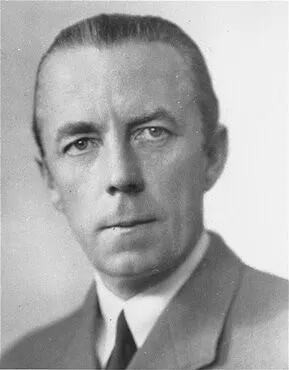
Folke Bernadotte
Human Design Chart
Biography
In his book, The End: My Humanitarian Negotiations in Germany in 1945 and Their Political Consequences, published on 15 June 1945 in Swedish, Bernadotte recounts his negotiations with Himmler and others, and his experience at the Ravensbrück concentration camp.
After the war, Bernadotte was unanimously chosen to be the United Nations Security Council mediator in the Arab–Israeli conflict of 1947–1948. He was assassinated in Jerusalem on 17 September 1948 at age 53 by the paramilitary Zionist group Lehi while pursuing his official duties.
In 1928 in Pleasantville, New York, Folke Bernadotte married Estelle Romaine Manville (1904–1984). They had four sons, two of whom died in childhood. In September 2008, it became official that before his marriage, in 1921, Bernadotte had a daughter with actress Lillie Ericson-Udde (1892–1981).
What does Manifestor 4/6 mean for Folke Bernadotte?
Manifestor 4/6 — Design at a Glance
Folke Bernadotte was a Manifestor. His design marked him as a pioneer and visionary with an imperial dynamism, comparable to an emperor in ancient Rome. He had the vision of a great whole but did not fight the necessary battles himself; instead, he sent others out to realize his plans. This far-sighted nature inevitably led to misunderstandings and polarization. His grand dreams were loved and emulated by some for their magnitude, while others hated or rejected them because of it.
The central challenge of his design lay in this split perception. To find the right following, it was essential for him to inform others about his intentions at the right time and accurately. This strategy of informing served to prevent misunderstandings and attract the correct supporters. If Folke Bernadotte lived in accordance with this strategy and his inner authority, his system rewarded him with a sense of inner peace. However, if he deviated from it or acted without prior information, it resulted in deep, lasting anger. His design thus clearly indicated: The path to success did not lie through silent action but rather through the clear communication of his visions to generate the necessary resonance and support.
Emotional Authority
Folke Bernadotte showed a decision-making stance that required time and distance; spontaneous reactions were unreliable in his design. His inner authority lay in the defined Emotional Center, meaning his perception was always marked by an emotional wave, a constant up-and-down of feelings. In one moment he could be enthusiastic about something, in the next see the same situation negatively. However, his immediate feeling was only a snapshot and not necessarily the truth. Quick decisions made from this emotional heat often had negative consequences.
The mechanics of his authority demanded patience. The more time he took, the deeper he could perceive. This required repeatedly sleeping on decisions and waiting for the emotional wave to subside. Only when the strong feelings subsided did he gain the necessary distance. Then clarity and calmness set in. This process was crucial for long-term, life-defining steps. Folke Bernadotte had to let himself be persuaded to reach true insight. Emotional authority took precedence over all other defined centers in his chart. It dictated the rhythm of his inner truth: Not the first impulse served as a guide but rather the calm after the storm of emotions.
The 4/6 Profile — Opportunist / Role Model
Folke Bernadotte's design was characterized by a pronounced tension between the deep need for belonging and the later emerging distance from community. In his first three decades, before Saturn returned, he showed an experimental spirit, especially in relationships and friendships. This phase was marked by an active search process for the right alliance partners, with Line 4 in the Heart Center waiting for trust and individual processes. Aggressive resistance often hindered necessary investigations and limited his credibility; instead, his design emphasized analysis and constructive opposition, not conflict.
With the activation of Line 6 in the Head Center, an inner conflict came to light: The desire for close connection now stood against the need to withdraw to reflect on the meaning of life and recognize wise patterns. This development allowed him to share his deep source of inspiration and gain intuitive clarity. In later years, he was expected to function as a role model and stand out through cooperation with others. His big heart remained cautious throughout, to avoid opening up to the wrong people and getting hurt. Sharing patterns helped him confirm the value of his own depth, while collective suggestions promoted further development.
Single Definition — Defined & Open Centers
Folke Bernadotte's design created a complex tension: a robust, defined structure for expression and reaction stood in contrast to an absent inner identity and willpower. He had a defined Throat Center, which gave him a steady, reliable expression. However, this expression was filtered through his emotional authority in the Solar Plexus; he had to wait out the waves of feelings until clarity emerged before acting or speaking. Spontaneous intuitive warnings from the defined Spleen Center and constant survival pressure from the Root Center supported decision-making in the here and now.
At the same time, his chart revealed fundamental gaps. The open G Center meant that he did not have a fixed identity but was defined through environment and relationships – a 'borrowed' identity. He tended to question who he truly was or which direction was correct rather than knowing this from within. The open Heart Center warned against making promises or proving willpower, as this led to exhaustion; he should not try to prove his worth. Additionally, the open Sacral Center lacked a constant energy flow. He had to learn to wait for 'yes' answers from outside and not initiate himself to avoid overloading. Mental inspiration was also only situational available, as Head and Ajna Centers were open; he must not get entangled in endless questions or concepts that were not his own. His challenge lay in integrating emotional depth with the dependence on correct environments without taking initiatives for which he had no energy.
Channels for meaningful struggle, ambition and emotional transformation.
Folke Bernadotte showed a stubborn determination to go his own way against resistance, transforming intuitive depth into perfected skills. This attitude resulted from the connection of Life Struggle Channel 38-28 and Wave Length Channel 48-16. The Life Struggle Channel 38-28 connected the Root Center with the Spleen Center through Gate 38, the Fighter, which provided adrenalized pressure to maintain individual integrity against external forces, and Gate 28, the Player, which evaluated which struggles made sense. This created energy for individuation struggle and the ability to find meaning in life battles. Parallel to this, Wave Length Channel 48-16 worked, connecting the Spleen Center with the Throat Center. Gate 48, the Depth Gate, sought vital, intuitive information while Gate 16, the Skill Gate, drew new possibilities for experimentation and perfected skills. This combination led to a development of mastery through repeated trial-and-error, where intuitive insights were translated into technical excellence. Additional dynamics came from Transformation Channel 54-32, which drove ambition through constant effort and the desire for social recognition, as well as Transience Channel 36-35, which promoted emotional search for new experiences and change. Individual Gates like Gate 39 (Provocation/Mutation), Gate 21 (Control of Material Life) and Gate 6 (Friction/Continual Development) complemented this profile through aspects of analysis, community service, and biological adaptability.
Collective Circuitry — Circuit Signature
Folke Bernadotte's design set a tendency towards pulsating, acoustic creativity driven by the life struggle. His identity was shown in his unique path serving transformation and gaining new knowledge, corresponding to the Knowledge Circuit, whose energy aims at individuality. In him specifically Channel 28-38 was active, connecting Spleen and Root Centers. This connection generated a rhythmic tension between instinct and stress reaction, acting as a motor for new insight gain.
Parallel to this, the Understanding Circuit showed the ability for focused, logical analysis. Here, Channel 16-48 connected Throat and Spleen Centers, enabling precise strategic communication – free from emotional coloring, directed towards future solutions.
In the Meaning Circuit, Channel 35-36 between Throat and Solar Plexus Centers worked cyclically bringing emotional waves from past experiences into expression. The energy rose and fell, thematizing transience.
Finally, the Ego Circuit with Channel 32-54 (Spleen-Root) added another layer of instinct-driven transformation. As Folke Bernadotte had a simple definition, these four circuits flowed as an interconnected whole: logic, emotion, instinct and stress reaction worked together on the Throat Center to transform and express knowledge.
Right Angle Cross of Tension 4
Folke Bernadotte exhibited a fundamental disposition marked by the right tension cross 4. This configuration indicated a tendency towards internal tension and a drive for clarity in complex situations. It was a dynamic pattern that urged him to confront tensions actively rather than ignore them, seeking to resolve them.
The right tension cross 4 describes a specific energy within Human Design associated with handling pressure and conflicts. Individuals with this expression tend to move into situations where opposites clash – whether between personal values and external demands or among different parties. They often sought ways to bridge these tensions or at least make sense of them.
In Folke Bernadotte's case, this meant he was likely frequently confronted with challenging dilemmas that required a clear stance. His design promoted the ability to remain under pressure while maintaining a cool head. It wasn't about solving all problems immediately but rather recognizing underlying forces and responding appropriately.
This mechanism influenced his entire life by engaging him in areas where balance and understanding were key. He lived with constant tensions, which also served as a source of his capacity for action.
Saturn Return · Uranus Opposition · Chiron Return — Life Cycles
Folke Bernadotte showed around 1943 an increasing personal engagement that became a universal mission of helping and teaching. This was not a sudden change but the natural result of a deep inner cycle: the Chiron return. During this period, typically between ages 49 to 51, his incarnation cross condensed into tangible meaning. Those who had lived according to their strategy and authority now found confirmation of their purpose in the world. It is not about healing old wounds psychologically but rather the blossoming of one's life task – transforming individual experience into competence for others.
In 1943 at age 48, Folke Bernadotte took up the role as Vice President of the Swedish Red Cross. This event marked a concrete transition point where his inner orientation turned outward. The mechanics of the Chiron return describe precisely this moment: What was previously felt as personal search or even a path of suffering became the source of authority and service. Bernadotte's assumption of this leading role in humanitarian work was the visible form of this inner maturity. His design now clearly showed his destiny, no longer just acting for himself but placing his gained wisdom and structure at the service of the community. The Chiron return thus acted as a catalyst that translated his personal potential into a universal mission of helping.
Manifestor · Emotional Authority — Synthesis
Folke Bernadotte was a pioneer who through his defined authority and engagement for the collective developed profound inner clarity. The connection between emotional depth (Solar Plexus) and a persistent desire to express (Throat Center) shaped a character unafraid of crises, using them as catalysts for transformation. His open G Center indicates adaptability and the ability to integrate different perspectives – a key characteristic for his role as mediator and bridge-builder. The combination of defined Root Center with open centers reveals that while he had an inner drive to move forward, he also reacted flexibly to others' energy and integrated this into his process.
A central paradox in Bernadotte's design lies in the tension between his manifesting impulse towards initiation and the need to wait for emotional clarity. He was destined to set things in motion (manifesting type), yet his emotional authority required patience and waiting for clarity. This dynamic led to an internal tension between a desire for quick action and the wisdom found in emotional maturity – a give-and-take that enabled him to act both visionarily and pragmatically.
4 Defined Channels
Incarnation Cross - Right Angle Cross of Tension 4
Solar Return
The Solar Return shows the moment when the sun returns to its exact birth position - your personal solar year.
Life Cycles
Discover the life cycles with a detailed triple view (birth chart, cycle chart, composite).
Human Design Profile
- Type
- Manifestor
- Strategy
- To inform others before acting
- Authority
- Emotional Authority
- Profile
- 4/6 - Opportunist / Role Model
- Definition
- Single Definition
- Incarnation Cross
- Right Angle Cross of Tension 4
- Date of Birth
- 02.01.1895 23:59
- Place of Birth
- Stockholm, Sweden
Frequently Asked Questions
What was Folke Bernadotte's Human Design type?
What Profile did Folke Bernadotte have?
What Authority did Folke Bernadotte have?
Which incarnation cross was active for Folke Bernadotte?
When was Folke Bernadotte born?
Discover your own Human Design
Are you also a Manifestor? Find out in a personal reading how to use your initiation power peacefully and dissolve resistance.
More Personalities
Back to overviewChristian-Jaque
Kesha

Laurent-Eynac
Lucebert
Masaccio
Papus