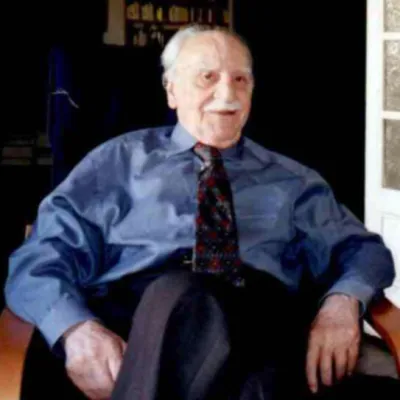
Francisco Ayala
Human Design Chart
Biography
During his first stage, before the Civil War, Tragicomedia de un hombre sin espíritu (Tragicomedy of a Spiritless Man, 1925) and Historia de un amanecer (A Sunrise Tale, 1926) follow a traditional narrative line. With El boxeador y el ángel (The Boxer and the Angel, 1929) and Cazador en el alba (Hunter at Dawn, 1930) he embraced avant-garde prose.
After a long silence, Ayala begun his second stage in exile with El hechizado (The Bewitched, 1944), a tale of a Creole man trying to meet King Charles II of Spain (known as the Bewitched), which became part of Los usurpadores (The Usurpers, 1949), a collection of seven narrations with the common theme of lust for power. La cabeza del cordero (The Lamb Head, 1949) is a collection of tales on the Civil War, where he pays more attention to the analysis of passions and human behaviour than to the relation of outside developments. Muertes de perro (Dog Deaths, 1958) denounced the situation of a country under a dictatorship, while presenting human degradation in a world with no values. El fondo del vaso (The Bottom of the Glass, 1962) complements his previous novel, which is commented by several characters.
He wrote his memoirs, Recuerdos y olvidos (Reminiscences and Overlooks, 1982, 1983, 1988, 2006). Francisco Ayala died in Madrid on 3 November 2009, aged 103.
Human Design Analysis: Francisco Ayala as Manifesting Generator 3/5
Manifesting Generator 3/5 — Design at a Glance
Francisco Ayalas Design features a hybrid energy structure: the lightning-fast expression of a Manifestor powered by the constant strength of his Sacral energy. This configuration allowed him to skip steps and push projects forward at high speed. However, this rapid pace carried risks. Often he would overlook necessary intermediate steps, leading to the need to backtrack later and fill in gaps – a potential source of frustration. Additionally, his system tended to respond simultaneously to multiple impulses, resulting in several tasks being handled in parallel.
The mechanics of his design required clarity: As a Manifesting Generator, his strategy was one of reaction, not initiation. He had to wait for a clear impulse and then check if his inner authority – the Sacral Center – agreed. Only when this "yes" sounded was his action energy-efficient. Acting without this confirmation or trying to force everything at once quickly led to exhaustion rather than creative enthusiasm. The goal was not to proceed linearly but to find a playful mode. In this state, he could enjoy variety and parallel work without overburdening himself. His satisfaction depended on whether he combined his speed with the discipline of reaction. Thus, potential chaos transformed into dynamic, satisfying creativity that allowed him to playfully and efficiently tap into his potential rather than struggle against the resistance of a lack of resonance.
Sacral Authority
Francisco Ayala was a Generator whose decision-making was determined by his sacral authority. This inner instance served as his primary orientation because for this type, strategy and authority are identical. His design required trusting physical signals – the so-called "gut feeling" – to activate energy and joy of life.
In response to external stimuli, this authority manifested in bursts of power or specific sounds like grunts, hums, or groans ("Mhm", "Hm-hm"). Francisco Ayala learned to pay attention to these immediate physical responses. When his sacral motor responded to a stimulus, he felt vital and alive. He had an inexhaustible source of energy that allowed him to carry out his activities with great enthusiasm.
This mechanism led him to live life with joy and satisfaction. He could immerse himself in his activities without being bound by strict purposefulness. His energy was not tied to an external goal but arose from the pure reaction to life itself. By heeding these inner signals, he avoided frustration and effectively utilized his natural endurance. The sacral authority thus provided him direct access to his life force, assuming he responded rather than initiated. This greatly simplified his process since he did not need to think but only feel to find the right direction.
The 3/5 Profile — Martyr / Heretic
Francisco Ayala revealed himself as someone who acquired knowledge exclusively through personal experimentation and failure, passing on this practical experiential wisdom to others afterward. His design as Profile 3/5, the Experimenter and Hero, established an initial stance of skepticism toward given truths. Thanks to Line 3, he initially believed nothing at all, learning instead to test everything himself. This process of trial and error gave him adaptability and the ability to shape a new upswing from crises.
The tension in his life arose from the contrast between this private, often painful learning process and public expectations. Line 5 projected him as an attractive rescuer or hero whose solutions were based on real experience. Others sought his advice because they found his wealth of life experiences valuable. Yet, this role could be painful when he experimented and failed in front of others. His authenticity lay precisely in this experienced learning process. By developing philosophical and humanitarian ideas that were valuable to the general public, he fulfilled his purpose while protecting his integrity through restraint from direct contact.
Single Definition — Defined & Open Centers
Francisco Ayalas Design points to a tendency towards powerful and direct expressive ability. As a Manifestor, he had a defined Heart Center, which gave him willpower and the capacity to keep promises as well as assert his own authority. This energy flowed into his defined Sacral Center, the motor of his life force, giving him constant generative vitality if he waited for triggers before reacting rather than impulsively initiating. His defined Throat Center acted as a Transmutator: it transformed this willpower and energy into clear communication and concrete actions. When Francisco Ayala followed his inner authority, his voice was honest and reliable; however, if he acted impulsively without waiting, he risked wasting energy and encountering resistance.
At the same time, his design was marked by several open centers that inclined him to reflect his environment. His open G Center meant he did not have a fixed identity but merged situatively with others; he tended to seek direction shown from outside. The open Solar Plexus Center allowed him to absorb and amplify emotions from his surroundings, making him vulnerable to emotional conditioning—he could feel foreign moods as his own if he was not careful. His open Spleen Center carried a fundamental survival fear that could make him cling to unhealthy situations just to simulate a sense of security. Additionally, his open Head and Ajna centers took mental concepts and inspirations from the environment, while his open Root Center absorbed external stress. These open centers made Francisco Ayala sensitive to his context: he was dependent on not personalizing these foreign influences as his own truth but using them as information to make decisions through his defined centers and strategy of waiting.
Channel 20-34: Charisma — Channels & Gates
Francisco Ayala showed a constant, pressing presence that made stagnation unbearable. His design was dominated by the Charisma Channel 34-20, connecting the Sacral Center with the Throat Center. This connection channeled raw, physiological energy from Gate 34 directly into the expression in the now of Gate 20. The result was a quick manifestation power that worked almost without delay. For Francisco Ayala, this meant that his charismatic power could only be correctly directed if he waited for internal sacral reactions. Acting out of intellect or "shoulds" led to obsession or misdirection of this energy. His activity served primarily self-reinforcement; it was not there to be tapped by others but arose from inner satisfaction through focused work.
Alongside this dominant generative force, Francisco Ayala's Money Line Channel 21-45 worked as a Juxta-channel. It connected the Heart Center with the Throat Center and brought themes of willpower, control, and material responsibility into play. Gate 21 (the Hunter) sought control and service, while Gate 45 (the Voice of the People) made authoritative decisions. This configuration challenged him to assert his will in a way that protected his own interests while serving others. Independence and the feeling of control over his work were crucial for his well-being.
Additionally, prioritized gates like Gate 36 (Crisis and Cyclical Development) and Gate 11 (Visual Memory and Assessment) shaped his inner landscape. They fostered a stance of restraint and analysis before action, creating a contrast to the quick expression style of the Charisma Channel. Francisco Ayala thus lived in the tension field between the urge for immediate manifestation and the necessity of channeling this energy through inner guidance and sacral reactions to avoid chaotic outbursts.
Individual Circuitry — Circuit Signature
Francisco Ayala's design connects two separate energetic poles: cooperative resource building and individual self-empowerment. In the ego circuit, Channel 21-45, the "money line," between Heart Center and Throat Center created a direct connection from values to verbal expression in the context of family expansion. Since this circuit lacked Sacral energy, Francisco Ayala relied on regular rest periods to regenerate the necessary strength for giving and taking within the community. Parallel to this was an entirely independent flow through the integration circuit. Here, Channel 20-34 ("charisma") directly connected the Sacral Center with the Throat Center, allowing Francisco Ayala to draw power from reactions to external impulses and express that energy immediately in the present moment. While the ego circuit promoted traditional structures and mutual support, integration secured individual survival through spontaneous manifestation. Both systems worked side by side: one required strategic pauses for the family, while the other offered immediate reactive capability for the individual. This configuration shaped Francisco Ayala's experiential world as a tension field between shared responsibility and personal, intuitive response to life's flow.
Right Angle Cross of Eden 1
Francisco Ayalas Human Design featured the archetypal structure of the Eden 1 Right Cross. This configuration established a fundamental life dynamic based on specific symbolic meaning and energetic alignment. In Human Design, this cross type describes a profound imprint that permeates the entire essence. It was not a superficial characteristic but rather the core of his individual existence. Francisco Ayala lived within this structural framework, which significantly influenced his reactions and inner experience. The mechanics of this cross acted as a constant backdrop determining how he interacted with his environment and understood himself. This energetic alignment was an integral part of his design and thus shaped his entire life path. It provided a context in which his personal experiences could unfold without external expectations or general theories. The symbolic significance of this specific cross underscored the uniqueness of his inner landscape. Francisco Ayala was part of this universal structure, yet highly individualized to him. His design showed how such archetypal patterns can shape human life by providing clear direction and depth. This occurred through the effect of underlying mechanics without additional explanations or abstract concepts.
Saturn Return · Uranus Opposition · Chiron Return · 2nd Saturn Return — Life Cycles
Francisco Ayalas design indicated a tendency towards cyclical professional deepening that manifested in clearly defined phases. In 1944, at age 38, he began his second phase with the work “El hechizado”. This marked the beginning of a period of maturation where earlier impulses condensed into concrete literary form.
This development peaked during the Chiron Return around 1958. During this fulfillment cycle, one’s incarnation cross unfolds increasingly; meaning and purpose become experiential. Francisco Ayala published at age 52 “Muertes de perro”, a work criticizing dictatorship. Here the mechanics of the Chiron Return were evident: long-term alignment according to strategy and authority culminated in clear, purposeful expression. This was not about healing old wounds but rather the blossoming of his life task in public space.
Consolidation followed with the second Saturn Return in 1962. At age 56, he published “El fondo del vaso”. This cycle condensed previous insights into a robust structure. Francisco Ayala’s path illustrated how professional maturation and literary deepening built upon each other sequentially within his design cycles: from initial realignment through meaning-generating unfolding to structural anchoring.
Manifesting Generator · Sacral Authority — Synthesis
Francisco Ayala lived a life marked by dynamic interaction between initiation and reaction. His design as a Manifesting Generator with defined throat and sacral center points to someone who possessed the ability to quickly initiate things, but whose true strength lay in responding to external stimuli. This combination of potential speed and need for sacral validation shaped his approach to tasks and projects – an ongoing balance between the urge to act and the necessity to align with inner authority. The Profile as Experimenter/Hero (3/5) reinforces this aspect: he gathered experiences through experimentation and shared knowledge willingly, driven by Line 3 to learn himself before teaching others. Open definitions in key centers like Head, Solar Plexus, Root, and Spleen indicate high sensitivity to external influences, making him vulnerable to conditioning but also capable of adapting to changing circumstances.
A central paradox in Francisco Ayalas design lies in the tension between desire for autonomy and vulnerability to external stimuli. While he had a defined throat that allowed clear expression, his open centers were constantly engaged in taking in and processing information. This led to an internal dynamic where he could manifest things while also being influenced by others’ emotions and fears. The constant need to balance self-initiative with reaction to the environment shaped his life and revealed deep complexity in managing his energy and expressing himself.
2 Defined Channels
Incarnation Cross - Right Angle Cross of Eden 1
Solar Return
The Solar Return shows the moment when the sun returns to its exact birth position - your personal solar year.
Life Cycles
Discover the life cycles with a detailed triple view (birth chart, cycle chart, composite).
Human Design Profile
- Strategy
- To respond - wait for something to respond to
- Authority
- Sacral Authority
- Profile
- 3/5 - Martyr / Heretic
- Definition
- Single Definition
- Incarnation Cross
- Right Angle Cross of Eden 1
- Date of Birth
- 16.03.1906 01:10
- Place of Birth
- Granada, Spain
Frequently Asked Questions
What was Francisco Ayala's Human Design type?
What Profile did Francisco Ayala have in Human Design?
Which Authority guided Francisco Ayala?
What incarnation cross did Francisco Ayala have?
When was Francisco Ayala born?
Discover your own Human Design
Are you also a Manifesting Generator? Find out in a personal reading how to unfold your multi-talents and direct your energy wisely.
More Personalities
Back to overviewAlain-Fournier

Aldair
Alizée

Angeli
Arletty
Artus