François Truffaut
Human Design Chart
Biography
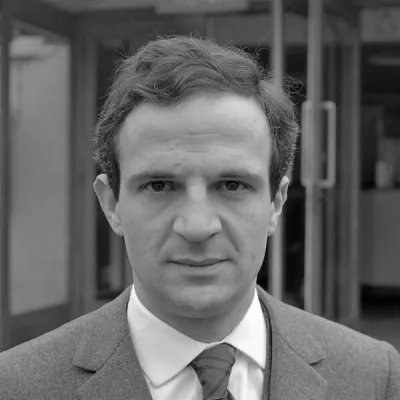
His other notable films include Shoot the Piano Player (1960), Jules and Jim (1962), The Soft Skin (1964), Two English Girls (1971) and The Last Metro (1980). Truffaut's Day for Night (1973) earned him the BAFTA Award for Best Film and the Academy Award for Best Foreign Language Film. He played the doctor in The Wild Child (1970), the director of the film-within-the-film in Day For Night and the scientist in Steven Spielberg's Close Encounters of the Third Kind (1977). He starred in The Green Room (1978), based on Henry James's "The Altar of the Dead". He wrote Hitchcock/Truffaut (1966), a book-length interview with his hero Alfred Hitchcock which tied for second on Sight and Sound's list of the greatest books on film.
Human Design Analysis: François Truffaut as Projector 4/6
Projector 4/6 — Design at a Glance
François Truffaut's Human Design profile marked him as a Projector whose energy focused like a beam of light on his surroundings. This dense aura allowed him to immediately identify disruptions in systems or relationships around others – he saw the flaw directly in the mechanism. However, this immediate diagnosis was often counterproductive: When he openly addressed these flaws, it felt like blinding light to those around him and triggered resistance.
The optimal strategy for his nature was not to intervene actively but to wait for an honest invitation from others. By embodying harmony himself, he became attractive; people came to him of their own accord seeking advice. His undefined Sacral Center also meant that he did not have a constant supply of life energy. Instead, he experienced phases of high activity which had to be balanced with rest periods to avoid exhaustion. If François Truffaut lived according to the principles of patience and waiting for invitations, he was rewarded with success. Ignoring this structure led sooner or later to experiencing bitterness as an expression of his non-self. His path therefore was not constant action but conscious shining in anticipation of the right request.
No Inner Authority
François Truffaut's design did not have inner authority – a rare configuration that set him apart from most people. He lacked both a defined Solar Plexus and Sacral Center as direct decision-making centers. Instead, his orientation was through exchange with others. As a mental projector, energetic interactions in his open centers activated latent potentials, allowing him to view and express issues from multiple perspectives. This high resonance capability helped him find the right environment and suitable conversation partners.
Evaluating these impulses was complex and required time as well as withdrawal. Only alone could François Truffaut see through the clutter of information, distinguishing relevant from irrelevant data and developing his specific intelligence: filtering out the essence from a mass of data and structuring it. This formed his capital for success. A central key for him was choosing an environment where he felt comfortable and could exchange trustingly. Through this dialogue over time, his sense deepened about what truly belonged to him and what was right. His decision-making therefore did not rely on inner urging but on the careful synthesis of external resonances in calm reflection.
The 4/6 Profile — Opportunist / Role Model
François Truffaut's design indicated a tendency towards intensive experimentation during the first three decades of life. As a 4/6, Line 6 then still acted like Line 3: he actively sought experiences, especially in relationships and friendships. This changed with Saturn returning, when an inner conflict arose. The desire to belong to the community (Line 4) now clashed with the need to think distantly about life's meaning (Line 6). This tension between heart and head shaped his further development.
His design also showed a specific burden from emotional absorption. Through Gate 13 in Line 4, he attracted people who told him stories, leading to emotional exhaustion and a pressing need for withdrawal for reflection. Pluto in Gate 33 intensified this cycle: after a phase of renewal often came silence to process the weight. At the same time, through Gate 1 in Line 6, he had the ability to objectively evaluate creativity. He distinguished true art from mere trends. For him, wisdom meant patience; innovations needed time to prove their authentic value. In later years, it was expected that he would act as a role model and stand out through cooperation, always carefully opening his heart to the right people.
Single Definition — Defined & Open Centers
François Truffaut's design showed a tendency towards consequent, conceptual clarity. His defined Ajna Center ensured constant mental processes and trustworthy concepts. He processed data and creativity in the same way, unaffected by external influences. This mental stability flowed directly into his defined Throat Center, which served as a focal point to translate these thoughts into clear communication and action in the world. His voice was reliable because it spoke from the firm source of his mind; he could express what he thought with honesty and ease.
At the same time, his chart revealed high receptivity to external influences through several open centers. His open Head Center made him vulnerable to mental pressure and the temptation to solve others' questions or get lost in non-self thoughts instead of trusting inner authority. The open G Center meant that he did not carry a fixed identity but reflected it through environment and relationships; he often sought the right place to find his direction rather than determining it himself.
Additionally, his open Heart Center was not designed for consistent willpower, which led him into spirals of self-proving when trying to demonstrate value through promises. His open Sacral Center caused him to absorb and amplify others' energy, often to exhaustion, as he lacked the constant vital force to set boundaries. The open Solar Plexus Center absorbed emotions from the environment, making him emotionally vulnerable and prone to personalizing foreign feelings as his own. Finally, his open Root Center took on external stress, causing him to suffer under adrenalized pressure that he could not regulate independently. This constellation showed a person of clear mental radiance who was, however, strongly influenced by the energetic and emotional atmosphere of their environment.
Channels for logical order and mental clarity.
François Truffaut's design inclined towards precise mental order. He appeared as someone who did not simply take in information but had to compulsively place it into a logical system to understand it. This attitude stemmed from Channel 17-62, which connected the Ajna Center with the Throat Center through Gate of Opinions (17) and Gate of Details (62). Here, Gate 17 visualized patterns while Gate 62 translated these into language and named them. Anything he could not integrate into his own worldview was simply incomprehensible to him. This created a permanent pressure to speak in order to find pleasure and relief through the detailed communication of his organized opinions. His gift lay in clearly depicting visual patterns as theories or formulas so that others could test their feasibility. Timing was crucial: successful clarity occurred when invited to speak, which reduced resistance.
Additionally, individual gates influenced him. Gate 13 promoted meaning-making through reflection within the context of time and utilized collective memory for continuity. Gate 7 projected patterns into the future and showed a need for leadership tested by experiments. Gate 1 emphasized uniqueness and creative mutation in the here and now, with expression happening at the right moment. Gate 2 represented receptivity as a foundation for new directions in evolution. Finally, Gate 4 enabled developing formulas to clarify suspicious patterns, ensuring success despite ignorance and freeing from punishment. François Truffaut's design thus linked logical organization with deep reflection on time and future, where creativity and leadership always aimed at integrating into a comprehensible whole.
Collective Circuitry — Circuit Signature
François Truffaut's design inclined towards clear, structured communication. His chart technical profile was shown through the simple connection of Ajna and Throat Centers, acting as a direct energetic bridge between inner focus and outer expression. This configuration belongs to the Understanding Circuit, a field that bundles energies to improve things or lead society into a better future via logic, strategy, and rational analysis. A central theme here is sharing insights ideally free from any conditioning. Since François Truffaut's Solar Plexus was not included in this circuit, it represented an
Right Angle Cross of the Sphinx 1
François Truffauts Design legte eine Tendenz zu einer tiefen, oft unbewussten Verbindung zwischen dem weiblichen Prinzip und der spirituellen Dimension an. Diese Konfiguration, bekannt als das rechte Kreuz der Sphinx 1, prägte seine innere Ausrichtung hin zur Intuition und zum Vertrauen in einen größeren, übergeordneten Plan.
Im Human Design beschreibt dieses Kreuz eine spezifische Energieverteilung, die das Zentrum des Solarplexus mit dem G-Zentrum verbindet. Es handelt sich nicht um rationale Analyse oder bewusste Kontrolle, sondern um ein fließendes Empfinden für den richtigen Weg. Personen mit dieser Konfiguration neigten dazu, sich von ihrer inneren Wahrheit leiten zu lassen, auch wenn diese nicht immer logisch nachvollziehbar war. Sie suchten oft nach Bedeutung hinter der Oberfläche und fühlten eine starke Anziehungskraft zum Mysteriösen oder Verborgenen.
Für François Truffaut bedeutete dies, dass sein Handeln stark von diesem intuitiven Kompass gesteuert wurde. Er reagierte auf innere Signale, die ihm sagten, was authentisch war. Diese Energie förderte eine Haltung der Hingabe und des Vertrauens in den Lebensfluss, anstatt gegen ihn anzukämpfen. Es war weniger ein Weg des strategischen Planens als vielmehr einer des Loslassens und des Erlaubens, dass sich Dinge auf natürliche Weise entfalten konnten. Seine Kreativität und sein Ausdruck wurden dadurch beeinflusst, dass er sich von dieser tiefen, weiblichen Intuition tragen ließ, die ihn durch verschiedene Lebensphasen führte.
Saturn Return · Uranus Opposition · Chiron Return — Life Cycles
François Truffauts Design zeigte eine klare Struktur, in der sich innere Vorarbeit zu äußeren Meilensteinen verdichtete. Dies wurde 1959 deutlich: Im Alter von 27 Jahren urteilte sein Debüt „Sie küßten und sie schlugen ihn“ in Cannes – ein Erfolg, der den ersten Saturn-Return markierte. Dieser Zyklus verdichtet oft jahrelange innere Reife zu einem tragfähigen öffentlichen Ergebnis.
Später, bei der Uranus-Opposition 1973 (Alter 41), veröffentlichte er „Die amerikanische Nacht“. Diese Phase bringt typischerweise eine Auseinandersetzung mit etablierten Strukturen und den Drang nach neuer Ausdrucksform oder Freiheit innerhalb des Karrierewegs.
Der Chiron-Return um das 49. Jahr herum ist ein Erfüllungszyklus, in dem sich der Lebenszweck entfaltet. 1980, mit 48 Jahren, erschien „Die letzte Metro“. Dies fiel in die Phase der Blüte, wo das Inkarnationskreuz – sofern gemäß Strategie und Autorität gelebt – zunehmend Sinn erfahrbar macht. Es handelte sich nicht um Heilung alter Wunden, sondern um die Verwirklichung des eigenen Wesens im beruflichen Kontext. François Truffauts Weg illustriert diese mechanischen Abläufe: Von der Verdichtung der frühen Jahre über die strukturelle Neuorientierung bis hin zur späten Entfaltung des Zwecks.
Projector · No Inner Authority — Synthesis
Er war ein Projektor, der eine ausgeprägte Fähigkeit besaß, Muster zu erkennen und Fehler im System aufzudecken (Kanal des Akzeptierens: Tor 17/62). Diese Gabe ging jedoch mit einer subtilen Herausforderung einher: die direkte Ansprache von Problemen wurde selten positiv aufgenommen. Stattdessen suchte er Wege, sein Verständnis indirekt zu vermitteln und Licht ins Dunkle zu bringen – eine Strategie, die durch seine offene Definition unterhalb des Kehlzentrums verstärkt wurde, da er auf den Austausch mit anderen angewiesen war, um Klarheit zu gewinnen. Diese Tendenz, Informationen mental zu ordnen und durch Sprache zu strukturieren (Tor 62), prägte seinen Ansatz, die Welt zu verstehen und sie anderen zugänglich zu machen.
Ein zentrales Paradox in seinem Design lag im Zusammenspiel von Distanz und Verbindung. Sein Profil als Netzwerker/Rollenvorbild deutet auf den Wunsch nach Zugehörigkeit hin (Linie 4), während die Linie 6 eine Neigung zum Nachdenken und zur Isolation signalisiert. Diese Spannung zeigte sich in einer Lebensweise, die sowohl Kooperation suchte als auch Momente der Reflexion erforderte. Das definierte Mentale Zentrum ermöglichte ihm zwar beständiges, begriffliches Denken, doch seine fehlende innere Autorität zwang ihn dazu, stets externe Perspektiven einzubeziehen, um zu einer fundierten Meinung zu gelangen – ein stetiger Wechsel zwischen innerer Analyse und äußerem Austausch.
1 Defined Channel
Incarnation Cross - Right Angle Cross of the Sphinx 1
Solar Return
The Solar Return shows the moment when the sun returns to its exact birth position - your personal solar year.
Life Cycles
Discover the life cycles with a detailed triple view (birth chart, cycle chart, composite).
Human Design Profile
- Type
- Projector
- Strategy
- Wait for the respectful invitation
- Authority
- No inner authority - learn more
- Profile
- 4/6 - Opportunist / Role Model
- Definition
- Single Definition
- Incarnation Cross
- Right Angle Cross of the Sphinx 1
- Date of Birth
- 06.02.1932 06:00
- Place of Birth
- Paris, France
Frequently Asked Questions
What was François Truffaut's Human Design type?
What Profile did François Truffaut have in Human Design?
What Authority did François Truffaut have?
What incarnation cross did François Truffaut have?
When was François Truffaut born?
Discover your own Human Design
Are you also a Projector? Find out in a personal reading how to unfold your leadership qualities and recognize the right invitations.
More Personalities
Back to overviewSissy Spacek

Alain-Fournier

Anémone

Ann-Margret

Arletty
Arno