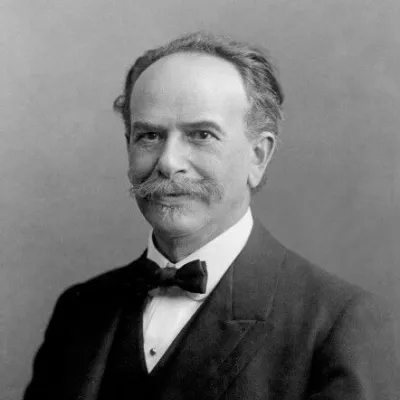
Franz Boas
Human Design Chart
Biography
Studying in Germany, Boas was awarded a doctorate in 1881 in physics while also studying geography. He then participated in a geographical expedition to northern Canada, where he became fascinated with the culture and language of the Baffin Island Inuit. He went on to do field work with the indigenous cultures and languages of the Pacific Northwest. In 1887 he emigrated to the United States, where he first worked as a museum curator at the Smithsonian, and in 1899 became a professor of anthropology at Columbia University, where he remained for the rest of his career. Through his students, many of whom went on to found anthropology departments and research programmes inspired by their mentor, Boas profoundly influenced the development of American anthropology. Among his many significant students were A. L. Kroeber, Alexander Goldenweiser, Ruth Benedict, Edward Sapir, Margaret Mead, Zora Neale Hurston, and Gilberto Freyre.
Boas was one of the most prominent opponents of the then-popular ideologies of scientific racism, the idea that race is a biological concept and that human behavior is best understood through the typology of biological characteristics.
Franz Boas as a Manifesting Generator 2/4 in Human Design
Manifesting Generator 2/4 — Design at a Glance
Franz Boas was revealed as a Hybrid being: He possessed the constant, sacral energy of a Generator but also had the ability of a Manifestor to skip steps and act swiftly. This configuration created a unique dynamic between endurance and speed. His basic strategy involved not initiating himself but responding to internal impulses. Only when his sacral center gave a clear 'yes' should he start acting. This was crucial as his nature tended towards skipping important stages due to high speed or pursuing multiple projects simultaneously without this inner approval, leading to frustration, his specific non-self theme if he realized he had to catch up later. The risk lay in hurried multitasking without genuine resonance. However, when there was alignment between impulse and internal authority, Franz Boas drew deep satisfaction from his work. In this state, parallel working was not a barrier but a source of strength. He needed variety and fell into a 'play mode' that nourished his creative power. The demand to focus on only one thing would have harmed him; instead, he flourished in the rotation of tasks as long as there was inner approval. Thus, potential frustration from hasty action transformed into lasting satisfaction driven by a mix of sacral constancy and manifesting speed.
Emotional Authority
Franz Boas exhibited a fundamental stance of patient waiting at crucial crossroads. His design dictated that spontaneous, gut-driven decisions were often misleading. Instead, his internal authority required time and the natural emotional rhythm to run its course.
This mechanism stemmed from his Emotional Authority carried by a defined Solar Plexus Center. In Human Design mechanics, this authority is prioritized; it takes precedence over all other defined centers in the graph regardless of further configurations. Franz Boas was subject to a permanent emotional wave, an ongoing up and down of his feelings. The world appeared colored through his current mood: At one moment he could be totally enthusiastic, at another view the same situation negatively.
This immediate feeling was merely a snapshot, a first impression that did not necessarily reflect his deeper truth yet. Quick reactions from this transient emotion could therefore have negative consequences. Franz Boas needed distance to gain clarity. The more time he took, the deeper and more comprehensive he could perceive a situation. This process required patience and multiple nights of reflection on a decision. Only when intense feelings subsided and emotional distance emerged did calmness set in. Then the internal process was complete and the chosen path aligned with his true nature. This strategy of delay served to make long-term life decisions on a stable basis rather than reacting to fleeting moods.
The 2/4 Profile — Hermit / Opportunist
Franz Boas showed himself as someone who oscillated between the deep need for withdrawal into inner clarity and the desire to connect with close circles. His design laid out the tension of Profile 2/4: Line 2 demanded solitude to condense processes; line 4 drew him into community. Success depended on clearly communicating these shifts, enabling network knowledge to be reflected upon during alone time.
This mechanism described a need to create secure environments. In his 'me-time', Franz Boas immersed in internal processes, creating calm and clarity. Once this need was satisfied, he emerged from withdrawal to spend time with his favorite people. The constant fluctuation between the desire for company and solitude shaped his dynamics. Through clear communication, he could absorb network knowledge during isolation, evaluate it, and develop brilliant ideas.
Line 2, as a line of swing development, projected the ability for renewal that only became clear in reputation. It demanded patience since early successes often led to impatience. The fourth line brought limitation and fixity in reaction to shocks but increased through Uranus influence creativity when using opportunities. Despite this fixity, there was learning capacity if new occasions were recognized. Franz Boas used this structure to gain inner clarity and then make it effective in his social contexts.
Single Definition — Defined & Open Centers
Franz Boas was characterized by a design that combined willpower (defined Heart Center) with a clear inner direction (defined G Center). His actions spoke from this stable identity and the desire for self-determination, giving him a reliable presence. This internal structure culminated in a defined Throat Center: He did not communicate based on fleeting thoughts but expressed his deep convictions and will directly. His voice was an expression of a firm 'I' that knew what it wanted and how to achieve it.
This constant presence was fueled by immense vital energy (defined Sacral Center). Franz Boas had a motor that prompted him to react; he did not act out of impulsive initiation but responded to life with powerful, sustained energy. However, this strength was subject to an emotional rhythm (defined Solar Plexus Center). His decisions were not quick judgments but the result of a process in which he waited for his emotional waves to clarify before making choices. This was complemented by intuitive moment clarity (defined Spleen Center), helping him distinguish between healthy and unhealthy elements in the present moment.
At the same time, Franz Boas was open to external influences in his mental centers. His open Head and Ajna Centers meant he did not have a fixed personal truth but absorbed inspirations and concepts from the environment. This could lead to internal pressure to find answers or understand things that were not actually his own questions. Additionally, his open Root Center absorbed stress from the surroundings. This external pressure could manifest as restlessness or haste, a state he could only resolve through trust in his inner authority – waiting for emotional waves and responding to sacral energy rather than fighting against foreign resistance.
Channels for community, inspiration, openness, charisma, intuition and power.
Franz Boas acted as an inspiring, charismatic, and intuitive personality through his design. His essence was marked by the ability to move others with authentic presence, using situational emotional openness. His generative life force enabled him to act in the moment and respond to intuitive signals, fostering a strong survival instinct and direct expression.
This effect relied on Channel of Inspiration 1-8, connecting the G Center with the Throat Center. Through Gate 1 of Self-expression and Gate 8 of Contributing, he lived his unique identity rather than just explaining it. As an example, he inspired others to creatively express their individuality, where recognition for this personal leadership was crucial.
His social demeanor was regulated by Channel of Openness 22-12, linking the Solar Plexus Center with the Throat Center. Gate 22 of Openness and Gate 12 of Caution ensured that his emotional wave guided interaction. He was charming and warm when the mood suited, but could be abrupt and withdrawn at inappropriate timing or under pressure, as he relied on a right feeling for social contacts.
The driving force behind his actions came from Channel of Charisma 34-20, connecting the Sacral Center (Gate 34 of Power) with the Throat Center (Gate 20 of Now). This configuration allowed him to directly convert generative energy into action. He acted spontaneously and quickly, driven by an internal reaction to external stimuli, giving him high endurance for self-chosen activities while making him independent from external expectations.
Intuitive clarity came through Channel of Brainwave 57-20, connecting the Spleen Center (Gate 57 of Intuitive Insight) with the Throat Center. This gave him the ability to speak deep truths in the moment and encourage others to use their own inner survival intelligence. His spontaneous verbal outbursts often hit the core of an issue, as they were based on ancient instincts.
Additionally, Channel of Power 34-57 connected the Spleen Center with the Sacral Center. This link between Gate 57 and Gate 34 created a strong archetypal survival instinct. It kept him alert for dangers in his environment and enabled quick, intuitive reactions to navigate daily life without considering others' needs.
Individual Circuitry — Circuit Signature
Franz Boas was someone who stood in the tension field between individual knowledge creation and tribal cooperation. His design connected through the Knowledge Circuit the Throat, Solar Plexus, Identity, and Spleen Centers into a cohesive flow. This promoted pulsating energy: flashes of insight (Channel 20-57) and inspiration (Channel 1-8) drove him to form new identities and express them emotionally filtered in the moment. The openness (Channel 12-22) supported this transformation process through expression now.
Parallel to this, the Ego Circuit, connecting Heart and Solar Plexus Centers, was at work. Here it was not about individuality but tribal resources. Channel Community (37-40) established clear give-and-take – mutual support for the group. As this circuit lacked a connection to the Sacral Center, there was no constant energy flow; instead, this dynamic, ratchet-like emotional structure required regular rest pauses for resource regeneration.
Additionally, Integration Channels Charisma (20-34) and Power (34-57), connecting Throat, Sacral, and Spleen Centers, were integrated. This allowed drawing strength from reacting to life and acting effectively in the moment. The simple definition ensured a coherent energy flow across all defined centers, making Franz Boas' actions always marked by an inner consistency that encompassed both creative impulses and social obligations.
Right Angle Cross of Penetration 2
Franz Boas' design carried the signature of the right cross of penetration 2. This configuration established a fundamental disposition characterized by a deep and often painful confrontation with one's own identity and the world. It was not about superficial adaptation but rather a process of breaking down old structures to arrive at a more authentic form of existence.
In Human Design mechanics, this cross describes a specific energetic dynamic: the drive to sharpen one's essence through confrontation with the unfamiliar or difficulties. It is a pattern of transformation through suffering or intense reflection, where old beliefs and roles must be dismantled for something new and genuine to emerge. For Franz Boas, this meant a life task that manifested in constantly penetrating superficial realities – always searching behind the facades for truth.
The energy of this cross often acts as a catalyst for profound changes both internally and in perception of the environment. It requires courage not to orient oneself towards superficial harmonies but to pursue uncomfortable questions. Franz Boas' chart showed a structure that predisposed him to transcend boundaries and through intensive inner work, open up new perspectives, even if this path was fraught with internal tensions.
Saturn Return · Uranus Opposition · Chiron Return · 2nd Saturn Return — Life Cycles
Franz Boas' design was marked by four significant cyclical turning points structuring his life phases. The first Saturn return around the age of 29 often indicated a solidification of personal foundations; this was evident in 1887 when he married Maria Krackowizer.
The Uranus opposition, a cycle of upheaval and new positioning, led to career advancement: Boas took up a professorship for anthropology at Columbia University. This step established his institutional authority.
The Chiron return, a fulfillment cycle where the incarnation cross unfolds and meaning becomes tangible, coincided with a deep crisis. In 1904, his student William Jones was killed during research in the Philippines. This event marked a phase of flourishing through painful loss.
Finally, the second Saturn return around age 60 brought consolidation of legacy. In 1918, close colleague Herman Karl Haeberlin died and left behind notebooks. This moment underscored the finality of structural transfer, which in Boas' design played a central role during this cycle.
Manifesting Generator · Emotional Authority — Synthesis
Franz Boas' life was marked by a deep internal tension between the need for individual expression and the ability to fit into existing structures. His design as an Manifesting Generator with emotional authority points to someone who possesses strong inner power (Sacral Center) but cannot express it unchecked. Rather, he had to learn to respond to external impulses and release his energy only when his emotions were clear. This combination of quick action and emotional maturity allowed him to advance innovative ideas (Channel 1-8), while the connection to G Center ensured a strong identity and direction. The openness of many centers indicates high adaptability, enabling him to integrate into various contexts and benefit from diverse influences – as long as he preserved his inner truth.
A central paradox lies in the interaction between his need for solitude (Line 2) and desire for community (Line 4). This was reflected in his work style, which included both intensive research and close collaboration with colleagues. The ability to develop creative solutions from this tension was strengthened by the interplay of intuition (Spleen Center) and willpower (Heart Center). Events such as taking up a professorship (1899) or losing a colleague (1904) showed that he was capable both of assuming responsibility and handling crises – always guided by his inner authority and need to remain authentic.
6 Defined Channels
Incarnation Cross - Right Angle Cross of Penetration 2
Solar Return
The Solar Return shows the moment when the sun returns to its exact birth position - your personal solar year.
Life Cycles
Discover the life cycles with a detailed triple view (birth chart, cycle chart, composite).
Human Design Profile
- Strategy
- To respond - wait for something to respond to
- Authority
- Emotional Authority
- Profile
- 2/4 - Hermit / Opportunist
- Definition
- Single Definition
- Incarnation Cross
- Right Angle Cross of Penetration 2
- Date of Birth
- 09.07.1858 09:24
- Place of Birth
- Minden, Germany
Frequently Asked Questions
What was Franz Boas' Human Design type?
What Profile did Franz Boas have in Human Design?
Which Authority guided Franz Boas?
What incarnation cross did Franz Boas have?
When was Franz Boas born?
Discover your own Human Design
Are you also a Manifesting Generator? Find out in a personal reading how to unfold your multi-talents and direct your energy wisely.
More Personalities
Back to overviewAldair

Alizée

Angeli

Arletty

Artus

Balthus