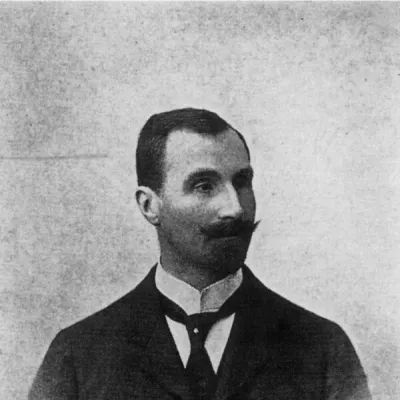
Franz Joseph von Bülow
Human Design Chart
Biography
What does Generator 2/4 mean for Franz Joseph von Bülow?
Generator 2/4 — Design at a Glance
Franz Joseph von Bülow possessed enormous physical endurance and a high degree of inner strength that he brought into his life as a Generator. His design indicated that this energy was not used most efficiently through spontaneous initiative but rather by reacting to external impulses. The motto of his system was 'not initiate, but react.' When an environmental signal hit his sacral center and it responded with a clear internal 'yes,' Franz Joseph von Bülow could unleash his full capacity. In such moments, he acted like a strong workhorse: reliable, powerful, and capable of carrying projects to completion.
If he did not follow this strategy and ignored the signals from his gut in favor of acting out of duty or external pressure, his energy would stagnate. The design warned that such behavior—such as taking on tasks without inner resonance—could lead to long-term frustration and a noticeable lack of energy. Conversely, it also posed a danger if he was hindered from working on his heart project while still full of drive internally. For Franz Joseph von Bülow, the deepest satisfaction and sense of fulfillment came exclusively from listening to his own internal answers and acting accordingly. Only then could no one stop him as he optimally utilized his natural energy source.
Emotional Authority
Franz Joseph von Bülow exhibited an inner decision-making structure that did not exhaust itself in immediate intellectual clarity or impulsive action. His authority lay in the defined Solar Plexus Center, meaning he was subject to emotional waves. This energy presented itself as a permanent up and down of his feelings; the world appeared colored by his current mood. In one moment, he could be totally enthusiastic about something, only to see it negatively in the next. Since this feeling was merely a snapshot—an initial impression that did not necessarily represent his truth—quick, spontaneous decisions based on emotion could have negative consequences.
The mechanics of his emotional authority required patience. The more time he took to let a decision mature, the deeper and broader he could see the situation. This demanded multiple nights of considering options. He should take his time and ask himself several times. Over time, intense feelings subsided, he gained emotional distance, and clarity as well as calmness set in. Only then had he gone through the process. This rule applied regardless of which other centers were defined in his chart: The Solar Plexus Center always took precedence regarding inner authority. This primarily concerned long-term decisions that could have a significant impact on his life course.
The 2/4 Profile — Hermit / Opportunist
Franz Joseph von Bülow was someone who oscillated between two fundamental needs: the urge to withdraw and the desire for community. His design as a 2/4 Profile established this tension. Line 2 demanded solitude to go inward and gain clarity; line 4 pulled him back into the network to spend time with familiar people. This dynamic required clear communication of his boundaries: He had to signal when he sought company and when he needed to be left alone. Only then could he process knowledge from his environment during solitary times and develop new insights.
Additionally, Line 2 of Gate 47 shaped his ambition. It projected his abilities outward, helped him realize goals, but hindered him from immediately grasping the deeper meaning of his experiences. This process was the beginning of a maturation towards greater inner sanctity. Parallel to this, Line 4 of Gate 45, which concerned direction-giving in service to the tribe, helped him recognize material opportunities and make them useful for higher principles, especially when working with others. Franz Joseph von Bülow used this constellation to develop his potential between isolated reflection and social engagement.
Split Definition — Defined & Open Centers
Franz Joseph von Bülow was someone who constantly felt an internal pressure to ask questions and understand connections. This mental tension stemmed from his defined connection between the Head Center and Ajna Center: He had a firm thought structure that pushed him to pursue inspirations, but lacked the energy to immediately turn these thoughts into actions. Instead, he acted as a catalyst, encouraging others to think deeply. At the same time, he possessed a reliable self-identity and clear sense of life direction, supported by his defined G Center. This gave him the ability to show others new perspectives without needing their approval.
His capacity for action was based on his defined Sacral Center, which provided him with a constant source of vital energy. Franz Joseph von Bülow relied on external stimuli to effectively use this power; initiating independently risked frustration and exhaustion. Additionally, he subjected his decisions to an emotional test: His defined Solar Plexus required patience, as true clarity only revealed itself at the end of the emotional wave. He avoided impulsive judgments by waiting until emotions calmed down.
This stable inner life contrasted with his open centers. His undefined Throat Center tended to feel pressure to force attention through constant speaking, often leading to unpredictable statements if he did not wait for the right invitation. Similarly, in his Heart Center, he lacked a consistent willpower; he was tempted to prove his worth through promises and competitive pressure instead of simply being himself. His open Spleen Center made him vulnerable to fears about survival and led him to cling to uncertain situations to gain a false sense of well-being. Finally, his undefined Root Center absorbed stress from the environment, pushing him into hectic overactivity to escape this foreign pressure rather than standing firm.
Channels for mental images, rituals and intimacy.
Franz Joseph von Bülow was someone whose inner compass was marked by a deep rhythm. The Rhythm Channel 5-15 connected his Sacral Center with his G Center and ensured that he was carried along by the flow of life. Gate 5 held onto fixed habits, while Gate 15 integrated the diversity of society into this natural stream. This gave him intuitive timing; when he listened to his reactions, everything felt effortless and drew others magnetically into his energy flow.
His drive for merging was determined by the Pairing Channel 59-6 between Sacral and Solar Plexus Centers. This current rooted him in a powerful quantum energy called intimacy. Gate 59 brought sexual essence, while Gate 6 steered the emotional wave of pleasure and pain. This configuration required patience: Only through waiting for emotional clarity could he enter deep, fruitful connections without his intensity being misunderstood.
Mentally, Franz Joseph von Bülow operated under the pressure of the Abstraction Channel 64-47 between Head and Ajna Centers. Gate 64 brought confusion through endless possibilities, while Gate 47 fostered a need to understand. His mind filtered every experience through mental images to find a story. Although this process often seemed confusing, patient waiting eventually led to the revelation of unique perspectives that he could share.
Additionally, individual Gates shaped his essence: Gate 22 allowed calm listening and individual mutation without intrusiveness. Gate 45 gathered energy on tribal level and expressed willpower. Gate 26 helped him anchor innovations in a conservative environment. In the design, Gate 4 supported the formulation of logical patterns for future security, while Gate 25 fostered a mystical stance of innocence. Gate 24 advanced mental renewal by testing which knowledge was truly valuable.
Collective Circuitry — Circuit Signature
Franz Joseph von Bülow was marked by a split definition, highlighting two independent energetic streams in his design. One current connected the Identity, Sacral, and Solar Plexus Centers. Here, the Understanding Circuit worked through the Rhythm Channel (Gates 15–5), linking logical thinking with the life force of the Sacral – a focus on protection and care.
The second, completely separate stream consisted of Head and Ajna Centers. The Meaning Circuit connected these via the Abstraction Channel (Gates 64–47). This configuration channeled energy towards reflecting past experiences and finding meaning in them, independent of the first current. There was no direct energetic flow between the logical-emotional core in the lower chart and the abstracting awareness above; both systems existed side by side as separate forces that offered Franz Joseph von Bülow different approaches to the world: on one hand, rational structuring with an emotional protective instinct, on the other, intuitive grasping of past connections.
Right Angle Cross of Rulership 3
Franz Joseph von Bülow carried the design of the right cross of governance. This configuration shaped his inner stance through a deep, almost mystical connection with the idea of a higher mission or divine order in political action. For him, government leadership was not merely administration or power play but a sacred act where he saw himself as an instrument of a higher truth.
This specific energy links the strength of will with intuition for the unseen. Those who carry this cross often feel a strong duty to realize justice and order, not out of egoistic ambition, but from the sense of serving a higher law. It is about the ability to translate spiritual values into concrete structures and laws. Franz Joseph von Bülow lived the tension between the material state and the immaterial claim for justice. His actions were driven by the urge to make his vision of a just world order visible, always seeking balance between the harsh reality of political power and the idealistic demand for moral integrity. This created a characteristic authority that relied less on pressure than on the persuasive force of an inner compass oriented towards eternal principles.
Saturn Return · Uranus Opposition · Chiron Return — Life Cycles
Franz Joseph von Bülow showed himself to be someone who could endure internal tensions between societal expectations and personal authenticity. His design pointed to dynamics often leading to reorientation in his late twenties. This became evident in 1890: At the age of 29, during his first Saturn return, he was promoted to lieutenant colonel and subsequently left the military. This cycle marked the transition from training to self-determined life; the promotion symbolized the end of a phase, while leaving service signified the beginning of new structures.
Another characteristic pattern emerged in his willingness to cross spatial and social boundaries to gain freedom. The Uranus opposition, an aspect of breaking free from old bonds, was active in 1900. At age 39, Bülow moved to Venice where homosexuality was legal. This decision highlighted the mechanics of Uranus: By breaking with the known and seeking an environment that accepted his nature, he created necessary space for self-determination. Both events underscored a life path where external changes – whether in career or residence – served as means to maintain inner integrity.
Generator · Emotional Authority — Synthesis
Franz Joseph von Bülow lived an internal rhythm that repeated itself throughout his life: an alternation between the deep need for inner clarity and the drive to share these insights (Rhythm Channel). The defined connection between Sacral and Identity Centers created a steady energy source, filtered through emotional highs and lows. This led to a process of deeply engaging with themes before communicating them outward – a pattern evident in career shifts (Saturn return).
A central paradox shaped his existence: the tension between the desire for solitude and the longing for community (Profile 2/4). While he needed phases of intense inner work to gain clarity, he simultaneously sought connection with others. This duality may have led to an ongoing search for environments where both withdrawal and exchange were possible – a need reflected in his choice of residence (Uranus opposition).
3 Defined Channels
Incarnation Cross - Right Angle Cross of Rulership 3
Solar Return
The Solar Return shows the moment when the sun returns to its exact birth position - your personal solar year.
Life Cycles
Discover the life cycles with a detailed triple view (birth chart, cycle chart, composite).
Human Design Profile
- Type
- Generator
- Strategy
- To respond - wait for something to respond to
- Authority
- Emotional Authority
- Profile
- 2/4 - Hermit / Opportunist
- Definition
- Split Definition
- Incarnation Cross
- Right Angle Cross of Rulership 3
- Date of Birth
- 11.09.1861 08:00
- Place of Birth
- Frankfurt am Main, Germany
Frequently Asked Questions
What was Franz Joseph von Bülow's Human Design type?
What Profile did Franz Joseph von Bülow have?
What authority did Franz Joseph von Bülow possess?
What incarnation cross did Franz Joseph von Bülow have?
When was Franz Joseph von Bülow born?
Discover your own Human Design
Are you also a Generator? Find out in a personal reading how to use your sacral energy correctly and discover deep satisfaction.
More Personalities
Back to overviewAaliyah

Alexia
Angèle

Anne-Marie

Arcángel

Arno