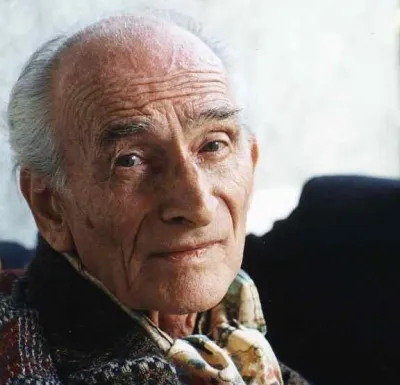
Franz Marc
Human Design Chart
Biography
His mature works mostly are animals, and are known for bright colors. He was drafted to serve in the German Army at the beginning of World War I, and died two years later at the Battle of Verdun.
In the 1930s, the Nazis named him a degenerate artist as part of their suppression of modern art. However, most of his work survived World War II, securing his legacy. His work is now exhibited in many eminent galleries and museums. His major paintings have attracted large sums, with a record of £42,654,500 for Die Füchse (The Foxes) in 2022.
Franz Marc — Projector with Profile 1/3
Projector 1/3 — Design at a Glance
Franz Marc lived as a Projector without an intrinsic energy source. His undefined Sacral Center meant that he did not have a steady life force but rather operated in phases of high activity which necessarily had to be followed by necessary rest periods to prevent burnout. This cyclical distribution of energy contrasted with the demands of standardized school systems or conventional work structures, which expected continuous performance and often ignored his specific need for recovery.
His aura acted like a focused beam of light that pointed directly at weaknesses in his environment. Franz Marc immediately recognized where systems or relationships were "in the dark" or not functioning properly. A direct confrontation of these flaws would have provoked resistance; his strategy was to attract through harmony and wait until others invited him to illuminate their problems. Living by this design, he was rewarded with success. Ignoring this invitation dynamic or living against his rhythm led to the non-self theme of bitterness – a feeling of injustice and disappointment about the environment that served as a warning signal for deviation from his natural path.
Self-Projected Authority
Franz Marc showed himself as a Projector with rare authority in Self, which required extreme openness towards external influences. This configuration carried the risk of being distracted by motoric energies and getting lost in a constant hunt for energy. His inner truth lay in his identity; decisions did not arise through cognitive analysis but rather through self-dialogues or dialogical exchange processes if he was invited to do so. Crucial was distinguishing spontaneous, unreflective speech from rational thought. This authentic expression made his uniqueness recognizable to others. Alternatively, a physical feeling led him into a specific geographical or thematic direction. By following this inner pull faithfully, he became a directional guide for his environment and realized his specific potential for success. The constant danger lay in losing himself in openness rather than maintaining the clear orientation of Self.
The 1/3 Profile — Investigator / Martyr
Franz Marc showed himself as someone who connected theoretical knowledge with practical application. His design as a Researcher and Experimenter (Profile 1/3) shaped an attitude based on learning through trial and error. He did not only seek abstract truths but actively tested them in reality. This configuration described a person who held judgments to be trustworthy only when they were both theoretically grounded and practically proven.
His inner dynamics lay in recognizing the law of necessity (Gate 49) to test revolutionary ideas at heart and soul. It was necessary to wait for emotional waves before acting so that new principles remained viable. At the same time, he was driven by adaptability (Line 3 from Gate 43). He was ready to enter into connections and tolerate criticism to further develop his knowledge. This process of constant testing and renewal stood at the forefront. Franz Marc lived out the essence of his profile: working out insights himself, understanding mistakes as learning opportunities, and continuously adapting through experience. His path was marked by the tension between a desire for complete planning and the urge to simply act and learn from it.
Single Definition — Defined & Open Centers
Franz Marc was someone whose inner life was characterized by a constant mental pressure - the urge to question, understand, and comprehend consciousness itself. His defined Head and Ajna Centers created a trustworthy, specific form of conceptual thinking; he was inspired to formulate questions but lacked the direct energy to immediately put these thoughts into action. Instead, his design worked to stimulate others through these mental impulses. This intellectual structure culminated in his defined Throat Center, which served as a focal point for reliably expressing messages from his mind and his fixed identity in the defined G Center. Marc thus had a clear sense of self-identity and direction that he could communicate.
At the same time, his design revealed profound vulnerabilities through several open centers. His open Heart Center lacked consistent willpower; he tended to get caught up in cycles, wanting to prove his worth through promises or performance, which led to self-doubt upon failure. With his open Sacral Center, he did not have a constant energy flow for persistent work. He absorbed the vital energy of his environment, amplified it, and risked overexerting himself with borrowed strength until exhaustion set in. His open Solar Plexus also absorbed foreign emotions; Marc was prone to identifying with others' moods or making emotional decisions that he later regretted instead of maintaining his own emotional clarity. This constellation described a person of great mental and identity depth who, however, had to learn how to protect himself from being overwhelmed by external energies and emotions.
Channels for logical doubt, inspiration, structure and awareness.
Franz Marc attracted attention through his mere presence and authentic life without actively seeking it out. This attitude stemmed from the Channel of Inspiration 1-8, which connected his G Center with his Throat Center. He lived his individual direction openly and inspired others to express their unique qualities rather than convincing them through words.
His mind was marked by a constant pressure to question patterns and logically categorize them. The Channel of Logic 63-4 linked his Head Center with his Ajna Center, fostering healthy skepticism. He sought verifiable patterns to answer questions about the collective while learning that this intellect did not serve to resolve personal future fears.
At the same time, Franz Marc received spontaneous insights that often seemed light-years ahead. The Channel of Structuring 23-43 connected his Ajna Center with his Throat Center and allowed him to clearly express innovative perspectives. His challenge was to wait for the right timing so these unique insights would be accepted by the environment rather than dismissed as alien.
This intuitive knowledge was further deepened through the Channel of Awareness 61-24 between Head and Ajna Centers, where a transformation occurred turning inspiration into rational answers. He had to learn to trust the 'white noise' of his thoughts and recognize when knowledge simply passed without needing control.
Additionally, Gate 49 shaped his emotional wave and sensitive reaction to principles within his clan or family. It was about upheaval and sacrifice of resources for the community's benefit. In his personal design, Gate 13 supported this attitude through collecting experiences and stories, helping him establish continuity and reflect in the mirror of collective memory.
Individual Circuitry — Circuit Signature
Franz Marc’s design inclined towards a coherent, internally connected mode of expression. As he was simply defined, energy flowed in one continuous stream through his system, giving him a sense of wholeness. This unity manifested concretely in the Knowledge Circuit, which linked his Head, Ajna, and Throat Centers with the Identity Center. This circuit served to transform new insights and express his unique identity. Franz Marc possessed the Channel of Awareness (Gates 24-61), promoting creative flashes of insight, as well as the Channel of Inspiration (Gates 1-8). Additionally, he structured these impulses through the Structuring Channel (Gates 23-43). Simultaneously, the Understanding Circuit operated, but only connected his Head and Ajna Centers. Here logic was paramount, supported by the Logic Channel (Gate 63-4), sharing rational insights free from conditioning. Although both circuits utilized his Head and Ajna Centers, they formed separate functional units: one for creative transformation and identity expression, the other for focused, emotionless ratio. Thus, Franz Marc demonstrated someone who not only thought innovative ideas but translated them through structured logic and inspired awareness into a clear, individual language. The Awareness Stream in his Ajna Center underscored the unique quality of his perception.
Right Angle Cross of Explanation 1
Franz Marc was marked by the right cross of the Declaration, a configuration that pointed to a deep internal drive for clarity and meaning. This structure combined the impulse towards intellectual penetration of connections with the need to articulate these insights authentically. It wasn't just about acquiring knowledge but rather a process of personal appropriation and transmission of truth.
In Human Design, this cross describes the dynamics between the mind that recognizes patterns and the ability to grasp these insights into words or other forms of expression. For Franz Marc, this meant his inner compass was strongly aligned with authenticity: he did not seek superficial answers but rather aimed to understand the essential structures of his environment and communicate them in a way that resonated with him personally.
This mechanism fostered an attitude of integrity. When Franz Marc explained or elaborated on something, it came from a place of inner conviction, not out of a desire to please or persuade others. The right cross of the Declaration suggested that his strength lay in reducing complex matters to their essence and making them accessible through clear language or expression. This created a bridge between his internal world of reflection and external reality by bringing his personal truths into a form that was understandable for others without losing depth.
Saturn Return — Life Cycles
Franz Marc experienced an intense phase of inner upheaval marked by his first Saturn Return. This cycle, typically occurring between the ages of 28 to 30, acts like an existential test: life puts the previous structure on trial and demands a fundamental realignment. For Franz Marc, this mechanical dynamic became concrete in 1908 when he divorced Marie Schnür. This separation was not just a biographical episode but the visible expression of the profound crisis that the Saturn Return brings about. The pressure of this phase forces one to question old bonds and identities that no longer seem sustainable. Franz Marc's design reacted to this archetypal moment with a drastic detachment from his earlier life form. The divorce marked the point where the internal necessity for change manifested outwardly. It was a moment of rupture, in which the burden of past commitments dissolved to make way for a new, more authentic orientation. The Saturn Return functioned here as a catalyst that through pain and loss laid the groundwork for a novel self-definition. Franz Marc did not go through this process passively but endured the necessary transformation towards a more independent existence form that better aligned with his inner design.
Projector · Self-Projected Authority — Synthesis
Franz Marc was a Projector whose ability to recognize patterns (defined Head Center) and point others toward their potential made him a defining figure in his environment. His profile as an Investigator and Experimenter (1/3) indicates he did not passively accept knowledge but validated it through personal experiences and trials – a process that allowed him to make authentic judgments. This combination of perceptiveness and the drive for self-examination formed a red thread throughout his life: the constant search for deeper understanding and willingness to question conventions to open up new perspectives (Channel 1-8).
At the same time, Franz Marc lived a central paradox. As a Projector, he was designed to lead others and bring 'light into darkness', yet his authority in self required internal dialogue and listening to one's own inner voice. This led to a tension between the need to express oneself and inspire (Gate 1) and the necessity of not losing one's identity in openness. A documented event, a crisis at age 28, points to the challenges associated with this inner field of tension.
4 Defined Channels
Incarnation Cross - Right Angle Cross of Explanation 1
Solar Return
The Solar Return shows the moment when the sun returns to its exact birth position - your personal solar year.
Life Cycles
Discover the life cycles with a detailed triple view (birth chart, cycle chart, composite).
Human Design Profile
- Type
- Projector
- Strategy
- Wait for the respectful invitation
- Authority
- Self-Projected Authority
- Profile
- 1/3 - Investigator / Martyr
- Definition
- Single Definition
- Incarnation Cross
- Right Angle Cross of Explanation 1
- Date of Birth
- 08.02.1880 10:00
- Place of Birth
- Munich, Germany
Frequently Asked Questions
What was Franz Marc's Human Design type?
What profile did Franz Marc have?
What authority did Franz Marc possess?
What incarnation cross did Franz Marc have?
When was Franz Marc born?
Discover your own Human Design
Are you also a Projector? Find out in a personal reading how to unfold your leadership qualities and recognize the right invitations.
More Personalities
Back to overviewSissy Spacek

Alain-Fournier

Anémone

Ann-Margret

Baekhyun

Balthus