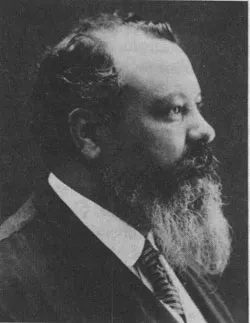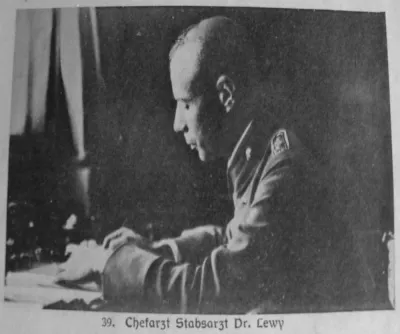
Frederic Lewy
Human Design Chart
Biography
Lewy was trained in Berlin and Zürich and graduated from Berlin in 1910. Lewy worked in Alois Alzheimer's Munich laboratory and was contemporary with Hans Gerhard Creutzfeldt (1885–1964), Alfons Maria Jakob (1884–1931) and Ugo Cerletti (1877-1963).
He fled Nazi Germany and emigrated to the U.S. in 1933. He died in Haverford, Pennsylvania on 5 October 1950, aged 65.
Frederic Lewy — Manifestor with Profile 2/4
Manifestor 2/4 — Design at a Glance
Frederic Lewy revealed himself as someone with the inner drive to pioneer new paths and lead others into a future he envisions. His design as a Manifestor inclined him towards being a trailblazer – similar to an emperor in ancient Rome, who had visions but did not fight every battle personally. This configuration often placed him in situations where he was misunderstood or polarized: some followed him enthusiastically because of his big dreams, while others rejected him because his ideas were too far-reaching.
The challenge lay in the fact that his influence on others depended strongly on how he communicated his intentions. The strategy for his design involved informing people timely and clearly about his plans. When he adhered to this strategy and trusted his inner authority, he experienced a sense of inner peace as a reward. However, if he lived against this pattern, such as by constantly pushing through without prior information, it often led him to prolonged anger rather than harmonious flow. His path was thus characterized by the tension between his visionary will and the necessity of making that will understandable to others in order to minimize resistance and gain true followers.
Ego Authority
Frederic Lewys Design established a rare inner authority: the Ego-Authority. This configuration required a defined Ego Center while simultaneously having open Emotional, Sacral, and Spleen Centers, marking him as either a Projector or Manifestor. His truth did not lie in analysis but rather in his will, which was revealed through spontaneous speech. He had to learn to listen to what came out of him unfiltered and directly, instead of questioning the mind, which often reflected the interests of others or non-self.
This great openness made him vulnerable and susceptible to distractions, yet when he focused on his true goals, he possessed the necessary willpower to fulfill promises and achieve results. His drive could be material in nature or encompass a desire for priority and surpassing conventional boundaries. In doing so, his consistent self-orientation might appear selfish to others; for him, however, it was essential that his efforts also personally rewarded him.
A central mechanism of his design was the need for a pause after each goal achievement. Continuous work without rest did not lead to lasting success but rather to unhealthy exhaustion and illness. His path involved following the spontaneous will of the Ego Center, listening to himself in the process, and balancing the resulting impulses with necessary regeneration to effectively pursue his goals.
The 2/4 Profile — Hermit / Opportunist
Frederic Lewys Design sets a fundamental tension between the desire for withdrawal and the wish for community. As a 2/4 Profile, he constantly oscillated between Line 2, which promotes solitude, and Line 4, which seeks contact with familiar people. This configuration required clear communication of his needs: He signaled when he needed company and when he wanted to be left alone. During his "Me-Time," he immersed himself in internal processes to gain clarity. Once this phase satisfied his need for peace, he returned from his "cave" to spend time with his favorite people.
This shift allowed him to reflect on the knowledge of his network during solitary times and develop new ideas from it. His Gate 19 on Line 2 emphasized selectivity in the use of personal resources and services, whether worldly or spiritual. Here he sought recognition and resources within his tribe, where an exchange between giving and receiving took place. Simultaneously, Gate 44 on Line 4 shaped his approach through honesty and directness. This communication was impartial and oriented towards the collective, not individual whims. In extreme situations, he would relinquish this neutral distance to receive necessary support but always maintained a dismissive attitude towards hypocrisy in matters of survival.
Single Definition — Defined & Open Centers
Frederic Lewys design tends towards clear, willful communication. His defined Throat Center connects with the defined Heart Center, providing him a constant source of willpower and self-worth. He speaks from a position of 'I want', secure in his value and ability to keep promises. This configuration fosters natural leadership and a tendency to control personal resources while being successful without impulsively wasting energy.
At the same time, Frederic Lewy shows through his open centers as a sensitive receiver of external influences. His open Head Center makes him vulnerable to mental pressure and confusion; he tends to identify with others' questions or seek inspiration to resolve inner uncertainties. The open Ajna Center amplifies this: He can take in opinions and concepts without knowing them as his own truth, making him flexible but also vulnerable to intellectual conditioning.
His open G Center means that he does not have a fixed identity or direction. Instead, he reflects the environment; often seeking love and orientation through others and easily getting lost in false relationships or places if he doesn't trust his inner authority. The open Sacral Center leads him to lack constant life energy. He is sensitive to other people's energy, tends to use 'borrowed' strength and can overexert himself or feel exhausted instead of setting boundaries.
Additionally, his open Solar Plexus absorbs foreign emotions, making him appear emotionally unstable if he doesn't learn to recognize these waves as not belonging to him. His open Spleen Center carries fears about survival security; he could cling to unhealthy relationships to simulate a sense of well-being. Finally, his open Root Center takes on external stress, leading him to intensify or avoid adrenalized pressure instead of using it as personal drive.
Channels for the path from hunting to gathering.
Frederic Lewy's design tends towards material self-determination paired with the necessity of strictly controlling one's own rhythm. This attitude results from Channel 21-45, the Money Line. It connects the Heart Center (Gate 21, The Hunter) with the Throat Center (Gate 45, The Gatherer). This creates an inner conflict between the urge to work hard and control resources as well as the need for rest. Success depends on acting as one's own boss and exchanging loyalty against material security without being exploited by others.
Alongside this material orientation, Frederic Lewy shows a complex internal landscape. Gate 19 connects him with themes of territory, spirituality, and seeking a supportive partner in community. Simultaneously, Gate 33 demands calm for reflection and memory to process experiences before new cycles begin. Without this pause, old patterns threaten repetition.
Gate 44 brings awareness and the ability to transform through direct interaction without preconditions. It stores lessons in cellular memory but requires willpower for change. Gate 24 steers mental mutations and renewal with life's pulse, filtering knowledge while preserving inner silence from old mental films.
In the realm of communication, Gates 12 (restraint, emotional mood, poetry) and 23 (understanding, amorality as freedom from collective dogmas) work. This combination allows him to express individual mutations through language and explain uniqueness. Gate 20 rounds out the picture by focusing on here and now, promoting authentic action and reinforcing integration of his own uniqueness. Together these elements shape a person who connects material power with inner reflection and mutative creativity.
Tribal Circuitry — Circuit Signature
Frederic Lewy shows himself as someone who knows his strength through concrete, material results. His design links the Heart Center to the Throat Center via Channel 21-45, known as the 'Money Line'. This connection creates a direct flow between willpower and expression: What he wants can be put into words and enforced. It's not about abstract ideas but creating resources and material well-being.
As part of the Ego Circuit, this energy is embedded in the Root Dynamics – cooperation and collective action. Since his design lacks a connection to the Sacral Center, it lacks constant background drive. Instead, his energy works impulsively: In moments of high motivation, he can accomplish much but then needs mandatory rest periods to gather new strength. This rhythm of tension and relaxation is essential for him to sustainably generate resources.
His simple definition also means that this powerful Heart-Throat flow is clearly separated from other undefined energy areas. He does not act on diffuse impulses but from a specific, focused source: the interplay of will and communication towards material building.
Right Angle Cross of the Four Ways 4
Frederic Lewys Human Design featured the right cross of the four paths. This configuration shaped an existential dedication to a single, deeply rooted life purpose. Those who carry this cross in their chart often know only one path; other options appear not as alternatives but as deviations from their true nature. It was not about choice but an inner necessity that guided every step in the same direction.
For Frederic Lewy, this meant his life was determined by a clear and unwavering orientation. The mechanics of this cross describe someone who aligns their entire being with a goal and often shows great dedication. Other paths remained irrelevant or inaccessible to him as his energy flowed exclusively into one direction. This clarity created stability but also a certain rigidity in dealing with alternatives. His design suggested that he did not seek many possibilities, but consistently followed his single path. This was not a decision of the mind but a deeper, biologically-energetic fact of his system. The focus was always on fulfilling this specific purpose, which influenced his actions and reactions significantly.
Saturn Return · Uranus Opposition · Chiron Return · 2nd Saturn Return — Life Cycles
Frederic Lewys design showed a structure where professional consolidation and internal upheavals were closely intertwined. In 1910, at the age of 25, he earned his doctorate on the topic 'Degeneration attempts in the auditory system of rabbits and cats'. This marked his first Saturn Return, a cycle during which years of groundwork often condenses into a solid result.
In 1923, at the age of 38, he was appointed extraordinary professor for internal medicine and neurology. This timing fell on the Uranus Opposition, a phase in Human Design typically associated with sudden changes or promotions when old structures break to allow new expression.
In 1934, at the age of 49, Lewy experienced his dismissal with the revocation of teaching authority. This corresponded to his Chiron Return, a fulfillment cycle ('flowering') in which one's incarnation cross unfolds. Although this event appears as a crisis, the mechanics suggest that it posed profound questions about life purpose, independent of external outcome. The configuration shows how external events – from academic confirmation to forced interruption – aligned with these astrological rhythms and shaped his life path.
Manifestor · Ego Authority — Synthesis
Frederic Lewy lived an inner continuity between the drive to initiate and direct the world in a certain direction (Manifestor) and the necessity to repeatedly withdraw from exchange to gain clarity (Profile 2/4). This interplay between leadership impulse and withdrawal led to an internal dynamic fueled by the defined Throat Center (communication and manifestation) – a voice speaking from deepest conviction but also influenced by the openness of the Ego Center. Channel 21-45 points towards a role as tribal leader, connected with responsibility for the welfare and provision of a community, which was reflected in professional successes (doctorate, professorship).
A central paradox lay in the tension between authoritarian ego and open centers. Lewy's authority in the Ego required authentic speaking from inner will, yet openness led to influenceability and distraction. This is mirrored in documented events: career peaks were overshadowed by a crisis (dismissal), hinting at an internal conflict between leadership impulse and external pressure. The connection of Heart with Throat Center (Channel 21-45) emphasized his own authority but the openness implied constant negotiation with others' interests.
1 Defined Channel
Incarnation Cross - Right Angle Cross of the Four Ways 4
Solar Return
The Solar Return shows the moment when the sun returns to its exact birth position - your personal solar year.
Life Cycles
Discover the life cycles with a detailed triple view (birth chart, cycle chart, composite).
Human Design Profile
- Type
- Manifestor
- Strategy
- To inform others before acting
- Authority
- Ego Authority
- Profile
- 2/4 - Hermit / Opportunist
- Definition
- Single Definition
- Incarnation Cross
- Right Angle Cross of the Four Ways 4
- Date of Birth
- 28.01.1885 21:15
- Place of Birth
- Berlin, Germany
Frequently Asked Questions
What Human Design type did Frederic Lewy have?
Which Profile did Frederic Lewy carry?
Which Authority determined Frederic Lewy's decisions?
What incarnation cross did Frederic Lewy have?
When was Frederic Lewy born?
Discover your own Human Design
Are you also a Manifestor? Find out in a personal reading how to use your initiation power peacefully and dissolve resistance.
More Personalities
Back to overviewChristian-Jaque
Kesha

Lucebert
Masaccio

Nadar
Papus